Name day
Anastasia: Name Day and Patron Saint
Anastasia keeps the name day on 22 December, or 4 January on the Old Calendar: the feast of St Anastasia the Deliverer from Potions.
- Patron saint
- St Anastasia the Deliverer from Potions
- New Calendar
- 22 December
- Old Calendar
- 4 January
- Next name day
- 22 December 2026 (New Calendar) · 4 January 2027 (Old Calendar)
- In the feast calendar
- The feasts of December · The feasts of January
The patron saint: St Anastasia the Deliverer from Potions
Kept on 22 December, or 4 January on the Old Calendar · Martyrdom
St Anastasia was the daughter of a noble Roman family, taught the faith by the martyr Chrysogonus. Married against her will to a pagan, she put on beggar’s clothes and secretly visited the prisons of Rome, washing and feeding the sick, binding their wounds and ransoming captives who suffered for Christ. After her husband’s death she gave everything to the poor and went from city to city ministering to Christian prisoners, healing them with the medicine of her day and by her prayers. For freeing so many from the bonds of despair she was called “Uzoreshitelnitsa” (Loosener of Bonds) in Slavonic and “Pharmakolytria” (Deliverer from Potions) in Greek. She was martyred under Diocletian around 304. Orthodox Christians pray to her for prisoners, for deliverance from poisons and spells, for healing, and in Russian tradition for a safe delivery in childbirth.
What the faithful pray for
- the release of prisoners, especially the innocent
- deliverance from poisons, potions and harmful substances
- deliverance from sorcery and evil spirits
- healing of the sick
- a safe delivery in childbirth (Russian popular tradition)
- comfort in temptation and sorrow
- freedom from the bonds of despair, fear and helplessness
Protection
- from poisoning
- from spells and sorcery
- prisoners from despair
- from unjust condemnation
Miracles
Other saints named Anastasia
the Royal Passion-Bearers
Kept on 17 July · Martyrdom at Yekaterinburg (1918)
The last Tsar of Russia, Nicholas, his wife Alexandra and their five children, Olga, Tatiana, Maria, Anastasia and Alexei, lived as one household of the Church of Christ, bound together by love. The Church’s hymns praise how they built their home on love, kept their marriage honorable, and raised their daughters as wise virgins for Christ. Their son Alexei bore a grave illness from infancy as a cross from the Lord, without complaint. During the war the Empress and her elder daughters served the wounded as sisters of mercy. After the Tsar’s abdication in 1917 the family was held in captivity. They bore humiliation with Christian meekness, prayed together, and forgave their persecutors. In the night of 16-17 July 1918 they were killed together at Yekaterinburg. The Russian Church Abroad glorified them in 1981, and the Moscow Patriarchate glorified them in 2000 as passion-bearers, those who imitate Christ by meekly accepting suffering and death.
What the faithful pray for
- love and unity in the family
- a faithful and honorable marriage
- raising children in the faith
- healing of sick children
- comfort for parents grieving over children in sickness or sin
- patience and meekness in suffering
- forgiveness of enemies
- the spiritual welfare of Russia and her people
Protection
- the family hearth
- children from sickness and the passions of this age
- the persecuted
- Orthodox families from division
Miracles
- Tsarevich Alexei was born, after long prayer, as ‘the fruit of the prayers of the Wonderworker of Sarov’, the longed-for heir of his royal parents. (source)
- Collections of testimonies record many healings and answered prayers through the intercession of the Royal Passion-bearers since their glorification. (source)
Pascha
Kept on Pascha (Easter Sunday) · Pascha, the Resurrection of Christ
The Pantocrator, “the Almighty, Ruler of all,” is the oldest and most central image of Orthodox iconography: Christ raising His right hand and holding the Gospel in His left, as He looks down from the dome of every Orthodox church. The letters IC XC are the first and last letters of “Jesus Christ” in Greek; with NIKA they proclaim “Jesus Christ conquers,” the confession stamped on prosphora, crosses and medallions. In Russia the beloved Zvenigorod Saviour, from the early fifteenth-century Deesis tier traditionally linked with St Andrei Rublev, was found near Zvenigorod in 1918 and is now in the Tretyakov Gallery; its gentle, searching gaze has made it one of the most loved faces of Christ in the world. Orthodox Christians keep an icon of the Saviour in the place of honor in every home, pray before it morning and evening, and make the sign of the Cross over a bridegroom with it on his wedding day. Through His icon the faithful turn to the Lord Himself, asking for mercy, healing and the salvation of their souls.
What the faithful pray for
- mercy and forgiveness of sins (the Jesus Prayer: Lord Jesus Christ, Son of God, have mercy on me)
- salvation of the soul
- healing of body and soul, as King Abgar of Edessa was healed through the Holy Face
- the protection of the home, where the icon of the Saviour holds the place of honor in the icon corner
- strength to keep the Gospel commandments
- victory over sin and temptation (IC XC NIKA: Jesus Christ conquers)
- the enlightenment of the mind by the uncreated Light of Tabor
- a bridegroom on his wedding day (the Saviour icon of the wedding pair)
- a peaceful Christian end and a good defense at the Last Judgment
Protection
- from the power of the devil and every evil
- from despair, for Christ has conquered death
- the household that keeps His icon
- from sickness of body and soul
Miracles
- King Abgar of Edessa, stricken with leprosy, received a cloth on which the Lord had imprinted His face after washing it; pressing it to his face, Abgar was healed. (source)
- On Mount Tabor the Lord shone with Divine Light before Peter, James and John, revealing the glory granted to those who unite the mind with God in prayer. (source)
- In 944 the Image Not-Made-by-Hands was solemnly carried from Edessa to Constantinople, an event the Church still keeps as a feast. (source)
St Anastasia of Rome
Kept on 29 October, or 11 November on the Old Calendar · Venerable Martyr Anastasia of Rome
The young abbess of Rome martyred under Decius.
Anastasia in other languages
| Language | The name | Short forms |
|---|---|---|
| English | Anastasia, Anastacia, Anastasiya | Stacy, Stacey, Stasia, Tasia, Nastia |
| Greek | Αναστασία, Anastasia | Τασούλα, Νατάσα, Τασία, Tasoula, Natasa, Tasia |
| Russian | Анастасия, Anastasiya, Anastasia | Настя, Ася, Стася, Nastya, Nastia, Asya, Stasya |
| Ukrainian | Анастасія, Anastasiia | |
| Bulgarian | Анастасия | |
| Serbian | Анастасија, Anastasija | |
| Romanian | Anastasia | |
| Georgian | Anastasia |
Icons of St Anastasia the Deliverer from Potions
 Folding diptych
Royal Passion-Bearers (Romanov family) & Feodorovskaya Mother of God
$99$69 Folding diptych
Royal Passion-Bearers (Romanov family) & Guardian Angel
$99$69 Folding diptych
Sts Nicholas II & Alexandra (Royal Passion-Bearers)
$99$69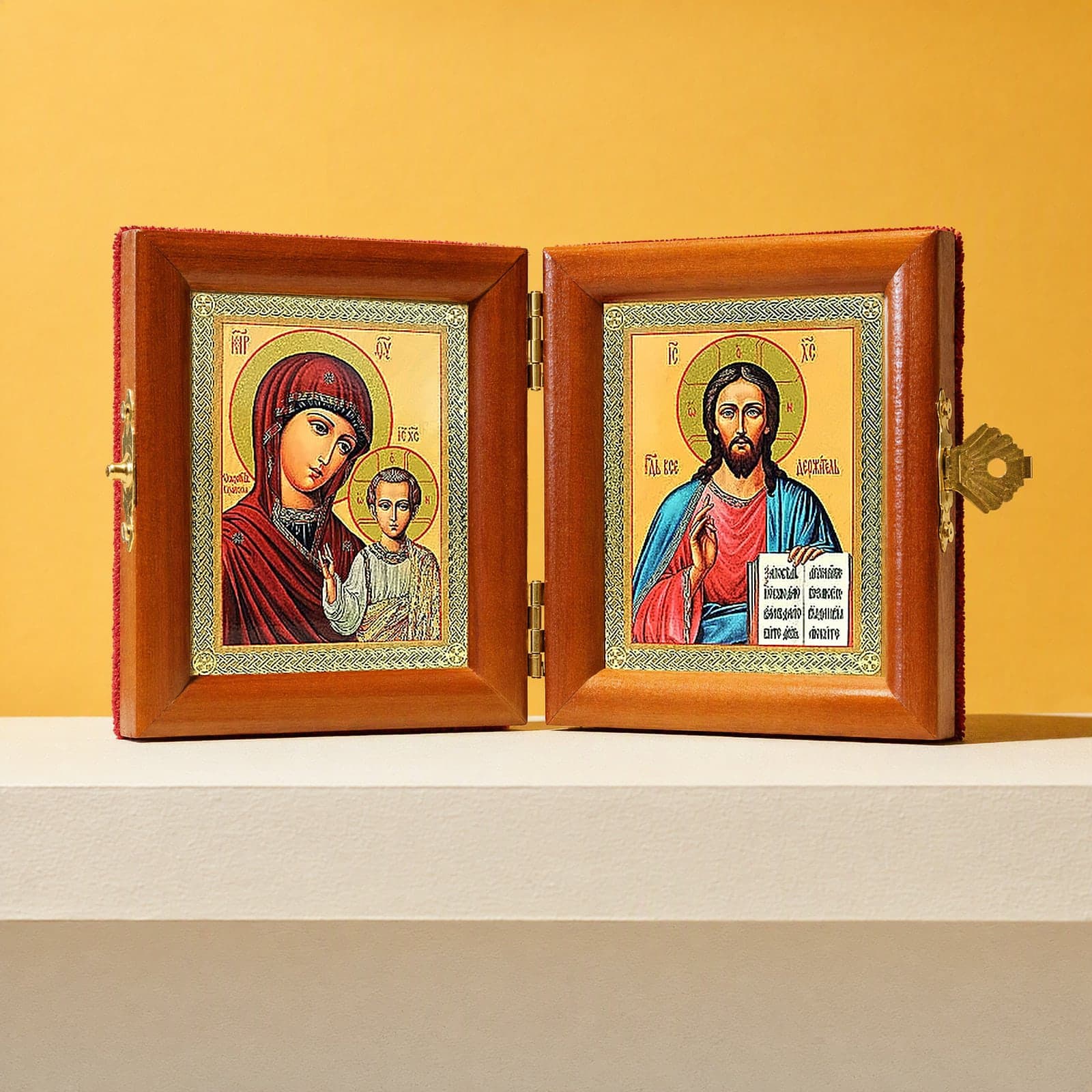 Folding diptych
Christ Pantocrator & Our Lady of Kazan
$99$69 Folding diptych
Christ (Zvenigorod Saviour) & Vladimir Mother of God
$99$69 Folding diptych
Holy Trinity (Rublev) & Christ (Zvenigorod Saviour)
$99$69 Medallion
Orthodox IC XC NIKA
Gold Color · Stainless Steel Medallion$56$39 Medallion
Orthodox IC XC NIKA
Silver Color · Stainless Steel Medallion$56$39
Have it consecrated by our priest before it reaches you: Consecration, $49.
A name-day gift for Anastasia
Name-Day Gift Set $213$149
A patron saint's folding diptych chosen by first name, a stainless steel crucifix and a prayer rope, in a gift box with a card giving the saint's life and feast day.
St Anastasia the Deliverer from Potions's diptych is chosen and the name is filled in.
Questions
When is Anastasia’s name day?
Anastasia keeps the name day on 22 December on the New Calendar and on 4 January on the Old Calendar, the feast of St Anastasia the Deliverer from Potions.
Who is the patron saint of Anastasia?
St Anastasia the Deliverer from Potions. St Anastasia was the daughter of a noble Roman family, taught the faith by the martyr Chrysogonus.
How is Anastasia written in other languages?
Greek: Αναστασία (Anastasia), Russian: Анастасия (Anastasiya), Ukrainian: Анастасія (Anastasiia), Bulgarian: Анастасия, Serbian: Анастасија (Anastasija) and Romanian: Anastasia. Every form of the name keeps the same saint.
What is a good name-day gift for Anastasia?
An icon of St Anastasia the Deliverer from Potions, the saint Anastasia bears: the Christ Pantocrator & Our Lady of Kazan Folding Diptych ($69), or the Name-Day Gift Set ($149) with that diptych, a crucifix and a prayer rope in a gift box.
More about name days
- Name Days Explained: What They Are, How Families Keep Them, and Gifts
A name day is the feast of the saint whose name you carry. Here is how to find yours on either calendar, how Greek and Russian families keep it, and what to give.
- Orthodox Patron Saint: How to Find Yours (by Name, Day or Choice)
Your Orthodox patron saint is the saint whose name you were given at baptism. Here is how to find yours by name, by the day of your birth or baptism, or by choice, and how to keep the name day.
- Find another name
Sources
- OCA: Great Martyr Anastasia the Deliverer from Poisons
- Азбука веры: Великомученица Анастасия Узорешительница
- Азбука веры: Молитва великомученице Анастасии Узорешительнице
- John Sanidopoulos: Why is Saint Anastasia Known as the Deliverer From Potions?
- Calend.ru: Настасьин день
- Акафист святым царственным страстотерпцам (Азбука веры)
- Акафист святому страстотерпцу царевичу Алексию (Азбука веры)
- OCA Lives of the Saints, 17 July
- OCA: Translation of the Image Not-Made-by-Hands from Edessa
- OCA: The Holy Transfiguration of Our Lord
- eortologio.net, Greek name-day calendar (Εορτολόγιο)
- azbyka.ru, Месяцеслов (the Russian Church's calendar of saints by name)