A prayer to Mary: the hymn to the Birth-giver of God
A prayer to Mary, whom the service book calls the Birth-giver of God. The book prints this hymn in a general service of prayer, a moleben, to her. This is the text printed in Isabel F. Hapgood’s Service Book of the Holy Orthodox-Catholic Apostolic Church, translated and printed in Boston in 1906, on page 560:
“Unto the Birth-giver of God let us sinners and humble ones now diligently have recourse; and let us fall down in penitence exclaiming, from the bottom of our souls: O Sovereign Lady, help us, having compassion on us.”
“Show zeal, for we perish with the multitude of our sins; turn not thy servants empty away; for we have thee as our only hope.”
Where to find it. In Hapgood’s Service Book, page 560: the book prints this hymn in a general service of prayer (moleben) to the Birth-giver of God.
The hymn calls on sinners and the humble to have recourse to the Birth-giver of God and to fall down in penitence, exclaiming from the bottom of their souls. What they say is a cry for help: O Sovereign Lady, help us, having compassion on us. They ask her to show zeal, for they perish with the multitude of their sins, and not to turn her servants empty away, for they have her as their only hope.
Reading the hymn. The hymn is a call to the singers and then the words they are to sing. The call names who is to approach, sinners and humble ones, and how, diligently and in penitence. The words are four short requests: help us, show zeal, turn not away, and the confession that she is their only hope. The book does not give the hymn a speaker, and it prints it in the moleben, the general service of prayer to the Birth-giver of God.
The hymn uses two forms of address to Mary, Birth-giver of God and Sovereign Lady, and it speaks of the singers as sinners and humble ones, and as her servants. The book’s English keeps these words, and so does this page.
About this text. It is an English translation of 1906, so some of its words are older than the ones you may say in your own church. We read the printed page twice, with two separate text readings, and checked every place where they differed against an image of the page. Spaces before marks of punctuation have been tidied and an exclamation mark is set as a full stop; the words are exactly the book’s.
A general service of prayer to the Birth-giver of God
The service book prints this hymn in a general service of prayer, which it calls a moleben, to the Birth-giver of God. The term for Mary is the book’s own: Birth-giver of God. The hymn is a hymn of recourse, and its words are those of a sinner asking for help. This page gives the text and its place, and a reader from another tradition can compare the words with the prayers to Mary that they know.
A prayer rope and a set for the home
A black wool prayer rope with dividing beads and a tassel, $34, is made for the Jesus Prayer, and the Protector Set, $169, holds a folding icon of St John the Warrior and the Guardian Angel, a St Michael the Archangel medallion, a black and gold-tone crucifix on a chain and a prayer rope, and the story of each saint’s life, sent to you by email. An Orthodox priest can bless either before it ships. With the Blessing, $83 to $218.
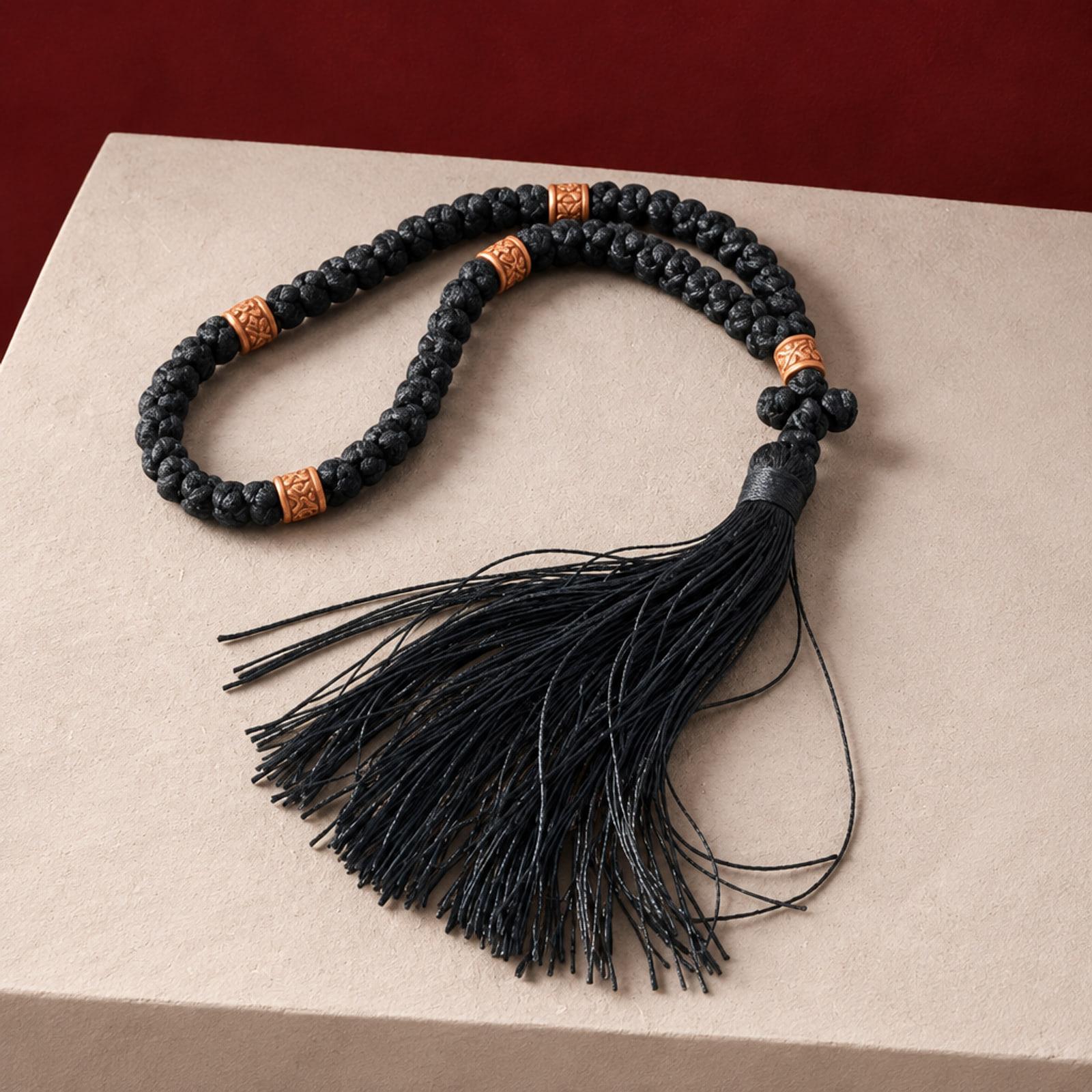 Cordón de oración
Chotki Komboskini
Color negro · Cordón de oración ortodoxo de lana, 50 nudos$49$34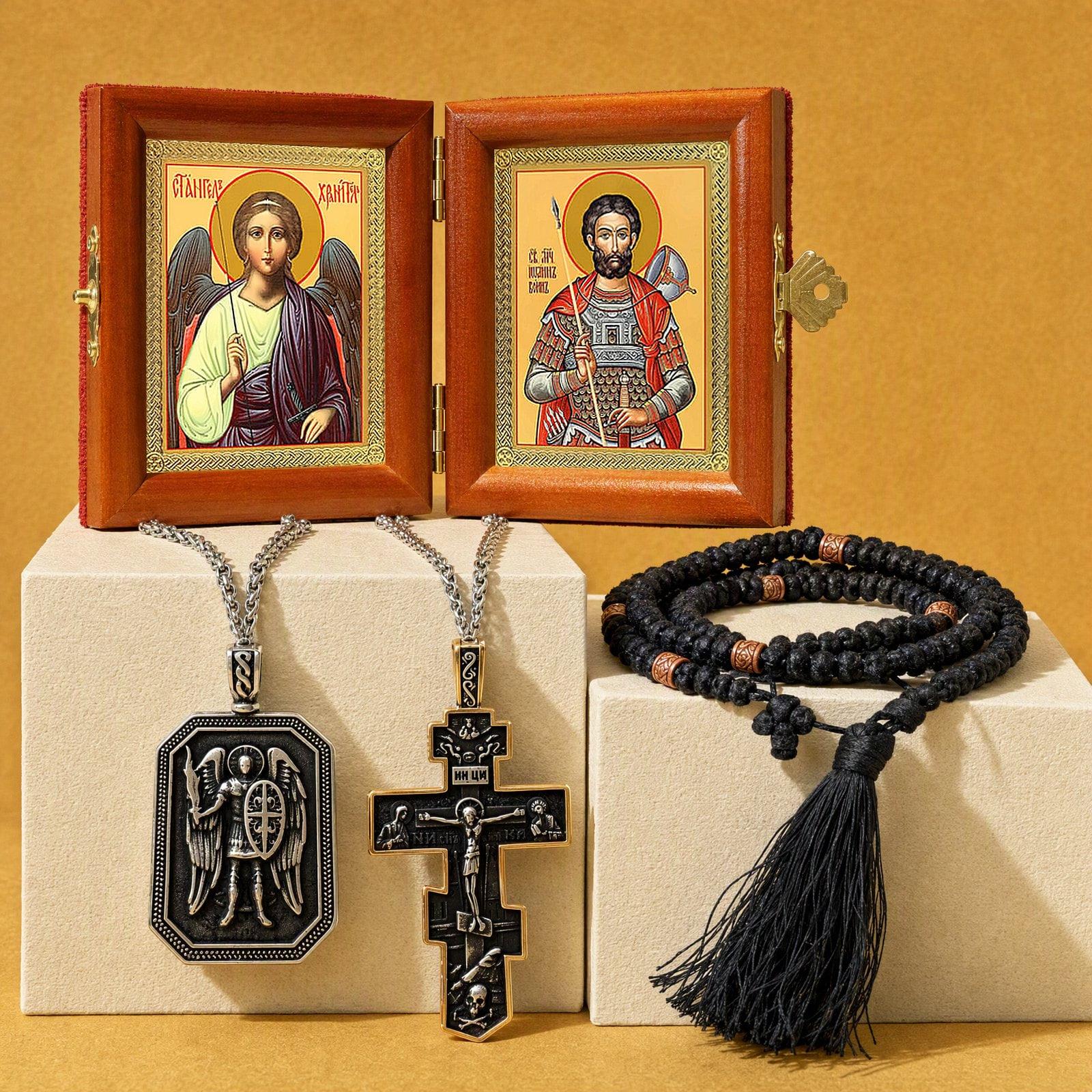 Set de regalo
Set Protector
$242$169
- Blessing, $49. Blessed by an Orthodox priest before it ships.
- Gift packaging, $20
Questions
What does Birth-giver of God mean?
It is the service book’s name for Mary, as the hymn uses it: Unto the Birth-giver of God let us sinners have recourse.
Where is this hymn printed?
On page 560, in a general service of prayer, a moleben, to the Birth-giver of God.
What does the hymn ask for?
Help and compassion, and that her servants not be turned empty away.
Can the Protector Set be blessed before it ships?
Yes. Choose the Blessing on its page and an Orthodox priest blesses it before it ships. With the Blessing, $218 (normally $291).