IHS Meaning: what it is and how Orthodox Christians use it
What is IHS, and how do Orthodox Christians treat it? The facts below come from Wikipedia and OrthodoxWiki, one fact to a line, with the Orthodox and Western uses kept in separate places.
- What it is. IHS (variants: JHS, IHC, and ΙΗΣ in Greek letters) is the opening.
- The letters. I is the Greek iota and H the eta; the last letter is a sigma, shown as C in its rounded (lunate) form or S in its final form.
- I and J. Latin did not separate the letters I and J systematically until the 17th century, so JHS and IHS are the same.
- Earliest use. It has been used in Latin since the 7th century; the first use in an English document is from the 14th century, in Piers Plowman.
- Bernardino of Siena. Saint Bernardino of Siena, in the 1400s, promoted the three letters on a blazing sun, hoping to replace popular pagan signs and the seals of political factions in public places.
- The Jesuits. The Jesuit emblem is the IHS with a cross standing on the H above three nails, set in a sun; tradition credits Ignatius of Loyola with introducing it in 1541.
- Later readings. Explanations such as ‘Jesus our Savior’ in Greek, ‘Jesus, Savior of men’ in Latin or ‘In His Service’ in English are later backformed readings, not the origin of the letters.
- On graves. It is found on gravestones, notably Irish Catholic ones.
In Western churches. Among Latin-speaking Christians of medieval Western Europe, IHS or IHC became the commonest Christogram, and it remains the usual one for Catholics and many Protestants. The Jesuits, the order of Ignatius of Loyola, took it as their emblem.
Facts come from Wikipedia (Christogram) and OrthodoxWiki (Abbreviations), put into our own words.
What the Orthodox Church does with IHS
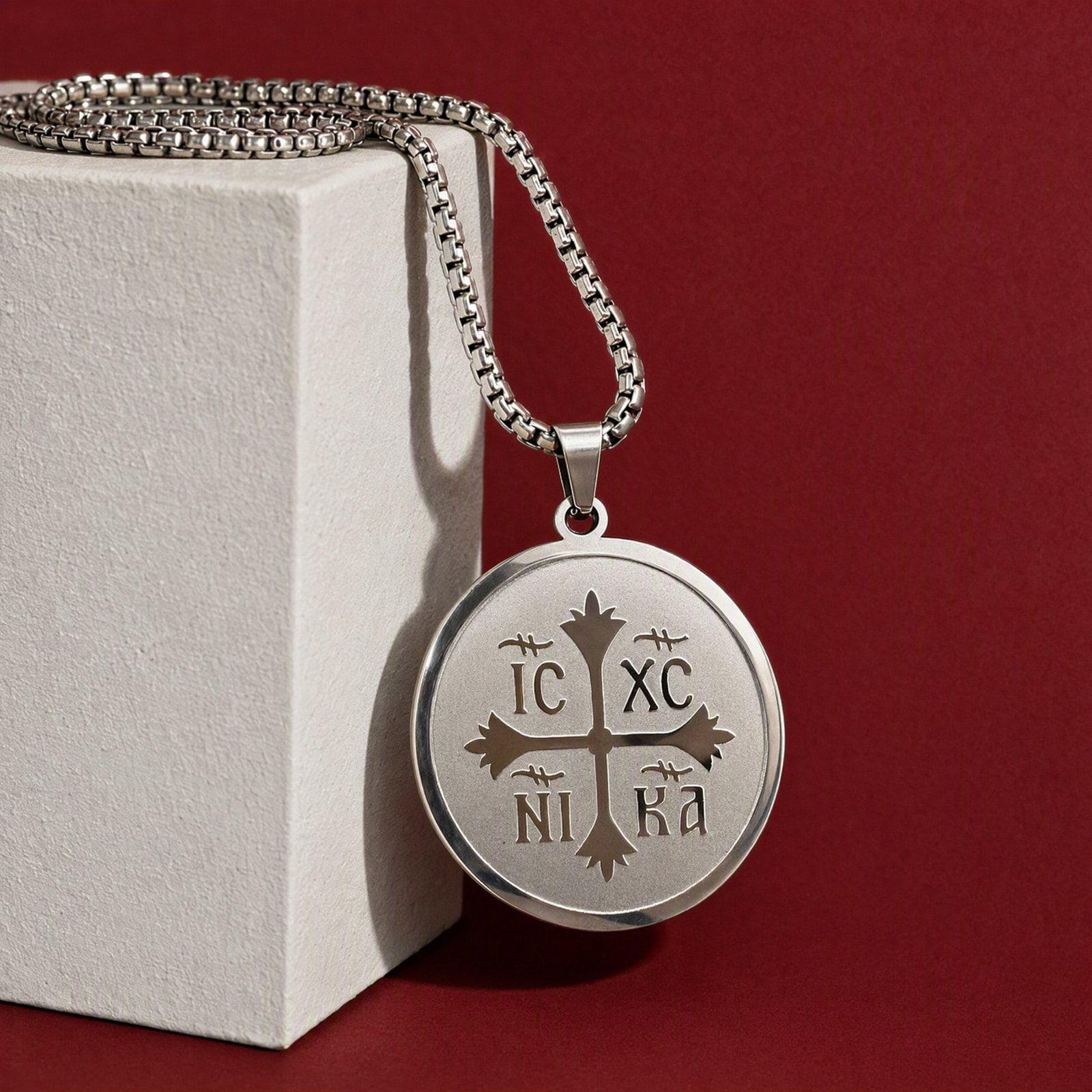
The article says the Christogram used most in Eastern Orthodox and Eastern Catholic churches is the four-letter ΙϹ ΧϹ (IC XC), not IHS. OrthodoxWiki’s list of icon abbreviations gives IC (ΙΣ) for Jesus and XC (ΧΣ) for Christ, keeping the opening and closing letters of each Greek name. Western churches have a use of their own. Among Latin-speaking Christians of medieval Western Europe, IHS or IHC became the commonest Christogram, and it remains the usual one for Catholics and many Protestants.
Medallions and crosses lettered IC XC
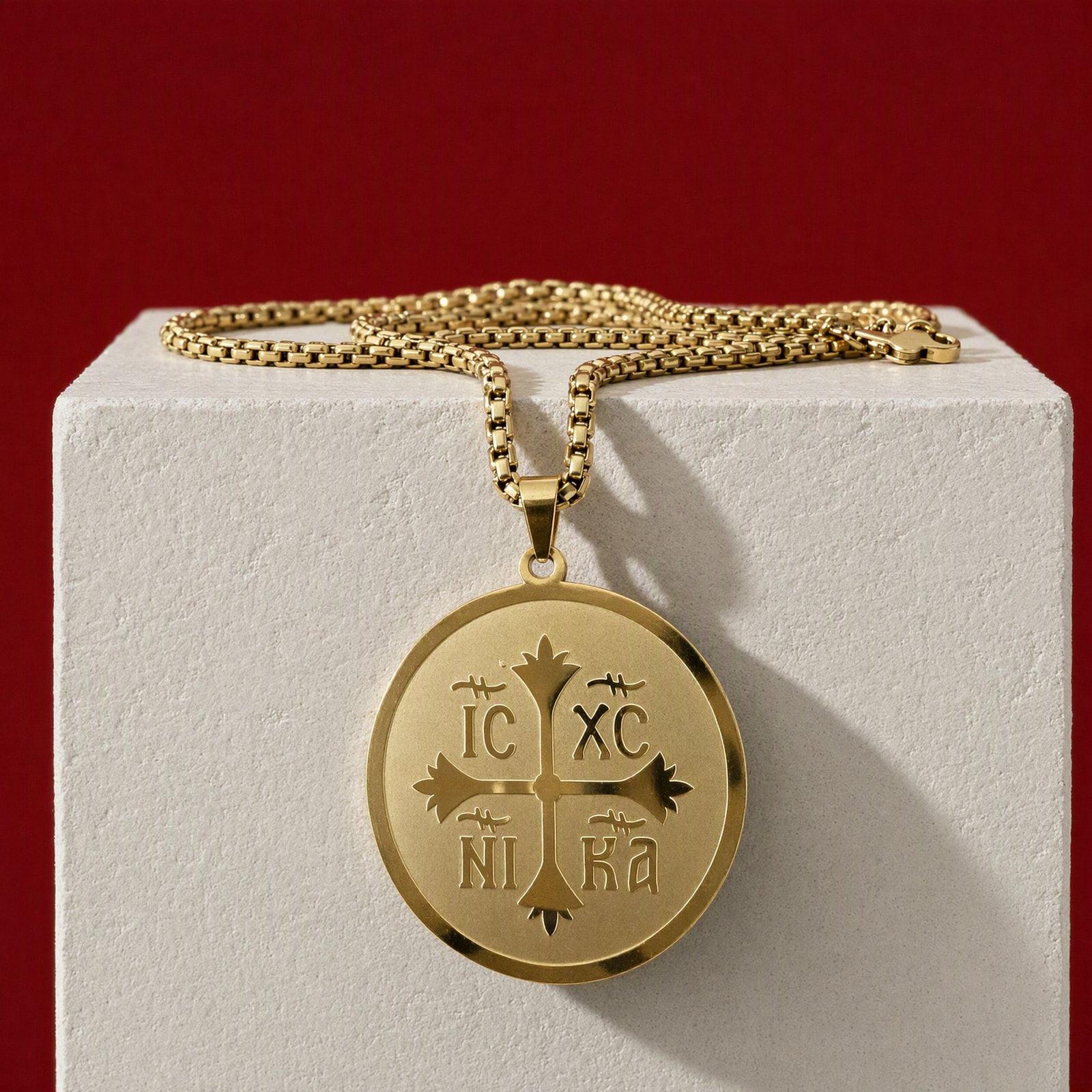
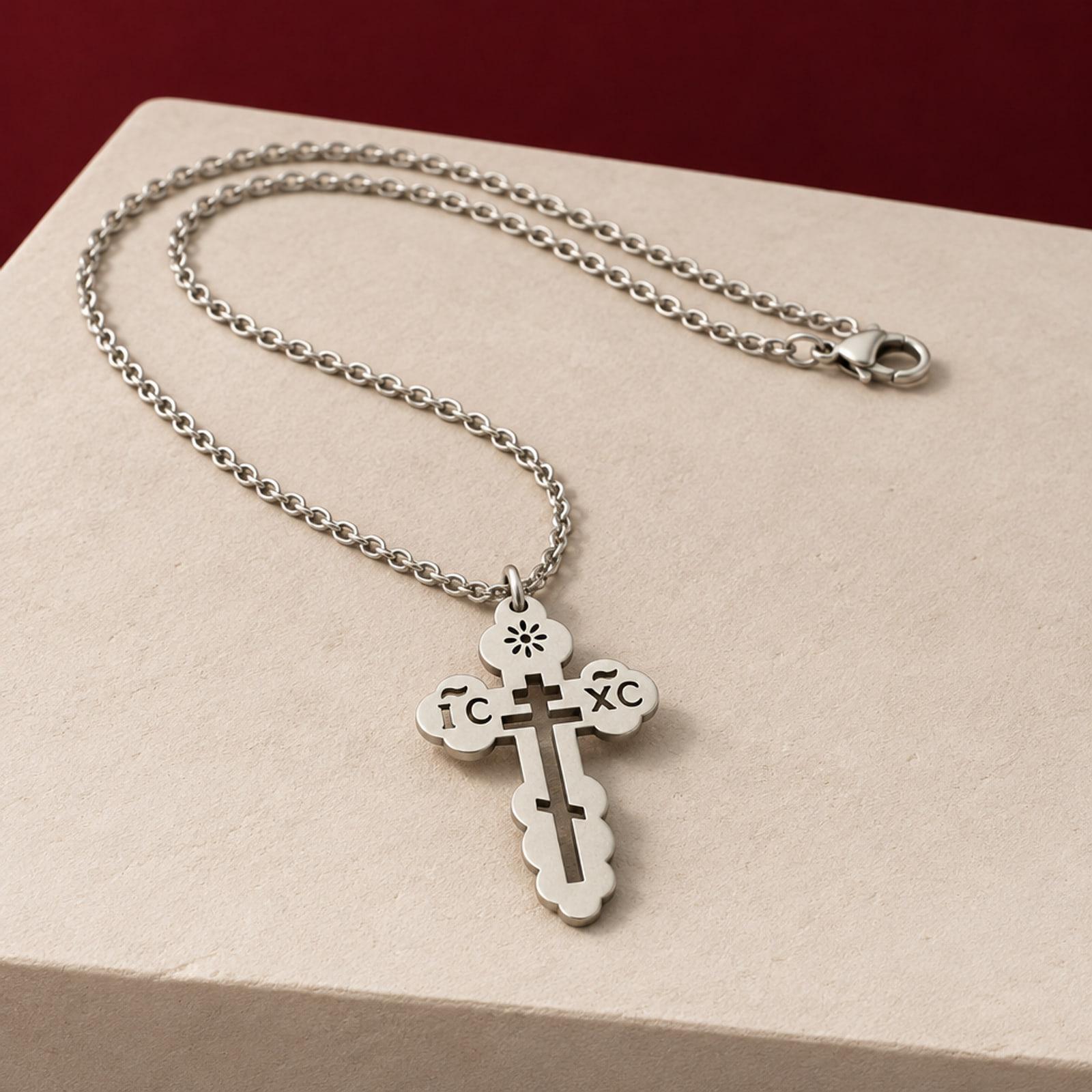
The catalogue has no item made for IHS; the nearest are the ones lettered IC XC: the IC XC NIKA medallions, $54 in silver-tone and $44 in gold-tone, and the small IC XC cross, $54. An Orthodox priest can bless each before it ships. With the Blessing, $93 to $103.
- Blessing, from $39. Blessed by an Orthodox priest before it ships.
- Gift packaging, $20
Questions
What is IHS as a Christian symbol?
IHS (variants: JHS, IHC, and ΙΗΣ in Greek letters) is the opening.
What does IHS mean to Christians?
Explanations such as ‘Jesus our Savior’ in Greek, ‘Jesus, Savior of men’ in Latin or ‘In His Service’ in English are later backformed readings, not the origin of the letters.
How does the Orthodox Church treat IHS?
The article says the Christogram used most in Eastern Orthodox and Eastern Catholic churches is the four-letter ΙϹ ΧϹ (IC XC), not IHS. OrthodoxWiki’s list of icon abbreviations gives IC (ΙΣ) for Jesus and XC (ΧΣ) for Christ, keeping the opening and closing letters of each Greek name.
Do Western churches use IHS as well?
The Jesuits, the order of Ignatius of Loyola, took it as their emblem.
Does Lampada sell anything that shows IHS?
No item in the catalogue is described as IHS, going by the titles and descriptions. The items on this page are the nearest we carry.