Byzantine cross meaning: crosses as emblems of the empire
A Byzantine cross, as most shops use the name, is an Orthodox cross or crucifix in the tradition the Eastern churches received from Byzantium, and Lampada carries crosses of that kind. The sources we use do not describe one fixed shape that they call the Byzantine cross. What they record is the cross as an emblem of the Byzantine state, and that is the fairest answer to Byzantine cross meaning that we can give.
When the empire put emblems on banners and shields for state and military use, the cross and the labarum were among them. The best documented emblem is the Palaiologan one. The ruling dynasty of that period used a cross of gold or silver with the Greek letter beta set in each of its four corners, which the source calls the tetragrammatic cross, and it describes this as the nearest the empire came to a national flag.
| When | What our source says |
|---|---|
| From the 6th century | crosses carrying a letter in each quarter appear, chiefly on coins, with the letters standing for brief invocations |
| 14th and 15th centuries | the tetragrammatic cross is common; it turns up on coins, on western sea charts that mark Constantinople and other Byzantine cities, and it served as the standard banner of the emperors |
| Later | Serbia adopted the emblem with small alterations |
One point is disputed. Some sources read the four marks as the letter beta and others as firesteels, and scholars have argued about it since the 17th century. Lampada does not sell a cross of this design.
Two meanings of the name Byzantine cross
The name is used in two ways, and it helps to know which one you mean before you buy.
- The emperors’ emblem. Historians use it for the crosses the Byzantine state put on banners, shields and coins, above all the Palaiologan cross with a letter in each corner. That is the meaning this page’s sources describe, and Lampada does not sell a cross of that design.
- A cross in the Byzantine tradition. Jewelers and church shops use it for Orthodox crosses and crucifixes in the style the Eastern churches received from Constantinople: the Greek churches, and the Slavic ones such as the Serbian, Bulgarian and Ukrainian. In that sense the crosses on this page are Byzantine crosses, and the Byzantine cross pendant, crucifix or necklace most people search for is this kind.
The emperors’ cross: the tetragrammatic cross
In the late empire, under the Palaiologan dynasty, the state’s emblem was a gold or silver cross with a Greek letter beta in each of its four corners, the tetragrammatic cross. Wikipedia’s article on Byzantine flags and insignia calls it the nearest thing the empire had to a national flag. Crosses with letters in the four quarters go back to the 6th century, mostly on coins, where the letters spell short invocations. In the 14th and 15th centuries the tetragrammatic cross is everywhere: on coins, on western sea charts marking Constantinople and other Byzantine cities, and as the usual imperial banner.
Whether the four marks are betas or firesteels has been argued since the 17th century. The emblem was also taken up in Serbia, with slight changes, and lives on in the Serbian cross: see the Serbian cross.
Emblem of an empire, cross for the neck
The Byzantine crosses described above belong to flags, coins and charts. They were emblems of a state, and our source says nothing about how the Church used them or what the faithful made of them. The crosses we sell are a different thing: plain three-bar Orthodox crosses with no figure, which the catalogue describes as simple crosses to wear every day. We name the nearest one in our catalogue beside this page because it is the plainest, not because it copies the Palaiologan design. Nothing here claims the emblem as a badge of the Church, because our source does not say so.
How to recognise a cross in the Byzantine tradition
A few marks set an Orthodox cross in the Byzantine line apart from a Western one:
- The letters IC XC, the Greek short form of Jesus Christ, often with NIKA, conquers.
- Christ shown at peace, His head bowed, rather than in agony, on a crucifix.
- Four nails, the feet side by side on a footrest, not crossed under one nail.
- A title board above, and in the Slavic churches a slanted footrest, which gives the three-bar shape; see the Orthodox three-bar cross.
- Ends that flower: budded, trefoil or flared, as on budded crosses.
Greek crosses are often equal-armed or Latin in outline with these marks; Slavic ones are usually three-bar. Both are Byzantine in the shop sense. For the Greek forms, see the Greek Orthodox cross.
Choosing a Byzantine cross pendant: gold, silver or steel
A Byzantine gold cross or silver cross in 14k gold or sterling silver is a fine piece of jewelry, and we do not carry those today; our guides to 14k gold Orthodox crosses and sterling silver Orthodox crosses say what to check if you buy one elsewhere. Our crosses are stainless steel in a gold-tone, silver-tone or black finish, made to wear every day.
For a small, quiet cross under a shirt, pick a cut-out IC XC cross. For a crucifix that reads as Byzantine at a glance, pick one with IC XC, NIKA or King of Glory on the front. For a plain cross on its own chain, pick a three-bar cross with no figure. Many Orthodox Christians wear their baptismal cross under their clothes rather than as jewelry over them; either way, a cross of this kind is for every day.
What we carry
Our crosses in the Byzantine tradition:
- Plain three-bar Orthodox cross, no figure, about 2¼ in, on a 60 cm chain: silver-tone $64, gold-tone $64, black $64.
- Small cut-out IC XC cross, 1⅜ in: gold-tone $54, silver-tone $54.
- King of Glory crucifix, gold-tone, about 3 in: $54.
- Budded crucifix with IC XC and NIKA, polished silver-tone, with the hymn We venerate Your Cross, O Master on the back, about 3 in: $54.
With a Blessing before it ships, they run from $54 to $64 on this page. More are in gold-tone crosses, silver-tone crosses and wooden crosses, and every cross in the store is in all our Orthodox cross necklaces. Orders arrive in 5–8 business days: US-based, ships from Florida.
Our Orthodox crosses in the Byzantine tradition
Plain three-bar crosses in silver-tone, gold-tone and black, small IC XC crosses and two crucifixes. Each can be blessed by an Orthodox priest before it ships.
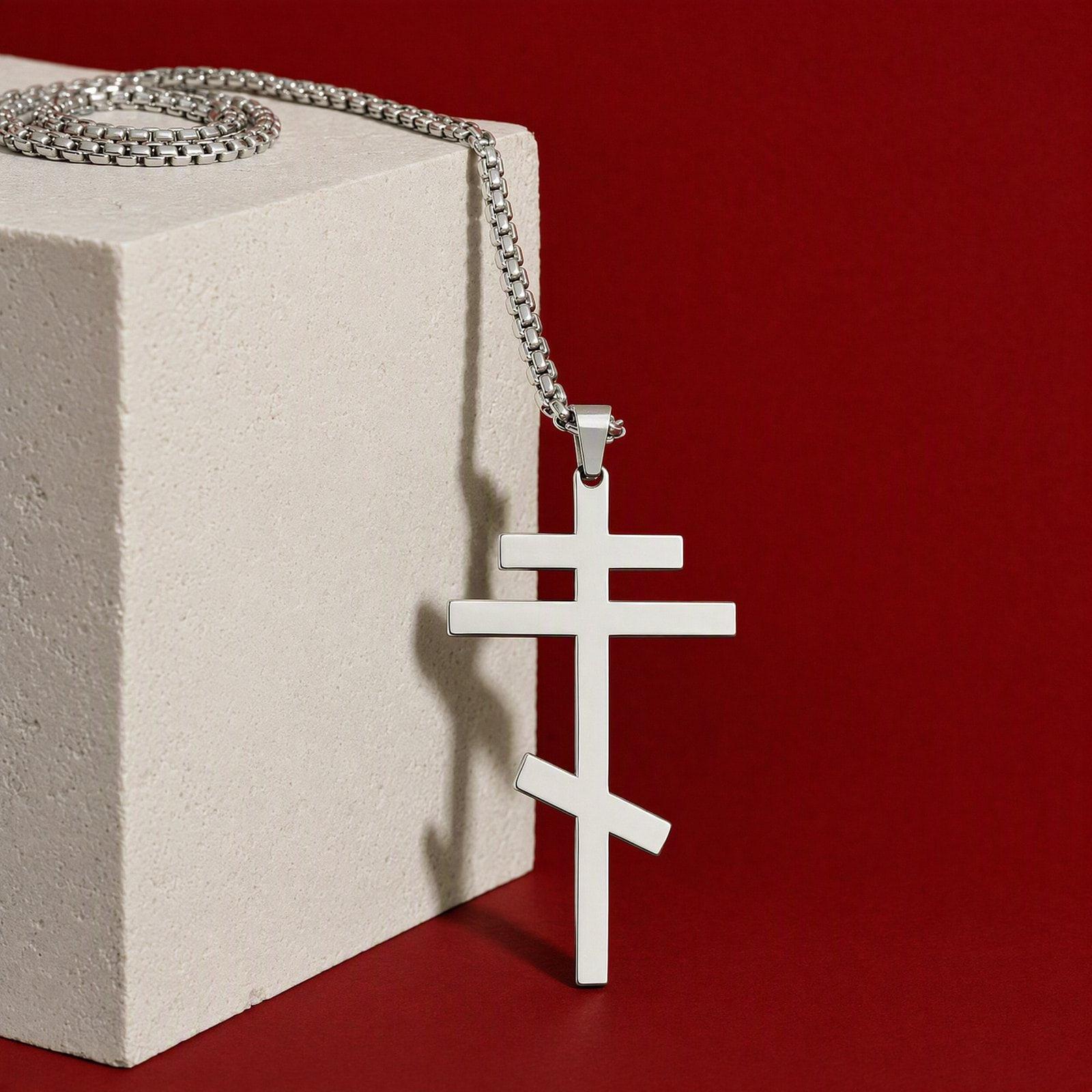 Cruce
Three-Bar Bright
Argintiu · Lănțișor 60cm · Oțel inoxidabil$92$64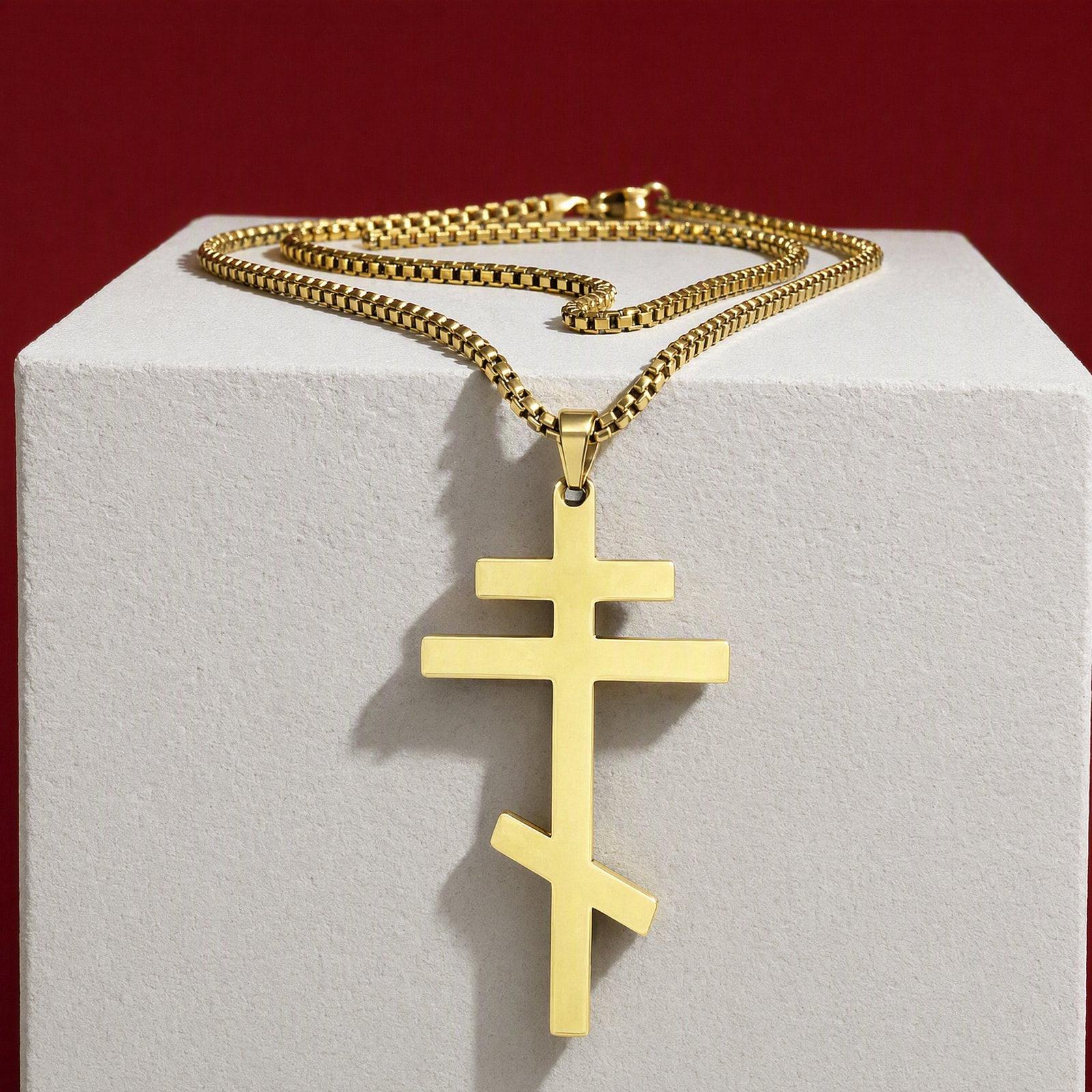 Cruce
Three-Bar Lamplight
Auriu · Lănțișor 60cm · Oțel inoxidabil$92$64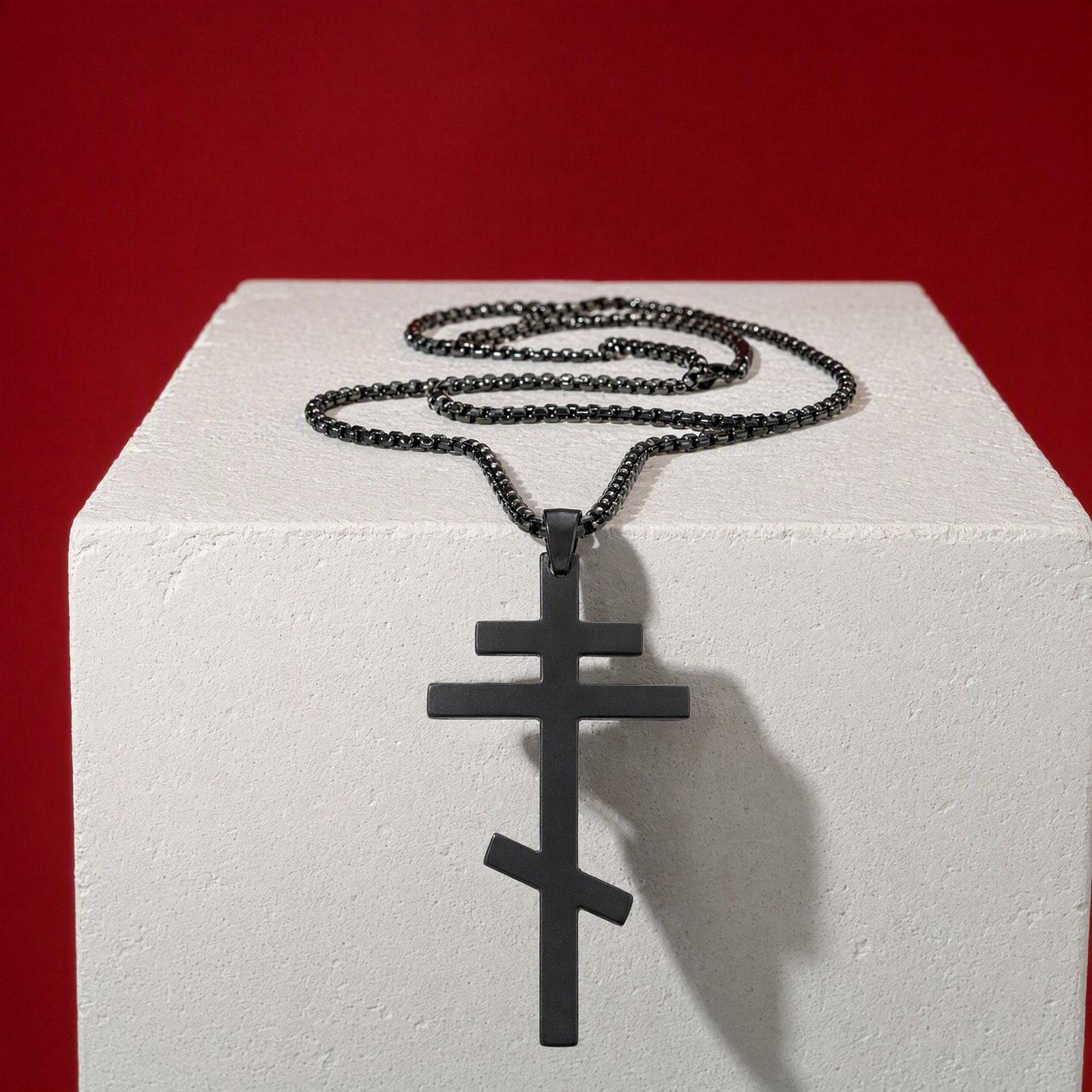 Cruce
Three-Bar Midnight
Negru · Lănțișor 60cm · Oțel inoxidabil$92$64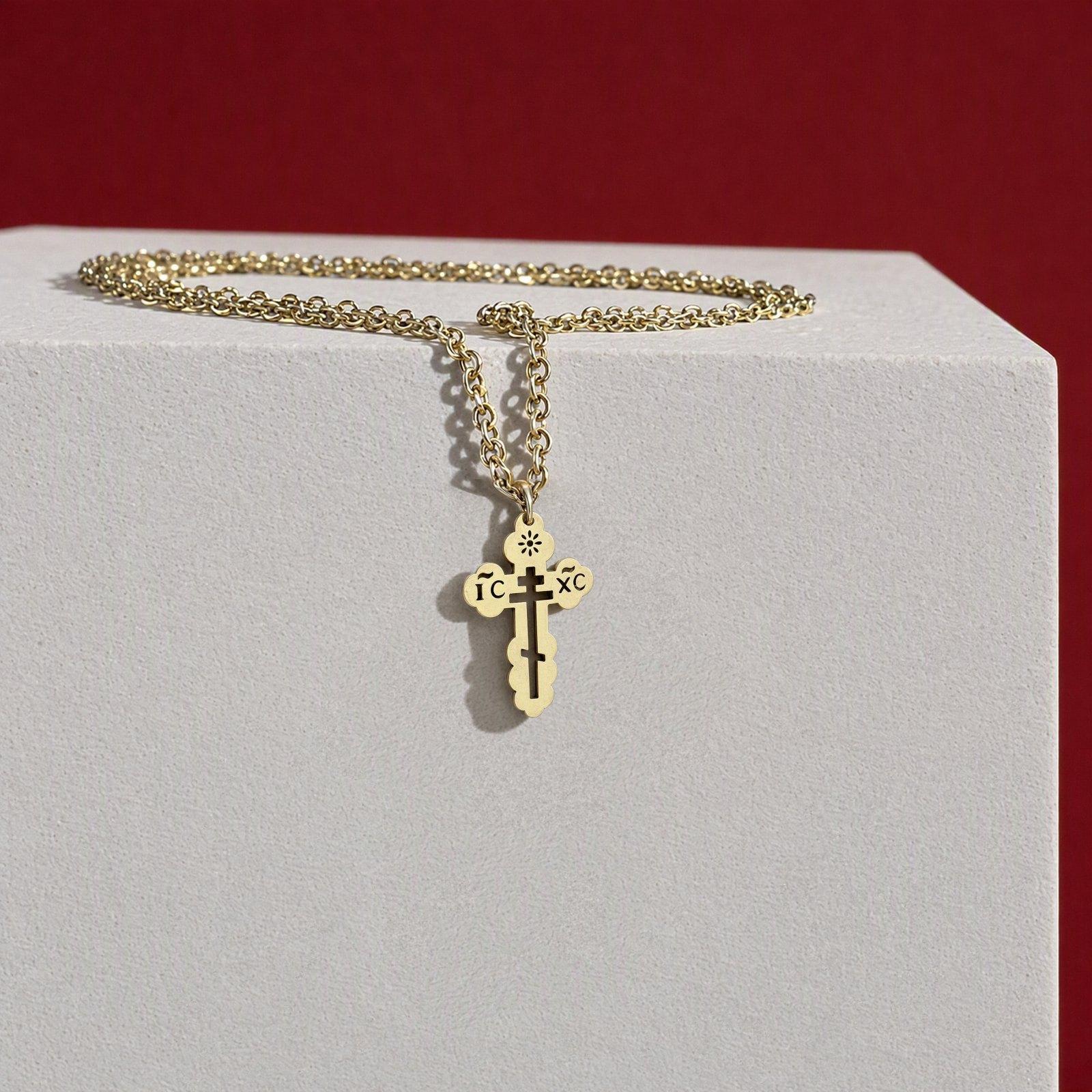 Cruce
Monogram Lamplight
Auriu · Oțel inoxidabil$78$54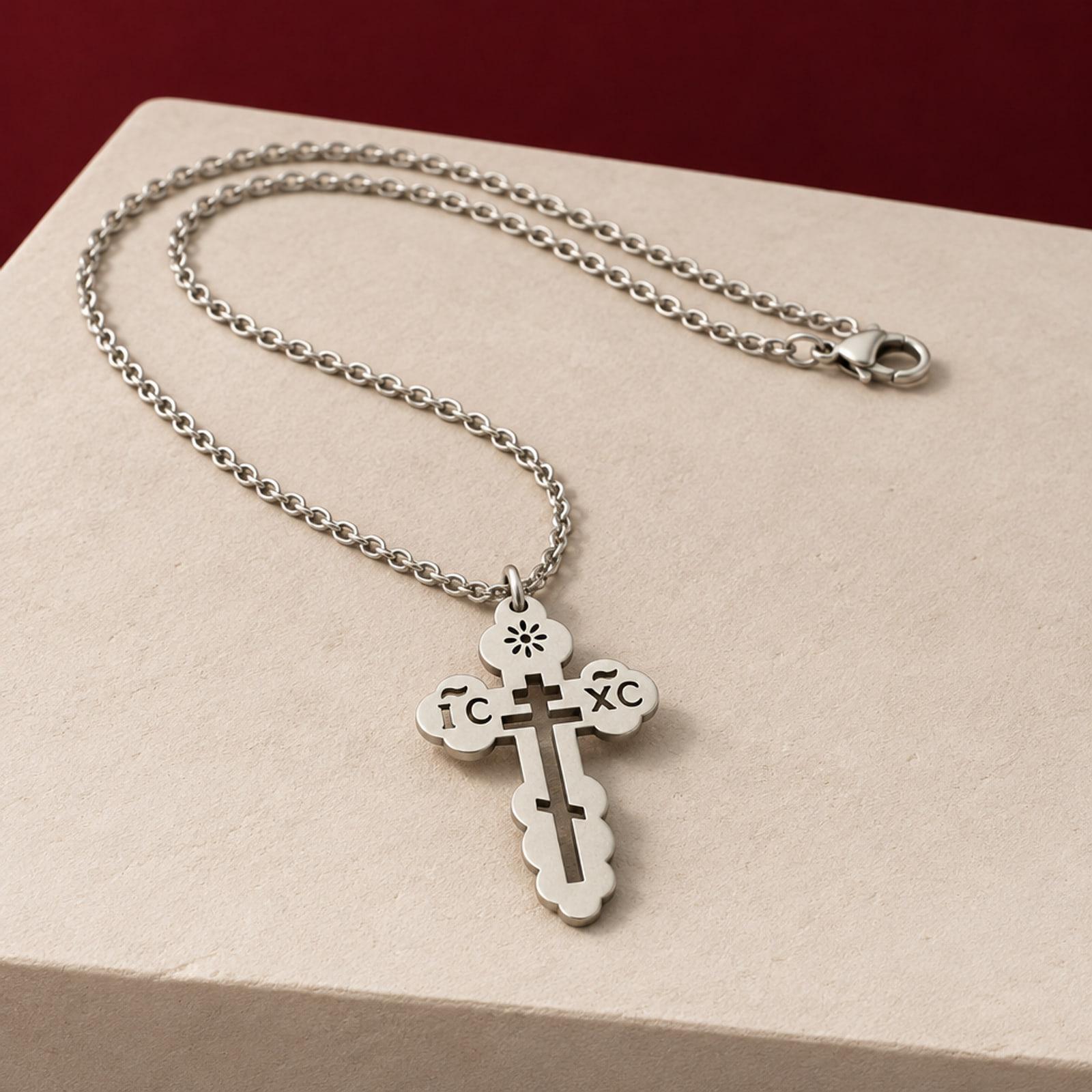 Cruce
Monogram Bright
Argintiu · Oțel inoxidabil$78$54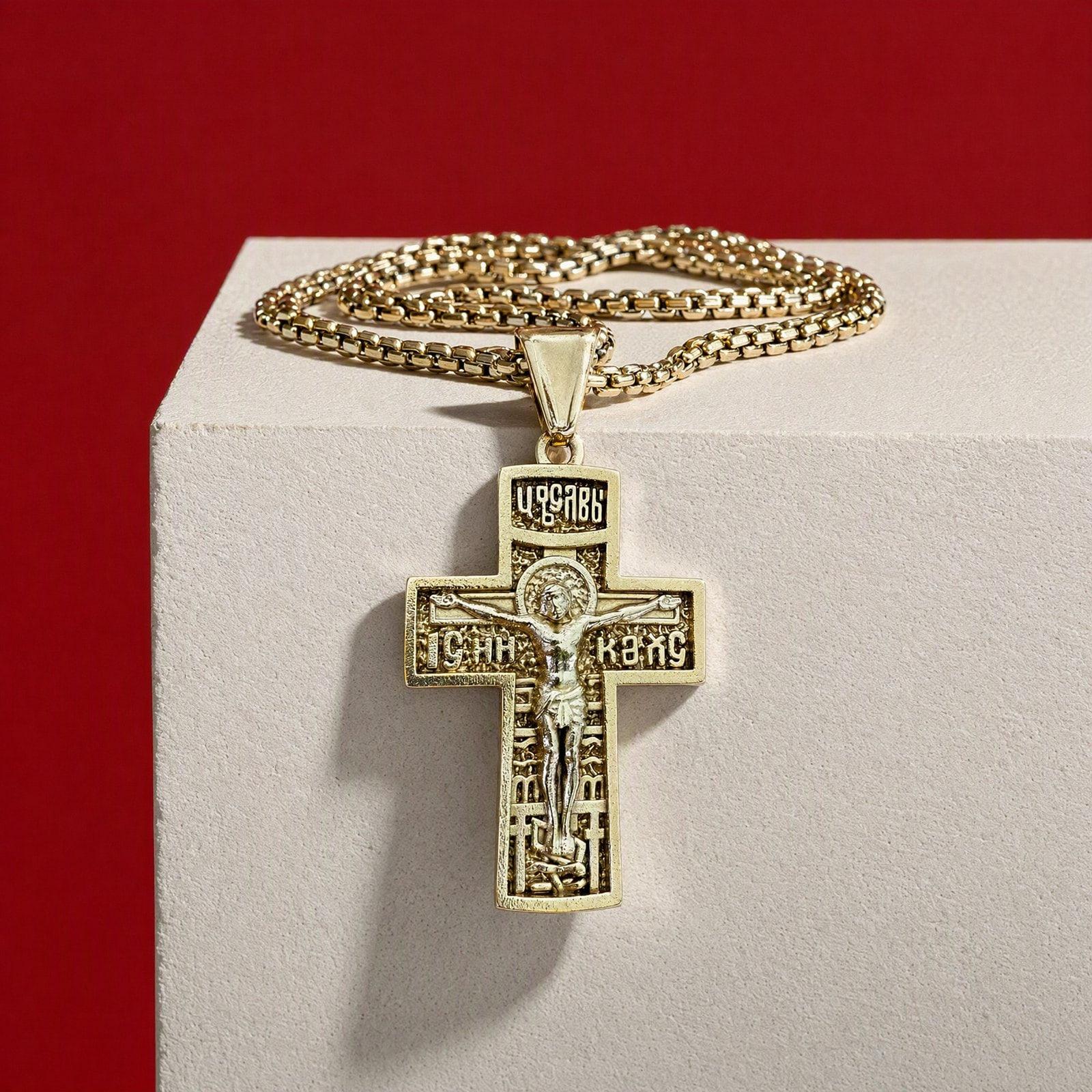 Cruce
Glory Lamplight
Auriu · Oțel inoxidabil$78$54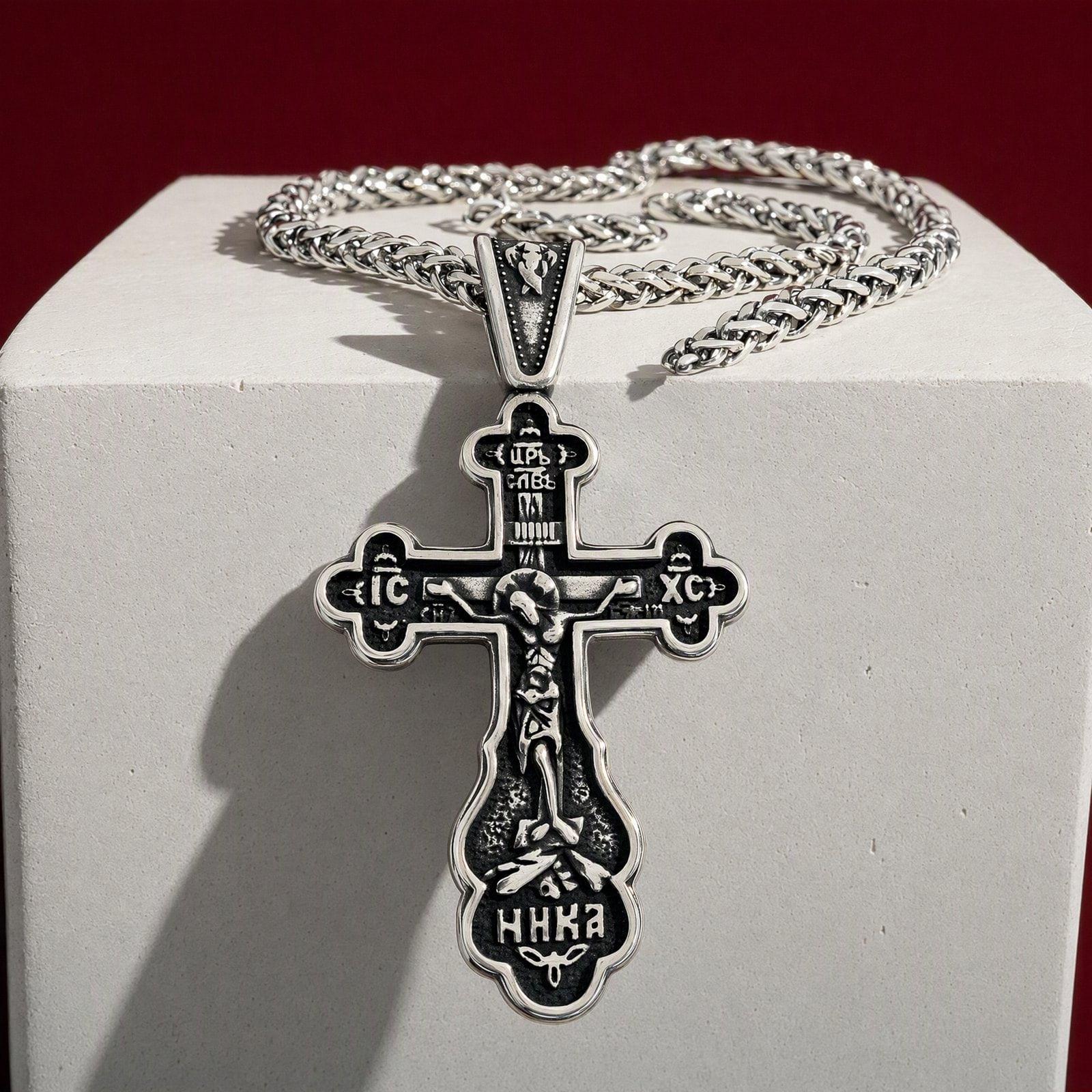 Cruce
Trefoil Bright
Argintiu · Oțel inoxidabil$78$54
CU SEDIUL ÎN SUA. EXPEDIERE DIN FLORIDA
Delivery in 5–8 business days.
Questions
What is the Byzantine cross?
The sources we use name no single shape. They describe crosses as emblems of the Byzantine state, such as the cross or labarum on banners and shields, and the Palaiologan cross with the Greek letter beta in each corner. In shops the name is used more loosely, for Orthodox crosses and crucifixes in the Byzantine tradition.
What is the tetragrammatic cross?
It is the Palaiologan emblem, a cross of gold or silver with the Greek letter beta in each of its four corners, and it is common in the 14th and 15th centuries.
Are the four marks the letter beta?
That is disputed. Some sources read them as the letter beta and others as firesteels, and scholars have debated the question since the 17th century.
Where can I buy a Byzantine cross necklace?
Not in the Palaiologan design. The Lampada catalogue has no Byzantine cross of that kind. Our nearest plain cross is the three-bar cross with no figure, and each of the three finishes comes with a chain. For a cross in the wider Byzantine and Orthodox tradition, this page also shows our IC XC crosses and crucifixes.
Is a Byzantine cross the same as a Greek Orthodox cross?
Shops often use the two names for the same thing. Greek Orthodox crosses are often equal-armed, or have flared or budded ends, and many carry IC XC NIKA. The Slavic churches, which took their faith from Byzantium, keep the title board and footrest of Byzantine Crucifixion images in their three-bar cross.
What do IC XC and NIKA mean on a cross?
IC XC is the Greek short form of Jesus Christ, the first and last letters of each word. NIKA is Greek for conquers, so together they read Jesus Christ conquers. Both are found on Orthodox crosses, icons and church bread in the Byzantine tradition.
What is a Byzantine Catholic cross?
Byzantine Catholics belong to Eastern Catholic churches, such as the Ruthenian and Ukrainian Greek Catholic churches, that keep the Byzantine rite in union with Rome. Many of them use the same three-bar cross as the Orthodox. Our crosses are Orthodox crosses, and a Byzantine Catholic will know the shape.
Are your Byzantine-style crosses gold or silver?
No. Our neck crosses are stainless steel in a gold-tone, silver-tone or black finish. We do not carry 14k gold or sterling silver crosses today; our guides to those explain what to look for if you buy one elsewhere.