Serbian cross, as Wikidata describes it, and the Serbian Orthodox cross
Wikidata describes the Serbian cross as an ordinary heraldic cross that separates four quadrants. Each quadrant holds an ornamented letter Es or a firesteel, and the figures are mirrored between the left-hand and right-hand quadrants.
Our source gives it a second name, the ocilo. It sorts the cross as an ordinary cross and as a mobile charge, and puts it among the crosses in heraldry.
Read together, those lines make the Serbian cross a heraldic figure first of all. They say how the quadrants are charged and how the charges face; they say nothing of a date, of a meaning for the letters, or of how a church makes use of the cross. We keep to that, and Lampada does not sell the heraldic Serbian cross as a pendant.
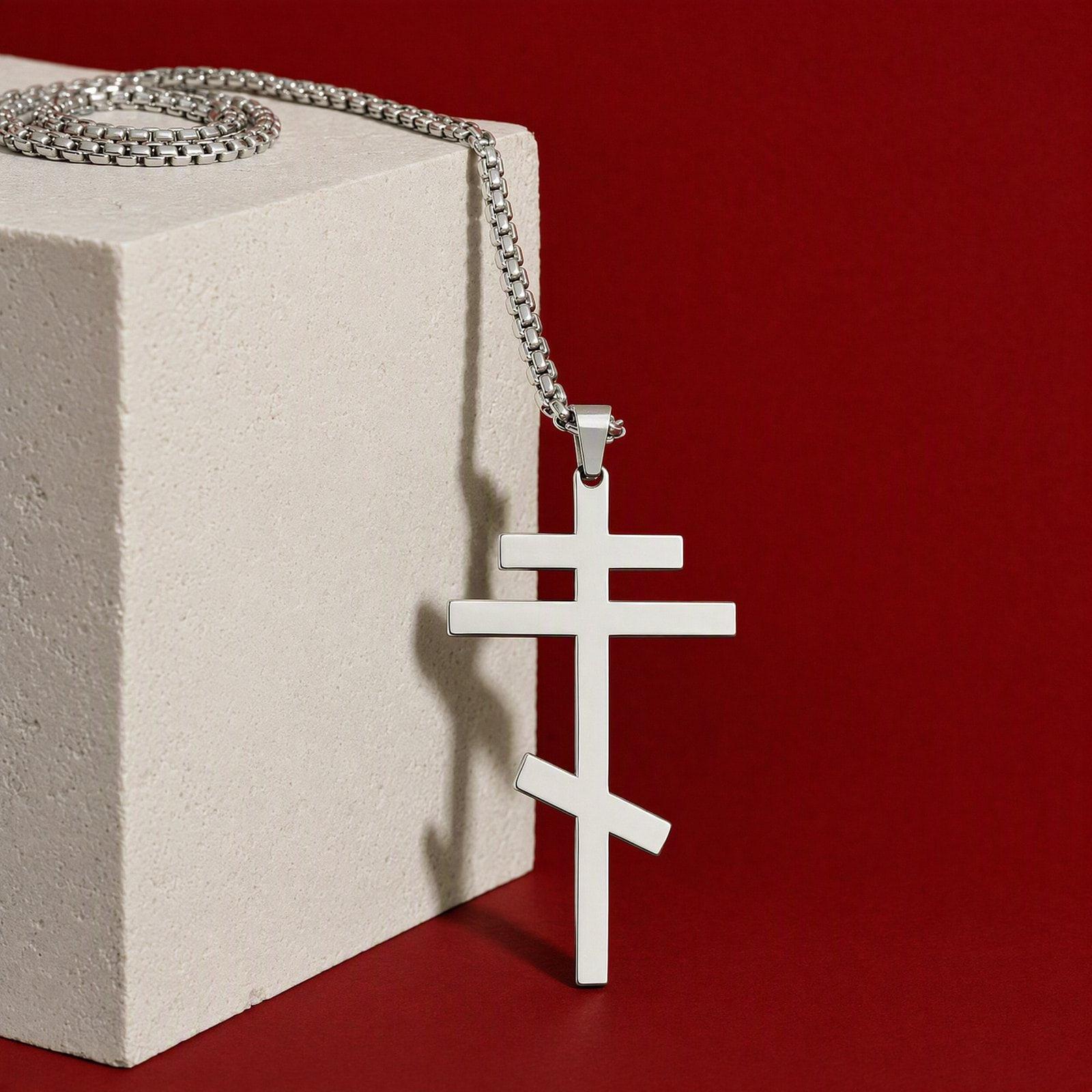
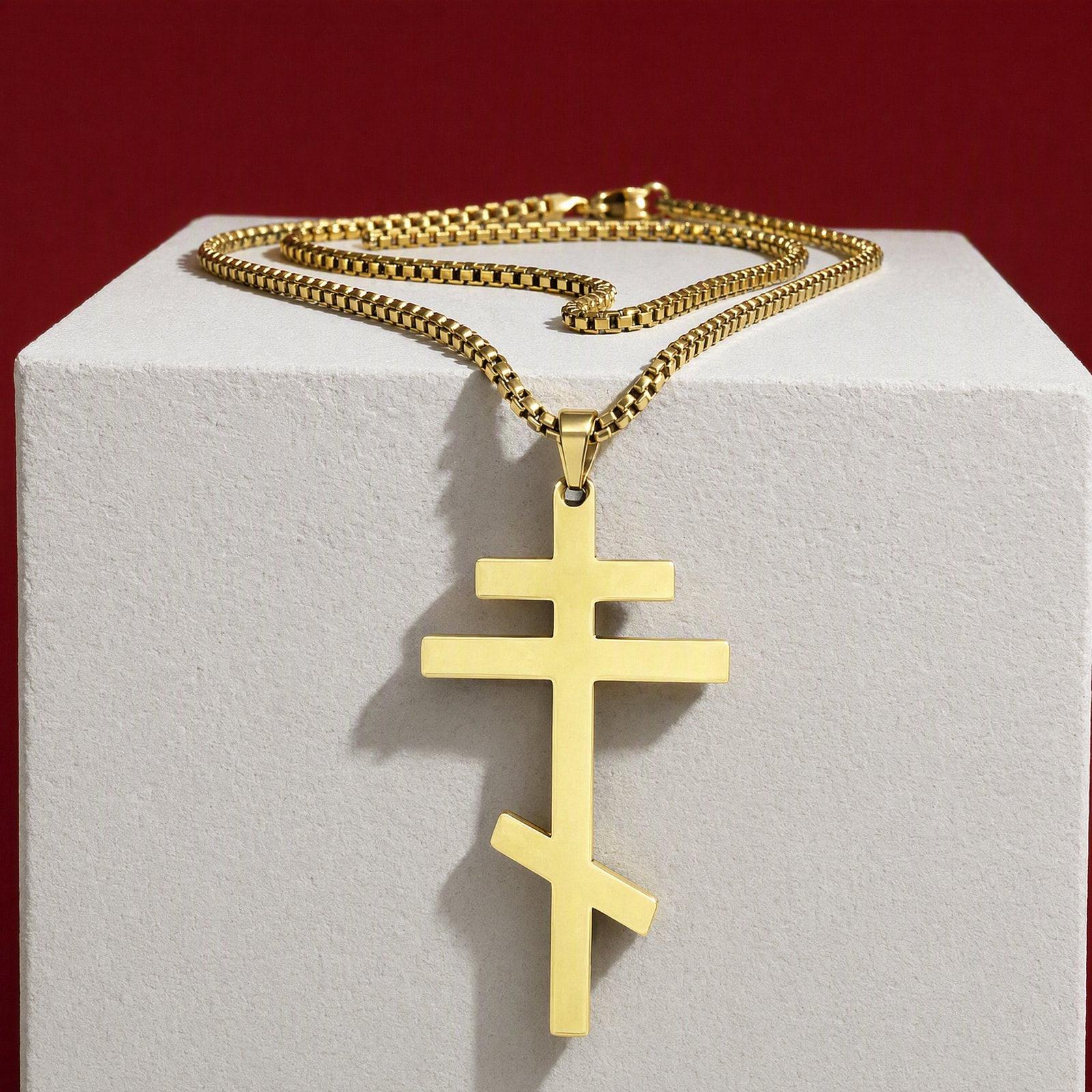
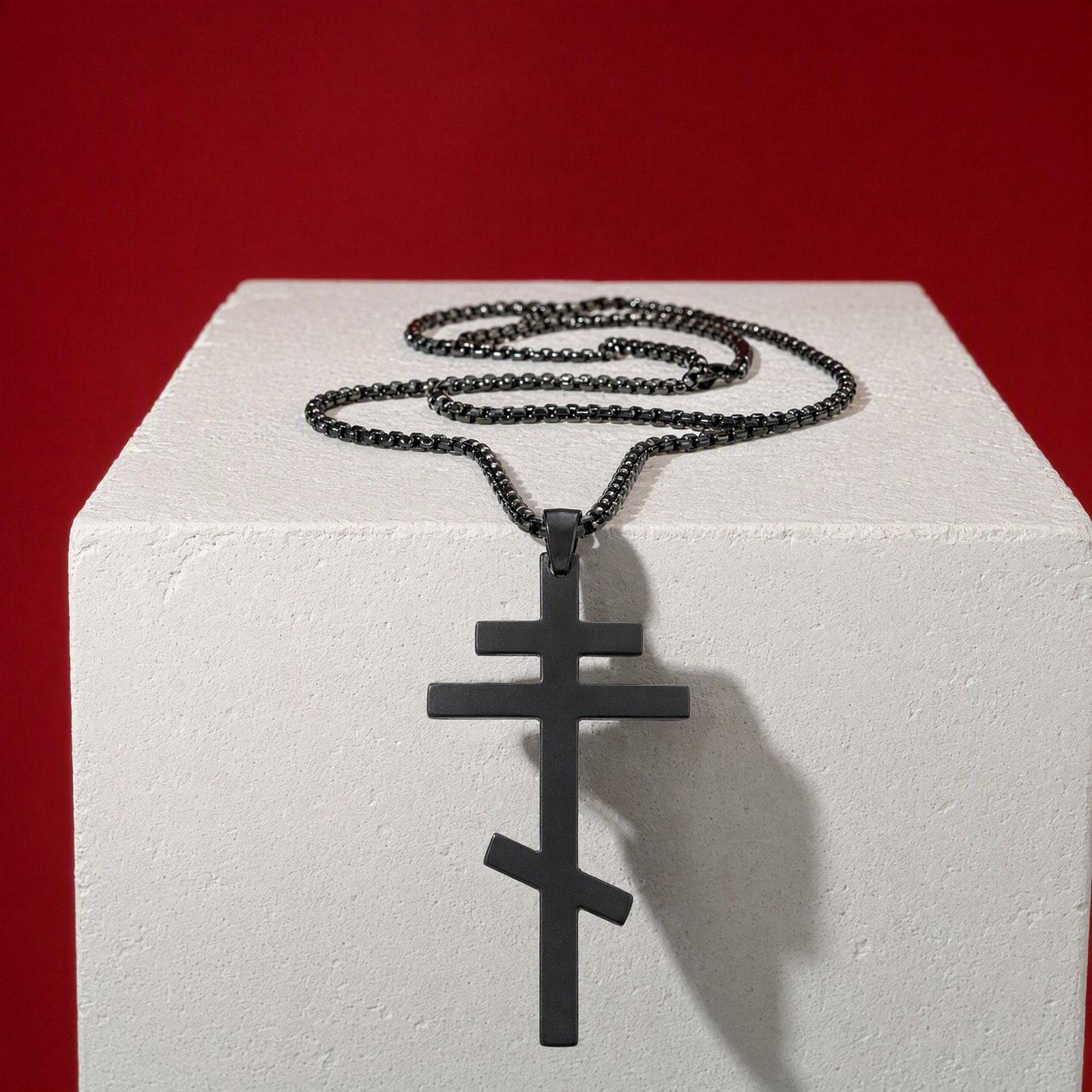
If you want an Orthodox cross to give, the nearest plain choice is a cross with three bars and no figure on it, in silver-tone, gold-tone or black.
The Serbian cross: what it is and where it comes from
The Serbian cross, or ocilo, is a cross that divides a shield into four quarters, with a firesteel shaped like the letter C in each one, the pairs facing outward. It is on the coat of arms and the flag of Serbia, on church banners and on many Serbian Orthodox cross pendants.
It has Byzantine roots. The emperors of Constantinople used a cross with four letters B in the quarters, the first letters of a Greek motto that calls Christ King of Kings. Serbia took the sign in the Middle Ages, and over time the letters were read as firesteels, the steel strikers used to light a fire. The Serbian Orthodox Church itself has governed its own life since 1219, when St Sava, a prince who became a monk on Mount Athos, was made its first archbishop.
The Serbian cross and the Serbian Orthodox cross
| Cross | What it is | Where you see it |
|---|---|---|
| Serbian cross (ocilo) | A cross with four firesteels in its quarters | Coat of arms, flags, banners, some pendants |
| Serbian Orthodox cross | The Orthodox cross worn at baptism | On the neck, on church domes |
| Orthodox three-bar cross | Short top bar, long bar, footrest | Neck crosses, church crosses |
| Greek Orthodox cross | Four near-equal arms | Neck crosses, icons |
The heraldic Serbian cross is a sign of a people and a state. The cross a Serbian Orthodox Christian receives at baptism is a devotional cross, the same family of crosses worn across the Orthodox world. Many Serbian Orthodox cross pendants join the two: an Orthodox cross with the four firesteels added.
What the four firesteels mean
- Their origin is the four letters B on the Byzantine imperial cross, for a motto about Christ, King of Kings.
- Their popular reading is the motto Only unity saves the Serbs, one word for each firesteel.
- Their shape, a C facing outward, gives the cross its folk name, ocilo, the Serbian word for a firesteel.
The cross at the center keeps its first meaning: the Cross of Christ, through which Orthodox Christians believe the world is saved.
Who wears a Serbian Orthodox cross pendant
Serbian families give a cross at baptism, usually from the kum, the godfather, who is often also the best man at the parents’ wedding. Many Serbian Americans wear a Serbian Orthodox necklace every day, and a Serbian Orthodox gold cross is a common gift for a baptism, a wedding or a Slava, the family’s patron saint feast. Friends of Serbian families wear it too, with respect for its meaning.
A heraldic cross and a cross worn plain
The Serbian cross is described with the vocabulary of heraldry: ordinary, mobile charge, quadrants. The cross in our catalogue is described with the vocabulary of wear. It is a three-bar Orthodox cross, plain, with no figure in any quarter, hung on a chain. These are different descriptions of different objects, and our source does not tell us whether Orthodox Christians treat the Serbian cross as a devotional cross or as a coat of arms. We would sooner leave the question open than answer it for a church we do not speak for.
What we carry
We do not stock a Serbian cross pendant with the firesteels. We carry the plain three-bar Orthodox crosses that Serbian Orthodox Christians wear, about 2¼ in, each on a 60 cm chain: silver-tone stainless steel ($64), gold-tone stainless steel ($64) and black stainless steel ($64). Every cross is in our Orthodox cross necklaces. Orders arrive in 5–8 business days: US-based, ships from Florida.
A plain cross, imported, in three finishes
Each cross can be blessed by an Orthodox priest before it ships.
CU SEDIUL ÎN SUA. EXPEDIERE DIN FLORIDA
Delivery in 5–8 business days.
Want us to stock it?
We carry close items, not every kind of Serbian cross. Leave your email and we will write once if we stock more.
Questions
What is the Serbian cross?
Wikidata describes an ordinary heraldic cross dividing the field in four, with an ornamented letter Es or a firesteel in each quadrant.
What is the ocilo?
It is the second name our source gives for the Serbian cross.
What do the four letters or firesteels mean?
Our source does not say. It describes their placement, mirrored between left and right, and gives no meaning. Historians trace them to the four letters B on the cross of the Byzantine emperors, and in Serbia they are popularly read as the motto Only unity saves the Serbs.
Can I buy a Serbian cross pendant here?
No. The heraldic Serbian cross is not in our catalogue, and a plain Orthodox cross is the nearest we carry.
What cross do Serbian Orthodox Christians wear?
The Serbian Orthodox cross worn on the neck is the cross of the whole Orthodox Church, most often the three-bar cross or a cross with four near-equal arms, with or without Christ. Some pendants add the four firesteels of the Serbian cross. The godfather, the kum, usually gives it at baptism.
Is a Serbian Orthodox gold cross made of gold?
Some are and many are not. Jewelers sell Serbian Orthodox crosses in gold, silver and gold-tone steel. Our own crosses are stainless steel in silver tone, gold tone or black, not gold metal, and they are made to be worn every day.
What is the Slava?
The Slava is the Serbian Orthodox feast of a family’s patron saint, handed down from father to son. The family blesses a Slava bread and wheat, lights a candle and welcomes guests. UNESCO lists it as Intangible Cultural Heritage. It is one of the best-loved Serbian Orthodox customs.