Budded cross meaning and our budded crosses
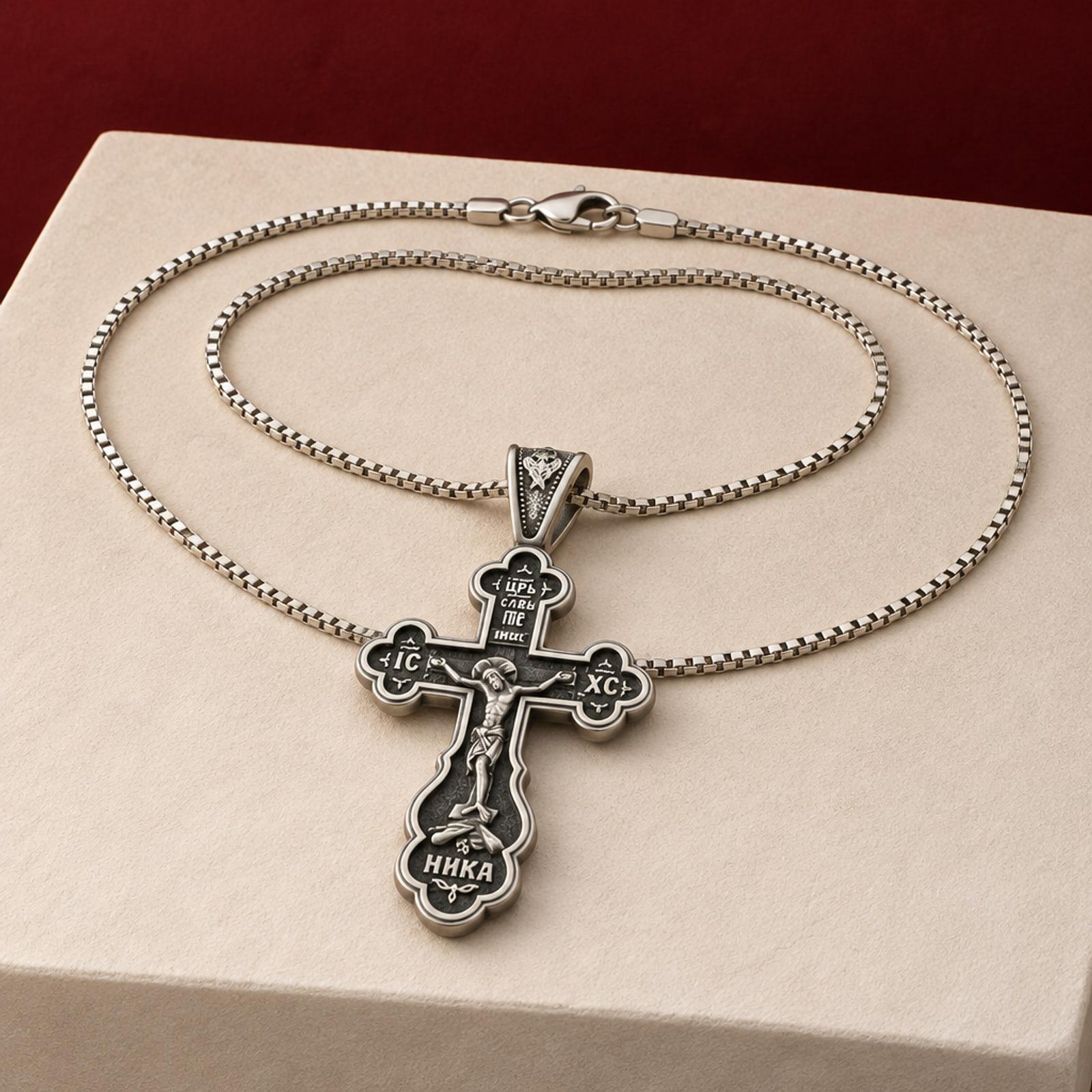
A budded cross is a cross whose arm tips are round or rounded, often in three small buds like a clover leaf. That is the whole of the shape, and it is what sets the style apart from the straight, pointed ends of the pattée cross and from the sharp ends the sources call aiguisé.
The same style goes by other names. Within the church it is an apostles’ cross and also a cathedral cross. Heraldry names the rounded ends treflée or botonée, and the article we read traces botonée to the French word bouton. It treats rounded ends as one of several ways to finish the arms of a two-barred cross.
Lampada sells budded crosses, and they are on this page. They differ in material and in how they are worn:
| Cross | What the catalogue says |
|---|---|
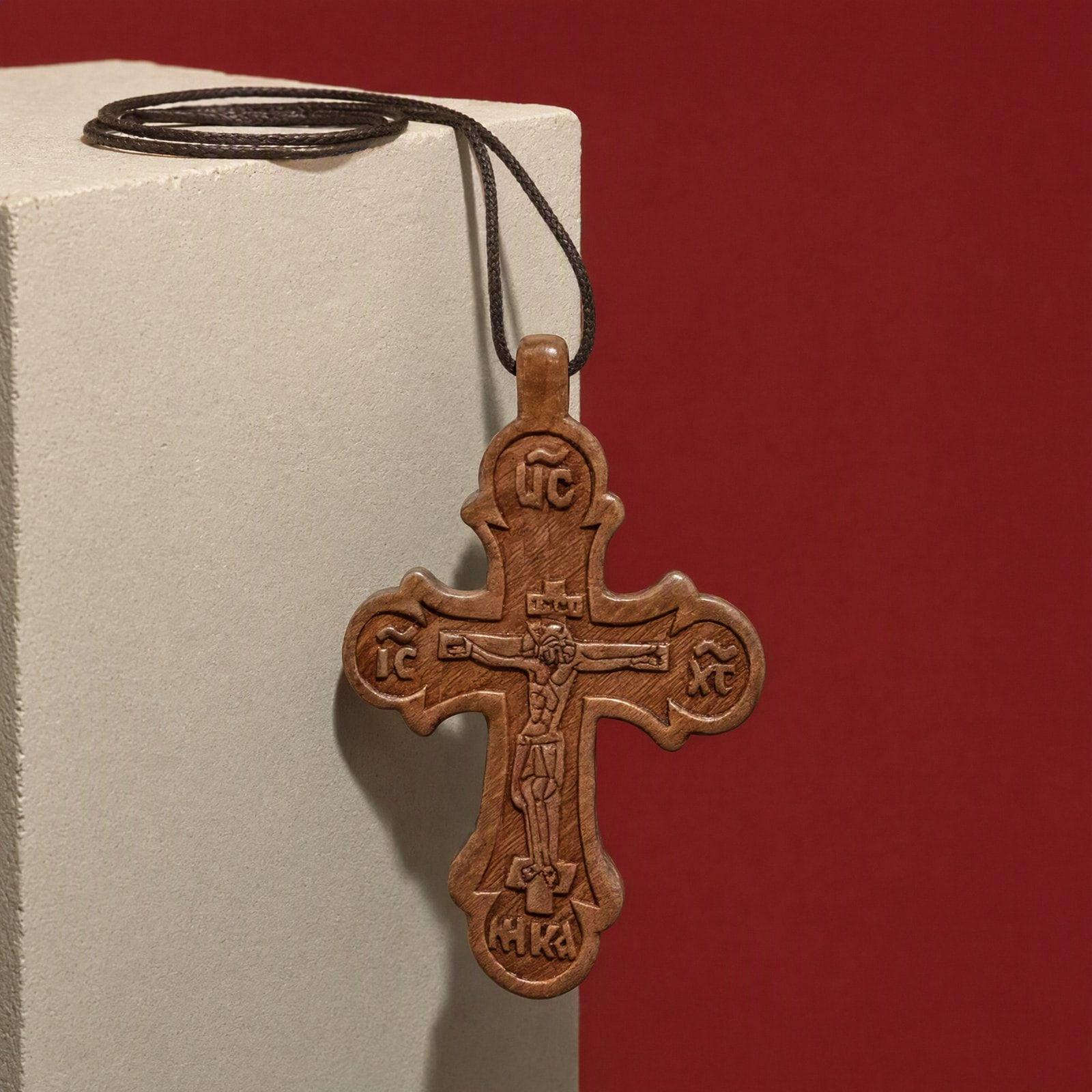
| Wooden crucifix | Christ crucified and the letters IC XC carved on the front, budded ends, to wear every day |
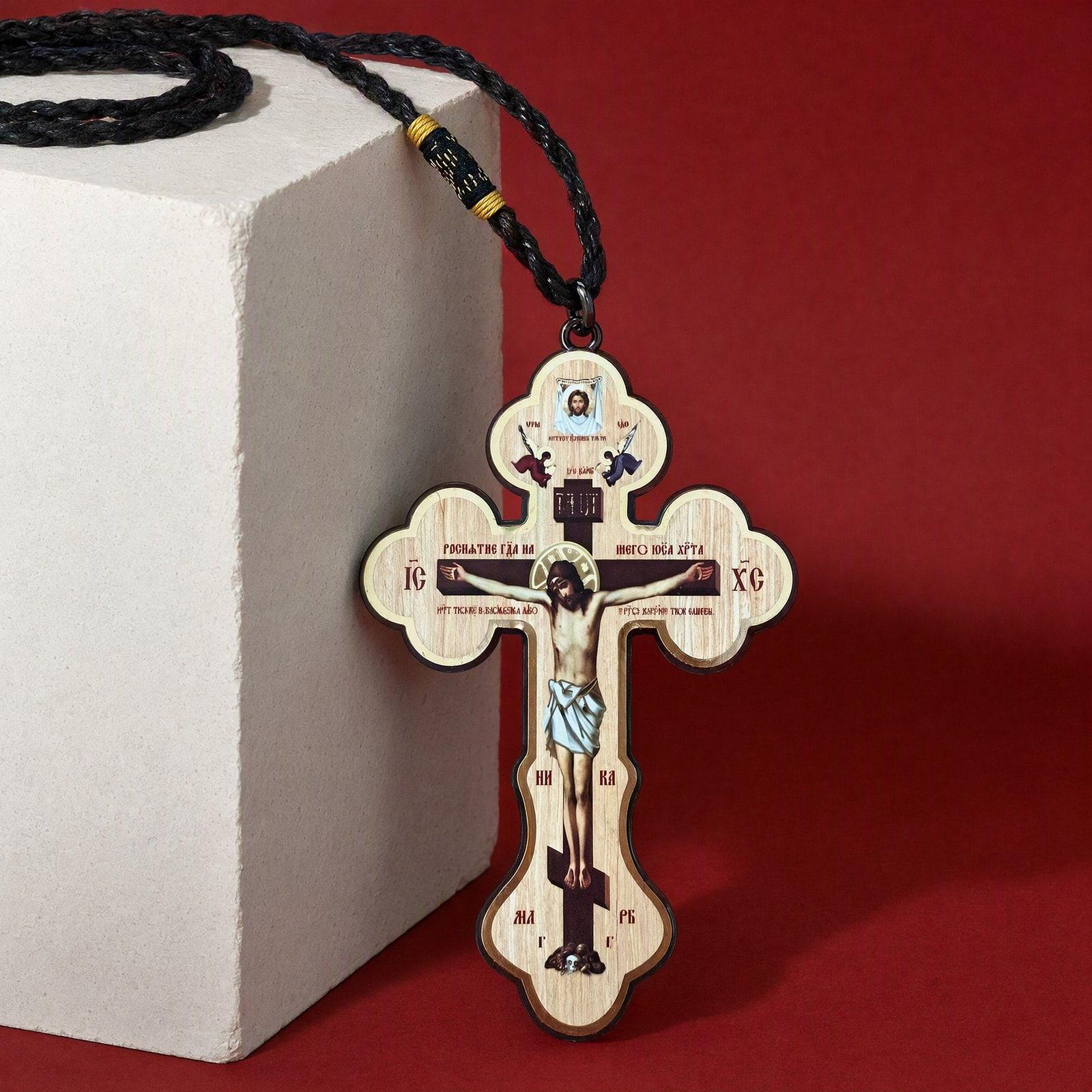
| Light wooden cross | budded ends, on a dark cord, Christ crucified printed in color, for a car, a bedside or the neck |
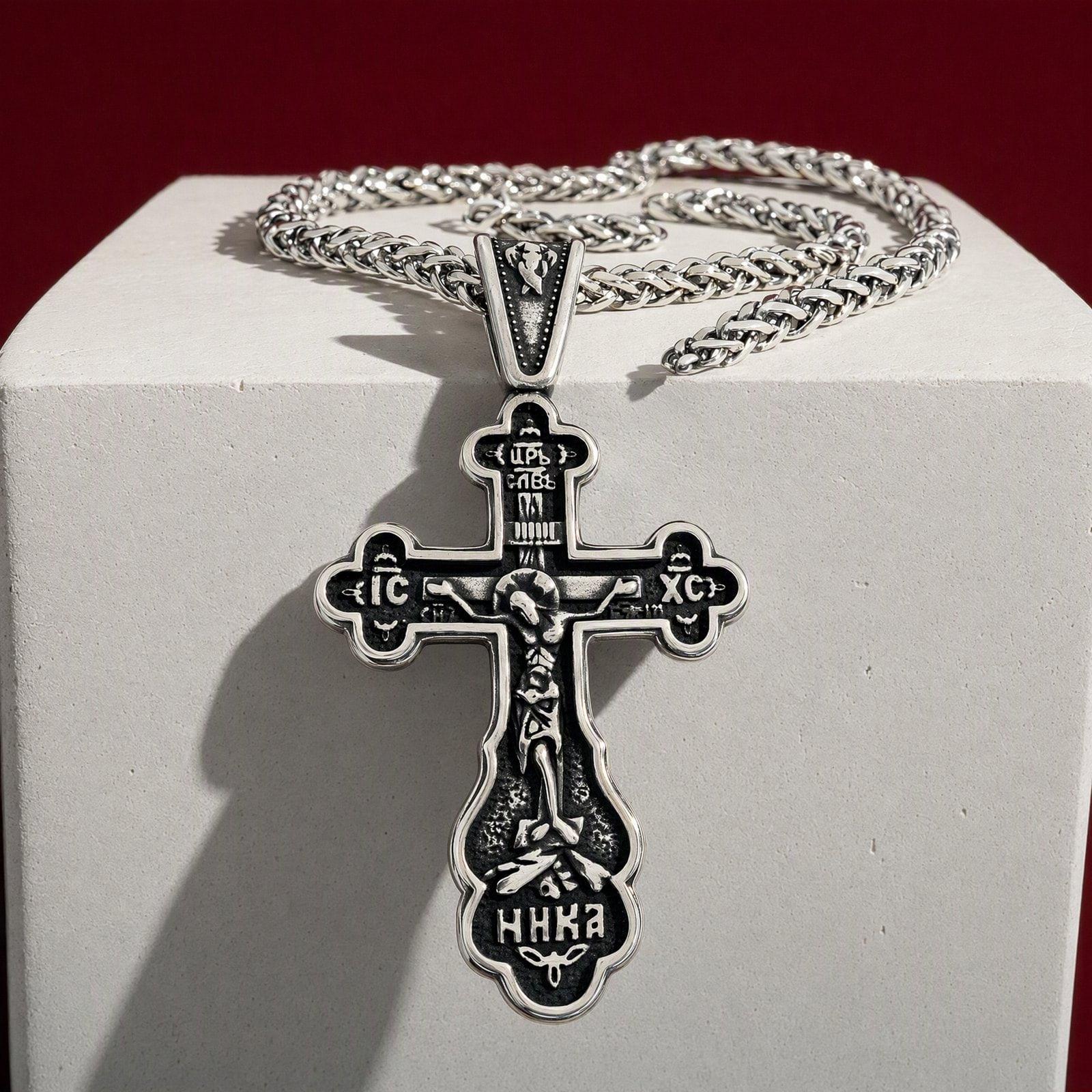
| Darkened silver-tone steel | Christ crucified on the front, the hymn We venerate Your Cross, O Master on the back |
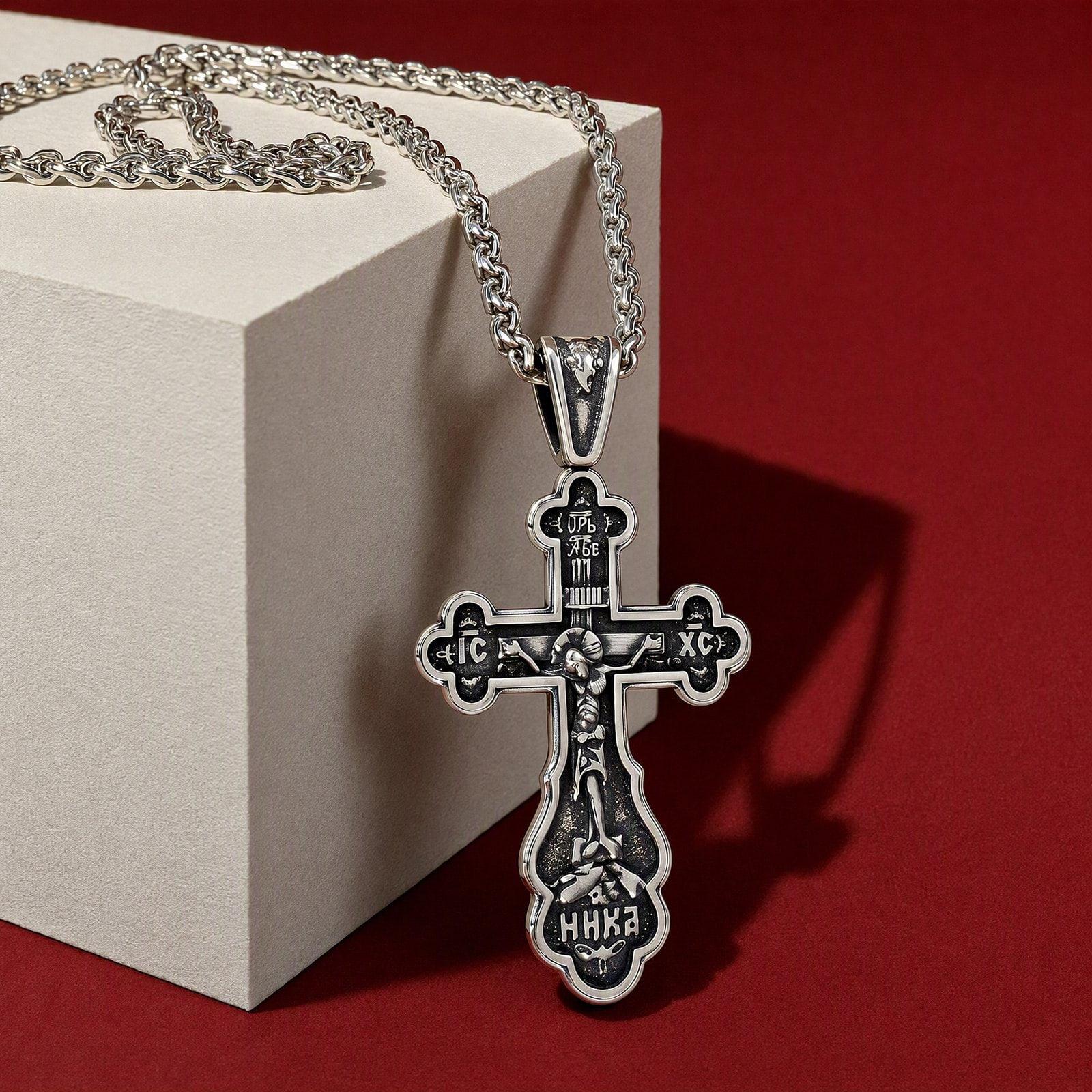
| Silver-tone steel | the same front and the same hymn on the back, in plain silver-tone rather than darkened |
What the budded cross means
The buds turn a plain cross into a living one. Three common readings stand side by side, and they do not compete:
| Detail | Traditional reading |
|---|---|
| Three buds on each arm | The Holy Trinity, Father, Son and Holy Spirit (symbols of the Trinity) |
| Buds breaking from wood | New life from the tree of death: the Resurrection after the Crucifixion |
| Twelve buds in all | The twelve apostles, hence the name apostles’ cross |
Christians have also long linked the budding cross to Aaron’s rod in the Book of Numbers, the dry staff that budded, blossomed and bore ripe almonds by the next morning: a sign of life from dead wood, read in Orthodox hymns as a figure of the Cross.
Where the budded cross comes from
Rounded and trefoil ends appear on crosses from the early Christian centuries, carved in stone and worked in metal, and they became a favorite finish of medieval church crosses in both East and West. Heraldry later gave them their formal names, cross bottony and cross treflée. In the Orthodox world budded ends are found on neck crosses, on the crosses above church domes, and on the stone cross-stones of Armenia (Armenian crosses). The fleur-de-lis ends of the cross fleury are a close cousin.
How it differs from the Orthodox three-bar cross
“Budded” describes the ends of the arms; “three-bar” describes the number of bars. The two can meet: many Orthodox crosses are three-bar crosses with budded ends, and many budded crosses have a single crossbar. If you want the full Orthodox form, look for the slanted footrest of the three-bar cross; if you want the rounded ends, look for the buds.
Budded ends in the churches
Among the cross styles that Wikipedia’s article on Eastern Orthodoxy ties to Eastern Orthodox churches, it includes budded designs, and it names the single-bar cross, the Latin cross and the Greek cross alongside them. We repeat that and add nothing to it. What we can add is what our own budded crosses show: the steel ones carry a hymn on the back, and the wooden crucifix has the letters IC XC carved beside the figure of Christ. Christ crucified is on the front of every one; the rounded ends are the part that names the style.
Budded cross necklace: what we carry
| Cross | Size and finish | Price |
|---|---|---|
| Wooden crucifix | Carved, IC XC, about 3 in | $44 |
| Light wooden cross on a cord | Printed in color, 4 in, cord about 70 cm | $44 |
| Polished silver-tone steel | IC XC and NIKA on the front, the hymn on the back, about 3 in | $54 |
| Darkened silver-tone steel | The hymn on the back, about 3 in | $54 |
| Silver-tone steel | The hymn on the back, about 3 in | $54 |
Each price is the one the item’s page opens at. The steel crosses are stainless steel in a silver tone. See all our crosses with budded ends and the We venerate Your Cross crosses. Orders arrive in 5–8 business days: US-based, ships from Florida.
Budded crosses in wood and in steel
Two are wooden and three are silver-tone steel; an Orthodox priest can bless any of them before it ships.
CU SEDIUL ÎN SUA. EXPEDIERE DIN FLORIDA
Delivery in 5–8 business days.
Questions
What is a budded cross?
It is a cross whose arm tips are round or rounded, unlike the straight, pointed ends of a pattée cross or the sharp ones the sources call aiguisé.
Is a budded cross the same as an apostles’ cross?
Within the church the budded style also goes by those two names, an apostles’ cross as well as a cathedral cross, so three names point to one style of ends.
Why does heraldry say botonée?
Heraldry gives the rounded ends two names, treflée and botonée, and the source we read traces botonée to the French word bouton.
Do you sell a budded cross to wear?
Yes. The wooden crucifix and both silver-tone steel crosses are made to wear, and the lighter wooden cross hangs on a dark cord.
What does the budded cross symbolize?
The three buds at each end are most often read as the Holy Trinity. The buds also speak of new life breaking out of the wood of the cross, the Resurrection after the Crucifixion. With three buds on each of four arms, the twelve buds recall the twelve apostles.
Is the budded cross an Orthodox cross?
Yes. Budded and trefoil ends are common on Orthodox neck crosses, church crosses and the crosses on domes, in the Greek, Slavic and Armenian traditions alike. The budded ends can finish a four-armed cross or a three-bar Orthodox cross.
Should I choose a wooden or a steel budded cross necklace?
Wood is light and warm against the skin and suits someone who wants a simple, traditional cross; keep it dry. Silver-tone stainless steel is sturdier for daily wear, in the shower or at the gym, and carries the hymn on the back.