How to make koliva
Make koliva by boiling wheat until the grains are tender, straining it thoroughly, drying it on a cloth until barely damp, and sweetening it with honey or sugar. Then mix in the additions your family uses, form the mixture into a mound on a platter, dust it with powdered sugar and mark it with a cross.
Boil and dry the wheat. Boil the wheat until the grains are tender, strain them thoroughly and lay them on a cloth to dry until they are barely damp. The sources give no measures, because recipes vary widely from family to family and parish to parish.
Sweeten and mix. Sweeten the wheat with honey or sugar. Parsley, anise, raisins, pomegranate seeds, cinnamon, walnuts, almonds and sesame seeds are the usual additions, and a cook may use some or all of them.
Shape it. Put the mixture on a platter and form it into a mound resembling a grave. Dust it with powdered sugar, then decorate it with almonds, raisins or other sweets. Make a cross on the surface, and place the departed’s initials along the sides.
The candle. A candle is often set in the middle. It is lit when the memorial service begins and put out when the service ends.
If you use rice. Rice sometimes stands in for wheat, a habit that arose as a practical answer to a famine. In the Japanese Orthodox Church koliva is commonly rice sweetened with sugar and topped with raisins.
Who makes it, and when. Some parishes appoint one person to prepare the koliva, so ask before you begin. Three days, nine days and forty days after a death, and again at the end of a year, memorial services are held; koliva also appears at funerals and on some Souls Saturdays. After the service those present eat it together, speaking of the departed. It is also blessed on the first Saturday of Great Lent, called Theodore Saturday.
In short. Boil wheat tender, strain and dry it, sweeten it, add your additions, mound it with a cross and a candle, and bring it to the memorial service for the parish priest to bless.
Why wheat
Boiled grain offerings are older than Christianity, and for Orthodox Christians the link between what is planted in the ground and what rises from it runs deep in the making and eating of koliva. Christ speaks in the Gospel of a grain of wheat that falls into the ground and dies. The Church blesses koliva in connection with memorial services, and the faithful share it afterward in memory of the departed. Because customs and recipes differ, ask your parish priest what your parish expects before you bring koliva to a service.
In memory of someone dear
The Memorial Set, $229, is made in memory of someone dear, with a folding icon, a wooden wall crucifix, a prayer rope and a printed prayer carrying names you choose, and a prayer card printed with your own names is $24.
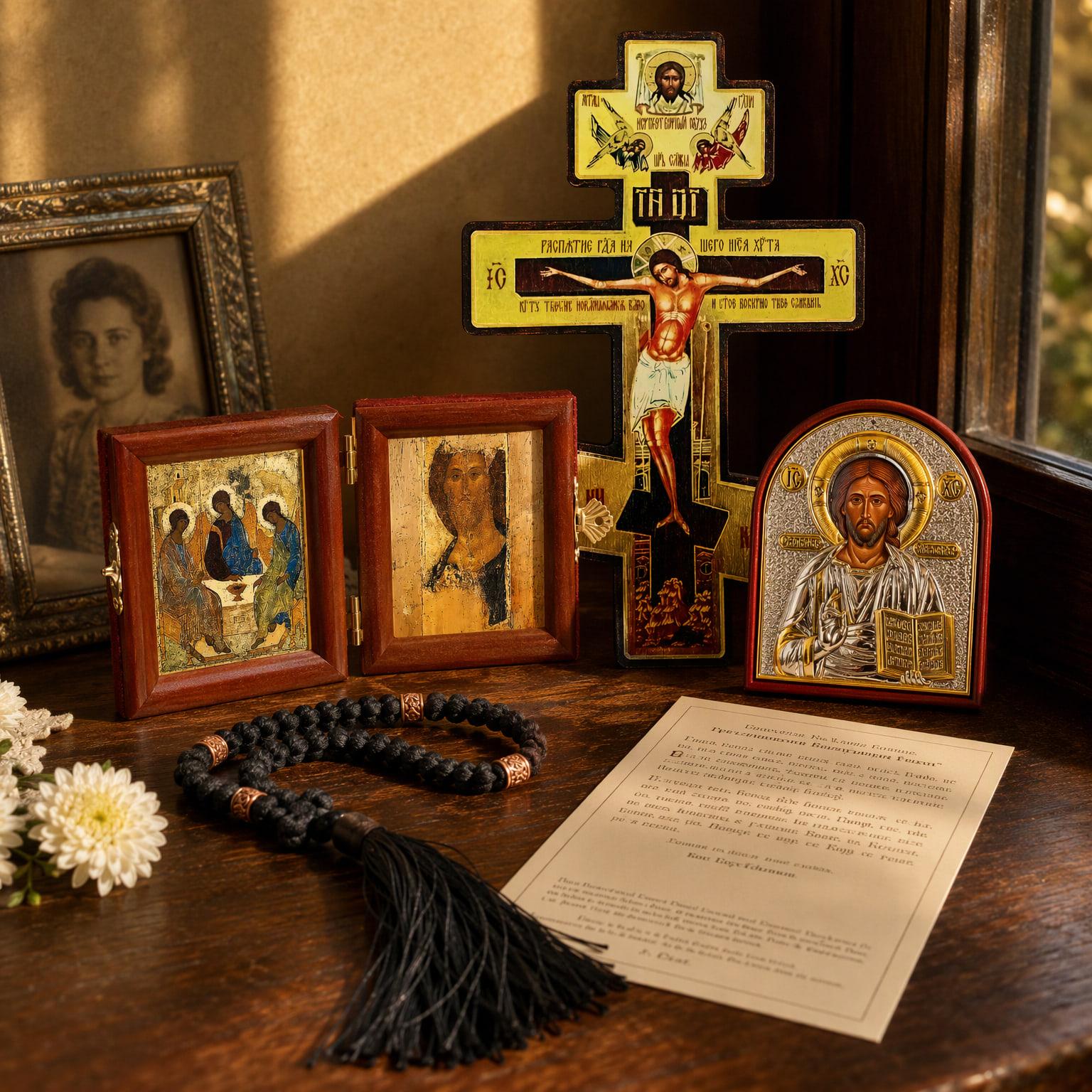 Gift set
Memorial Set
$328$229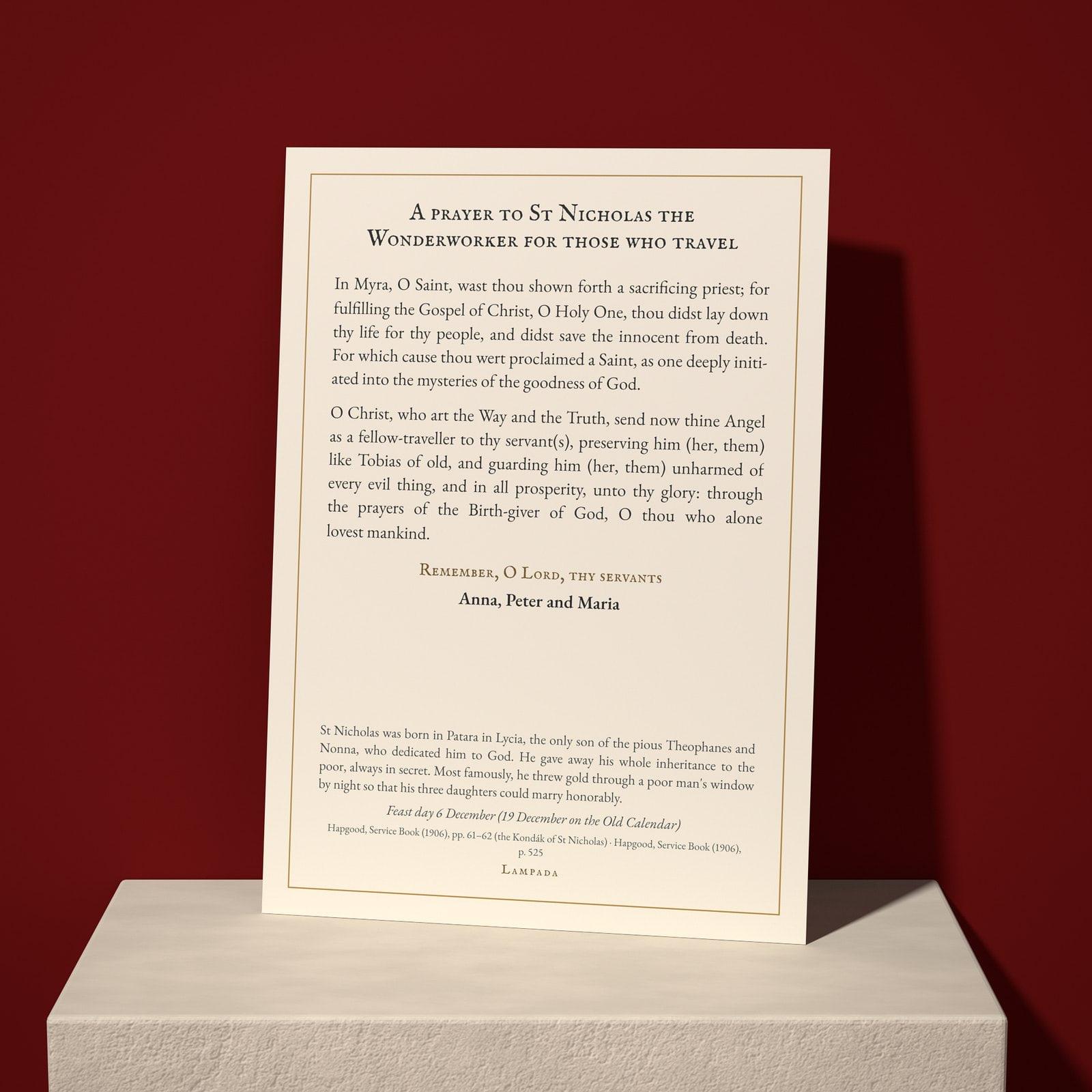
Printed Prayer Card with Your Names
$35$24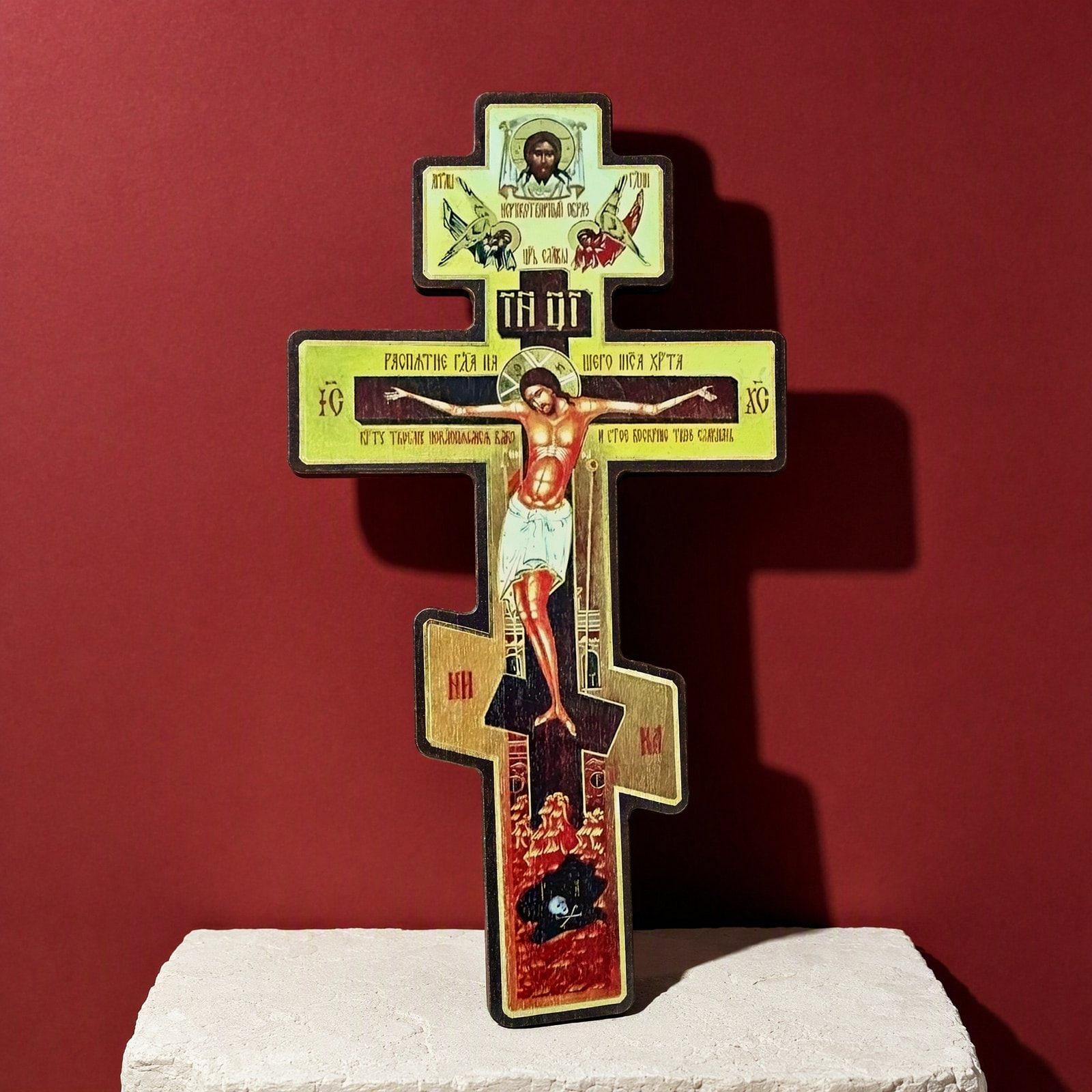 Wall cross
Save and Protect
Wood$106$74
- Blessing, from $39. Blessed by an Orthodox priest before it ships.
- Gift packaging, $20
Questions
How do you make koliva?
Boil wheat until tender, strain it well and dry it on a cloth until barely damp, sweeten it with honey or sugar, add nuts, seeds and spices, mound it on a platter under powdered sugar, and mark a cross on top.
What goes in koliva?
Boiled wheat, honey or sugar, and often parsley, anise, raisins, pomegranate seeds, cinnamon, walnuts, almonds and sesame seeds.
Can koliva be made with rice?
Yes. Rice sometimes stands in for wheat, and in the Japanese Orthodox Church koliva is commonly rice sweetened with sugar.
When is koliva made?
For memorial services three, nine and forty days after a death and at the year’s end, at funerals, on some Souls Saturdays, and on the first Saturday of Great Lent.
Does a priest bless koliva?
It is blessed in church in connection with the memorial service; ask your parish priest how your parish handles it.