Orthodox vestments: what each order wears, the colors, and how to choose
Not in our store todayWe do not carry Orthodox vestments today. Below: what each vestment is, the colors of the year, how a set is ordered, and the books and church items we carry for a priest.
Orthodox vestments are the robes the clergy put on to serve the Divine Liturgy and the other services. Every order starts from the same long tunic, the sticharion. A deacon adds a narrow stole on the left shoulder and cuffs; a priest adds the epitrachelion around the neck, a belt, cuffs and the large outer phelonion; a bishop wears the sakkos and the omophorion. Colors follow the church year, and details vary by tradition.
We do not carry vestments today. Below: each vestment by name, the colors, how a set is chosen and ordered, and the books and church items we carry for a priest.
What Orthodox vestments are for
Vestments set the clergy apart for the work of worship, not for their own honor. The Church sees in them the garments God gave Aaron and the priests of Israel in the Book of Exodus, and in the white garment every Christian receives at baptism. That is why the first vestment, the white or colored sticharion, is the same for every order, from the reader to the bishop.
Before a service, the deacon and the priest vest in the altar. Each piece is blessed with the sign of the cross and kissed, and a short verse from the Psalms or the Prophets is said as it goes on. Outside the services they wear the cassock, which is clergy dress, not a vestment; our answer on what Orthodox priests wear covers the cassock and the hat.
Each vestment by name, and who wears it
| Vestment | What it is | Worn by |
|---|---|---|
| Sticharion | Long tunic with sleeves, white or in the color of the day | Readers, subdeacons, deacons, priests, bishops |
| Orarion | Long narrow stole over the left shoulder | Deacons; subdeacons wear it crossed around the body |
| Epimanikia | Embroidered cuffs laced at the wrist | Deacons, priests and bishops |
| Epitrachelion | Stole around the neck, its ends joined in front, often with seven crosses | Priests and bishops |
| Zone | Belt worn over the sticharion and the stole | Priests and bishops |
| Epigonation | Stiff diamond-shaped cloth hung at the right side | Bishops, and priests given it as an award |
| Phelonion | Large sleeveless outer vestment | Priests |
| Sakkos | Tunic with wide sleeves, from the Byzantine emperor’s robe | Bishops |
| Omophorion | Wide embroidered band over the shoulders | Bishops |
| Mitre | Domed crown | Bishops; in some traditions senior priests as an award |
A bishop also wears a panagia, an oval or round medallion of the Mother of God, with his pectoral cross. Whether a priest wears a pectoral cross depends on his tradition.
The colors of the church year
The Orthodox Church has no single rule for colors. Many Greek parishes simply use bright vestments for feasts and dark ones for fasting seasons. Slavic parishes keep a fuller scheme, roughly this one:
| Color | When it is usually worn |
|---|---|
| Gold or yellow | Ordinary Sundays, and the feasts of apostles, prophets and holy bishops |
| White | Nativity, Theophany, the Transfiguration, the first service of Pascha, funerals |
| Red | The weeks after Pascha, and the feasts of martyrs |
| Blue | Feasts of the Mother of God |
| Green | Palm Sunday, Pentecost, and the feasts of monastic saints |
| Purple or dark red | Weekends of Great Lent and the feasts of the Cross |
| Black | Weekdays of Great Lent in many parishes |
A new parish usually starts with one gold set and adds the others over the years. The dark sets come out for Great Lent, and the green for Orthodox Pentecost.
How a set of vestments is made
Church tailors cut a priest’s set from the same fabric, so the phelonion, sticharion, epitrachelion, zone and cuffs match. Many parishes order the chalice veils and the altar covers from the same fabric.
- Brocade woven with gold- or silver-tone thread is the classic festal fabric; it is heavy and stiff.
- Damask and silk-look fabrics are lighter and drape more softly, which suits warm churches.
- Velvet is often chosen for the dark Lenten sets.
- Trim is a woven braid, called galloon, sewn along the edges, with embroidered crosses on each piece.
- Linings keep the fabric’s back from catching and help the vestment hang straight.
Greek and Slavic cuts differ most in the phelonion and the deacon’s orarion, so the maker will ask which tradition the parish follows.
How to choose and order a set
- Ask the priest or deacon. Vestments are fitted, and he will know his parish’s cut and colors. For a gift, families and parish councils often pay while he chooses.
- Measure. Makers ask for height and a few body measurements; the length of the sticharion and phelonion depends on them.
- Pick the first color. Gold serves most Sundays of the year; white or a light color covers the great feasts and funerals.
- Think of the climate. Heavy brocade is warm in a full church in summer.
- Ask the lead time before an ordination or feast date. Made-to-measure sets are not quick.
- Have them blessed. New vestments are blessed by a bishop or priest before they are first worn.
For care, hang vestments on wide padded hangers, out of sunlight and damp, and send brocade to a cleaner who knows metallic thread. By custom, vestments that are worn out are not thrown away: they are burned, or the fabric is given for other church use.
Gifts for a priest or deacon
A whole set of vestments is a large, fitted purchase, so most gifts to the clergy are things he can use straight away. Books for the services, a censer for blessing homes, icons for his own house and a good prayer rope are given at ordination, on his name day and at Christmas and Pascha. See our gifts for a priest for ideas by occasion, and our Orthodox prayer books and icons and censers for the rest of what we carry.
What we carry for the clergy
We do not carry vestments today. These are the items closest to what a priest uses:
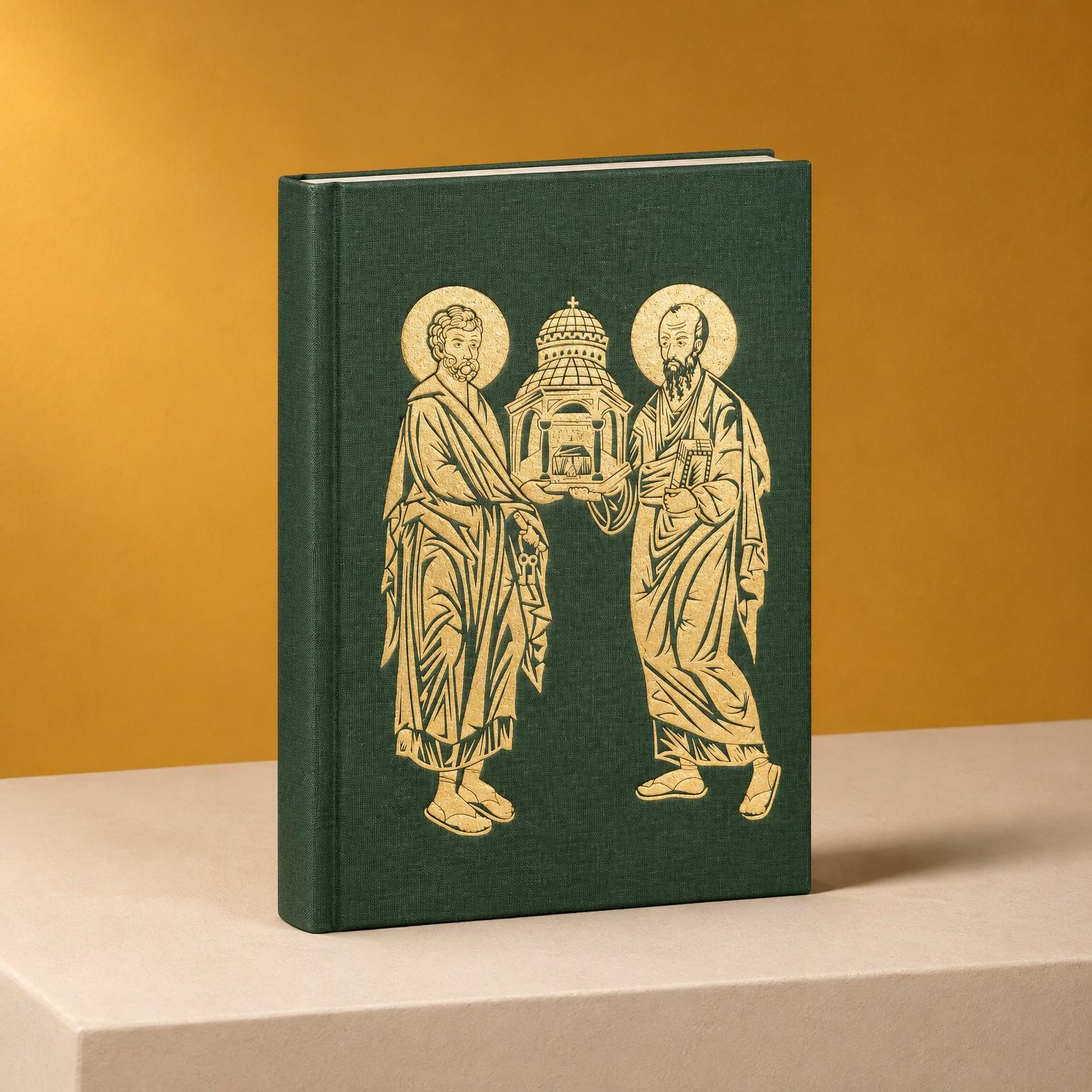
- The Holy Apostle, 5 x 7.5 in ($129): the Acts and every Epistle, marked for the Orthodox year, with a calendar of each day’s reading; cloth hardcover stamped in gold foil, 524 pages, four ribbons. Small enough for a priest’s kit for home visits.
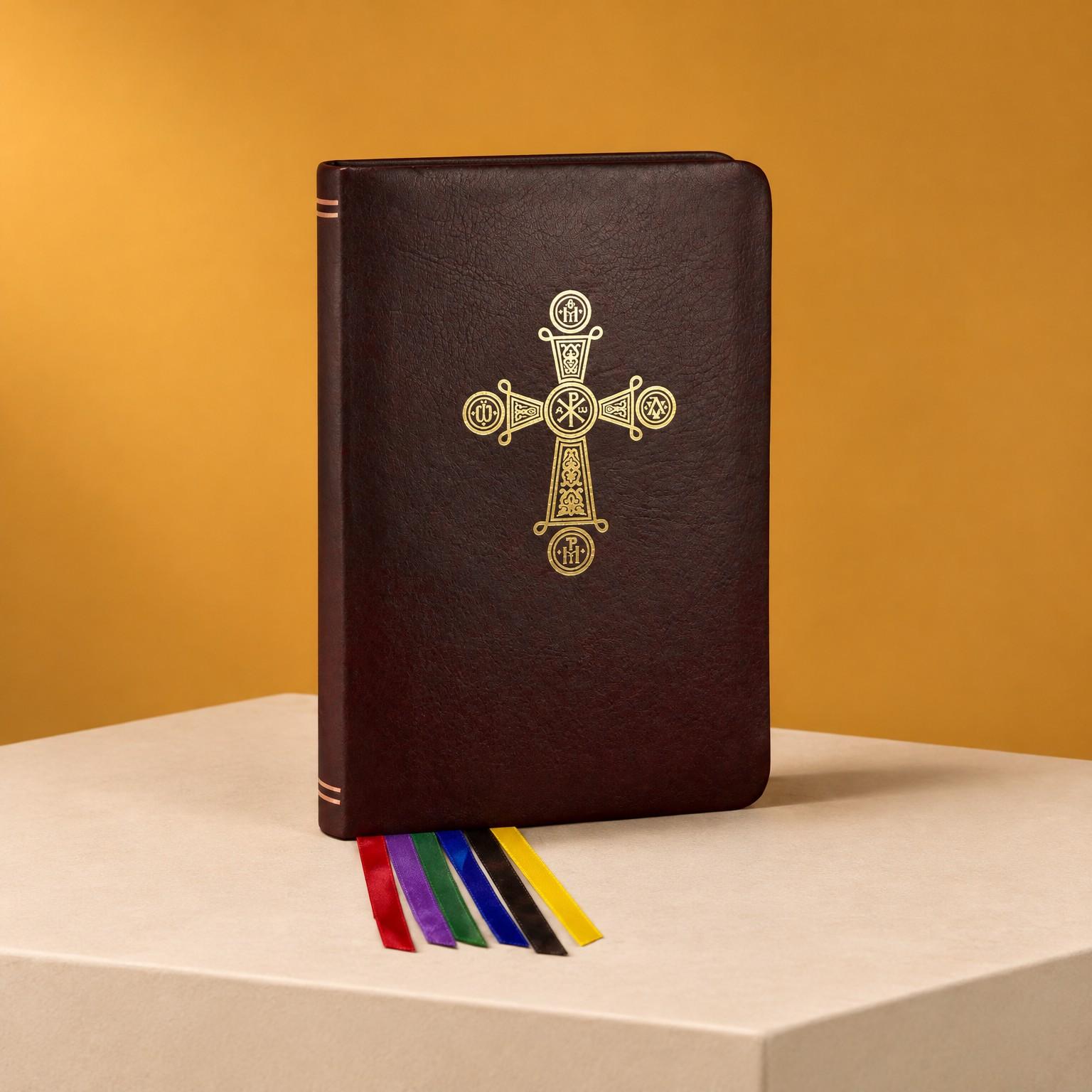
- Orthodox Lectionary Bible, 4.75 x 7 in ($169): the year’s Gospel, Epistle, Old Testament and Psalm readings in the order they are read, leather-bound softcover.
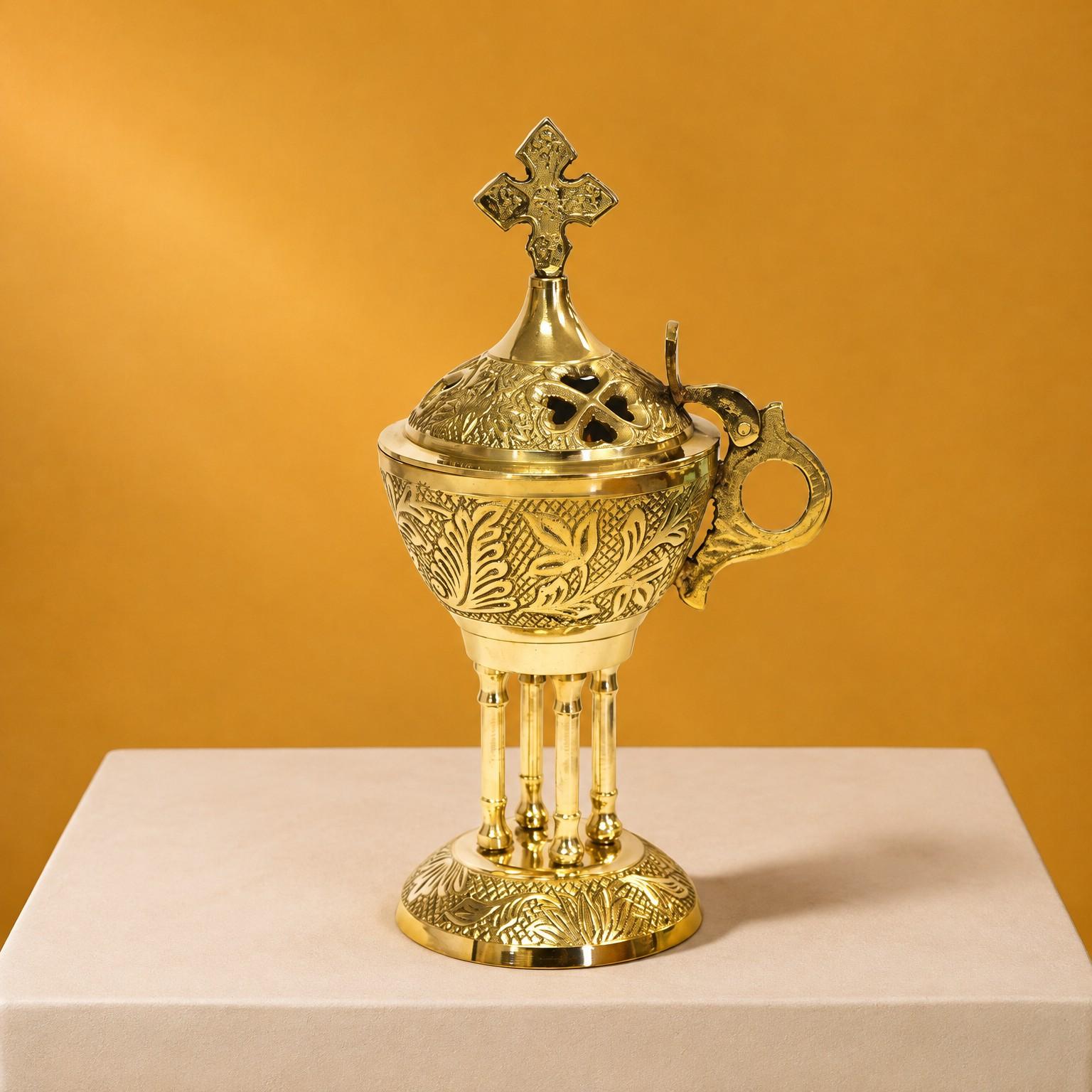
- Brass Incense Burner, Deluxe ($94): a brass censer 6 in tall, with a cross engraved on the lid and an antique finish, carried from icon to icon as the priest censes the church.
- Great Feasts and Pascha Icon Set ($369): thirteen icons, one for each of the Twelve Great Feasts and Pascha, reproduced from one hand-painted series so they match.
Orders arrive in 5–8 business days: US-based, ships from Florida.
Our closest items
Things a priest or deacon uses in his ministry: the book of the Epistles, the Lectionary Bible, a brass censer and the icons of the Great Feasts. Each card shows its live price.

US-BASED. SHIPS FROM FLORIDA
Delivery in 5–8 business days.
Want us to stock it?
We don't carry Orthodox vestments today. Leave your email and we will write once if we stock it.
Questions
Do you sell Orthodox vestments?
Not today. We carry books and church items a priest uses: The Holy Apostle, the Lectionary Bible, a brass censer and a set of Great Feasts icons. Leave your email on this page and we will write once if we stock vestments.
What is the difference between a cassock and a vestment?
A cassock is the long black robe clergy wear every day, in church and outside it. Vestments go on over the cassock only to serve a service: the sticharion, stole, belt, cuffs and outer vestment, each kissed and put on with a verse from Scripture.
What do the colors of Orthodox vestments mean?
They mark the season. In many parishes gold is worn on ordinary Sundays, white or red at Pascha, dark red or purple in Great Lent, green at Pentecost and blue on feasts of the Mother of God. Greek and Slavic practice differ, so each parish follows its own rule.
What is a phelonion?
The priest’s large outer vestment: a sleeveless cape worn over the others at the Divine Liturgy, Vespers and Matins. Its vesting verse is from the Psalms: ‘Your priests, O Lord, shall be clothed with righteousness.’ Greek phelonia are cut round and soft; Slavic ones often have a high, stiff shoulder.
What is the epitrachelion?
The stole a priest wears around his neck, its two ends joined down the front. A priest does not serve a sacrament without it, so it is the vestment he takes with him to hear a confession, to visit a home or to serve outside the church.
Who wears vestments besides the clergy?
Readers, subdeacons and altar servers wear the sticharion when they serve at the altar, with the blessing of the priest or bishop. People in the congregation wear no vestments; a small cross on a chain is the usual sign of faith a lay person wears.
What is a good gift for a newly ordained priest?
Ask his family or parish first, because a set of vestments is ordered to his measurements and his parish’s tradition, and he usually chooses it himself. Books he will read every day, a censer for the home or icons for his house need no fitting.