Orthodox saint
St Paraskeva
St Paraskeva (Paraskevi) — the Great Martyr Paraskeva Pyatnitsa of Iconium
Αγία Παρασκευή — η Μεγαλομάρτυς Παρασκευή η Ικονιεύς · Αγία Παρασκευή η Ρωμαία · Οσία Παρασκευή η Επιβατινή (η Νέα) · Великомѹ́ченица Параскеѵа́, нарицаемая Пѧ́тница · Великомученица Параскева Пятница (Иконийская)
St Paraskeva is remembered on 28 October (10 November on the Old Calendar). Orthodox Christians pray to St Paraskeva for a happy marriage and a good choice of husband, a good bridegroom for a young woman and peace, harmony and well-being in the home.
Feast days
- Feast
- Great Martyr Paraskeva Pyatnitsa of Iconium (the Russian 'Pyatnitsa')
- Kept on
- 28 October (10 November on the Old Calendar)
- Next, New Calendar
- Next, Old Calendar
- Feast
- Virgin Martyr Paraskevi of Rome (the Greek 'protector of the eyes')
- Kept on
- 26 July (8 August on the Old Calendar)
- Next, New Calendar
- Next, Old Calendar
- Feast
- Venerable Paraskeva (Petka) the New of Epivates, relics at Iasi (Serbian, Bulgarian, Romanian)
- Kept on
- 14 October (27 October on the Old Calendar)
- Next, New Calendar
- Next, Old Calendar
The New Calendar is kept by the Greek, Antiochian, Romanian and Bulgarian churches, the OCA and most converts; the Old Calendar by the Russian, Serbian and Georgian churches, Jerusalem and Mount Athos, 13 days later on the civil calendar.
The life of St Paraskeva
She gave her life to Christ, refused to sacrifice to idols, endured beating and iron claws, was miraculously healed in prison, and was beheaded. In Russia she is loved as Paraskeva Pyatnitsa: churches and wayside chapels bore her name, and her icons guard pious and happy households. St Paraskevi of Rome, a second-century virgin martyr, preached Christ after her parents' death, survived a cauldron of boiling oil, and restored the sight of the ruler who was blinded there; Greeks honor her as protector of the eyes. St Paraskeva the New (Petka), an eleventh-century ascetic of Epivates, rests incorrupt at Iasi. Orthodox Christians pray to these holy women for their families, their marriages and their health.
What the faithful ask of St Paraskeva
The faithful pray for
- a happy marriage and a good choice of husband
- a good bridegroom for a young woman
- peace, harmony and well-being in the home
- the conception of a child and an easy birth
- the health of children
- healing of the eyes and restored sight
- healing of grievous illness of body and soul
- the protection of fields, crops and livestock
- help in all the needs of daily life
St Paraskeva protects
- the household from discord and quarrels
- from eye diseases
- from fever, headache and toothache (Russian folk prayers)
- cattle from disease
- from grievous illness of body and soul
Patron of
- women and wives (in Russia called the 'women's intercessor', babya zastupnitsa)
- families and the household
- marriage and brides
- spinners, weavers and needleworkers
- fairs, markets and trade (Russian 'Pyatnitsa' fairs)
- fields, harvest and cattle
- those with eye ailments (especially St Paraskevi of Rome, Greek usage)
- Iasi and Moldavia (St Paraskeva the New)
Miracles
St Paraskeva of Iconium, raked with iron claws and thrown into prison lacerated to the bone, was miraculously healed by God before her beheading.
St Paraskevi of Rome emerged unharmed from a cauldron of boiling oil and tar; when the watching ruler was blinded by a splash of it, her prayer restored his sight — which is why she is shown holding a dish with two eyes.
At the tomb of St Paraskevi of Rome the blind received sight, the lame walked and barren women bore children.
Source: OCA — Martyr Paraskevi of Rome
The incorrupt relics of St Paraskeva the New, carried from Epivates to Trnovo, Belgrade and Constantinople, were brought to Iasi in 1641, where many healings took place.
Where the traditions differ
These are three different saints. Russian usage centers on the Great Martyr Paraskeva Pyatnitsa of Iconium (28 Oct). Greek usage centers on St Paraskevi of Rome (26 Jul) as protector of the eyes; Russian prayers to Paraskeva Pyatnitsa also ask for deliverance from eye disease. Serbs, Bulgarians and Romanians chiefly honor St Paraskeva the New (Petka, 14 Oct), patron of Iasi and of needleworkers, spinners and weavers. Name-day choice depends on which saint the family's tradition follows.
St Paraskeva in our shop
We don't carry an icon of St Paraskeva yet. Ask for it below, and we will write to you when it is ready.
Until then, the closest we carry
 Folding diptychSt Olga of Alaska & Guardian Angel Folding DiptychKept on the same day, 28 October
$99$69 Folding diptychChrist Pantocrator & Our Lady of Kazan Folding DiptychAlso prayed to for eyes and vision
$99$69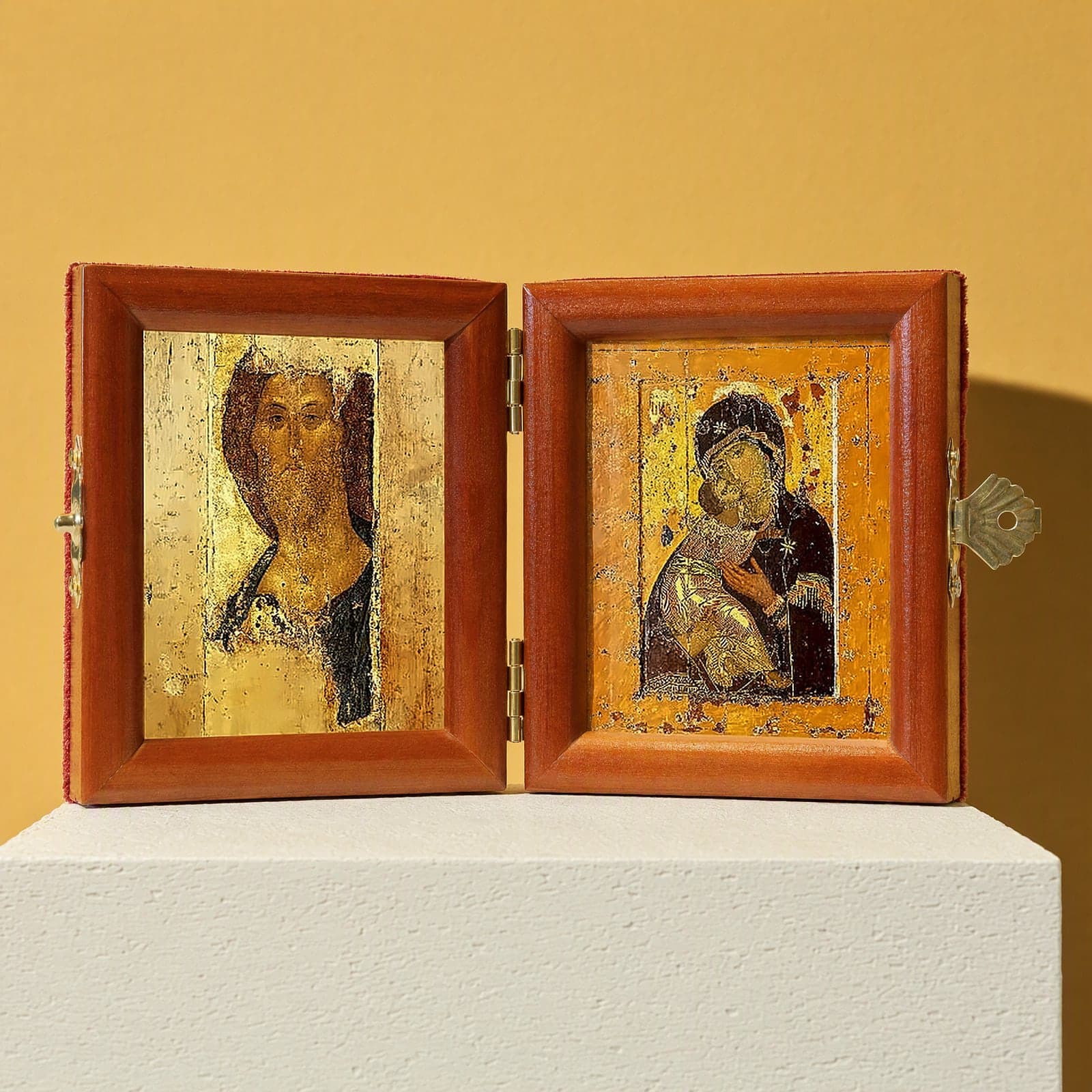 Folding diptychChrist (Zvenigorod Saviour) & Vladimir Mother of God Folding DiptychChrist and the Mother of God keep every Christian home
$99$69
Have it consecrated by our priest before it reaches you — Consecration, $49.
Ask our priest
Our priest can serve a moleben to St Paraskeva for the people and the need you name.
Name days
These names keep their name day on a feast of St Paraskeva:
Prayed to for
Related saints

Questions
When is the feast day of St Paraskeva?
Great Martyr Paraskeva Pyatnitsa of Iconium (the Russian 'Pyatnitsa'): 28 October (10 November on the Old Calendar); Virgin Martyr Paraskevi of Rome (the Greek 'protector of the eyes'): 26 July (8 August on the Old Calendar); Venerable Paraskeva (Petka) the New of Epivates, relics at Iasi (Serbian, Bulgarian, Romanian): 14 October (27 October on the Old Calendar).
What do Orthodox Christians pray to St Paraskeva for?
Orthodox Christians pray to St Paraskeva for a happy marriage and a good choice of husband, a good bridegroom for a young woman, peace, harmony and well-being in the home, the conception of a child and an easy birth, the health of children and healing of the eyes and restored sight.
What is St Paraskeva the patron saint of?
St Paraskeva is the patron of women and wives (in Russia called the 'women's intercessor', babya zastupnitsa), families and the household, marriage and brides, spinners, weavers and needleworkers, fairs, markets and trade (Russian 'Pyatnitsa' fairs), fields, harvest and cattle, those with eye ailments (especially St Paraskevi of Rome, Greek usage) and Iasi and Moldavia (St Paraskeva the New).
What does St Paraskeva protect from?
St Paraskeva protects the household from discord and quarrels, from eye diseases, from fever, headache and toothache (Russian folk prayers), cattle from disease and from grievous illness of body and soul.
Whose name day is on a feast of St Paraskeva?
The name day of Paraskeva, Paraskevi, Praskovya, Paraskevas, Parascheva, Petka, Voula and Evi.
Sources
- OCA — Greatmartyr Paraskevi of Iconium (read 14 October 2026)
- OCA — Martyr Paraskevi of Rome (read 14 October 2026)
- OCA — Venerable Paraskevi (Petka) of Serbia (read 14 October 2026)
- Azbuka very — Великомученица Параскева Пятница (read 14 October 2026)
- Calend.ru — Параскева-Пятница, Бабья заступница (read 14 October 2026)
- Rambler — Покровительница семьи: кому помогает Параскева Пятница (read 14 October 2026)
- John Sanidopoulos — The Wondrous Saint Paraskevi (read 14 October 2026)
- Greek City Times — Feast Day of Agia Paraskevi, protector of the eyes (read 14 October 2026)
- Wikipedia — Parascheva of the Balkans (read 14 October 2026)