Psalm 12, which the Church numbers 11
Psalm 12 is Psalm 11 in the Septuagint. The Hebrew numbering, which the King James Bible follows, calls this psalm 12; the Septuagint, the Greek Old Testament that the Orthodox Church reads, calls it 11. The psalm is the same under both numbers. The King James text has 8 verses and Brenton’s Septuagint text has 9; the two count the verses differently. The King James text opens with a title line.
The psalm in the King James Version.
Help, LORD; for the godly man ceaseth; for the faithful fail from among the children of men. They speak vanity every one with his neighbour: with flattering lips and with a double heart do they speak. The LORD shall cut off all flattering lips, and the tongue that speaketh proud things: Who have said, With our tongue will we prevail; our lips are our own: who is lord over us?
For the oppression of the poor, for the sighing of the needy, now will I arise, saith the LORD; I will set him in safety from him that puffeth at him. The words of the LORD are pure words: as silver tried in a furnace of earth, purified seven times. Thou shalt keep them, O LORD, thou shalt preserve them from this generation for ever. The wicked walk on every side, when the vilest men are exalted.
The psalm in the Septuagint, in Brenton’s English translation.
For the end, a Psalm of David, upon the eighth.
Save me, O Lord; for the godly man has failed; for truth is diminished from among the children of men. Every one has spoken vanity to his neighbour: their lips are deceitful, they have spoken with a double heart. Let the Lord destroy all the deceitful lips, and the tongue that speaks great words: who have said, We will magnify our tongue; our lips are our own: who is Lord of us?
Because of the misery of the poor, and because of the sighing of the needy, now will I arise, saith the Lord, I will set them in safety; I will speak to them thereof openly. The oracles of the Lord are pure oracles; as silver tried in the fire, proved in a furnace of earth, purified seven times. Thou, O Lord, shalt keep us, and shalt preserve us, from this generation, and for ever. The ungodly walk around: according to thy greatness thou hast greatly exalted the sons of men.
What the psalm says. The psalm begins with a short cry, help, Lord, because the godly man ceases and the faithful fail from among the children of men. The next verses describe what has taken their place: everyone speaks vanity with his neighbour, with flattering lips and a double heart. The one who prays asks the Lord to cut off flattering lips and the tongue that speaks proud things, the tongue of those who say that with their tongue they will prevail. Then the Lord himself speaks, and the reason he gives for acting is not the strength of the one who prays but the oppression of the poor and the sighing of the needy: now will I arise, says the Lord, and set him in the safety he longs for. The psalm then says that the words of the Lord are pure words, like silver tried in a furnace of earth and purified seven times. It ends by saying that the Lord will keep them and preserve them from this generation for ever, while the wicked walk on every side and the vilest men are exalted.
Where it falls in the Psalter. The Church divides the Psalter into twenty readings called kathismata. This psalm stands in kathisma 2.
In the Service Book. We found no page of Isabel F. Hapgood’s Service Book of the Holy Orthodox-Catholic Apostolic Church that prints this psalm under its own Psalm heading, so this page names no service for it.
Psalm and kathisma
A kathisma is a reading of the Psalter, and the Church counts twenty of them. Psalm 12 belongs to the second. Orthodox Christians who pray the Psalter pray it by these divisions, and the psalms also appear inside the services, which Hapgood’s Service Book prints.
Readers from other traditions may know the Psalms by their numbers alone. In the Orthodox books the number is paired with the kathisma, and the number itself may be the Septuagint’s rather than the Hebrew.
For the home’s icon corner
The Protector Set holds a folding icon of St John the Warrior and the Guardian Angel, a St Michael the Archangel medallion, a black and gold-tone crucifix on a chain and a prayer rope, and the story of each saint’s life, sent to you by email, $169. An Orthodox priest can bless it before it ships. With the Blessing, $218 (normally $291).
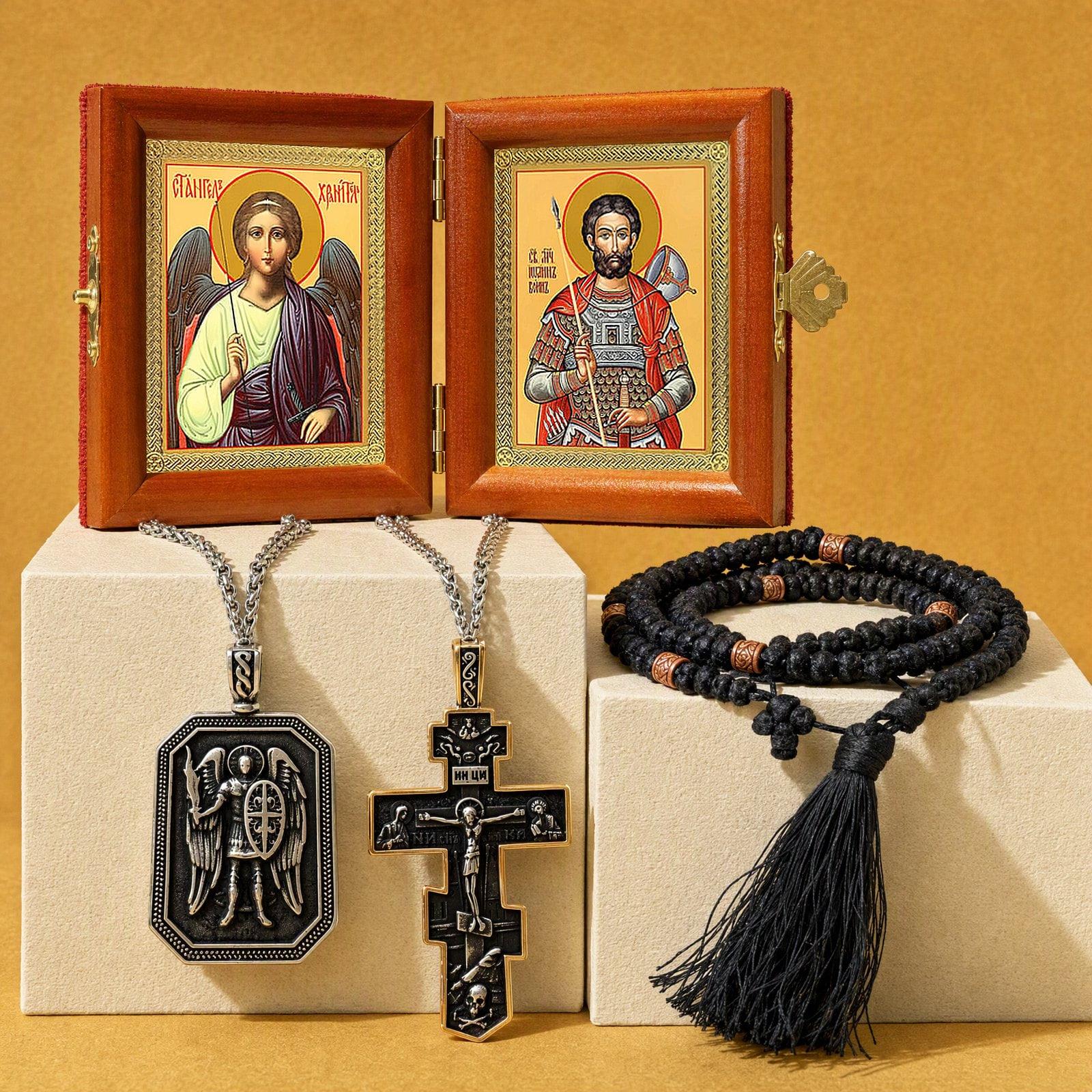
- Blessing, $49. Blessed by an Orthodox priest before it ships.
- Gift packaging, $20
Questions
What is Psalm 12 in the Septuagint?
It is Psalm 11. The King James Bible numbers it 12; the Septuagint, which the Orthodox Church reads, numbers it 11. The psalm is the same.
How many verses does Psalm 12 have?
The King James text has 8 and Brenton’s Septuagint text has 9, because the two count the verses differently.
Which kathisma is Psalm 12 in?
It is in the second, kathisma 2. The Church divides the Psalter into twenty kathismata and reads them in order.
Is Psalm 12 printed in the service book?
We did not find it under a Psalm heading in Isabel F. Hapgood’s service book, so this page names no service for it.
Whose translations are these?
The first is the King James Version. The second is Brenton’s English translation of the Septuagint, the Greek Old Testament that the Orthodox Church reads.