Lampada: the Orthodox icon lamp, how to choose one and how to light it
A lampada is the small oil lamp that burns before the icons in an Orthodox church or home. It is usually a cup of colored glass, most often red, in a metal holder that hangs on chains or stands on a base, with a floating wick burning in olive oil. It is lit for prayer, on Sundays and feast days, and in many homes every evening.
Below: what the lamp means, the kinds of lampada, how to set up the oil and wick, how to use it safely, and the icon lamps we carry.
What the lampada means
Christ said, “I am the light of the world,” and the lampada keeps a small light burning before His icon and the icons of His saints. Orthodox Christians see three things in it: the light of Christ, the prayer that keeps burning in the heart, and a small offering of oil, which a family gives just as a parish gives oil and candles for the church.
In church a lampada hangs before each great icon of the iconostasis, and one burns before the tabernacle on the altar. At home it hangs or stands before the family icons in the icon corner. Many people light it when they begin their evening prayers, so the flame becomes the sign that prayer has started.
Kinds of lampada
| Kind | How it sits | Best for |
|---|---|---|
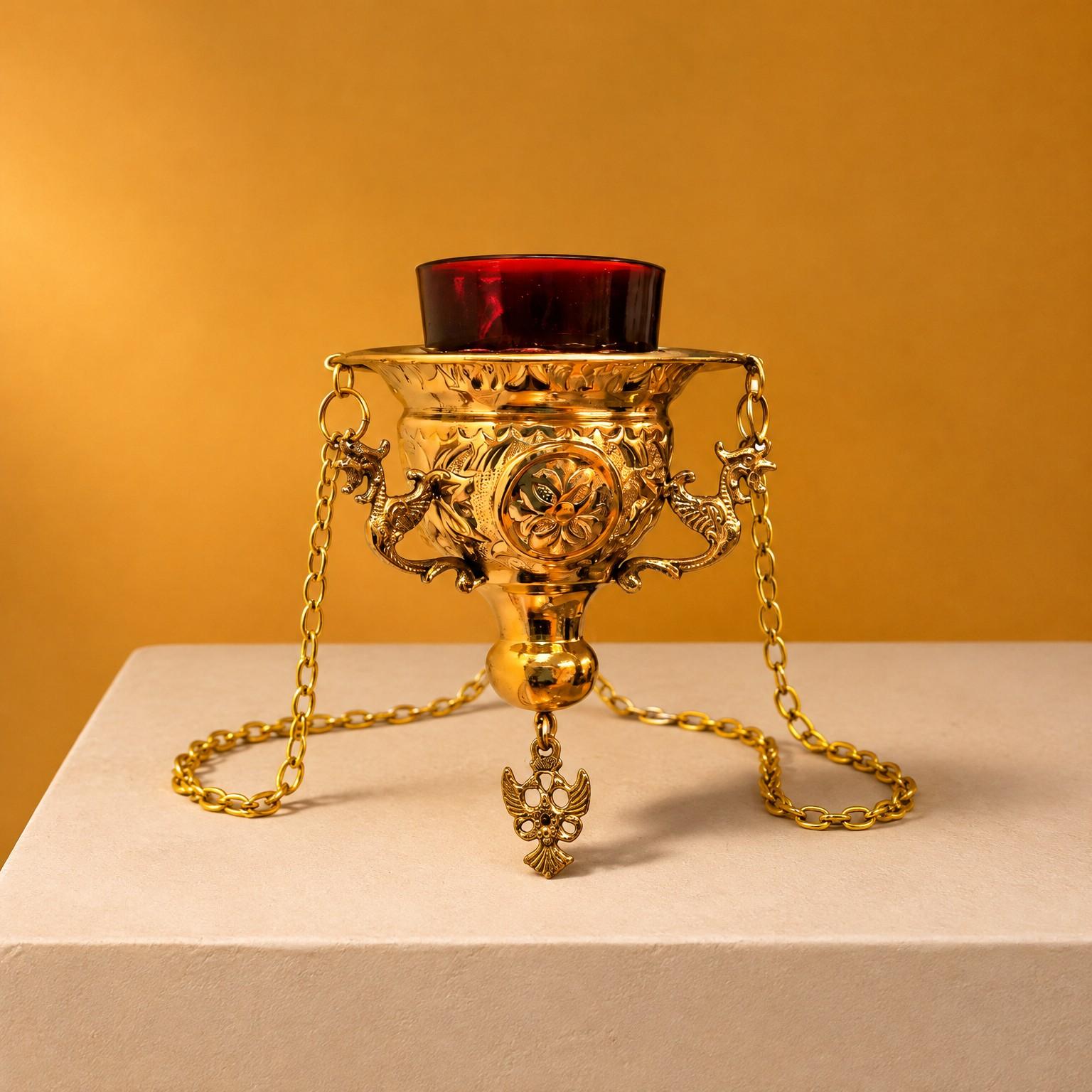
| Hanging lamp | A glass cup in a metal holder on three chains, hung from a bracket or the ceiling | A corner with a wall bracket or a shelf above the icons |
| Standing lamp | A glass cup on a stem or a footed base | A shelf, a small table or a dresser |
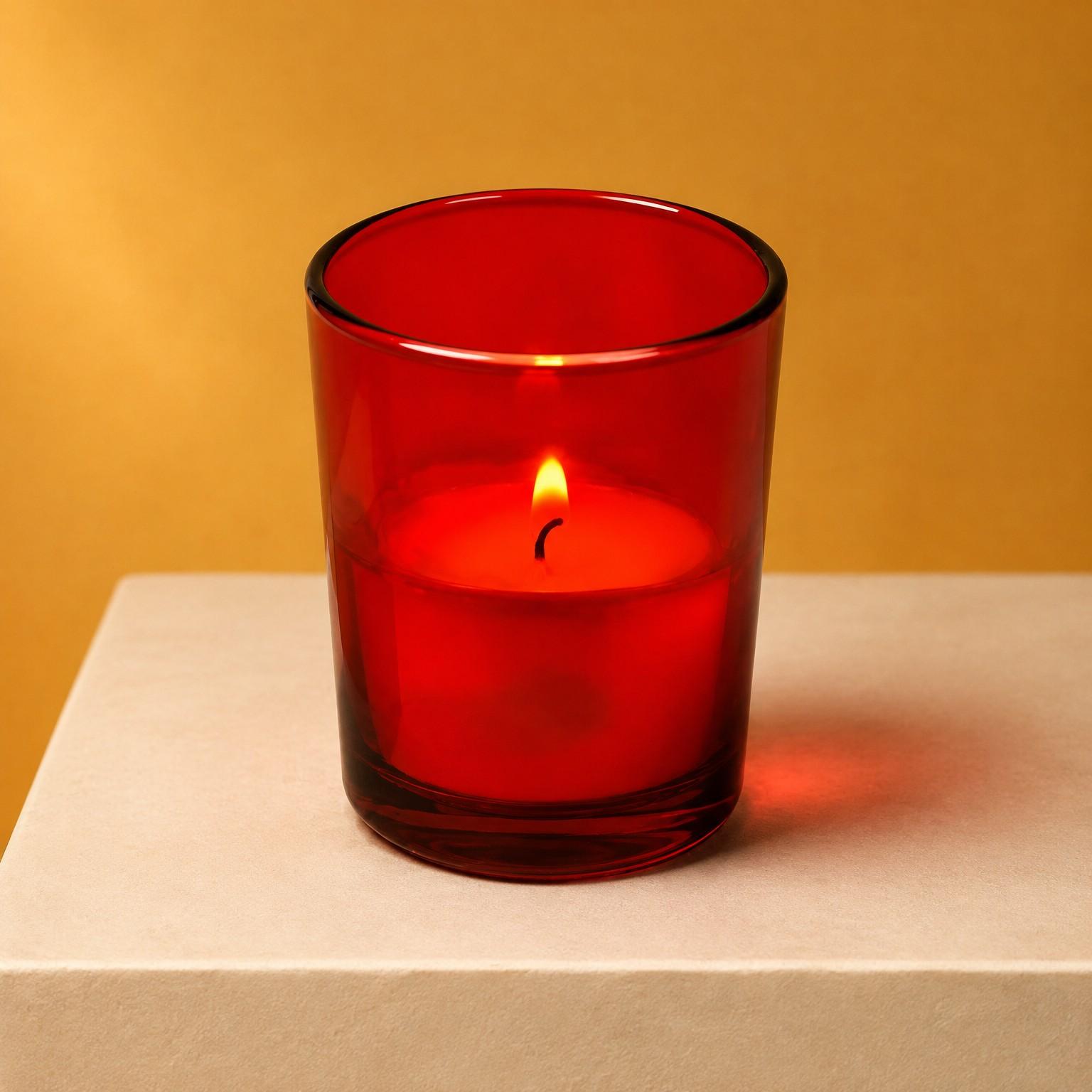
| Votive cup | A small glass cup that takes a tea light | A first prayer corner, a desk, a child’s room |
| Lamp set | A lamp with wicks and candles in one box | A gift for a new home or a new Orthodox Christian |
A hanging lamp needs something to hang from: a ceiling hook, or a wall bracket fixed below the icons so the flame sits in front of them, not under a shelf. A standing lamp needs only a level surface. Both burn the same oil and wicks.
Oil, wick and float: setting it up
- Rinse and dry the glass.
- Add water, then oil. Many people pour a little water into the bottom of the glass and the oil on top. The oil floats, so less of it is needed, and when the oil runs out the flame goes out on the water.
- Float the wick. A float wick is a short cotton wick held in a cork or metal float. Lay it on the oil and let the cotton soak for a minute before lighting.
- Light it and adjust. The flame should be small, about the size of a fingernail, and steady. If it smokes, the wick is too long: trim it or push it lower in the float.
- Top up and replace. Add oil as it burns down, and change the wick when it hardens or chars.
For what the Church means by blessed oil, and where it is used, see our holy oil guide.
Safe use
- Never leave a burning lamp alone, and never let children use a flame without an adult. This is the safety note our lamps carry.
- Keep curtains, dried palms and paper icons well clear of the flame, and leave space above a hanging lamp: heat rises.
- Fix a wall bracket into a stud or with proper anchors. A lamp full of oil and water is heavier than it looks.
- Wipe up spilled oil at once; it stains wood and fabric.
- If you would rather avoid open oil, a beeswax tea light in a votive cup gives the same small light; see our vigil candles guide.
The icon lamps we carry
- Hanging vigil lamp, brass and glass ($249): 4.5 in across and 6 in long, on a chain of about 14 in, with a removable glass cup; it arrives.
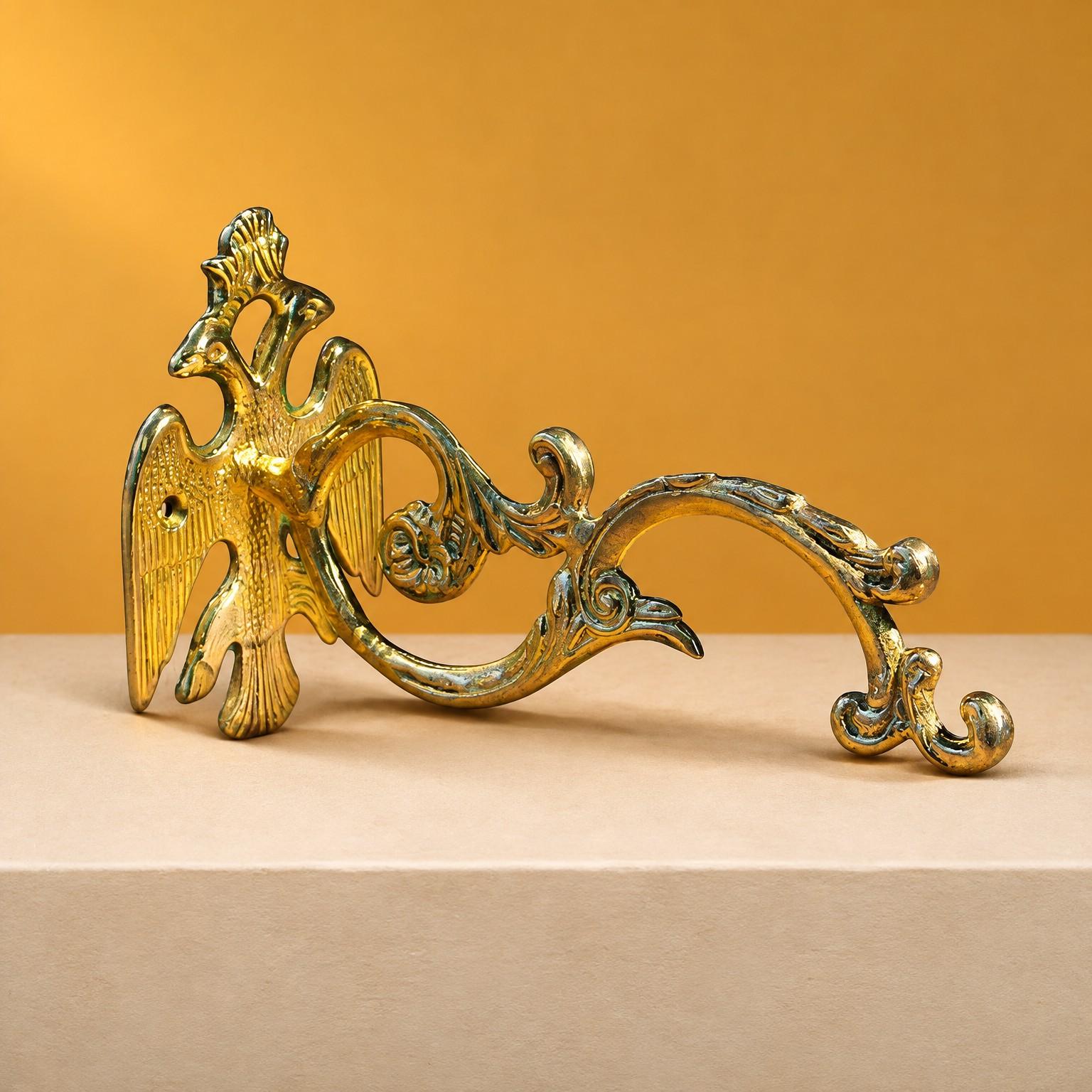
- Byzantine eagle wall bracket, brass ($89): an eagle plate of about 3 x 4 in, 7 in overall, made to hang a vigil lamp or a censer before the icons.
- Red votive lamp ($19): red glass, 2.5 in tall and 2 in across, for a votive or a tea light.
A complete corner with icons is described in our home iconostasis guide. Orders arrive in 5–8 business days: US-based, ships from Florida.
Our icon lamps
A hanging brass vigil lamp, a small red votive and a wall bracket. Each card shows its live price.
US-BASED. SHIPS FROM FLORIDA
Delivery in 5–8 business days.
Questions
What is a lampada?
It is the oil lamp kept burning before icons in Orthodox churches and homes. The word comes from the Greek for lamp or torch. Greek families call it a kandili, Serbian families a kandilo; in English it is also called an icon lamp or a vigil lamp.
What oil do you use in a lampada?
Olive oil is the traditional fuel, the same oil the Old Testament names for the lamp of the tabernacle. Some families use a refined lamp oil sold for indoor lamps instead; if you do, follow its maker’s directions. Never use a fuel meant for outdoor torches.
When is the lampada lit?
Customs vary. Most families light it for morning and evening prayers, on Saturday evening and Sunday, and on feast days. In some homes it burns all day; if you keep it lit, put it out whenever no one is home or everyone is asleep.
Why is the lampada usually red?
Red glass is the most common, and its warm glow is the look most people know from church. Green, blue, amber and clear glass are also used. The color is a family’s or a parish’s choice; no rule of the Church fixes it.
Can I use a candle instead of oil?
Yes. A beeswax tea light in a small glass votive gives the same small flame before the icons with nothing to measure or trim. Many people start with a votive and move to an oil lamp later.
How do I keep the glass from turning black?
Soot comes from a flame that is too tall. Trim the wick or lower it in its float until the flame is small and steady, and wipe the glass clean once a week when it is cool.