Pomegranate Symbolism: what it is and how Orthodox Christians use it
This page answers pomegranate symbolism from Wikipedia and OrthodoxWiki. It gives what is said of the pomegranate in general, then what the Orthodox Church does with it, then what Western churches do.
- In the Hebrew Bible. The Hebrew Bible includes it in the Seven Species, its list of the Land of Israel’s special crops.
- In the Temple. Woven pomegranate shapes edged the High Priest’s robe, and carved ones topped the pillars at Solomon’s Temple.
- Earliest Christian use stated. At Hinton St Mary in Dorset a 4th-century floor mosaic puts a chi rho and the bust of Christ between pomegranates; the article treats it as the first unmistakable mosaic picture of Christ.
- Where it appears in Christian art. Church vestments and hangings are woven with the fruit and metalworkers make it too; in paintings Botticelli and Leonardo gave it to Mary or the Christ Child.
- Meaning in Christian art. Shown split open, it signifies the full extent of Jesus’ suffering and resurrection.
- Marian title. Our Lady of the Pomegranate (Madonna del Granato) is the name of a chapel at Paestum.
In Western churches. European religious painting and church textiles use the pomegranate as a common motif, often placed in Mary’s or the child Jesus’ hands.
Facts come from Wikipedia (Pomegranate and Pomegranates in culture) and OrthodoxWiki (Kollyva), put into our own words.
Where the Orthodox Church uses the pomegranate
Greek memorial offerings called kollyva are boiled wheat, sweetened and topped with pomegranate decoration. The wheat of kollyva, blessed in church at memorial services, commonly has pomegranate seeds added to it. Western churches have a use of their own. European religious painting and church textiles use the pomegranate as a common motif, often placed in Mary’s or the child Jesus’ hands.
A cross with no figure on it
Nothing in the catalogue is described as the pomegranate, so this page offers its plainest cross instead, a three-bar Orthodox cross with no figure, silver-tone at $64, gold-tone at $64 and black at $64, each on a chain. An Orthodox priest can bless it before it ships. With the Blessing, $103.
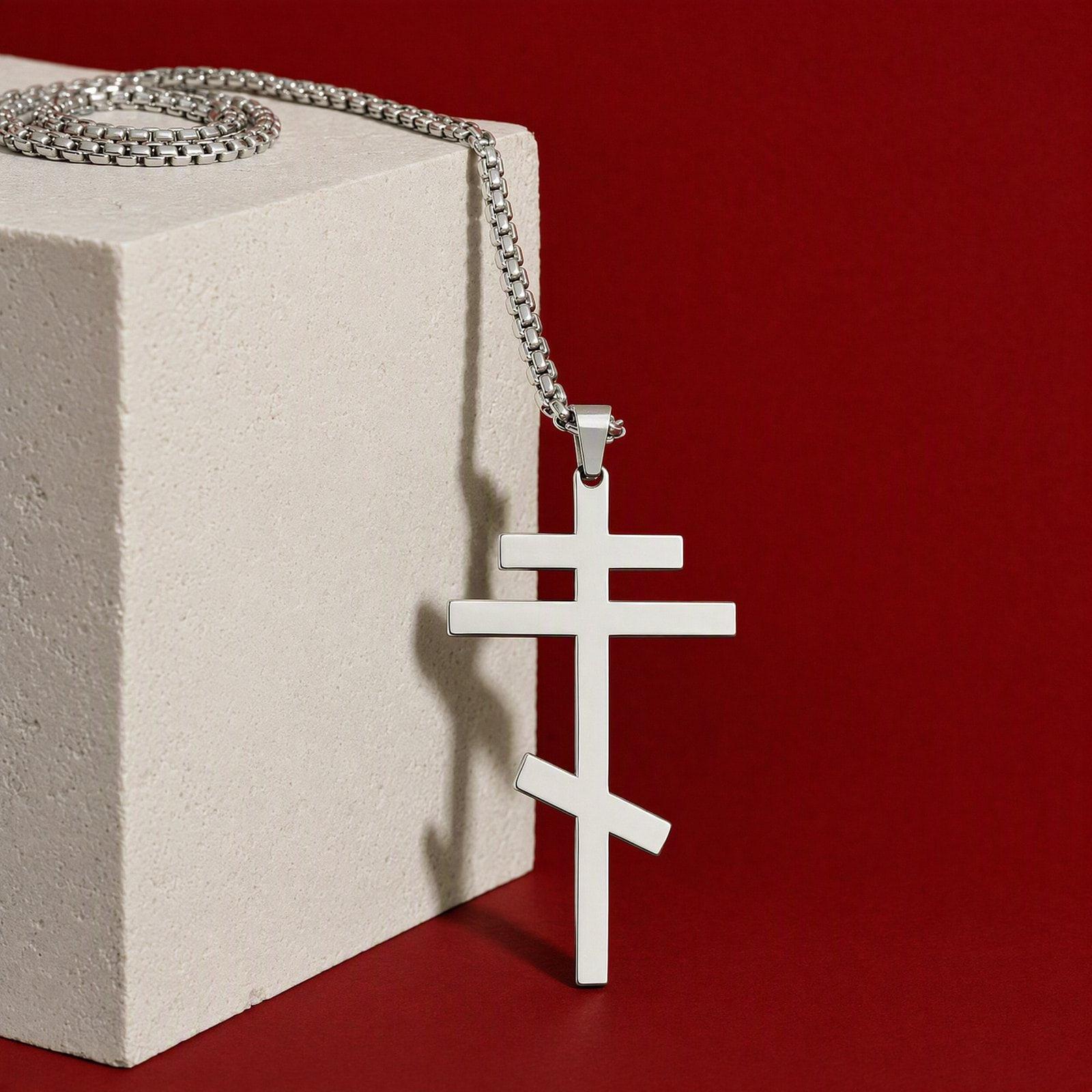 Cruz
Three-Bar Bright
Color plata · Cadena de 60cm · Cruz ortodoxa de acero inoxidable$92$64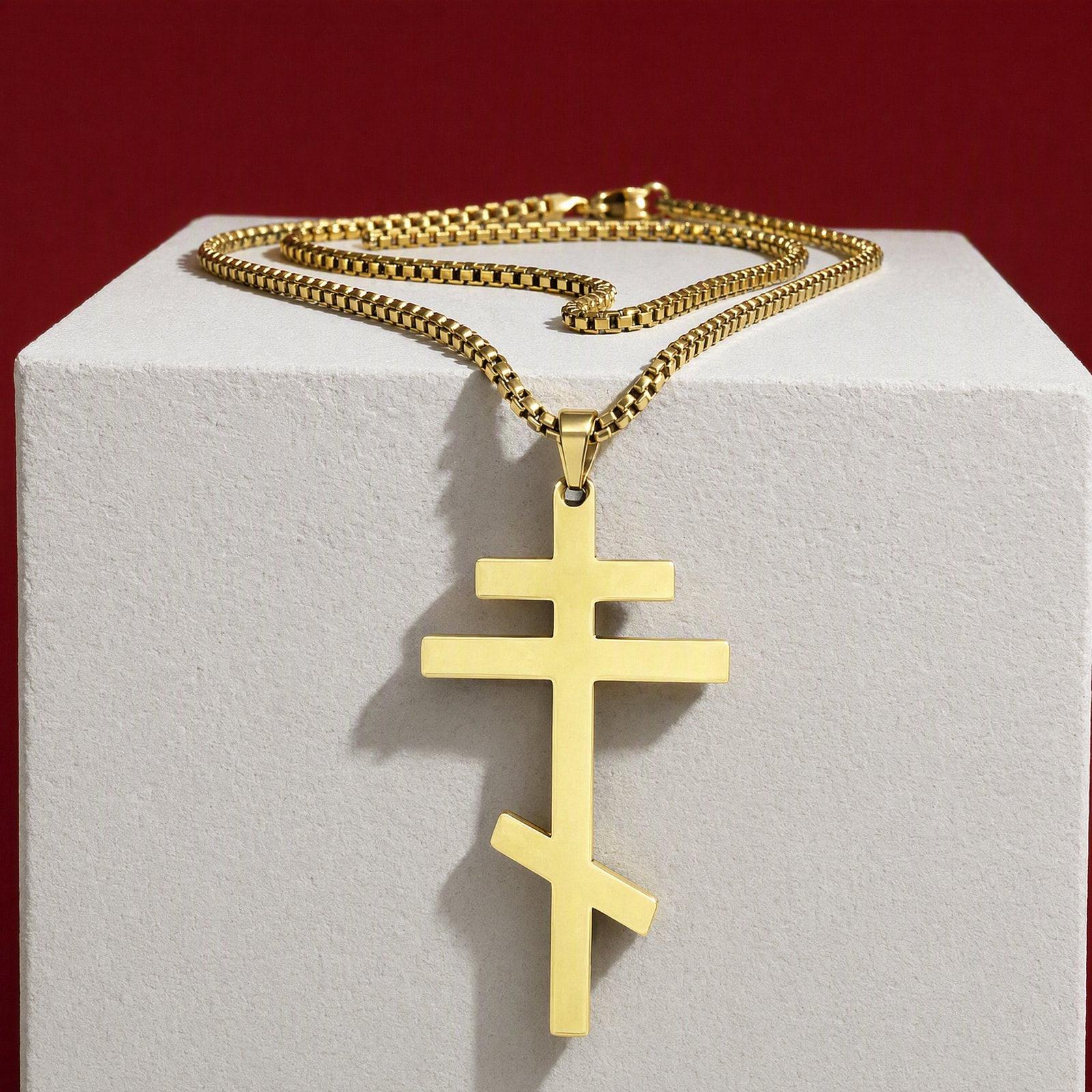 Cruz
Three-Bar Lamplight
Color oro · Cadena de 60cm · Cruz ortodoxa de acero inoxidable$92$64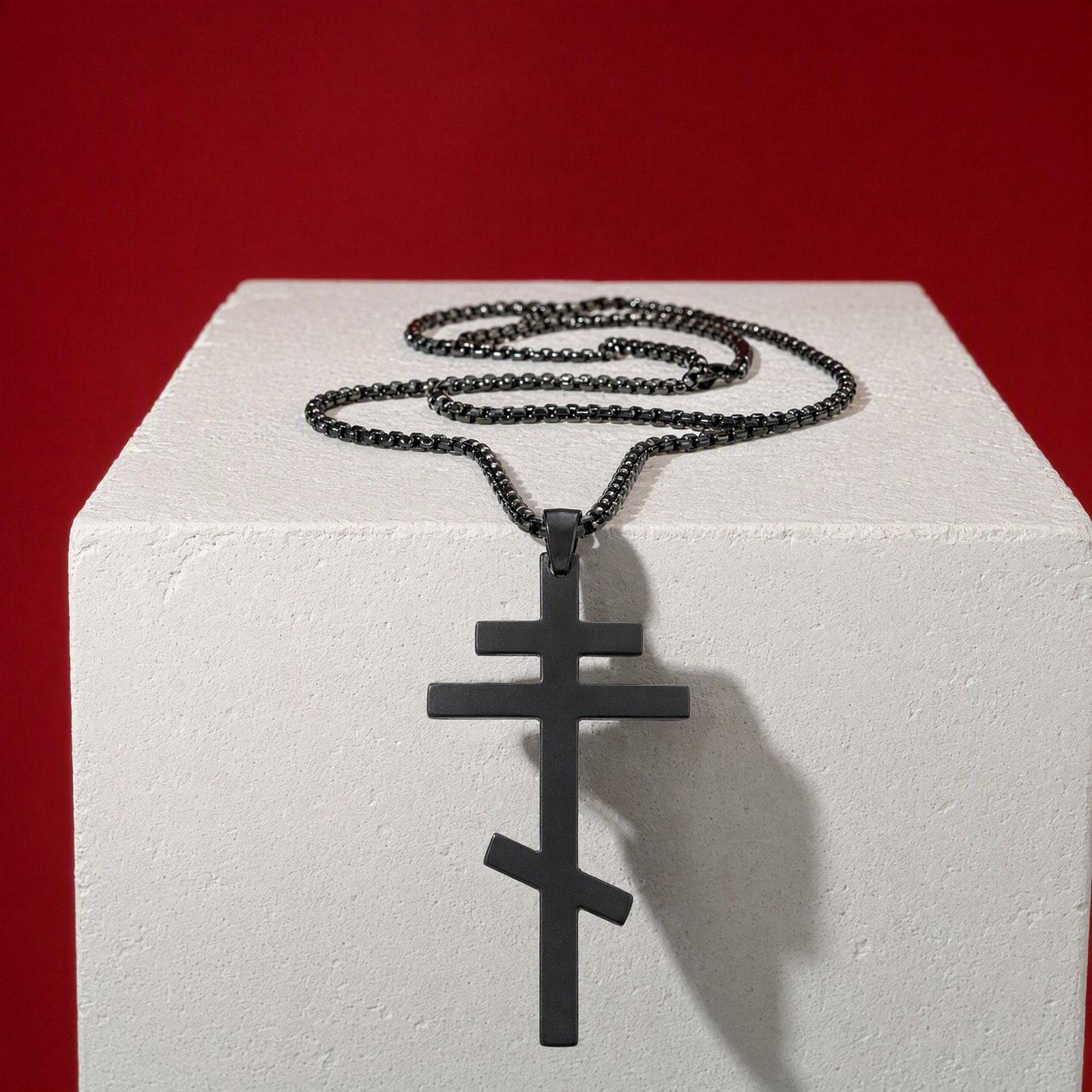 Cruz
Three-Bar Midnight
Color negro · Cadena de 60cm · Cruz ortodoxa de acero inoxidable$92$64
- Blessing, $39. Blessed by an Orthodox priest before it ships.
- Gift packaging, $20
Questions
What is the pomegranate as a Christian symbol?
The Hebrew Bible includes it in the Seven Species, its list of the Land of Israel’s special crops.
What does the pomegranate mean to Christians?
Shown split open, it signifies the full extent of Jesus’ suffering and resurrection.
How does the Orthodox Church treat the pomegranate?
Greek memorial offerings called kollyva are boiled wheat, sweetened and topped with pomegranate decoration. The wheat of kollyva, blessed in church at memorial services, commonly has pomegranate seeds added to it.
Do Western churches use the pomegranate as well?
European religious painting and church textiles use the pomegranate as a common motif, often placed in Mary’s or the child Jesus’ hands.
Does Lampada sell anything that shows the pomegranate?
No item in the catalogue is described as the pomegranate, going by the titles and descriptions. The items on this page are the nearest we carry.