Chalice Meaning: what it is and how Orthodox Christians use it
What is the chalice, and how do Orthodox Christians treat it? The facts below come from Wikipedia and OrthodoxWiki, one fact to a line, with the Orthodox and Western uses kept in separate places.
- What it is. A footed cup on a stem; today the word is used almost only for the cups of the Eucharist.
- The word. It comes from the Latin calix, ‘cup’, itself from the Greek kylix.
- Who uses it. Roman Catholics, Eastern Orthodox, Oriental Orthodox, Anglicans, Lutherans and others use a chalice for the sacramental wine at the Eucharist.
- Why it matters. After Jesus told his disciples to do this in memory of him (Luke 22:19) and Paul described the rite (1 Corinthians 11:24 to 25), the Eucharist stood at the center of Christian worship, and its vessels were richly decorated.
- Early shape. Early chalices often followed classical cup shapes, with a big bowl and a pair of upright handles; later the bowl got smaller and the base wider so the cup would stand steadily.
- How made. Chalices are usually metal, often precious metal, and may be enamelled or set with jewels; most have no handles, and some traditions still require gold plating inside the cup.
In Western churches. In Western Christianity many chalices have a knop (a node) where stem meets cup, and Roman Catholic ones from recent centuries tend to have rather narrow cups.
Facts come from Wikipedia (Chalice) and OrthodoxWiki (Chalice), put into our own words.
What the Orthodox Church does with the chalice
OrthodoxWiki: in Orthodox usage the chalice is the cup from which Communion is given at the Divine Liturgy, usually gold or silver; the chalice carries the wine and the paten (diskos) the bread (prosphora or artos), and the two are the Holy Gifts. At the proskomedia a Lamb is cut from the loaf and placed on the paten, and at the Great Entrance the Gifts are carried to the altar, where the Lamb is joined with the wine. According to the article, Eastern chalices commonly bear a cross and icons in enamel or engraving. Because everyone receives both the Body and the Blood, part of the Lamb is dropped into the chalice and Communion is given by spoon, which is why Eastern cups tend to be larger and rounder.
The IC XC NIKA medallions and a budded cross
The catalogue holds no chalice or lamb item, so the nearest are the pieces marked IC XC NIKA, the inscription OrthodoxWiki says is stamped on the bread of the Divine Liturgy: the medallions at $54 and $44, and a budded crucifix at $54. An Orthodox priest can bless each before it ships. With the Blessing, $93 to $103.
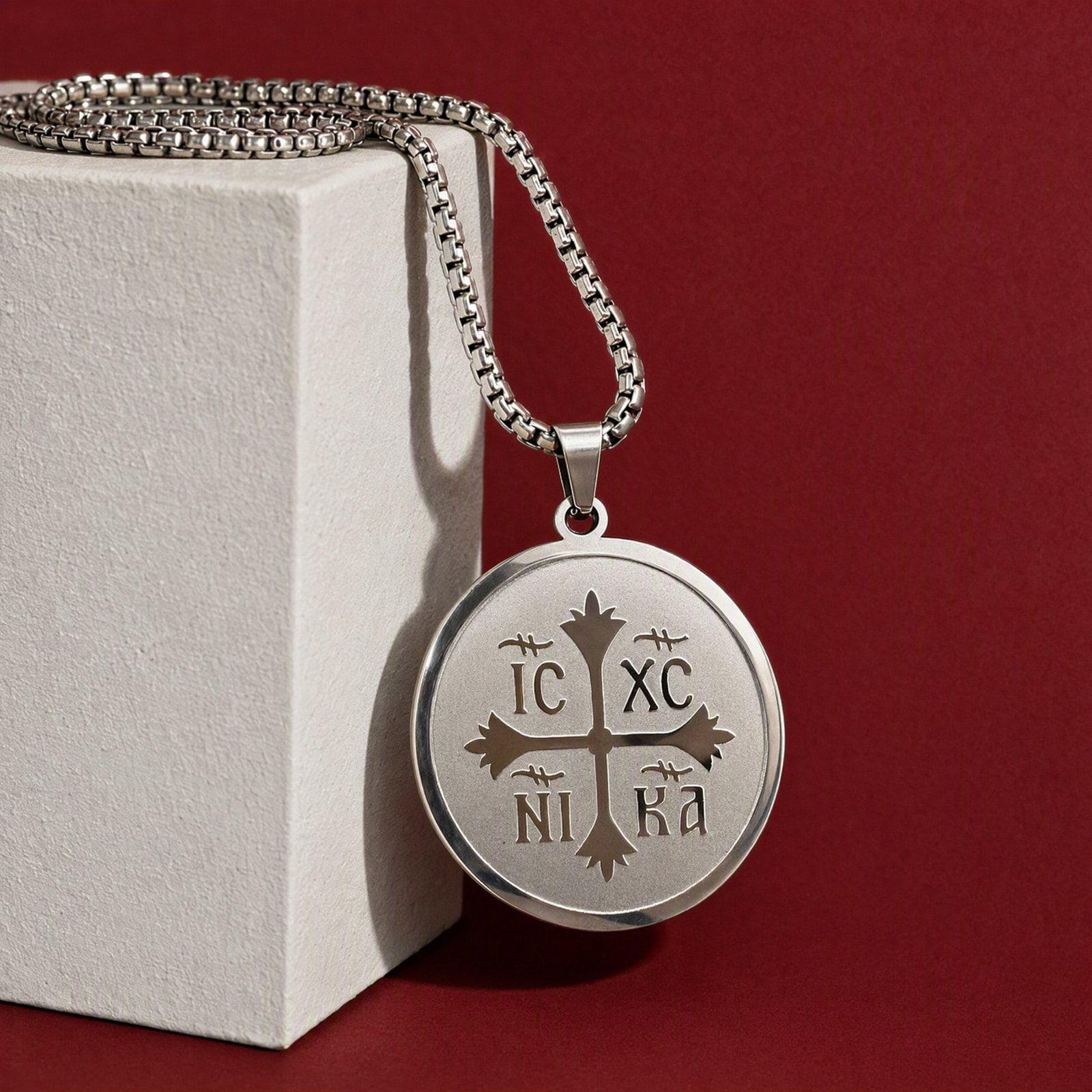 Medalla
Nika Bright
Color plata · Medalla ortodoxa de acero inoxidable$78$54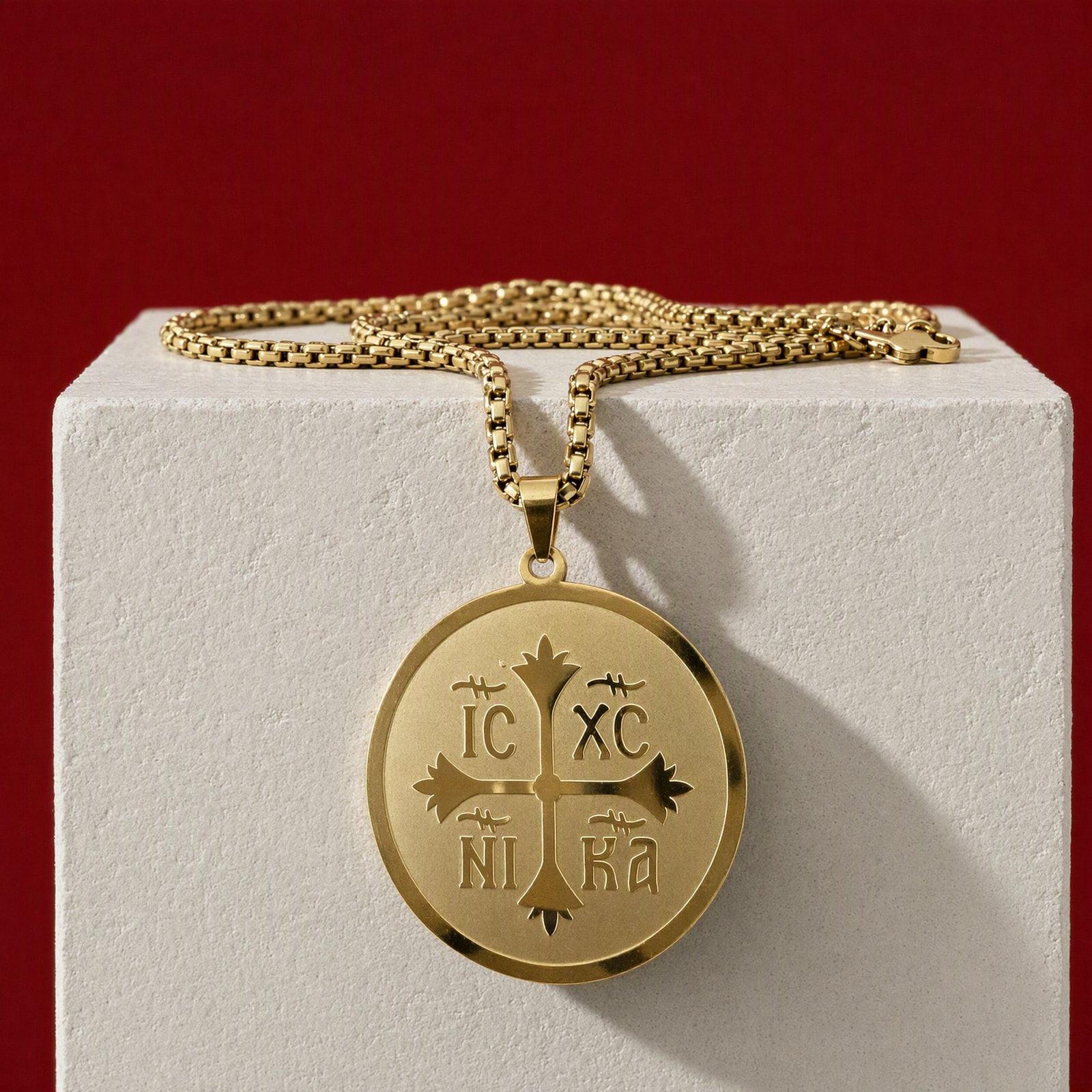 Medalla
Nika Lamplight
Color oro · Medalla ortodoxa de acero inoxidable$63$44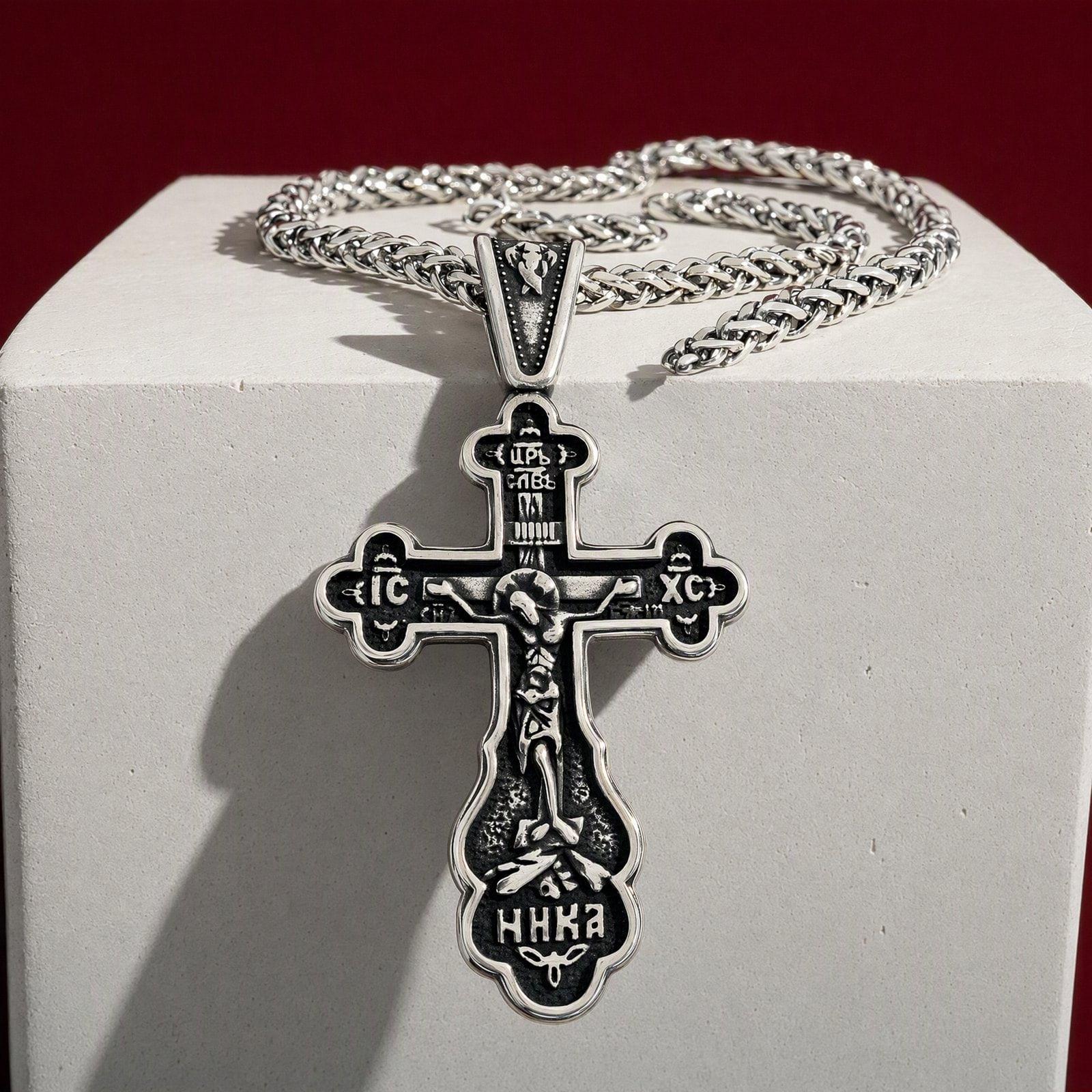 Cruz
Trefoil Bright
Color plata · Cruz ortodoxa de acero inoxidable$78$54
- Blessing, from $39. Blessed by an Orthodox priest before it ships.
- Gift packaging, $20
Questions
What is the chalice as a Christian symbol?
A footed cup on a stem; today the word is used almost only for the cups of the Eucharist.
What does the chalice mean to Christians?
After Jesus told his disciples to do this in memory of him (Luke 22:19) and Paul described the rite (1 Corinthians 11:24 to 25), the Eucharist stood at the center of Christian worship, and its vessels were richly decorated.
How does the Orthodox Church treat the chalice?
According to the article, Eastern chalices commonly bear a cross and icons in enamel or engraving. Because everyone receives both the Body and the Blood, part of the Lamb is dropped into the chalice and Communion is given by spoon, which is why Eastern cups tend to be larger and rounder.
Do Western churches use the chalice as well?
In Western Christianity many chalices have a knop (a node) where stem meets cup, and Roman Catholic ones from recent centuries tend to have rather narrow cups.
Does Lampada sell anything that shows the chalice?
No item in the catalogue is described as the chalice, going by the titles and descriptions. The items on this page are the nearest we carry.