Christogram Symbol: what it is and how Orthodox Christians use it
The Christogram turns up in Christian art and writing, and the Orthodox Church and the Western churches do not always read it the same way. This page sets out what two reference sources say about it, and keeps the Orthodox use apart from the Western.
- What it is. A monogram, or group of letters, standing for the name of Jesus Christ; the Church has long used such signs as religious symbols.
- The main forms. The Chi-Rho (ΧΡ), the IX monogram (iota and chi), the ΙΗ monogram, IHS and, in the East, ΙϹ ΧϹ.
- Constantine. Constantine I had the Chi-Rho shown on the labarum, the military standard he used in 312.
- The IX monogram. An early form, found on Christian ossuaries in Palestine, joins the first capitals, iota and chi, of the Greek names Jesus and Christ.
- Medieval variety. The medieval period used a very large number of variants, and the line between a monogram and a plain scribal abbreviation is blurred.
- The scribal root. Scribes of Greek manuscripts from the 200s and before already shortened sacred names such as Jesus and Christ, keeping the first and last letter under a line.
- Latin terms. Middle Latin has chrismon for the Chi-Rho in particular.
- The letter X. The single letter Chi (X) is the Christogram English speakers meet most, as in Xmas.
In Western churches. In the Latin West the commonest Christogram turned out to be IHS or IHC, as among Catholics and many Protestants today. Insular manuscripts such as the Book of Kells have Chi-Rho pages.
Facts come from Wikipedia (Christogram, Nomina sacra, Christ Pantocrator and Chi Rho) and OrthodoxWiki (Hand Cross and Prosphora), put into our own words.
How Orthodox Christians use the Christogram
Among Eastern Orthodox and Eastern Catholic Christians the most widely used one is ΙϹ ΧϹ; on icons it is split, ΙϹ on the left and ΧϹ on the right, and it is sometimes extended to ΙϹ ΧϹ ΝΙΚΑ, ‘Jesus Christ conquers’. OrthodoxWiki says a blessing (hand) cross often has the Crucifixion icon on it with IC XC NIKA, ‘Jesus Christ conquers’. OrthodoxWiki says the bread for the Divine Liturgy is stamped with an image that usually includes IC XC NIKA, which guides the cutting of the Lamb. On the Christ Pantocrator icon IC and XC are often written on either side of the halo, and the fingers of the raised hand are posed to form the letters.
Medallions and crosses lettered IC XC
The catalogue has no item made for the Christogram; the nearest are the ones lettered IC XC: the IC XC NIKA medallions, $54 in silver-tone and $44 in gold-tone, and the small IC XC cross, $54. An Orthodox priest can bless each before it ships. With the Blessing, $93 to $103.
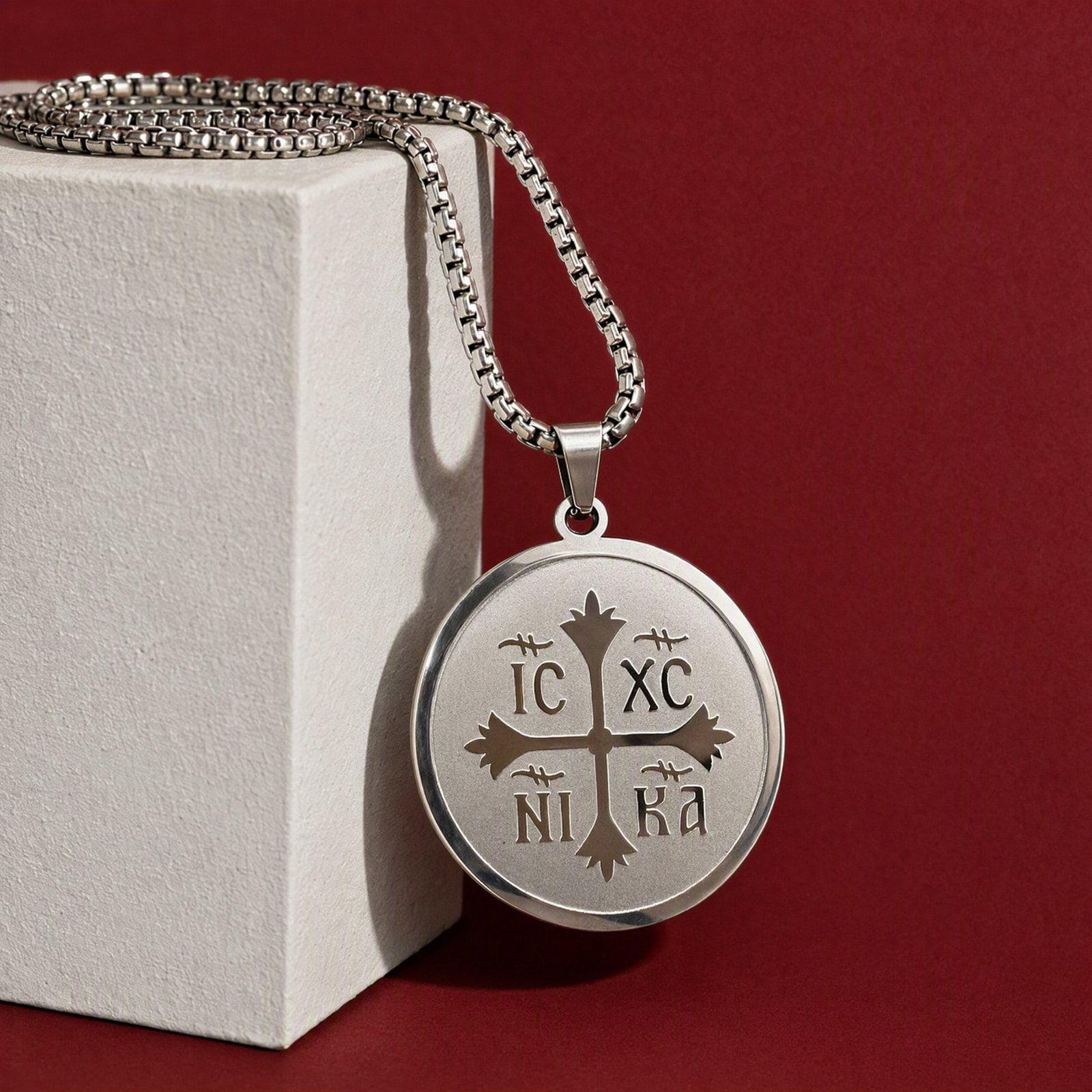 Medalla
Nika Bright
Color plata · Medalla ortodoxa de acero inoxidable$78$54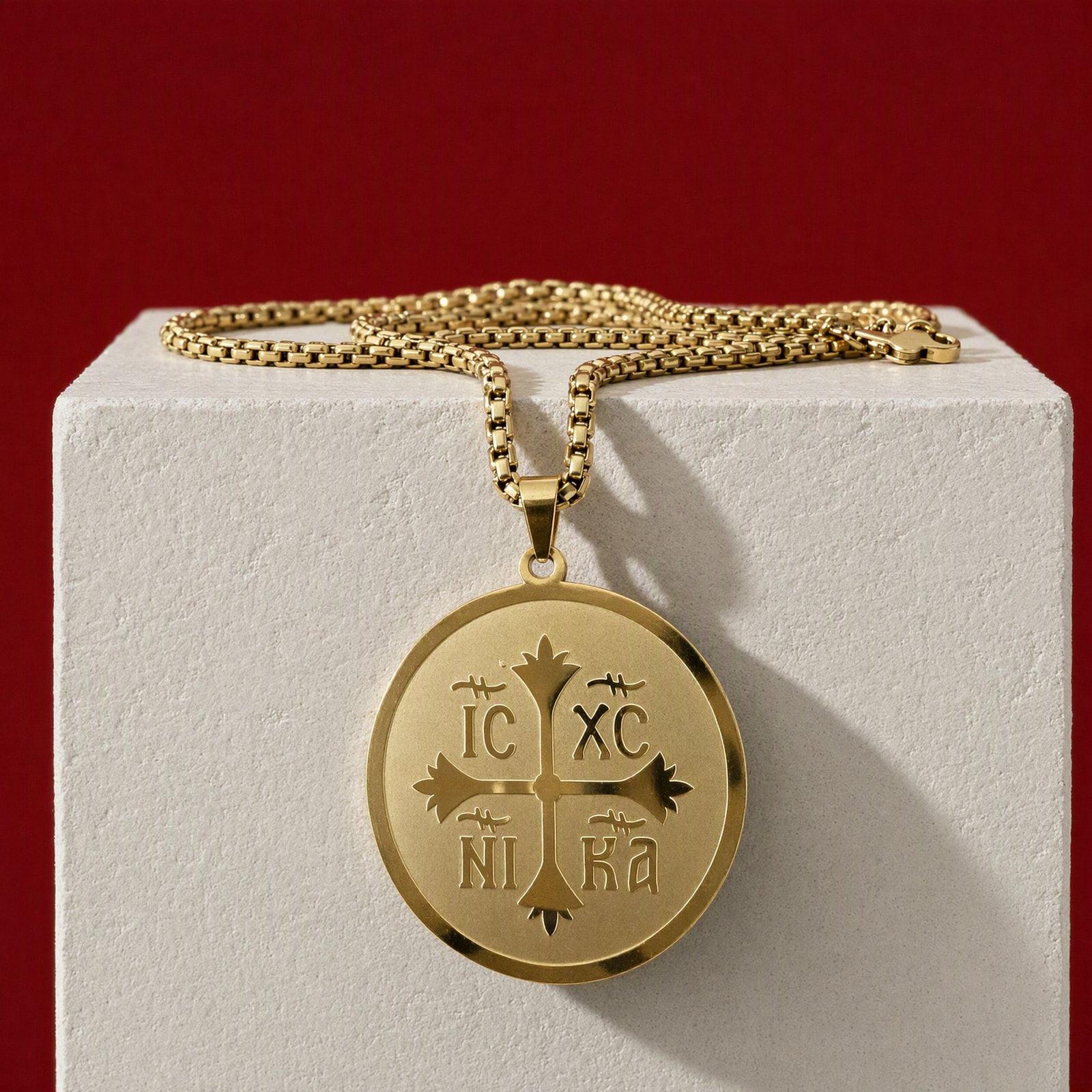 Medalla
Nika Lamplight
Color oro · Medalla ortodoxa de acero inoxidable$63$44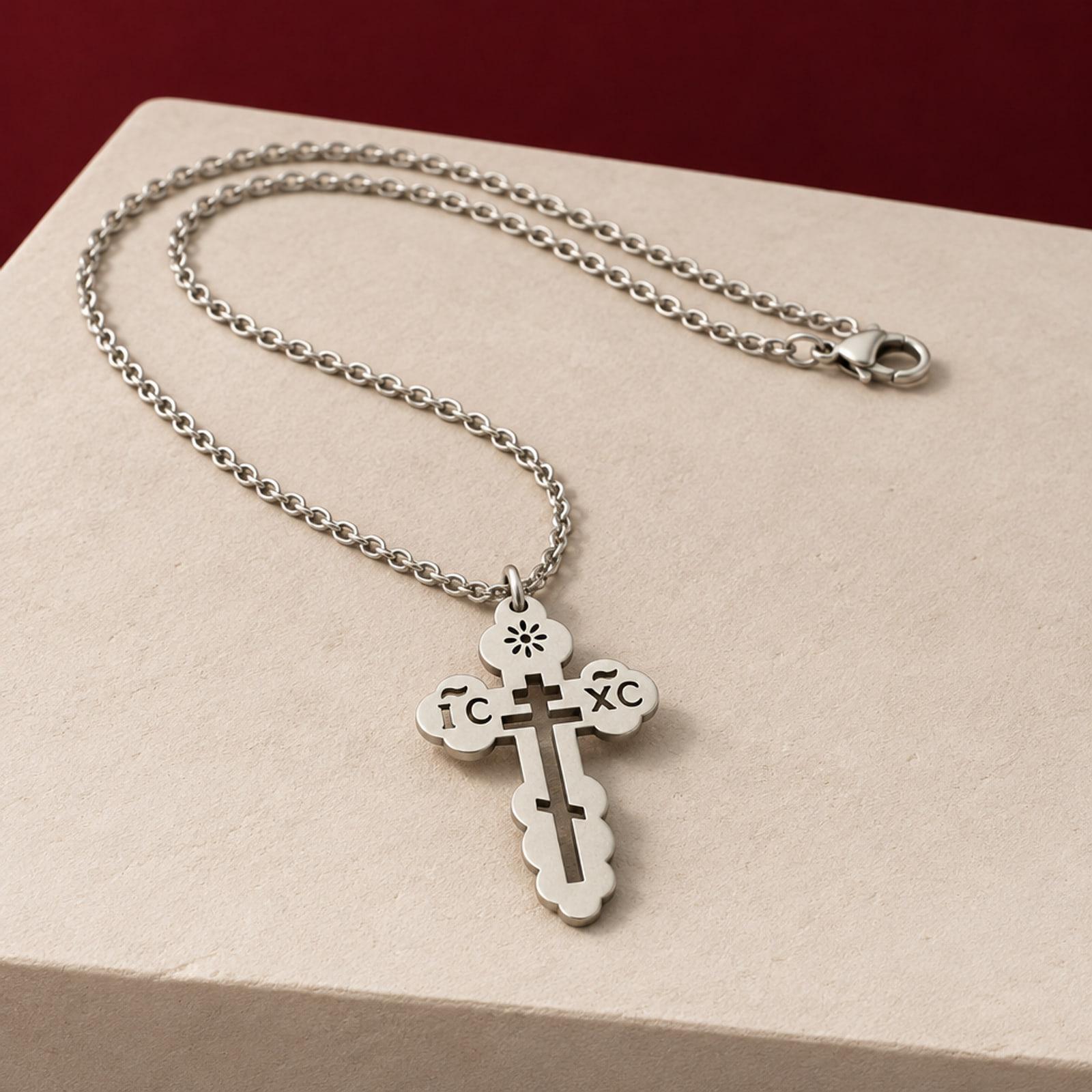 Cruz
Monogram Bright
Color plata · Cruz ortodoxa de acero inoxidable$78$54
- Blessing, from $39. Blessed by an Orthodox priest before it ships.
- Gift packaging, $20
Questions
What is the Christogram as a Christian symbol?
A monogram, or group of letters, standing for the name of Jesus Christ; the Church has long used such signs as religious symbols.
What else do the sources say about the Christogram?
The Chi-Rho (ΧΡ), the IX monogram (iota and chi), the ΙΗ monogram, IHS and, in the East, ΙϹ ΧϹ.
How does the Orthodox Church treat the Christogram?
On the Christ Pantocrator icon IC and XC are often written on either side of the halo, and the fingers of the raised hand are posed to form the letters.
Do Western churches use the Christogram as well?
Insular manuscripts such as the Book of Kells have Chi-Rho pages.
Does Lampada sell anything that shows the Christogram?
Yes, in a limited way: the catalogue names the Christogram letters IC XC on the IC XC NIKA medallions and on the small IC XC cross, and on a budded crucifix as well. The page above shows the medallions and the small cross.