Agnus Dei Meaning: what it is and how Orthodox Christians use it
This page answers agnus dei meaning from Wikipedia and OrthodoxWiki. It gives what is said of the Lamb of God in general, then what the Orthodox Church does with it, then what Western churches do.
- What it is. A title of Jesus in the Gospel of John, where John the Baptist calls him the Lamb of God (John 1:29 and 1:36).
- The words. Ἀμνὸς τοῦ Θεοῦ in Greek and Agnus Dei in Latin.
- Revelation. The Book of Revelation has more than twenty-nine references to a lamb that was slain yet stands and wins victory, and only this lamb can open the scroll (Revelation 5).
- Paul. The article reads 1 Corinthians 5:7 as Paul referring to Jesus’ death, with Jesus as the Paschal Lamb.
- The picture. From the Middle Ages the Lamb is typically a standing lamb with a halo and a cross over its shoulder, bearing a white banner marked with a red cross, though other forms exist.
- Variants. It may lie on a book with seven seals (Revelation 5), or bleed from the heart.
- In prayer. The title is common in Christian prayer; as the Latin Agnus Dei it is sung or said in the Catholic Mass and in Anglican and Lutheran services.
In Western churches. The Agnus Dei is part of the fraction rite in the Roman Rite Mass and in Anglican, Lutheran and Western Rite Orthodox services; tradition credits Pope Sergius I (687 to 701) with bringing it into the Mass.
Facts come from Wikipedia (Lamb of God) and OrthodoxWiki (Prosphora), put into our own words.
Where the Orthodox Church uses the Lamb of God
The article says Orthodox liturgical art does not use the lamb image, although it is old, because Orthodox icons show Jesus as a man, as a way of confessing the Incarnation; applying the title ‘Lamb of God’ to Jesus raises no objection. In the Orthodox Divine Liturgy the Host is called the Lamb (Greek ἄμνος). A Synod of Constantinople in 692 is said to have banned portraying Christ as a lamb; the article says the East took this up and the West did not. OrthodoxWiki says the portion of the bread called the lamb (amnon) is cut out at the proskomedia, guided by the IC XC NIKA stamp on the loaf.
The IC XC NIKA medallions and a budded cross
The catalogue holds no chalice or lamb item, so the nearest are the pieces marked IC XC NIKA, the inscription OrthodoxWiki says is stamped on the bread of the Divine Liturgy: the medallions at $54 and $44, and a budded crucifix at $54. An Orthodox priest can bless each before it ships. With the Blessing, $93 to $103.
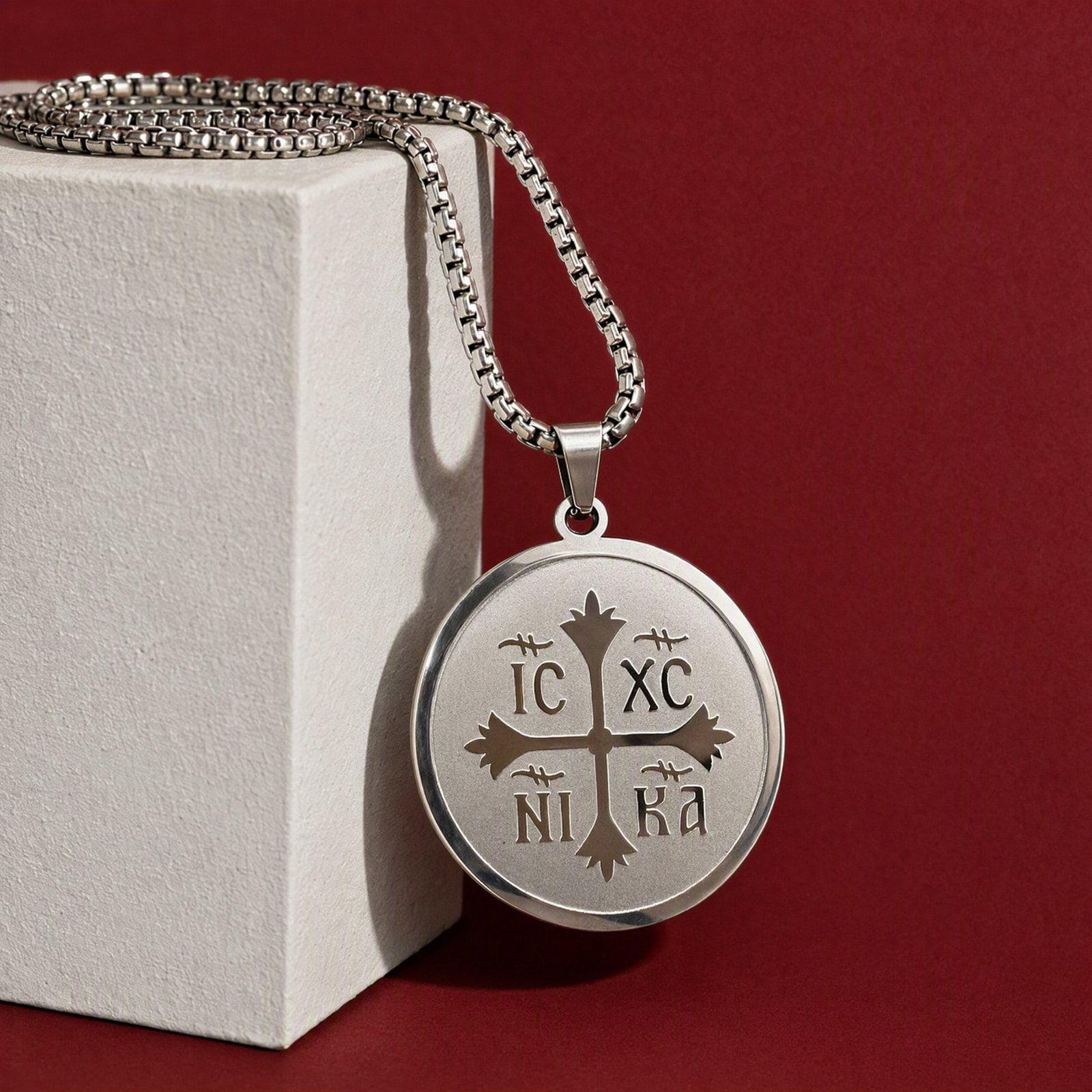 Medalla
Nika Bright
Color plata · Medalla ortodoxa de acero inoxidable$78$54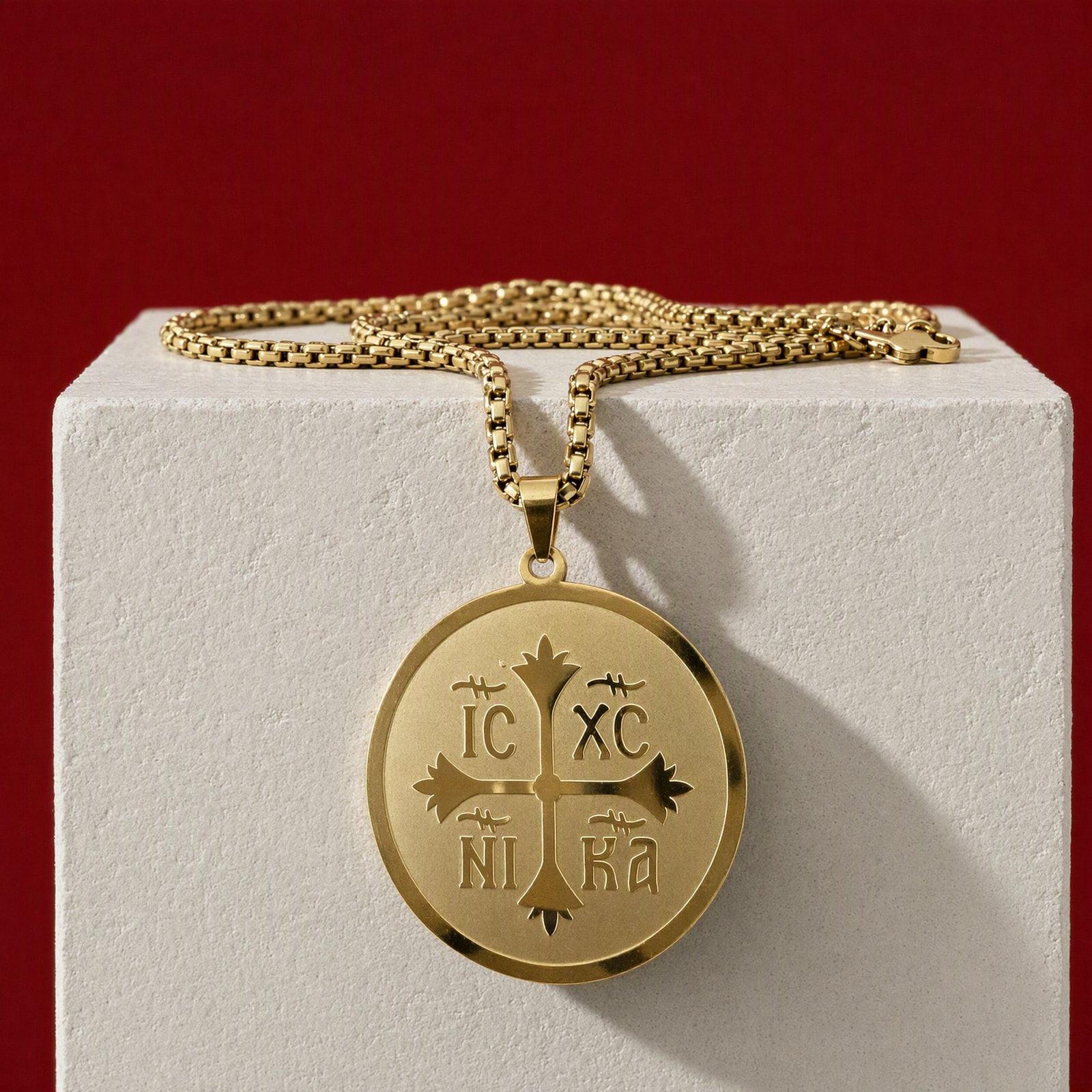 Medalla
Nika Lamplight
Color oro · Medalla ortodoxa de acero inoxidable$63$44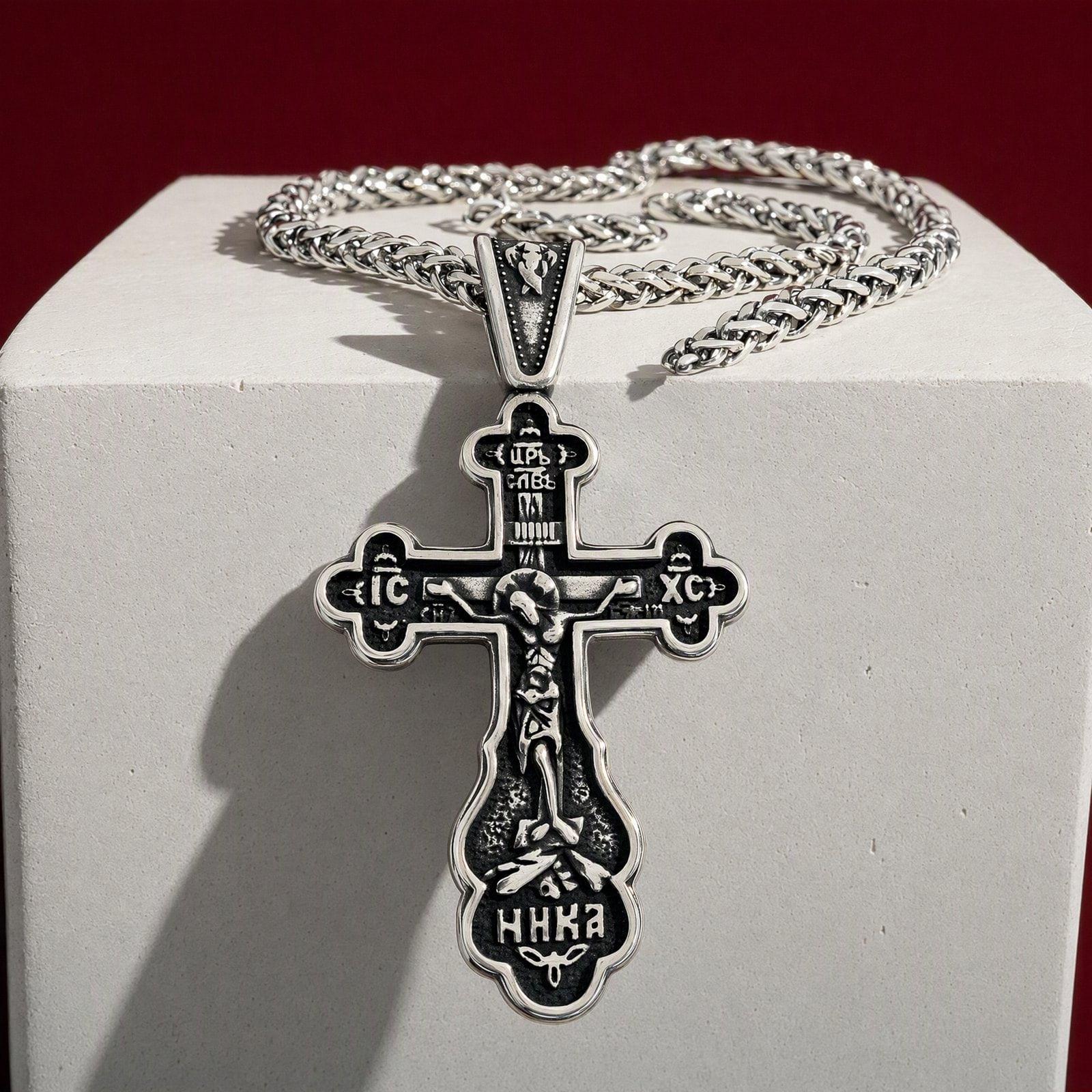 Cruz
Trefoil Bright
Color plata · Cruz ortodoxa de acero inoxidable$78$54
- Blessing, from $39. Blessed by an Orthodox priest before it ships.
- Gift packaging, $20
Questions
What is the Lamb of God as a Christian symbol?
A title of Jesus in the Gospel of John, where John the Baptist calls him the Lamb of God (John 1:29 and 1:36).
What else do the sources say about the Lamb of God?
Ἀμνὸς τοῦ Θεοῦ in Greek and Agnus Dei in Latin.
How does the Orthodox Church treat the Lamb of God?
OrthodoxWiki says the portion of the bread called the lamb (amnon) is cut out at the proskomedia, guided by the IC XC NIKA stamp on the loaf.
Do Western churches use the Lamb of God as well?
The Agnus Dei is part of the fraction rite in the Roman Rite Mass and in Anglican, Lutheran and Western Rite Orthodox services; tradition credits Pope Sergius I (687 to 701) with bringing it into the Mass.
Does Lampada sell anything that shows the Lamb of God?
No item in the catalogue is described as the Lamb of God, going by the titles and descriptions. The items on this page are the nearest we carry.