Psalm 80, which the Church numbers 79
The Church numbers this psalm 79, not 80. Look for Psalm 80 in a King James Bible and for Psalm 79 in a Septuagint, such as Brenton’s English translation. Both numbers point to the one psalm printed below. The King James text has 19 verses and Brenton’s Septuagint text has 20; the two count the verses differently. The King James text opens with a title line.
The psalm in the King James Version.
Give ear, O Shepherd of Israel, thou that leadest Joseph like a flock; thou that dwellest between the cherubims, shine forth. Before Ephraim and Benjamin and Manasseh stir up thy strength, and come and save us. Turn us again, O God, and cause thy face to shine; and we shall be saved. O LORD God of hosts, how long wilt thou be angry against the prayer of thy people?
Thou feedest them with the bread of tears; and givest them tears to drink in great measure. Thou makest us a strife unto our neighbours: and our enemies laugh among themselves. Turn us again, O God of hosts, and cause thy face to shine; and we shall be saved.
Thou hast brought a vine out of Egypt: thou hast cast out the heathen, and planted it. Thou preparedst room before it, and didst cause it to take deep root, and it filled the land. The hills were covered with the shadow of it, and the boughs thereof were like the goodly cedars. She sent out her boughs unto the sea, and her branches unto the river.
Why hast thou then broken down her hedges, so that all they which pass by the way do pluck her? The boar out of the wood doth waste it, and the wild beast of the field doth devour it. Return, we beseech thee, O God of hosts: look down from heaven, and behold, and visit this vine; And the vineyard which thy right hand hath planted, and the branch that thou madest strong for thyself.
It is burned with fire, it is cut down: they perish at the rebuke of thy countenance. Let thy hand be upon the man of thy right hand, upon the son of man whom thou madest strong for thyself. So will not we go back from thee: quicken us, and we will call upon thy name. Turn us again, O LORD God of hosts, cause thy face to shine; and we shall be saved.
The psalm in the Septuagint, in Brenton’s English translation.
For the end, for alternate strains, a testimony for Asaph, a Psalm concerning the Assyrian.
Attend, O Shepherd of Israel, who guidest Joseph like a flock; thou who sittest upon the cherubs, manifest thyself; before Ephraim and Benjamin and Manasse, stir up thy power, and come to deliver us. Turn us, O God, and cause thy face to shine; and we shall be delivered.
O Lord God of hosts, how long art thou angry with the prayer of thy servant? Thou wilt feed us with bread of tears; and wilt cause us to drink tears by measure. Thou hast made us a strife to our neighbours; and our enemies have mocked at us. Turn us, O Lord God of hosts, and cause thy face to shine; and we shall be saved. Pause.
Thou hast transplanted a vine out of Egypt: thou hast cast out the heathen, and planted it. Thou madest a way before it, and didst cause its roots to strike, and the land was filled with it. Its shadow covered the mountains, and its shoots equalled the goodly cedars. It sent forth its branches to the sea, and its shoots to the river.
Wherefore hast thou broken down its hedge, while all that pass by the way pluck it? The boar out of the wood has laid it waste, and the wild beast has devoured it.
O God of hosts, turn, we pray thee: look on us from heaven, and behold and visit this vine; and restore that which thy right hand has planted: and look on the son of man whom thou didst strengthen for thyself. It is burnt with fire and dug up: they shall perish at the rebuke of thy presence. Let thy hand be upon the man of thy right hand, and upon the son of man whom thou didst strengthen for thyself.
So will we not depart from thee: thou shalt quicken us, and we will call upon thy name. Turn us, O Lord God of hosts, and make thy face to shine; and we shall be saved.
Its kathisma. In the Church’s reading of the Psalter this psalm belongs to kathisma 11, one of twenty divisions of the book.
Left unsaid. Hapgood’s Service Book of the Holy Orthodox-Catholic Apostolic Church has no psalm heading for this psalm that we could find, and this page does not guess which service uses it.
The Psalms in the Church’s prayer
The Church prays the Psalms in two ways: in the services, where they are set among the hymns and prayers, and in the Psalter read in kathismata, twenty readings in all. Psalm 80 is in kathisma 11.
The Church speaks of what a psalm says and of where it is read; it does not treat a psalm as a charm. Read Psalm 80 as the Church does, with the words in front of you, in the translation you know best and in the Septuagint’s.
A prayer rope for the psalms
A black wool prayer rope with dividing beads and a tassel, $34, for the Jesus Prayer at home or on the road. An Orthodox priest can bless it before it ships. With the Blessing, $83 (normally $98).
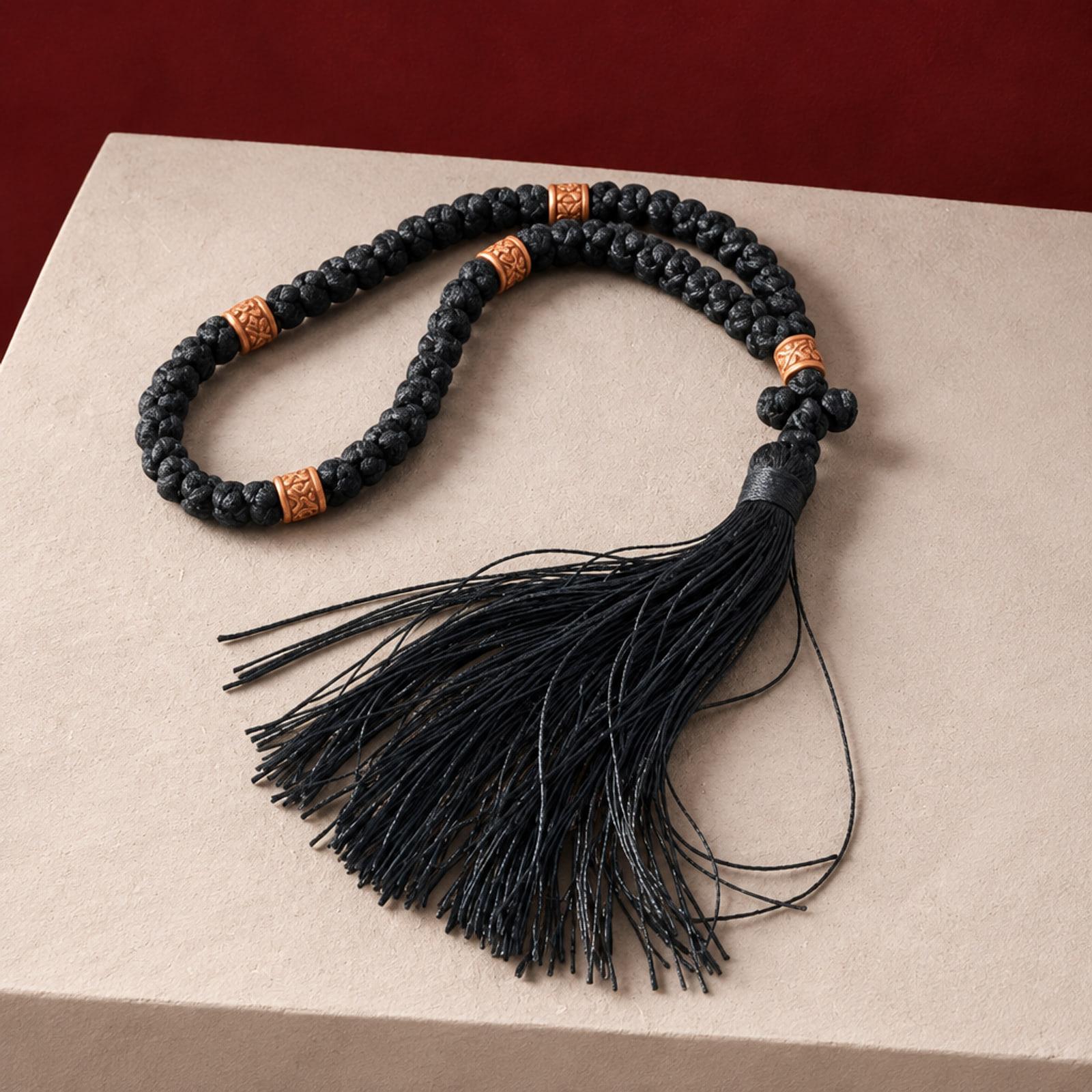
- Blessing, $49. Blessed by an Orthodox priest before it ships.
- Gift packaging, $20
Questions
What is Psalm 80 in the Septuagint?
It is Psalm 79. The King James Bible numbers it 80; the Septuagint, which the Orthodox Church reads, numbers it 79. The psalm is the same.
How many verses does Psalm 80 have?
The King James text has 19 and Brenton’s Septuagint text has 20, because the two count the verses differently.
Which kathisma is Psalm 80 in?
It is in the eleventh, kathisma 11. The Church divides the Psalter into twenty kathismata and reads them in order.
Is Psalm 80 printed in the service book?
We did not find it under a Psalm heading in Isabel F. Hapgood’s service book, so this page names no service for it.
Whose translations are these?
The first is the King James Version. The second is Brenton’s English translation of the Septuagint, the Greek Old Testament that the Orthodox Church reads.