Cross of Lorraine necklace, the two-barred cross and where it comes from
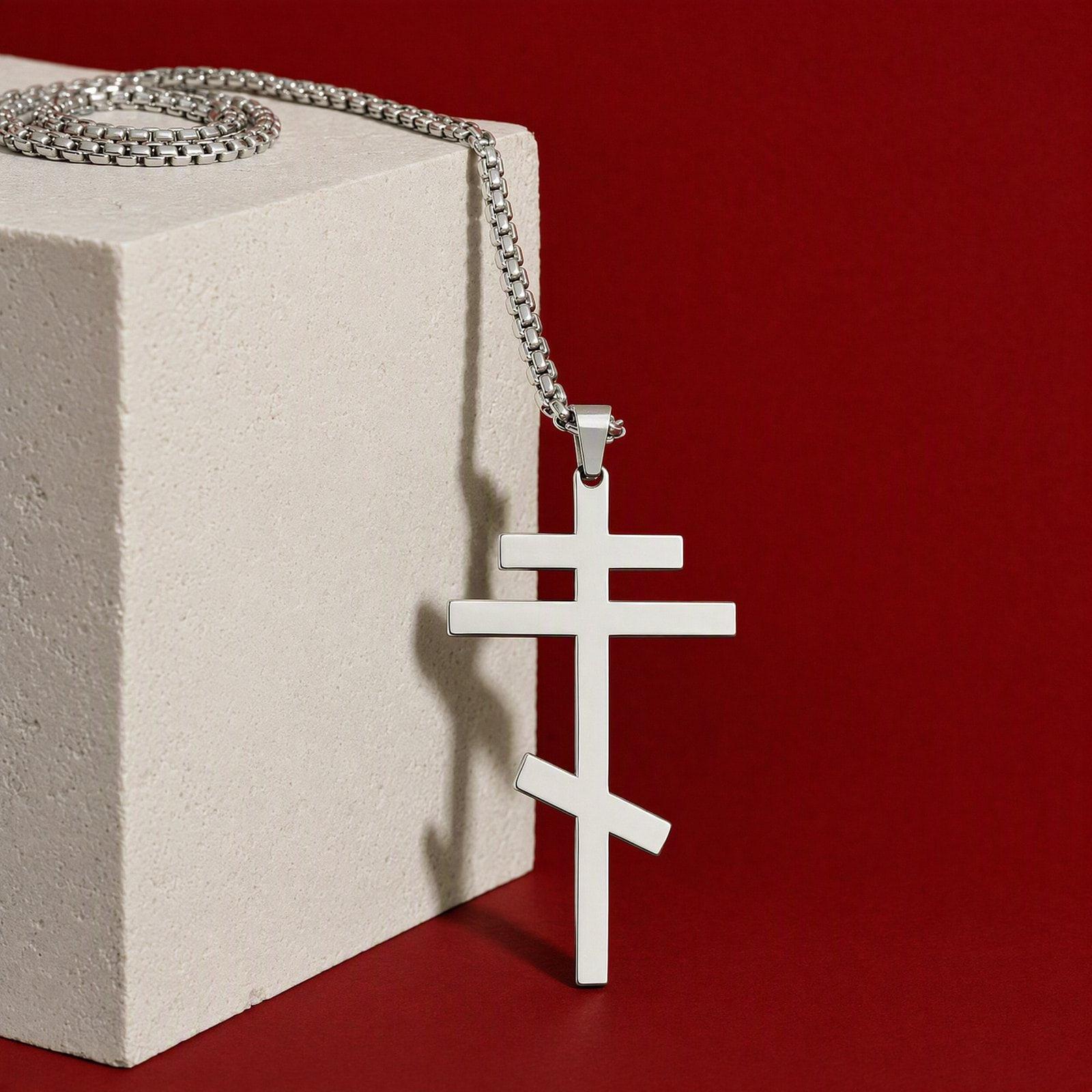
The Cross of Lorraine is a heraldic cross with one upright and two crossbars, the upper one usually the shorter. Wikipedia says it came to the Duchy of Lorraine by way of Hungary in the fifteenth century, and that in the sixteenth century it was still called the Cross of Anjou. Lampada does not sell it. The nearest cross we carry is the plain Orthodox cross, which has three bars.
Béla III was the first Hungarian king to use a two-barred cross as a sign of royal power, in the late twelfth century, and the historian Pál Engel thinks he probably took it from the Byzantine Empire. Wikipedia adds that the shape ultimately comes from the crozier of an archbishop. Today it is a symbol of the Lorraine region of eastern France, and many Americans know it from the American Lung Association, which took it up after a Paris physician suggested it in 1902.
The Lorraine name also gathers in the patriarchal cross, with both bars near the top. On that cross the upper bar is the board that carried the inscription above Christ, INRI in Latin and INBI in Greek. The patriarchal cross is found on Byzantine coins from the second reign of Justinian II, which began in 705.
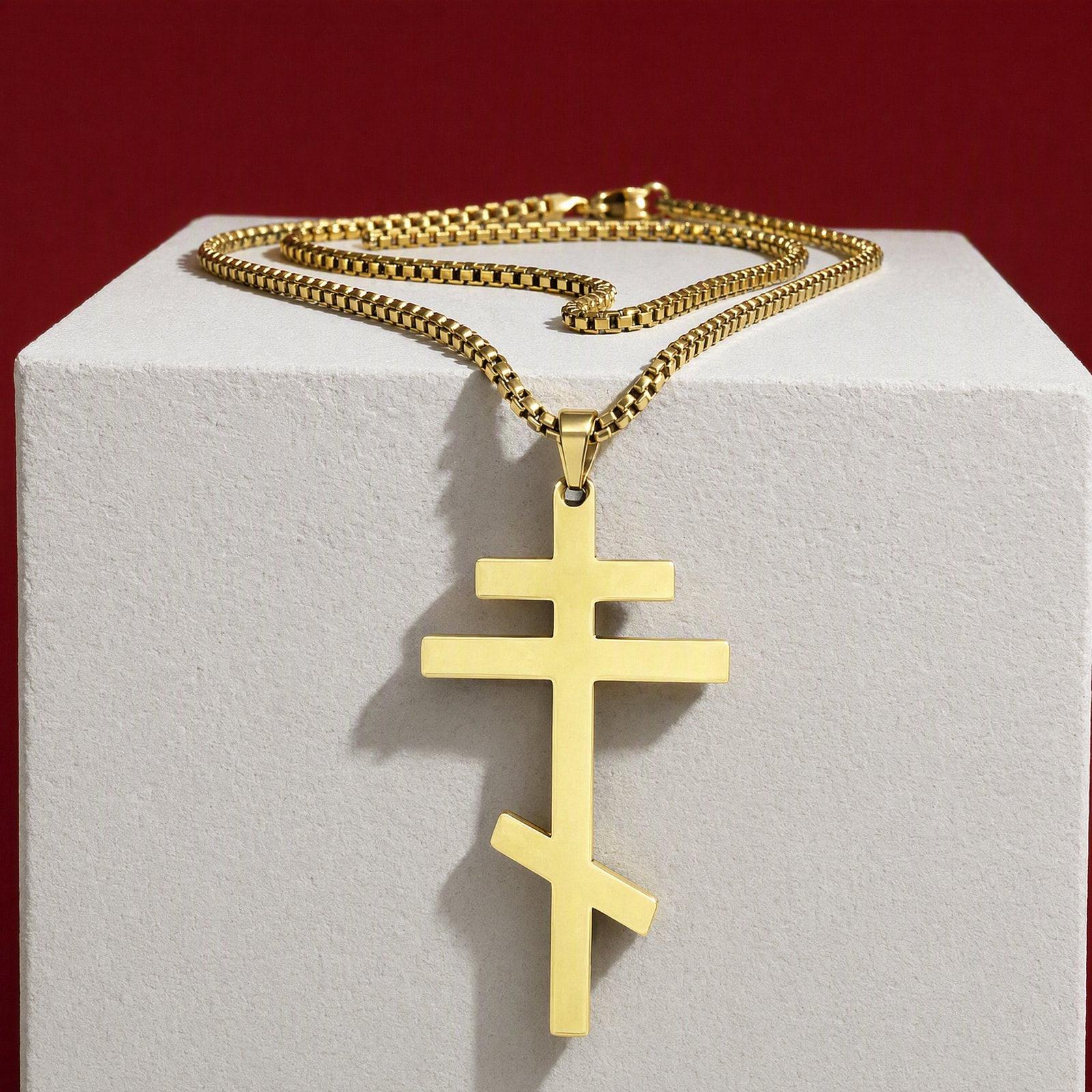
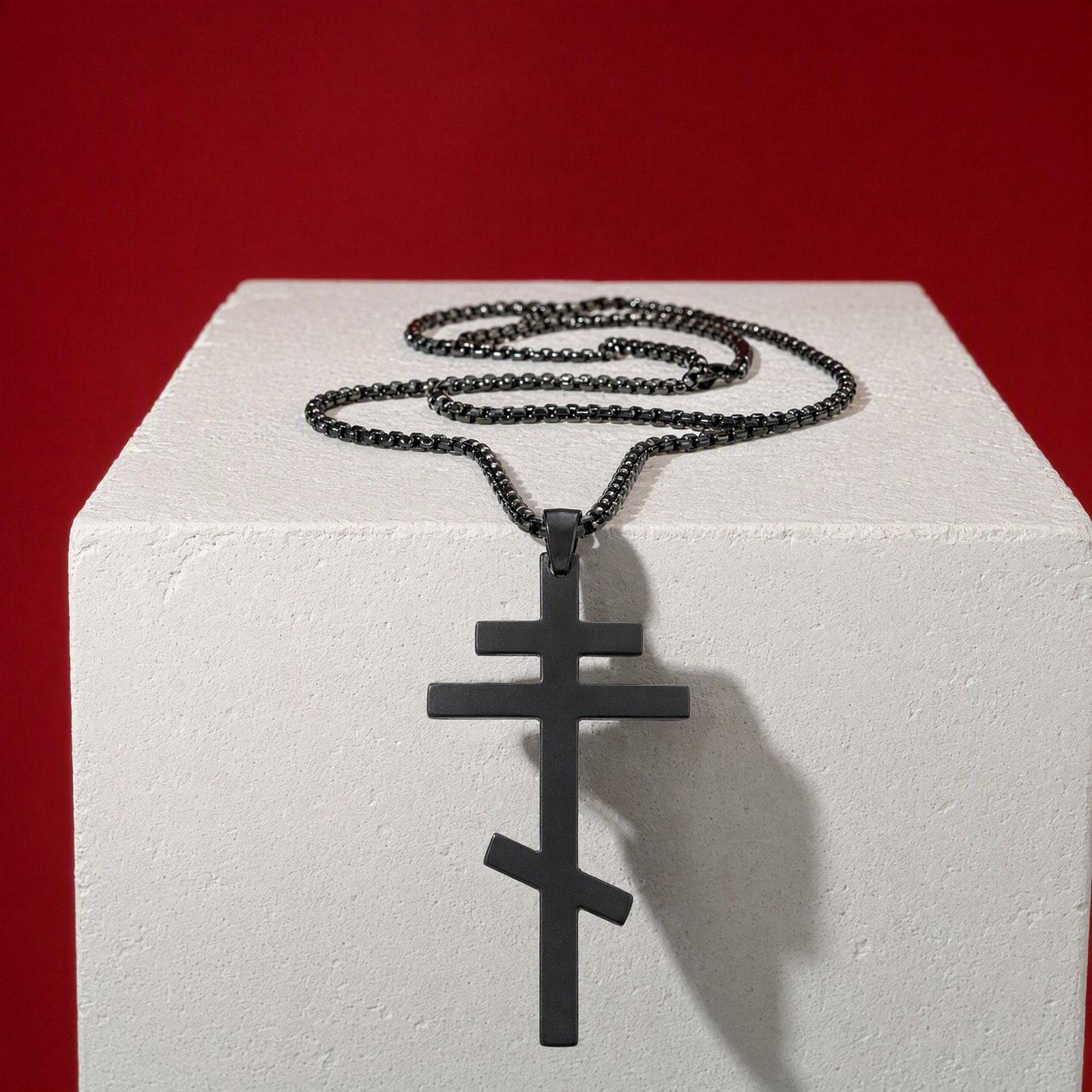
Our Orthodox crosses have three bars. OrthodoxWiki explains them one by one: the top bar is the sign placed on the cross, the long middle bar is where his arms were nailed, and the bottom bar is the footrest that held his body. By finish, it is $64 in silver-tone, with the gold-tone one at $64 and the black one at $64.
Two bars, three bars and a shared Byzantine root
No source in our hands says that Orthodox Christians use the Cross of Lorraine as their cross, so the page does not claim it. What they do show is a common ancestry. Wikipedia links the double bar to the Byzantine court, and finds the patriarchal cross on Byzantine coins and in the icon art of the Greek world and Eastern Europe. The cross OrthodoxWiki describes has a third bar for the footrest. If you want a cross to wear, a priest of the Orthodox Church can bless it ahead of shipping, and with the Blessing the plain crosses run $103.
A plain Orthodox cross on a chain
The closest we have to a simple cross for the neck is the plain cross with three bars at $64 in silver-tone, with no figure on it to explain.
- Blessing, $39. Blessed by an Orthodox priest before it ships.
- Gift packaging, $20
Questions
What does the Cross of Lorraine mean?
Wikipedia treats it as a heraldic sign with roots in Hungary and the Byzantine court, not as a cross with a doctrine of its own. It is a symbol of the Lorraine region of eastern France.
Is the Cross of Lorraine the same as the patriarchal cross?
Wikipedia says the Lorraine name has come to cover several variants, including the patriarchal cross, which has two bars close to the top. In the usual Cross of Lorraine the upper bar is the shorter.
Do Orthodox Christians use the Cross of Lorraine?
We found no source that says so. OrthodoxWiki describes the Orthodox cross with three bars. Wikipedia finds the two-barred patriarchal cross in the icon art of the Byzantine Greek world and Eastern Europe.
Why was it called the Cross of Anjou?
Wikipedia says the sign was still called that in the sixteenth century, and that René II, Duke of Lorraine, had inherited it from ancestors of the House of Anjou.
Does Lampada sell a Cross of Lorraine necklace?
Not that shape. Our plain Orthodox cross, which has three bars, hangs on a chain, with the silver-tone one at $64, the gold-tone one at $64 and the black one at $64.