Orthodox incense burners for the home: smokeless or charcoal
An Orthodox incense burner is a small burner that stays in one place before the icons while church incense smolders in it. There are two kinds. A charcoal burner heats the incense on a lit tablet and gives the full church fragrance with visible smoke. A smokeless burner warms the incense over a tea light, with little smoke and no charcoal smell.
For an apartment or a home with smoke alarms, start with a smokeless brass burner. For the full church scent on feast days, use charcoal. Below: how each works, how to choose for your space, materials, how to use a smokeless burner well, and the burners we carry.
Smokeless burner or charcoal burner?
| Smokeless (tea light) | Charcoal | |
|---|---|---|
| Heat source | A tea light under a metal pan | A lit charcoal tablet in the bowl |
| Smoke | A faint wisp | Clearly visible, like church |
| Fragrance | Clean incense scent | Full and strong, with a little charcoal smell |
| Setup | Light a tea light, add grains | Light charcoal with tongs, wait, add grains |
| Mess | Charred grains on the pan | Ash to empty and bury |
| Best for | Apartments, daily prayer, smoke alarms | Feasts, house blessings, larger rooms |
Many families keep both: the smokeless burner for every evening, the charcoal censer for feasts. To cense from room to room, see our censer guide.
Choosing an Orthodox incense burner for home
Think about where it will stand and who lives with you.
- Small apartment: a smokeless burner, set on the shelf before the icons, away from curtains.
- House with a prayer corner: either kind; a charcoal burner on a heat-proof tile gives the church scent on Sundays.
- Children at home: a burner with a stable, heavy base and a handle for adults; keep it above their reach.
- Renters with sensitive alarms: smokeless, with few grains, and a window open a little.
Whatever you choose, the burner belongs in the prayer corner, in front of the icons, where the family prays.
Brass, ceramic and other materials
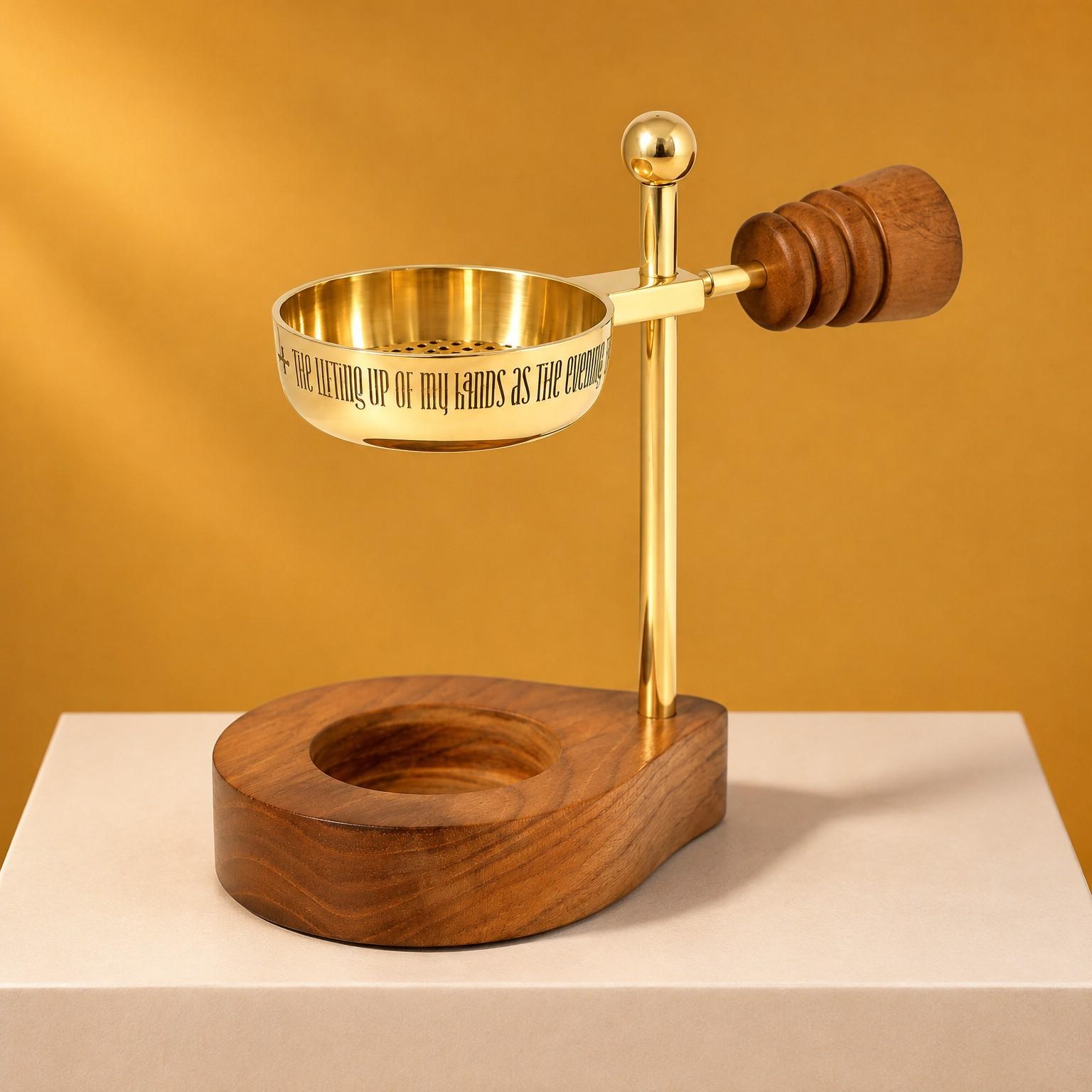
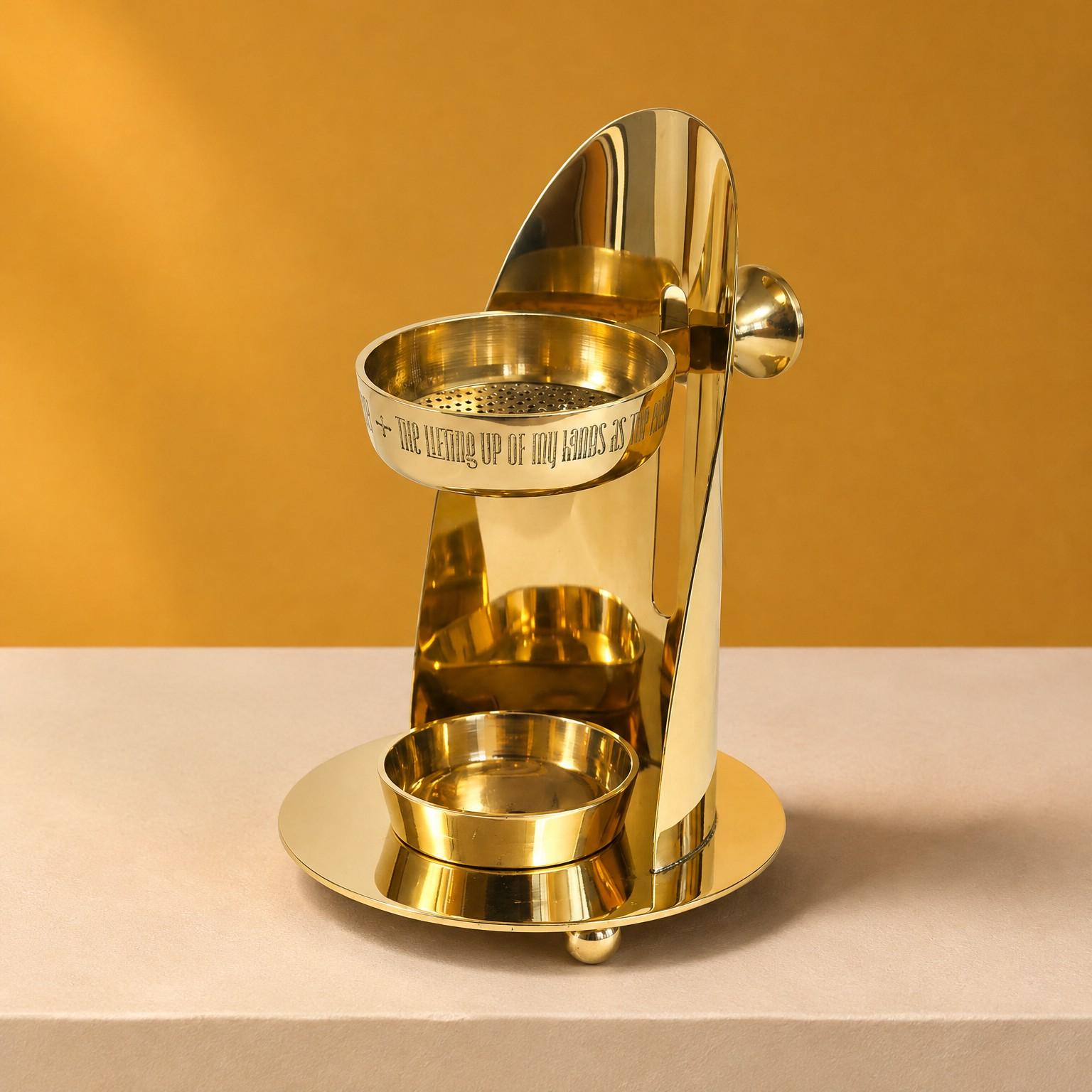
Brass is the traditional metal of the church incense burner: it takes heat for years and develops a warm, darker tone; brass polish brings back the shine. Ceramic burners are common in shops and look handsome, but they must be fully heat-rated, and thin pieces can crack. Wood appears only as a base or handle, never near the flame. Greek and Slavic designs often carry a cross on the lid, and some carry a verse; our smokeless burners carry Psalm 140:2 around the tray: “Let my prayer arise in Thy sight as incense.” Read the psalm on our Psalms pages.
How to use a smokeless burner well
- Light a beeswax tea light and set it in the base.
- Put one, two or three grains of incense in the pan above; the scent comes in about half a minute.
- For more fragrance, lower the pan toward the flame; for a gentler burn, raise it.
- For incense that melts, such as amber or soft resin blends, lay a small square of foil on the grate first so nothing drips into the flame.
- Let it cool fully before cleaning, then scrape off the charred grains with something soft, like an old toothbrush.
Move the grains with tongs or a spoon, never your fingers, and do not carry a lit burner around the house.
Catholic and Greek Orthodox burners
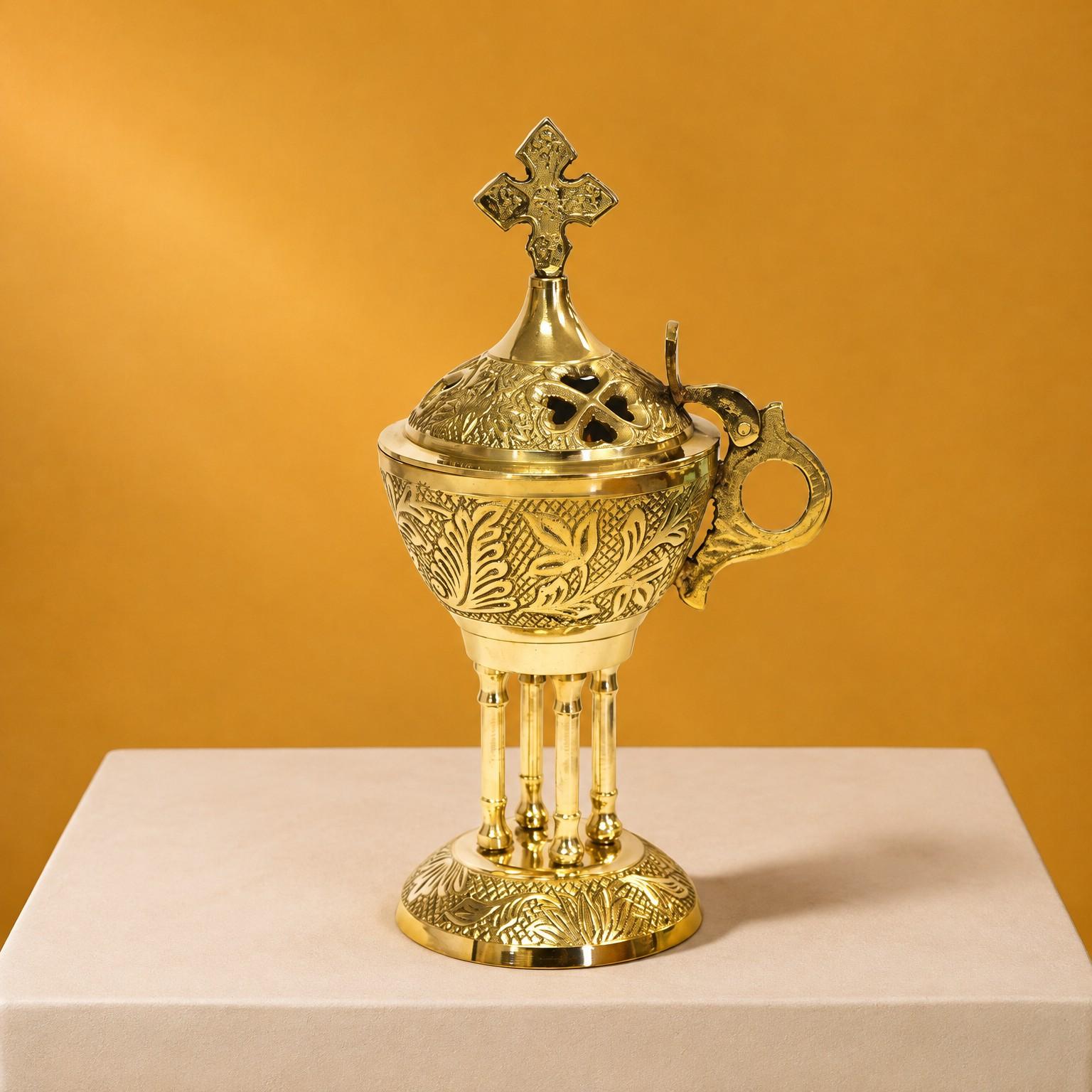
A catholic incense burner at home is usually a small bowl of charcoal or a smokeless warmer used for evening prayer or a feast; in church, Catholics use the thurible on chains, explained in our thurible guide. The incense burner Greek Orthodox families keep at home looks much the same: brass, a cross on the lid, set before the icons. The grains are the same church incense, and so is the prayer that goes with them.
The incense burners we carry
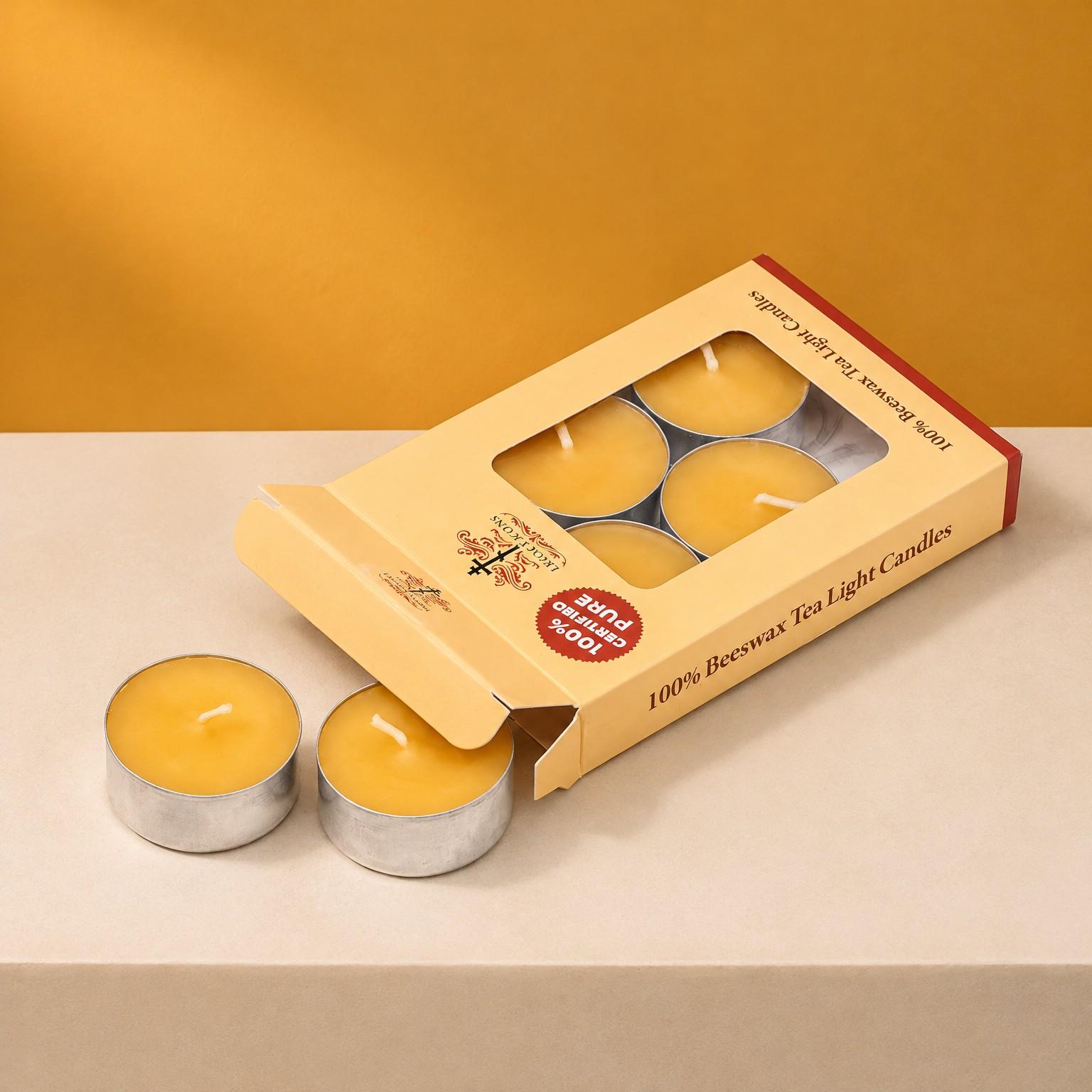
The smokeless brass burner ($139) stands 5 in tall on a carved hardwood base, with a wooden handle to adjust the pan safely. The deluxe smokeless burner ($159) stands 5.5 in tall with an adjustable pan. Both run on a tea light; our beeswax tea lights, six to a pack ($39), burn without the soot of paraffin.
For charcoal, the brass hand censer ($94) has a cross on its lid and an antique finish. Pick the incense in our church incense guide. Orders arrive in 5–8 business days: US-based, ships from Florida.
Our incense burners
Two smokeless brass burners, a brass hand censer and beeswax tea lights. Each card shows its live price.
US-BASED. SHIPS FROM FLORIDA
Delivery in 5–8 business days.
Questions
What is the difference between an incense burner and a censer?
A burner stands in one place; a censer is carried, by a handle at home or on chains in church. Many people use the words for the same thing. If you want to walk from room to room, choose a censer with a handle.
Does a smokeless incense burner really make no smoke?
It makes very little. The tea light warms the incense instead of burning it on charcoal, so you get a faint wisp and the fragrance, with no charcoal smell. It is the gentlest choice for a small apartment.
What tea lights should I use in a smokeless burner?
Beeswax tea lights work best. Paraffin tea lights leave black soot that soon coats the underside of the incense pan. Keep a spare pack beside the burner so it is always ready for evening prayer.
Is a brass or ceramic incense burner better?
Brass is durable, takes heat well and lasts for generations; it darkens with age unless polished. Ceramic is lighter and can crack if it heats unevenly. We carry brass burners; we do not carry ceramic ones today.
Can I burn church incense in an ordinary incense holder?
Not a stick holder. Church incense is grains of resin, which need either a lit charcoal tablet in a heat-proof bowl or a warming pan over a flame. A holder made for sticks or cones will not work for it.
Will an incense burner set off my smoke alarm?
A smokeless burner rarely does. A charcoal burner can, if you add many grains at once or set it under the alarm. Use one to three grains, open a window a little, and keep the burner away from the detector.