Where did the Jesus Prayer come from?
The Jesus Prayer came from the monks of the Egyptian desert, where the Desert Fathers and Desert Mothers lived from the fifth century and where its words turned up in writing on the remains of a cell. Its standard form is first recorded around the year 600, and it spread through the Philokalia and the tradition of hesychasm.
The desert. Anthony the Great withdrew into the desert around 270; when he died in 356 the desert held thousands of monks and nuns who had followed his example. The prayer grew out of their life of psalms and quiet. A letter credited to John Chrysostom (died 407) already commends repeating a short plea to Jesus Christ, Son of God, for mercy, without ceasing.
Early advice. Ammonas told a monk to keep the publican’s words always in his heart, and Macarius of Egypt taught Evagrius a short prayer to say with each breath. In Gaza, Barsanuphius and John proposed several short forms, and their chief disciple Dorotheus told his own pupil to keep God in mind with a constant plea to Jesus for mercy.
The standard form. The earliest explicit mention of the form still used is in the Discourse on Abba Philimon, written around the year 600. John Climacus, who lived from about 523 to 606, recommended a one-worded prayer of this kind in his Ladder of Divine Ascent.
Athos and the Philokalia. The Philokalia, compiled at Mount Athos by Nicodemus and by Makarios, who was of Corinth, and first printed at Venice in 1782, gathers the writings of this tradition. Hesychasm, the tradition of inner stillness in which the prayer is central, was defended by Gregory Palamas at synods in Constantinople between 1341 and 1351.
In our time. The nineteenth-century book The Way of a Pilgrim describes living by the prayer in the tradition of the Philokalia, and brought it to many readers.
In short. Desert monks, then Gaza, then Philimon and Climacus, then Athos and the Philokalia: the prayer reached its present shape over many centuries.
A prayer handed on
For Orthodox Christians the Jesus Prayer is not an invention of any one teacher but something handed on from the early monks, shaped by their lives of prayer and Scripture. It is held to be one of the Church’s most profound prayers, said repeatedly and often with a prayer rope, and always as a plea to Christ and not as a technique. Gregory Palamas defended the hesychast tradition of prayer in the fourteenth century. A parish priest can say which books suit a beginner and how a layperson may take up this old prayer.
For the prayer’s old tradition
The black wool prayer rope with dividing beads and a tassel, $34, is made for the Jesus Prayer, and the crucifix with the Jesus Prayer on the front, $64, carries its words.
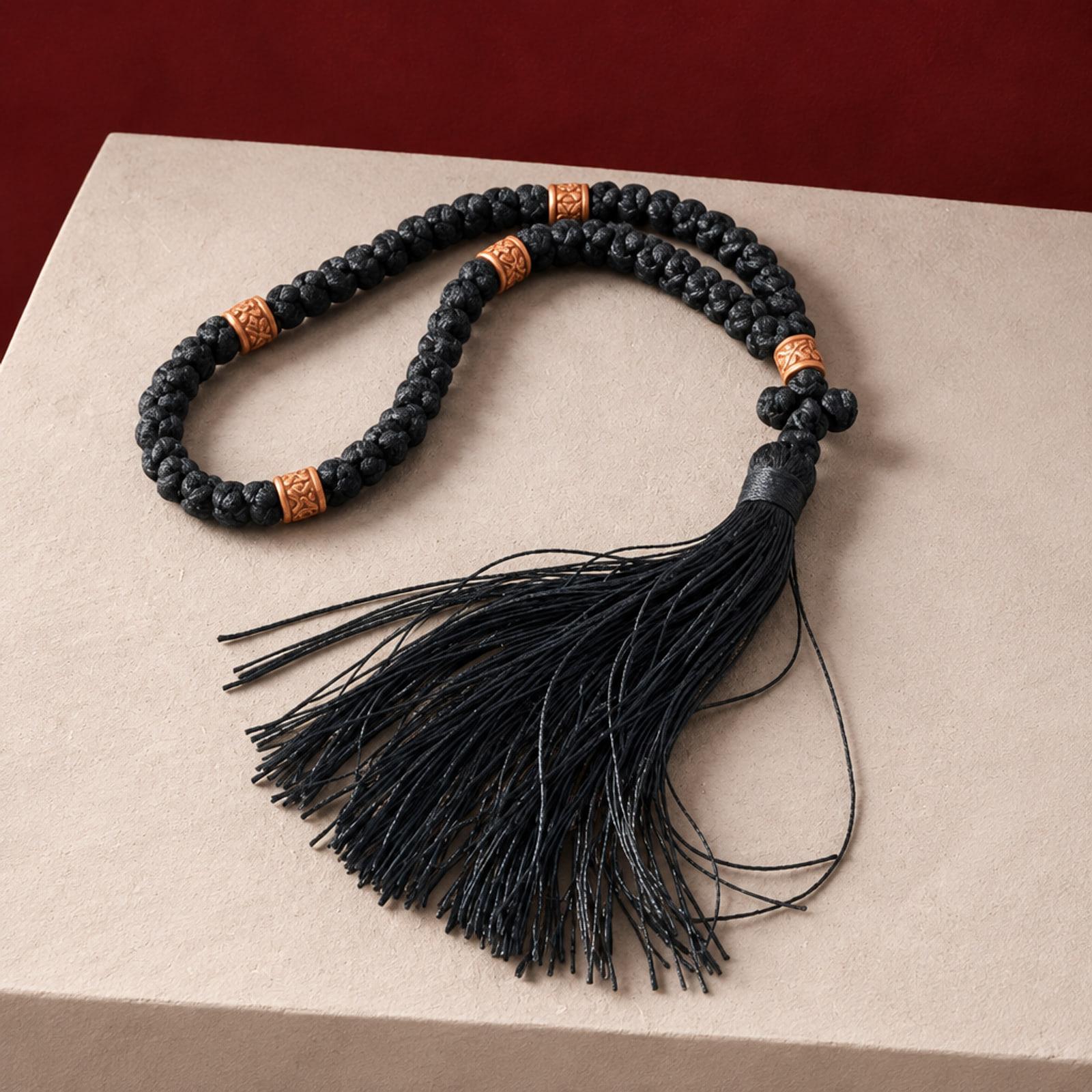 Prayer rope
Fifty-Knot Chotki
Black wool, 50 knots$49$34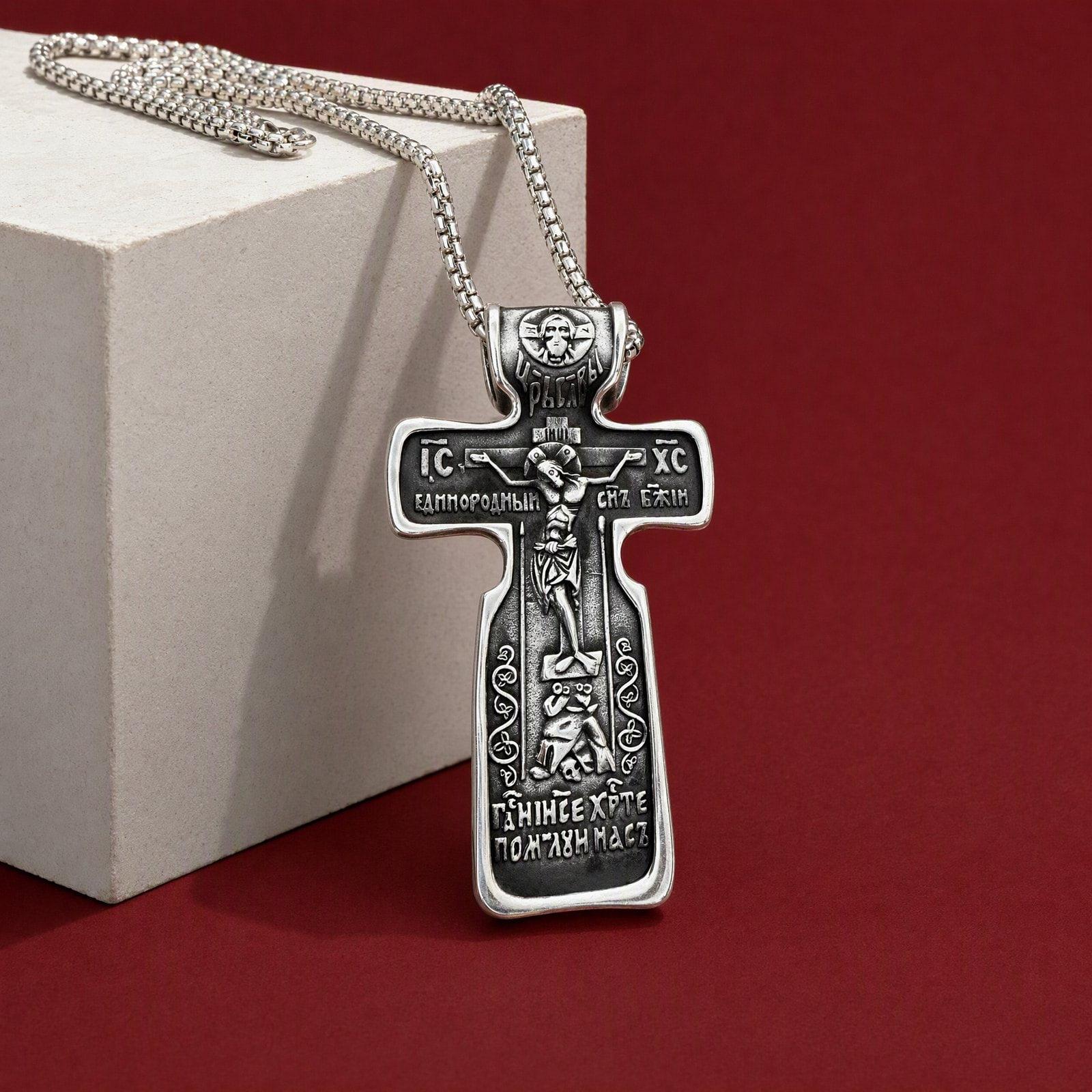 Cross
Jesus Prayer Bright
Stainless steel, silver finish, 24 in chain$92$64 Icon
Pantocrator, Wood Arch
Wood, gold finish$99$69
- Blessing, from $39. Blessed by an Orthodox priest before it ships.
- Gift packaging, $20
Questions
Where did the Jesus Prayer come from?
From the monks of the Egyptian desert, in the fifth century or earlier; its standard form is first recorded around the year 600.
Who invented the Jesus Prayer?
No single person. The desert monks shaped it from Scripture, and writers such as Philimon and John Climacus handed on its form.
What is the Philokalia?
Writings on prayer and the spiritual life, gathered on Mount Athos and published at Venice in 1782.
What is hesychasm?
The tradition of inner stillness in prayer, which often uses the Jesus Prayer.