Psalm 43: the psalm, its kathisma and its numbers
Looking for Psalm 43? It is here, and in the Septuagint, the numbering the Orthodox Church uses, it is Psalm 42. A reader may meet either number, depending on the Bible on the shelf. Both texts run to 5 verses.
The psalm in the King James Version.
Judge me, O God, and plead my cause against an ungodly nation: O deliver me from the deceitful and unjust man. For thou art the God of my strength: why dost thou cast me off? why go I mourning because of the oppression of the enemy? O send out thy light and thy truth: let them lead me; let them bring me unto thy holy hill, and to thy tabernacles. Then will I go unto the altar of God, unto God my exceeding joy: yea, upon the harp will I praise thee, O God my God.
Why art thou cast down, O my soul? and why art thou disquieted within me? hope in God: for I shall yet praise him, who is the health of my countenance, and my God.
The psalm in the Septuagint, in Brenton’s English translation.
A Psalm of David. Judge me, O God, and plead my cause, against an ungodly nation: deliver me from the unjust and crafty man.
For thou, O God, art my strength: wherefore hast thou cast me off? and why do I go sad of countenance, while the enemy oppresses me? Send forth thy light and thy truth: they have led me, and brought me to thy holy mountain, and to thy tabernacles. And I will go in to the altar of God, to God who gladdens my youth: I will give thanks to thee on the harp, O God, my God.
Wherefore art thou very sad, O my soul? and wherefore dost thou trouble me? Hope in God; for I will give thanks to him, who is the health of my countenance, and my God.
What the psalm says. The psalm is a prayer for judgment and for guidance. It begins with a request that God judge the one who prays, plead his cause against an ungodly nation and deliver him from the deceitful and unjust man. Then comes a question to God himself: since you are the God of my strength, why have you cast me off, and why do I go mourning because of the oppression of the enemy? The prayer grows more specific in the middle verses, where he asks that God send out his light and his truth to lead him and bring him to the holy hill and to the dwelling. He then promises to go to the altar of God, to the God of his exceeding joy, and to praise him on the harp. The psalm closes with a question: why are you cast down, O my soul, and why are you disquieted within me? Hope in God, for I shall yet praise him, who is the health of my countenance and my God.
It has the shape of a prayer of longing: a plea, a complaint, a request, a promise and a refrain. The plea is for judgment against an ungodly nation. The complaint is the question to God, why have you cast me off. The request is for light and truth to lead him up to the holy hill and to the tabernacles. The promise is that he will go to the altar of God, to God his exceeding joy, and praise him upon the harp. The refrain, why are you cast down, O my soul, is the voice of the one who prays speaking to himself, and the answer he gives himself is hope in God.
The reading it belongs to. Orthodox Christians speak of the Psalter in twenty kathismata, and Psalm 43 is in the sixth of them, kathisma 6.
Left unsaid. Hapgood’s Service Book of the Holy Orthodox-Catholic Apostolic Church has no psalm heading for this psalm that we could find, and this page does not guess which service uses it.
How the Church reads the Psalter
The Psalter is the book the Church prays from. It divides the Psalms into twenty kathismata, readings taken in order, and Psalm 43 comes round in its place in kathisma 6. The psalms are also set into the services themselves, as the pages of Hapgood’s Service Book show.
An Orthodox Christian will often name a psalm by its kathisma and by the Septuagint number the Church sings it under. If you came for the words, they are above. If you came to pray them as the Church does, the kathisma is the place to begin.
For someone in a hard season
The Comfort Set, $209, brings together a folding icon of their patron saint beside the Guardian Angel, a bronze-tone Holy Face crucifix, a prayer rope, a gold-tone Mother of God icon in an arched frame and a printed prayer with their names, and the story of their saint’s life and feast day, sent to you by email. Choose the Blessing on its page and an Orthodox priest blesses it before it ships. With the Blessing, $258 (normally $348).
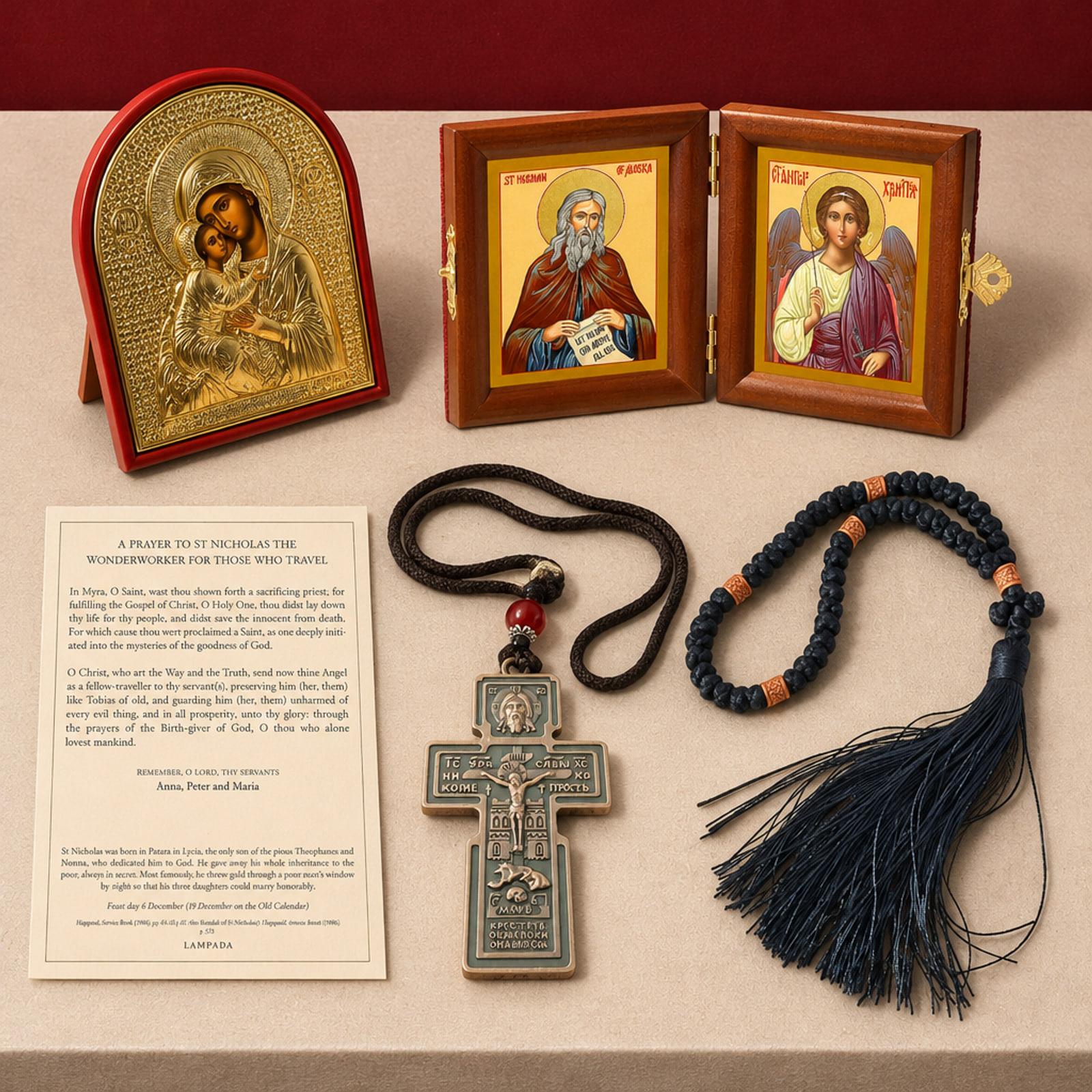
- Blessing, $49. Blessed by an Orthodox priest before it ships.
- Gift packaging, $20
Questions
What is Psalm 43 in the Septuagint?
It is Psalm 42. The King James Bible numbers it 43; the Septuagint, which the Orthodox Church reads, numbers it 42. The psalm is the same.
How many verses does Psalm 43 have?
5, in the King James text and in Brenton’s Septuagint alike.
Which kathisma is Psalm 43 in?
It is in the sixth, kathisma 6. The Church divides the Psalter into twenty kathismata and reads them in order.
Is Psalm 43 printed in the service book?
We did not find it under a Psalm heading in Isabel F. Hapgood’s service book, so this page names no service for it.
Whose translations are these?
The first is the King James Version. The second is Brenton’s English translation of the Septuagint, the Greek Old Testament that the Orthodox Church reads.