Holy Trinity icon, Rublev diptych and cross: the Trinity cross and icon explained
Trinity cross or Trinity icon: the Holy Trinity can be worn as a cross or kept as an icon, and this page carries both. The Holy Trinity icon most people have in mind is the one by Andrei Rublev: three angels seated at a table, which the Church reads as an icon of the Holy Trinity. Lampada has 8 pieces that carry it.
The Rublev Trinity is one panel of the folding diptych, with Christ as the Zvenigorod Saviour on the other. Both icons are printed under glass in pine frames that fold shut. To wear the Trinity, the Holy Trinity cross shows the Crucifixion with the Holy Trinity above it and saints below, in silver-tone stainless steel.
Three icons show the Trinity on their own: an icon after Rublev, an icon by the iconographer Georgi Chimev with the angels in red, blue and green, and an icon painted by hand in tempera on stained oak.
Sets are built round the diptych. The Pascha Set adds a gold-tone IC XC NIKA medallion, a wooden wall crucifix and a prayer rope. The Orthodox Lent Prayer Set adds a silver-tone crucifix with the Jesus Prayer, a prayer rope, the family prayer booklet and a gold-tone Pantocrator icon. The Memorial Set adds a wall crucifix, a Pantocrator icon, a prayer rope and a printed prayer with the names you give us.
Choose the diptych for the icon, the cross to wear, and a set for the season or the occasion it is named for.
What people mean by a trinity cross
A trinity cross is a cross that points to the Holy Trinity, one God in three Persons, Father, Son and Holy Spirit. People mean one of three things by it:
| Kind | What it looks like | Do we carry it? |
|---|---|---|
| A cross with the Trinity on it | The Crucifixion with the Holy Trinity shown above | Yes: our silver-tone Holy Trinity crucifix |
| A trinity knot cross | A cross worked with the triquetra, three interlaced arcs | Not today |
| A cross with three-lobed ends | Each arm ends in three rounded lobes | Yes: see our budded crosses |
The triquetra, the Celtic trinity knot, is common in Insular art from about the 7th century; Wikipedia says it has been read as a Trinity sign mainly since the 19th-century Celtic revival, and that Catholic iconography uses it as a sign of the Trinity today. We do not carry a trinity knot cross or a Celtic trinity cross necklace today. Read more about Trinity symbols and the Celtic cross.
A trinity cross necklace from us is the Holy Trinity crucifix: the Crucifixion with the Trinity above it and saints below, in silver-tone stainless steel, about 3 in, made to wear every day.
The Rublev Trinity and how the Church keeps it
The Holy Trinity icon that Orthodox Christians know best is the one Andrei Rublev painted in the early fifteenth century, commissioned in honour of St Sergius of Radonezh for the Trinity monastery near Moscow. It pictures the three angels who visited Abraham at the Oak of Mamre, seated so that their bodies make a circle round a cup on the table, with Abraham and Sarah left out. OrthodoxWiki says that at Pentecost, fifty days after Pascha, this icon is set in the middle of the church for veneration. Wikipedia notes that Western art more often shows the Father as an older man and the Spirit as a dove. The Church remembers St Sergius on 25 September (8 October on the Old Calendar). The Blessing by an Orthodox priest is offered on every piece before it ships.
Read about the Holy Trinity and St Sergius of Radonezh.
Trinity iconography: how an icon shows the Trinity
Orthodox iconography shows the Holy Trinity through a scene from Scripture: the Hospitality of Abraham in the eighteenth chapter of Genesis, where three visitors come to Abraham’s tent by the oak of Mamre and he sets the best food he has before them. The Church has long seen in the three angels the Father, the Son and the Holy Spirit. Older versions of the scene show Abraham and Sarah serving at the table. Rublev took them out, so the three angels alone carry the meaning.
Look for three things in a Trinity icon. The angels sit round one table, often so that their bodies make a circle. A cup stands at the center, which Wikipedia reads as a sign of Christ’s sacrifice and a reminder of the Eucharist. And the angels are alike but not the same: in the icon by Georgi Chimev each wears a different color, red, blue and green. The icon does not name which angel is which, and different versions answer the question in different ways.
Western art more often paints the Father as an elderly man with a white beard, the Son beside him and the Holy Spirit as a dove. Orthodox homes keep to the three angels.
How to choose a Holy Trinity icon
| Icon | How it is made | Size | Good for |
|---|---|---|---|
| Rublev Trinity and Zvenigorod Saviour diptych | Printed under glass in pine frames that fold shut | 8 × 9.5 cm (3.15 × 3.74 in) folded, 16.5 × 9.5 cm (6.5 × 3.74 in) open | A shelf, a desk, travel, a gift |
| Holy Trinity icon after Rublev | An icon of Rublev’s Trinity | On its page | A first Trinity icon for the corner |
| Holy Trinity icon by Georgi Chimev | The three angels in red, blue and green | On its page | A home that welcomes guests |
| Hand-painted Holy Trinity icon | Tempera on a board of solid stained oak, numbered certificate | 21 × 29 cm, lectern size | An heirloom, a parish or a house blessing gift |
A printed icon is a faithful copy and costs far less; a hand-painted icon is built up layer by layer in tempera by an iconographer, and is often handed down in a family. Both are venerated the same way at home. Choose the size by the place: a small icon for a shelf or a nightstand, a lectern-size icon for the center of an icon corner. To keep any icon well, read caring for an icon.
Where a Trinity icon goes
Most Orthodox homes keep their icons together in one place, the icon corner, often on a wall that faces east, with Christ and the Mother of God at the center. A Trinity icon belongs there, above or beside them. The catalogue suggests the Trinity for the prayer corner of a home that welcomes guests, since it shows a meal shared with God’s messengers, and the diptych for a family’s own table.
On Pentecost, which many Orthodox Christians call Trinity Sunday, the Trinity icon is set in the middle of the church. See the date of Pentecost 2027. For setting up a corner, see the icon corner guide.
Gifts with the Holy Trinity
The hand-painted icon is a gift for Pentecost or a new home. The Pascha Set and the Orthodox Lent Prayer Set are made for those seasons, and the Memorial Set is made in memory of someone dear; see more sympathy gifts. The Holy Trinity cross is a personal gift for a godchild, a husband or a wife who will wear it every day.
What we carry
The Holy Trinity pieces run from $34 to $1,449. The Rublev Trinity and Zvenigorod Saviour diptych is $109. The Holy Trinity cross, our trinity cross necklace in silver-tone stainless steel, is $54. The Holy Trinity icon after Rublev is $34, the Holy Trinity icon by Georgi Chimev is $119, and the hand-painted Holy Trinity icon on oak is $1,449.
The sets: the Pascha Set is $209, the Orthodox Lent Prayer Set $239 and the Memorial Set $229. Each price is the one the item’s page opens at. See every icon in our Orthodox icons for sale. Orders arrive in 5–8 business days: US-based, ships from Florida.
A Holy Trinity icon for a family table, a season or a remembrance
The diptych suits a wedding, a housewarming or a family’s own table, the cross is for wearing, and the sets are made for Pascha, Great Lent and remembering someone dear.
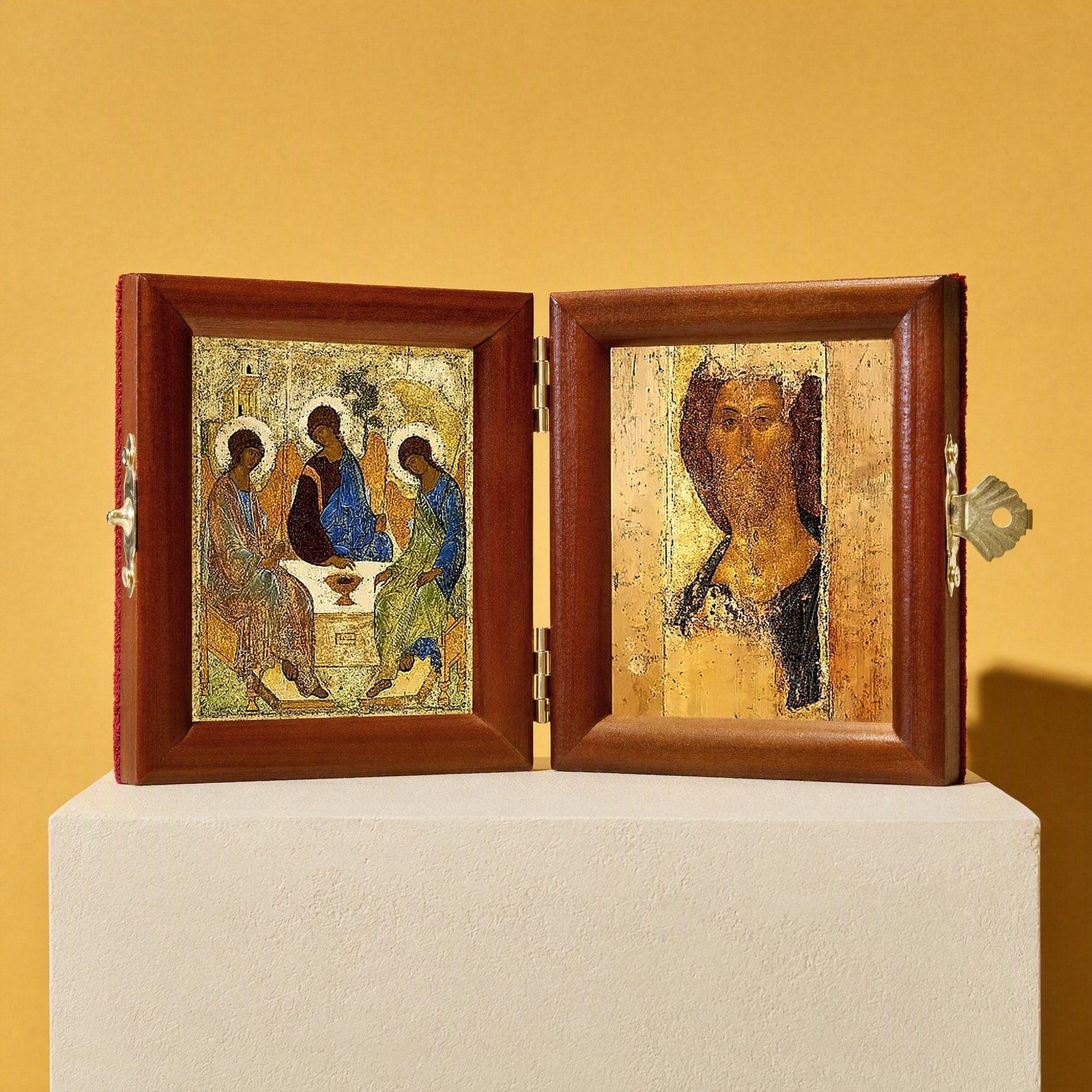 Sklopivi diptih
Sveta Trojica (Rubljov) i Hristos (Zvenigorodski Spas)
sklopivi diptih$156$109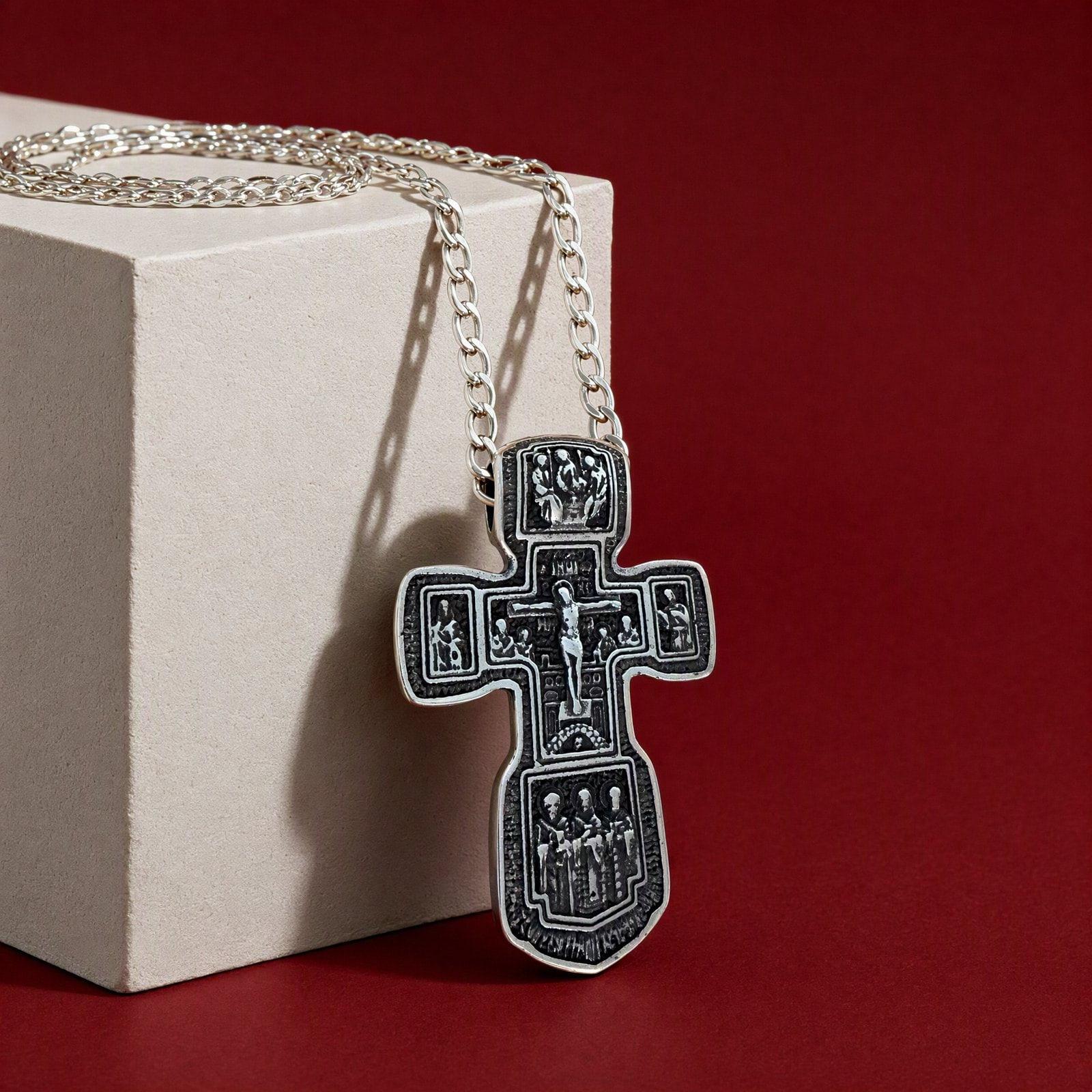 Krst
Holy Trinity Slate
srebrna boja · nerđajući čelik$78$54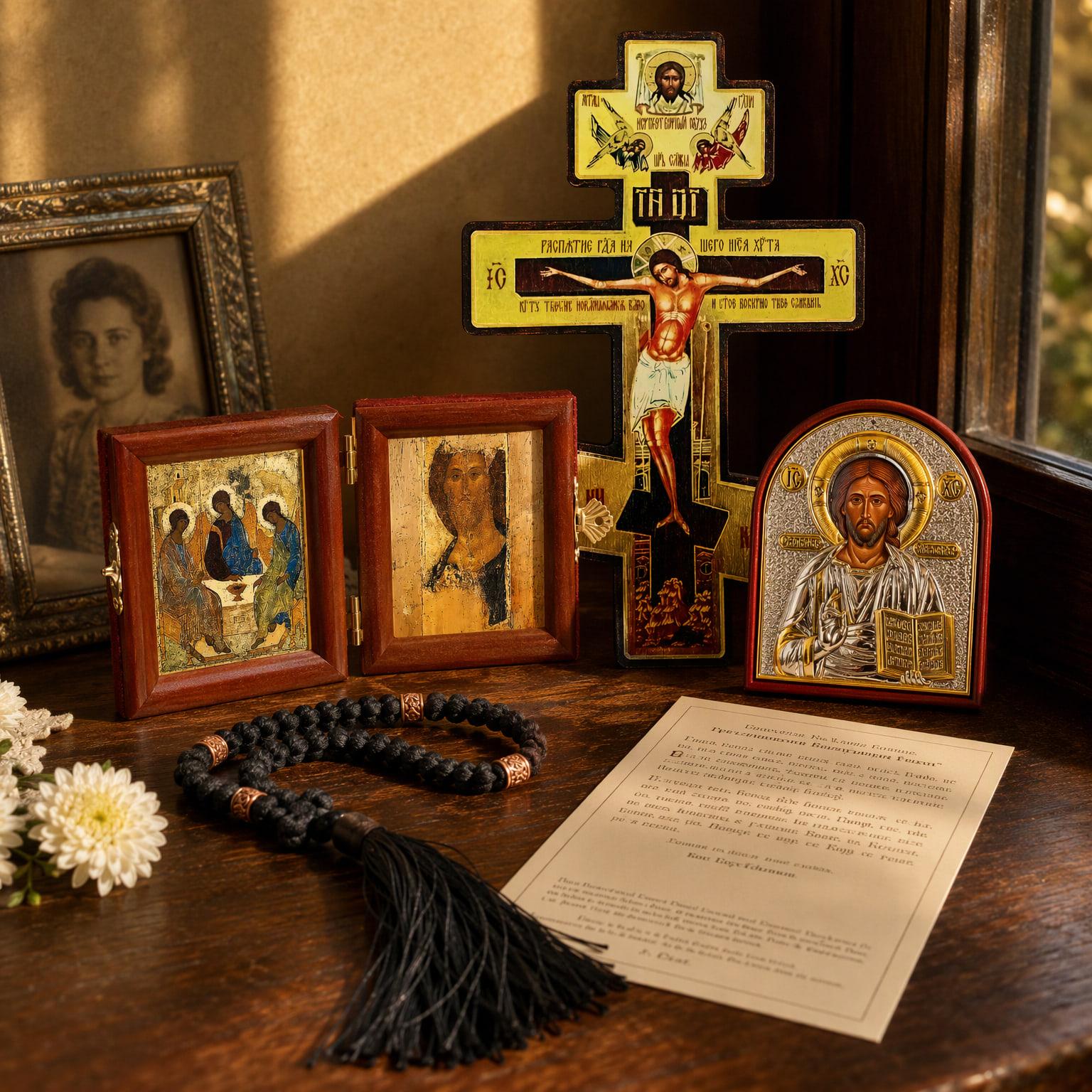 Poklon set
Set u spomen
$328$229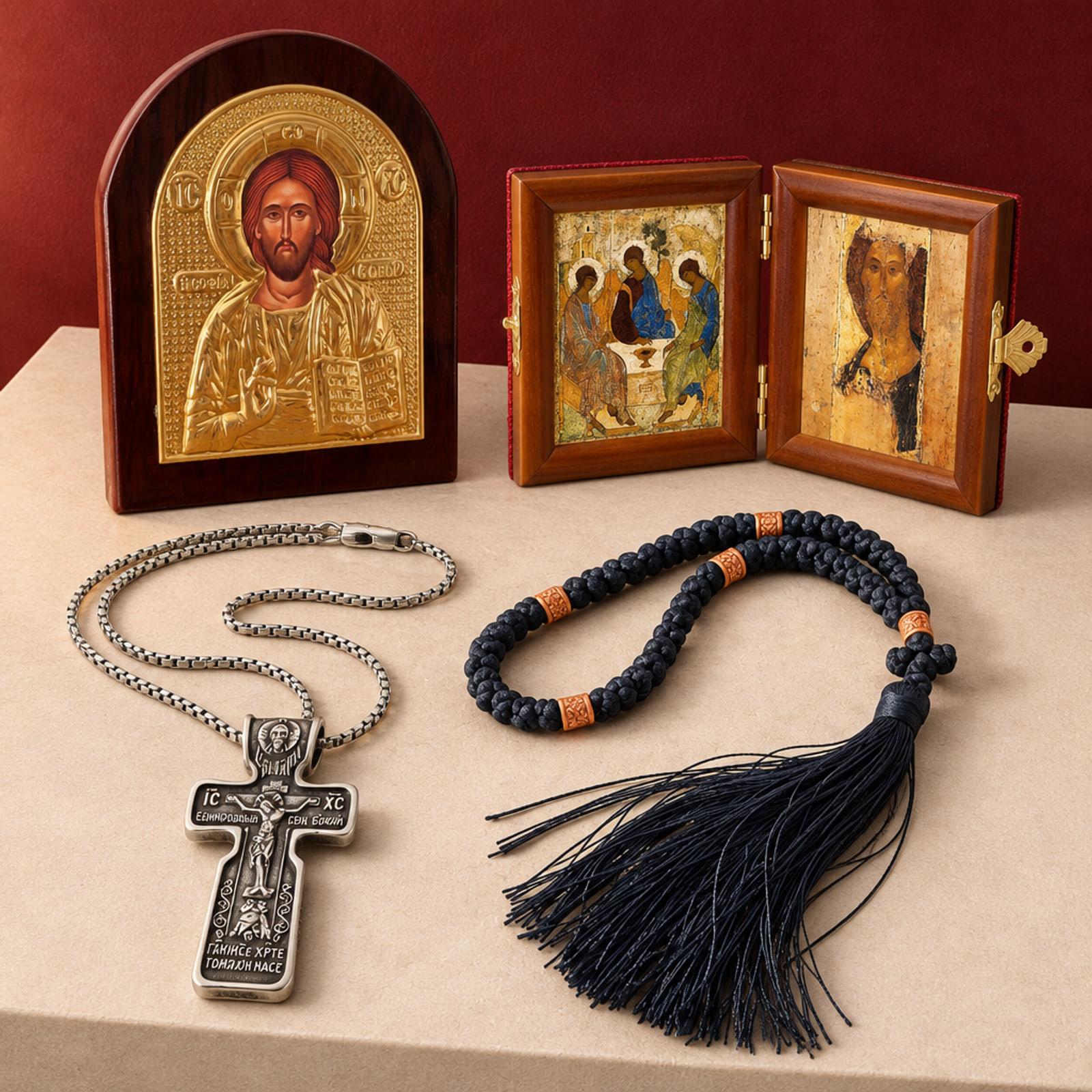 Poklon set
Molitveni set za Veliki post
$342$239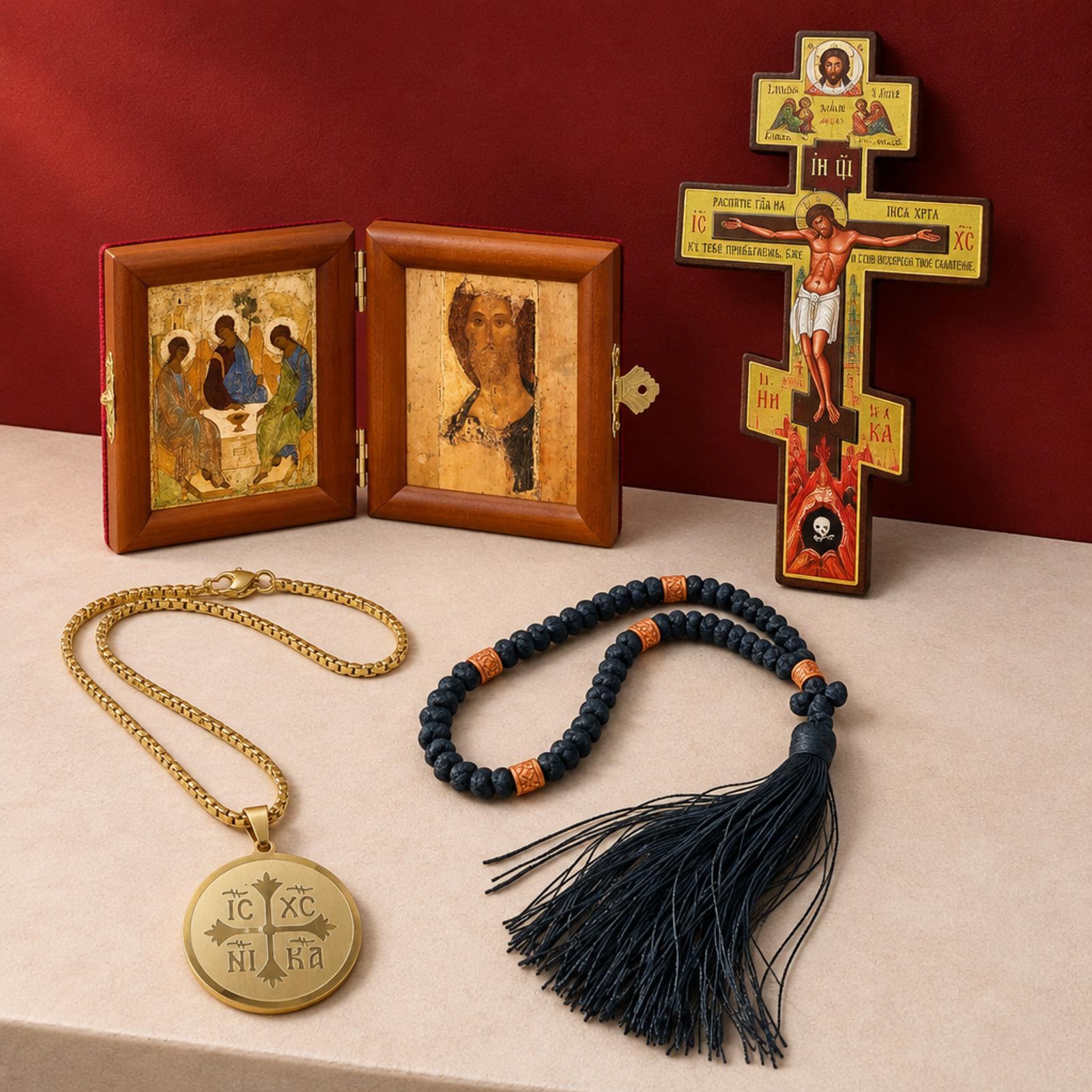 Poklon set
Vaskršnji set
$299$209 Ikona
Pravoslavna ikona Svete Trojice
stil XXIc$170$119 Ikona
Pravoslavna ikona Svete Trojice
po Rubljovu$49$34 Ikona
Pravoslavna ručno oslikana ikona Svete Trojice na prirodnom drvetu 21x29 cm
$2,070$1,449
SA SEDIŠTEM U SAD. ŠALJEMO IZ FLORIDE
Delivery in 5–8 business days.
Questions
Which Holy Trinity icon should I buy?
The diptych is the icon, with the Rublev Trinity beside Christ as the Zvenigorod Saviour. The cross is the Holy Trinity to wear, and each set boxes the diptych with other pieces for a season. For one icon on its own, choose the icon after Rublev, the icon by Georgi Chimev, or the hand-painted icon on oak.
What does the Rublev Trinity icon show?
Wikipedia says it shows the three angels who visited Abraham at the Oak of Mamre, read as the Holy Trinity. Rublev left out Abraham and Sarah, and the angels sit in a circle round a cup.
Who painted the Holy Trinity icon?
Wikipedia credits Andrei Rublev, in the early fifteenth century, for the monastery of St Sergius of Radonezh near Moscow. It adds that the date is uncertain, with proposals from 1408 to 1427.
What does the Holy Trinity cross show?
The catalogue describes the Crucifixion with the Holy Trinity above it and saints below, in silver-tone stainless steel, made to wear every day.
When does the Church keep the Holy Trinity?
OrthodoxWiki says the feast of Pentecost falls fifty days after Pascha, always on a Sunday, so its date moves each year. On that feast the icon of the three angels is set out in the church for veneration.
What is a trinity cross?
A trinity cross is any cross that points to the Holy Trinity. Ours shows the Crucifixion with the Holy Trinity above it. Others use a sign instead, such as the Celtic trinity knot, called the triquetra, worked into the cross. We do not carry a trinity knot cross or a Celtic trinity cross necklace today.
Is there a hand-painted Holy Trinity icon?
Yes. One icon is painted by hand in tempera on a board of solid stained oak, in lectern size, and comes with a numbered certificate. The diptych is printed under glass, and the other two Trinity icons are not described as hand-painted.
Where should a Holy Trinity icon go at home?
In the icon corner, beside Christ and the Mother of God, where the family prays. The catalogue suggests the Trinity for the prayer corner of a home that welcomes guests, since it shows the three angels at Abraham’s table, and the diptych for a family’s own table.