Sterling silver Orthodox cross: coming to Lampada, and what 925 means
Not in our store todayWe do not carry sterling silver or 925 crosses today. Below: what the 925 mark means, how to choose and care for a sterling cross, and our closest items, Orthodox crosses in silver-tone stainless steel.
A sterling silver cross necklace, stamped 925, is the classic silver cross, and this page explains what that mark means and what to look for in one. Lampada does not sell sterling silver or 925 Orthodox crosses yet. They are coming to the catalogue. What we sell today is silver-tone stainless steel, which is a finish on steel and not silver, and the catalogue records no silver content and no hallmark for any cross.
What sterling and 925 mean. Wikipedia defines sterling silver as 92.5 percent silver by weight, with 7.5 percent of other metals, usually copper, and gives 925 parts per thousand as its minimum fineness. Fine silver, at 99.9 percent, is soft, which is why silver for jewellery is usually mixed with copper. So 925 on a cross means sterling. Silver-tone, silver colour or a silver finish says only how a piece looks.
The nearest crosses we sell now are silver-tone stainless steel:
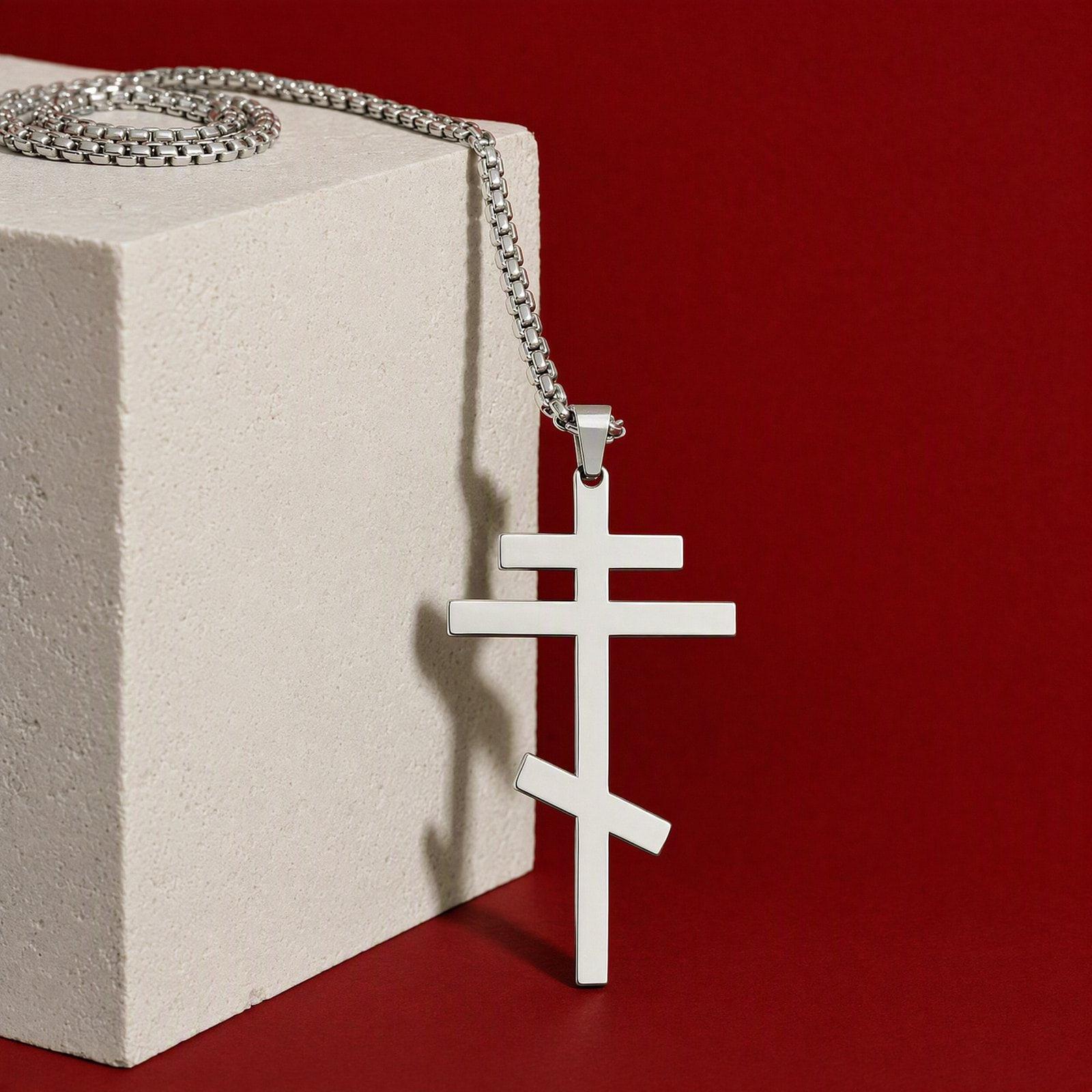
- the plain three-bar cross on a 60 cm chain;
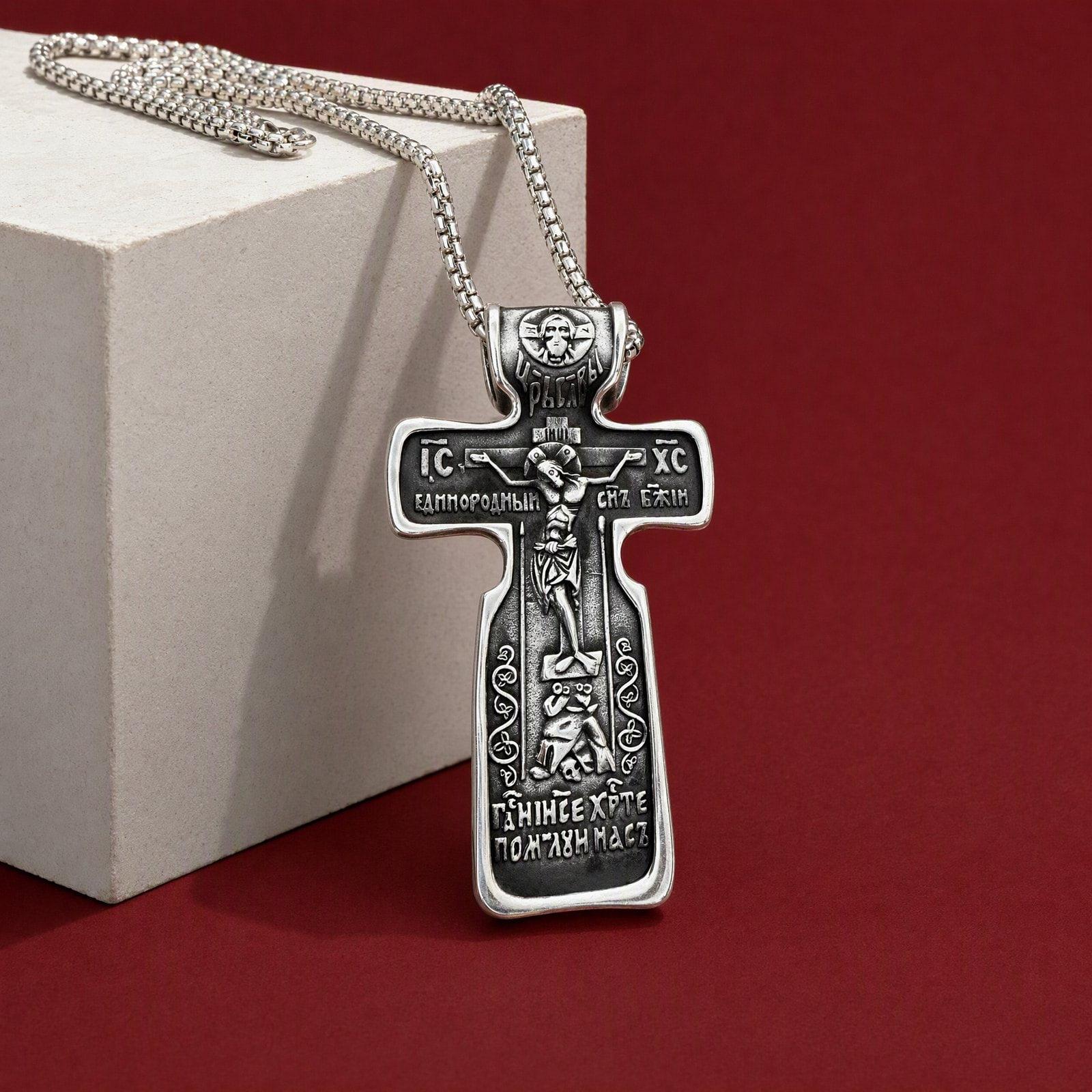
- the Jesus Prayer crucifix, polished, on a 60 cm chain;
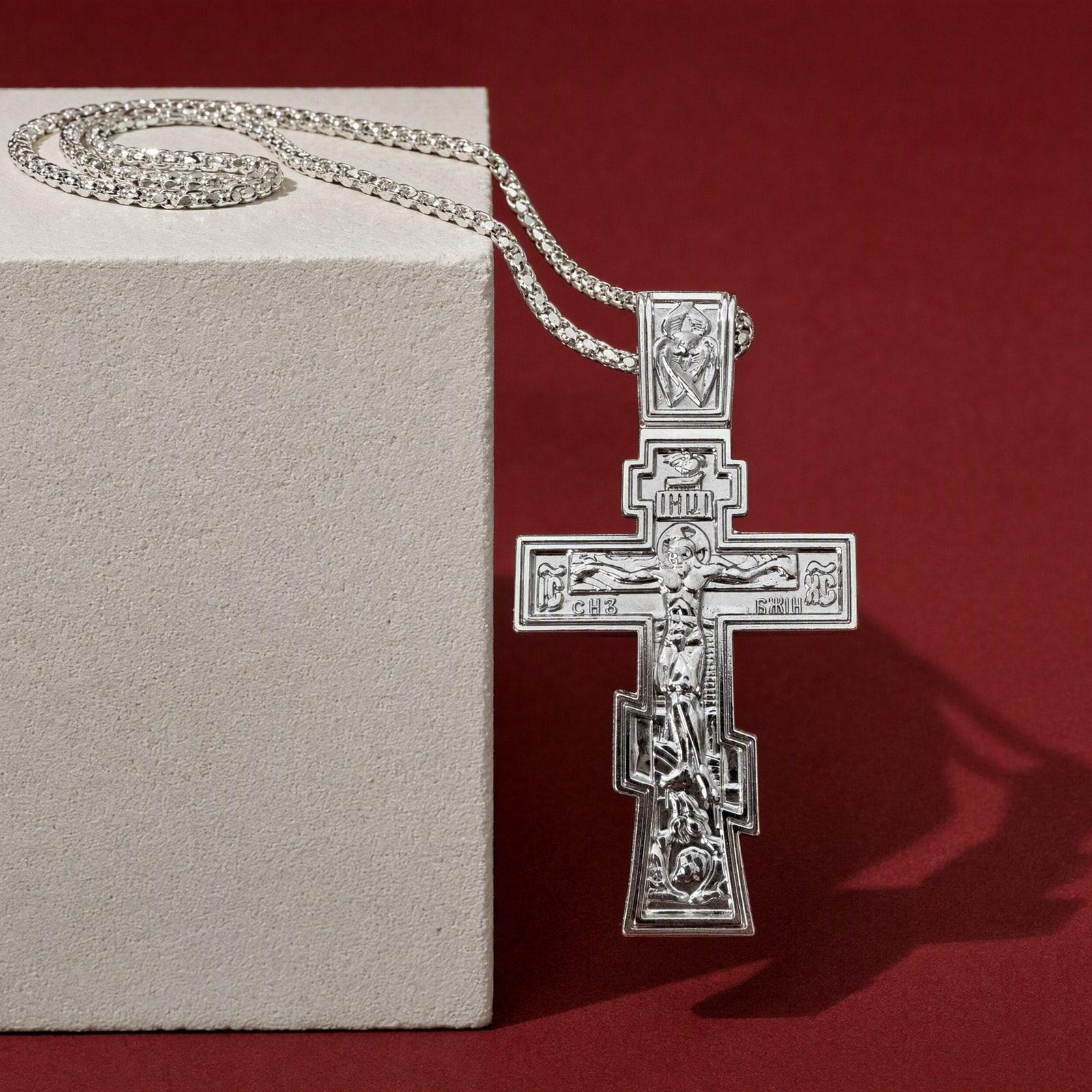
- the crucifix with Let God arise on the back, a pendant;
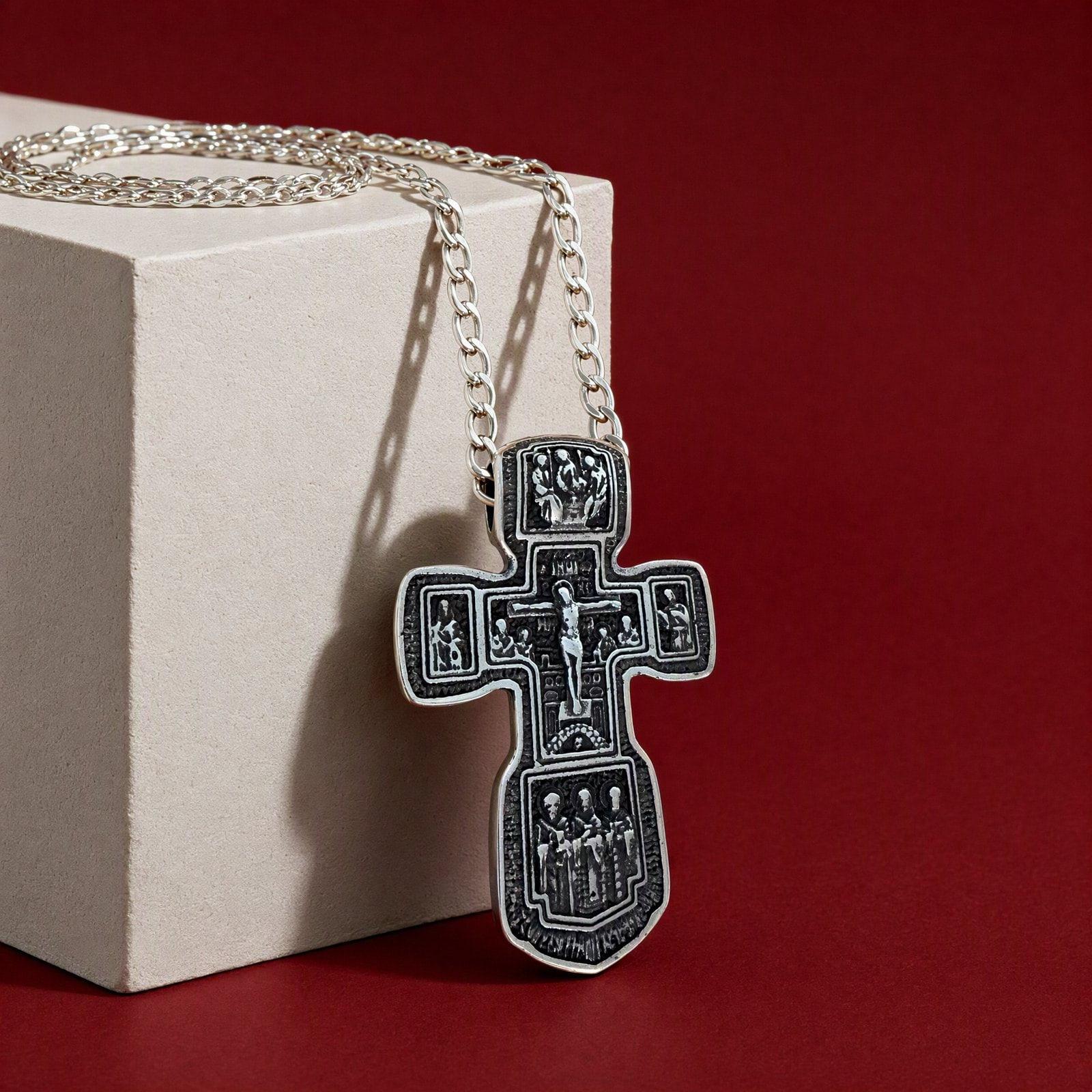
- the Holy Trinity crucifix, a pendant.
Sterling silver cross necklace: what to look for
A sterling cross necklace is one of the most common Christian gifts in America, for a confirmation, a baptism or a graduation. When you buy one, check five things.
- The stamp. Real sterling is marked 925, STER or Sterling, usually on the back of the cross and on the clasp of the chain. A cross with no mark may not be sterling.
- The chain. A sterling cross on a plated chain will not last as long as the cross. Ask whether the chain is 925 too.
- The back. A smooth or engraved back is pleasant on the skin; a hollow back is lighter and dents more easily.
- The size. A small sterling silver cross pendant, under an inch, suits a fine chain and a woman’s neckline; a cross of 1.5 in or more reads well on a man’s chain.
- The finish. Many sterling pieces are rhodium-plated so they stay bright longer; the plating wears off in time and can be renewed by a jeweler.
What sterling and 925 mean
| Mark or label | Silver content | What to expect |
|---|---|---|
| 999, fine silver | 99.9% | Very soft, rarely used for a cross worn every day |
| 925, sterling | 92.5%, the rest usually copper | The standard for silver jewelry; tarnishes, can be polished |
| 900, coin silver | 90% | Found on older pieces |
| Silver-plated | A thin layer over a base metal | Can wear through to the metal below |
| Silver-tone | No silver, a color or finish | Says only how it looks; ours is stainless steel |
So “925 Italy” on a chain means sterling silver made in Italy, and “silver color” or “silver finish” on a label is not silver at all.
Silver, tarnish and a cross worn every day
OrthodoxWiki describes a small cross on a chain round the neck as the usual thing for an Orthodox Christian to wear, so the metal is handled and worn day after day. Wikipedia says sterling silver is prone to tarnishing, and that makers can use elements other than copper in the alloy to reduce it. It says stainless steel resists rust and corrosion because of the chromium in it. Lampada holds no source that compares the two for a cross, so it makes no claim that one lasts longer. What makes a cross Orthodox is its form and its words, such as the three bars, and not the metal. An Orthodox priest can bless the crosses below.
Sterling silver or stainless steel?
| Sterling silver | Silver-tone stainless steel | |
|---|---|---|
| What it is | 92.5% silver alloy | Iron with chromium, silver in color |
| Tarnish | Darkens with air and skin; polish brings it back | Does not tarnish |
| Water | Best taken off for the pool and the sea | Takes a shower or a swim |
| Price | Priced partly by the weight of the silver | Lower |
| Gift value | A precious metal, often engraved | A cross for everyday wear |
Both are worn by Orthodox Christians. Choose sterling if the metal itself matters to the person you give it to; choose steel for a cross that is never taken off. Our stainless steel crosses page covers steel in full.
Caring for a sterling silver cross
Rub the cross with a silver polishing cloth when it starts to look dull. If it is dirty, wash it in warm water with a drop of mild soap, rinse and dry it well. Avoid bleach, pool chlorine and dips that strip a darkened finish from the recesses of a crucifix. Store it in a closed bag, with an anti-tarnish strip if you have one, and apart from other jewelry. Put perfume and lotion on before the cross, not after.
What makes a silver cross Orthodox
Most Orthodox crosses have three bars: a short top bar for the title over Christ, the long bar for His arms, and a slanted footrest below. Many carry the letters IC XC or a flat figure of Christ, in the manner of an icon, and some have a prayer engraved on the back. A sterling cross with these marks is just as Orthodox as one in steel or gold. Read more on the Orthodox three-bar cross.
What we carry instead
Our closest items are Orthodox crosses in silver-tone stainless steel, each at its live price: the plain three-bar cross on a 60 cm chain ($64), the Jesus Prayer crucifix, polished, on a 60 cm chain ($64), the crucifix with Let God arise on the back, a pendant ($54), and the Holy Trinity crucifix, a pendant ($54). Every silver-tone cross is on silver-tone Orthodox cross necklaces, and the whole range is in all our Orthodox cross necklaces. Orders arrive in 5–8 business days: US-based, ships from Florida.
The closest silver-tone crosses on sale now
Each cross below is silver-tone stainless steel, and the email box under them is the waiting list for the sterling pieces.
SA SEDIŠTEM U SAD. ŠALJEMO IZ FLORIDE
Delivery in 5–8 business days.
Want us to stock it?
We don't carry a sterling silver cross necklace today. Leave your email and we will write once if we stock it.
Questions
Does Lampada sell sterling silver Orthodox crosses?
Not yet. They are coming to the catalogue. Until then the silver crosses on sale are silver-tone stainless steel, such as the plain three-bar cross on a 60 cm chain.
What does 925 mean on a cross?
It is the sterling mark. Wikipedia lists 925 as sterling silver, in the system that gives the purity of silver and gold alloys in parts per thousand, so 925 means 92.5 percent silver.
Is silver-tone the same as sterling silver?
No. Silver-tone describes the finish. Our silver-tone crosses are stainless steel, and the catalogue states no silver content and no hallmark for them.
Why is sterling silver mixed with copper?
Wikipedia says fine silver is soft, and that silver is usually mixed with copper to make it harder and stronger. The mix leaves sterling at 92.5 percent silver and 7.5 percent other metals.
How will I hear when sterling silver crosses arrive?
Leave your email in the box on this page. It is the waiting list for those pieces.
What should I look for in a sterling silver cross necklace?
A 925 or sterling stamp on the cross and on the chain, a clasp that is sterling too, a back that is smooth or engraved and not hollow, and a weight that feels right in the hand. For an Orthodox cross, look for the three bars or the letters IC XC.
Does a sterling silver cross tarnish?
Yes, over time. Wikipedia says sterling silver tarnishes easily, because the copper in it reacts with the air and with skin. A cross worn every day darkens more slowly than one kept in a drawer, and a silver cloth brings it back.
How do I clean a sterling silver cross?
Rub it with a silver polishing cloth, wash it in warm water with a drop of mild soap if it is dirty, and dry it well. Keep it in a closed bag when you are not wearing it, and take it off before swimming in a pool or the sea.