Russian iconography: how Russian icons grew from Byzantium, and how to choose one
Russian iconography is the tradition of icon painting that Kievan Rus received from Byzantium after its Baptism in 988 and made its own over the next thousand years. Russian icons keep the Byzantine rules, but often with brighter colors, longer and lighter figures, and a gentleness best known from St Andrei Rublev’s Holy Trinity.
Below: where the tradition comes from, its great painters and schools, what silver covers and “black icons” are, how to choose a Russian icon today, and the Russian icons we carry, all made today.
Where Russian iconography comes from
In 988 Prince Vladimir of Kyiv was baptized and brought his people into the Church of Constantinople. With the faith came Greek painters and icons. The most famous, the Vladimir Mother of God, arrived from Constantinople in the 12th century and became the treasure of Moscow. For centuries the painters of Kyiv, Novgorod and Moscow learned from these models, then gave them their own voice. Read the background in Byzantine icons.
The great painters and schools
| Period | What to know |
|---|---|
| 12th to 13th centuries | Kyiv, Vladimir and Novgorod follow Byzantine models closely |
| 14th to 15th centuries | Theophanes the Greek and St Andrei Rublev in Moscow; the bright, clear Novgorod school |
| Late 15th to 16th centuries | Dionisy: tall, light figures and soft colors |
| 17th century | The Stroganov school’s fine miniature work; Simon Ushakov’s more lifelike faces |
| 18th to 19th centuries | The Academic style, close to Western painting |
Rublev’s Holy Trinity, the three angels at Abraham’s table, is the summit of the tradition; see the Holy Trinity icon. His Zvenigorod Saviour, found in a woodshed in 1918, shows Christ with a face of quiet mercy.
Silver covers, old icons and black icons
Many people searching for Russian silver icons mean icons under a metal cover, the oklad or riza, which leaves only the faces and hands visible. Old covers were silver, often gilded; most made today are silver- and gold-tone metal, and should be sold as such.
Old and antique Russian icons are often dark, because their linseed-oil varnish darkened with age. Genuine old icons are rare, costly and need papers that show where they come from. If you want an icon to pray with rather than a collector’s piece, a new icon in the Slavic tradition is the usual choice.
How to choose a Russian icon
Start with the two icons every Orthodox home has: Christ and the Mother of God. The most loved Russian icons of the Mother of God are the Kazan icon, which points to her Son (Our Lady of Kazan), and the Vladimir icon, the Child’s cheek against hers (Our Lady of Vladimir). Then check the face is clear, the inscriptions are present, and the size fits the place: about 4 x 6 in for a shelf or car, 8 x 10 in for an icon corner. Read how icons are made to tell a hand-painted icon from a mounted one.
What we carry
We carry icons made today in the Slavic tradition. The Holy Trinity after Rublev ($34) is a single icon; the Holy Trinity and Zvenigorod Saviour diptych ($109) and the Zvenigorod Saviour and Vladimir Mother of God diptych ($109) fold shut to travel. Our Lady of Kazan under a silver and gold tone cover ($69) stands on a desk, the Christ Pantocrator and Our Lady of Kazan diptych ($94) is a gift for a couple, and the Christ and Theotokos Enthroned set ($74) is in the Academic style. We do not carry antique or large old Russian icons; leave your email below if that is what you need. More in icons for the icon corner. Orders arrive in 5–8 business days: US-based, ships from Florida.
Our icons in the Slavic tradition
The Rublev Holy Trinity, the Zvenigorod Saviour, the Vladimir and Kazan icons of the Mother of God, and a pair in the Academic style. These are icons made today; we do not sell antique icons. Each card shows its live price.
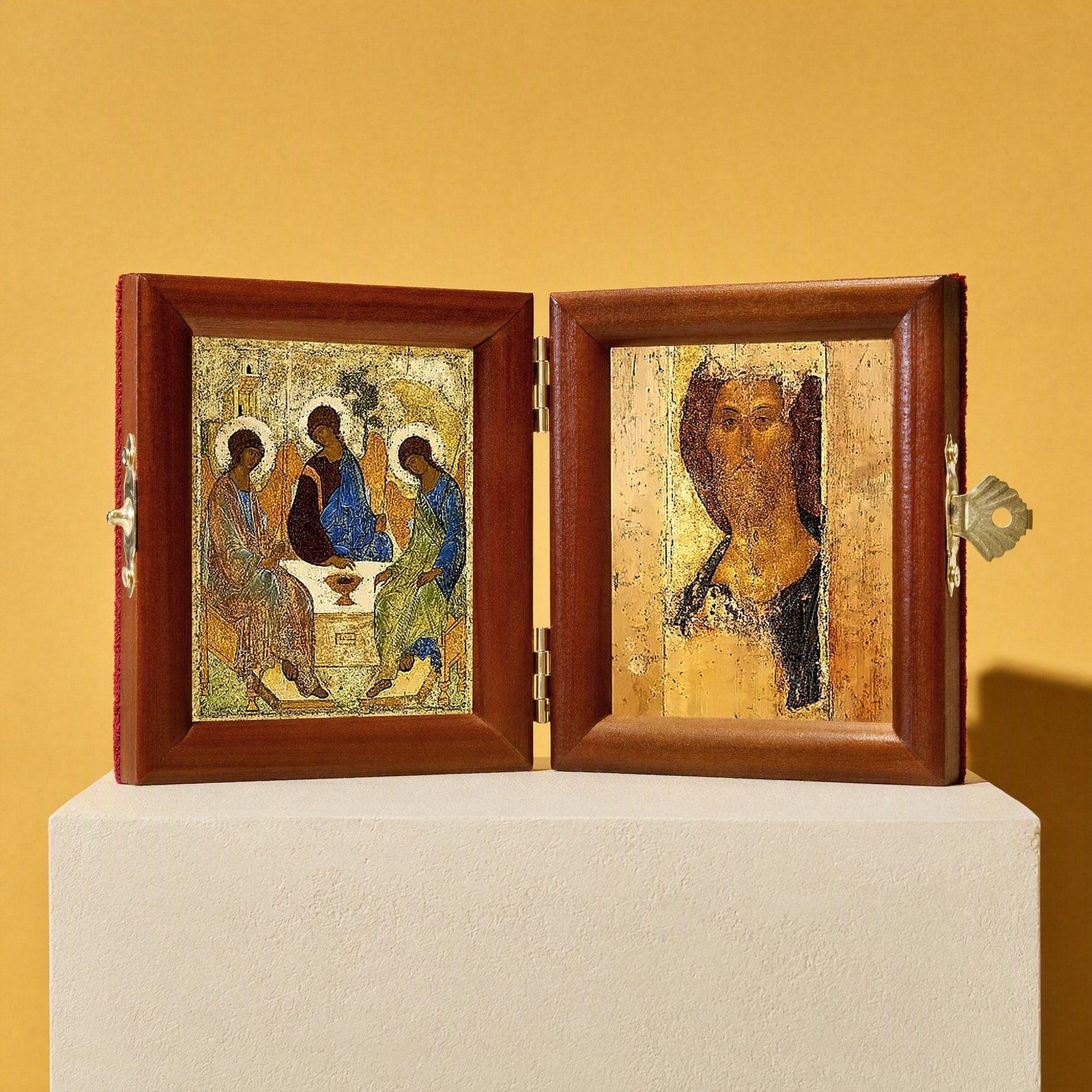 Складень
 «Святая Троица (Рублёв) и Спас Звенигородский»
$156$109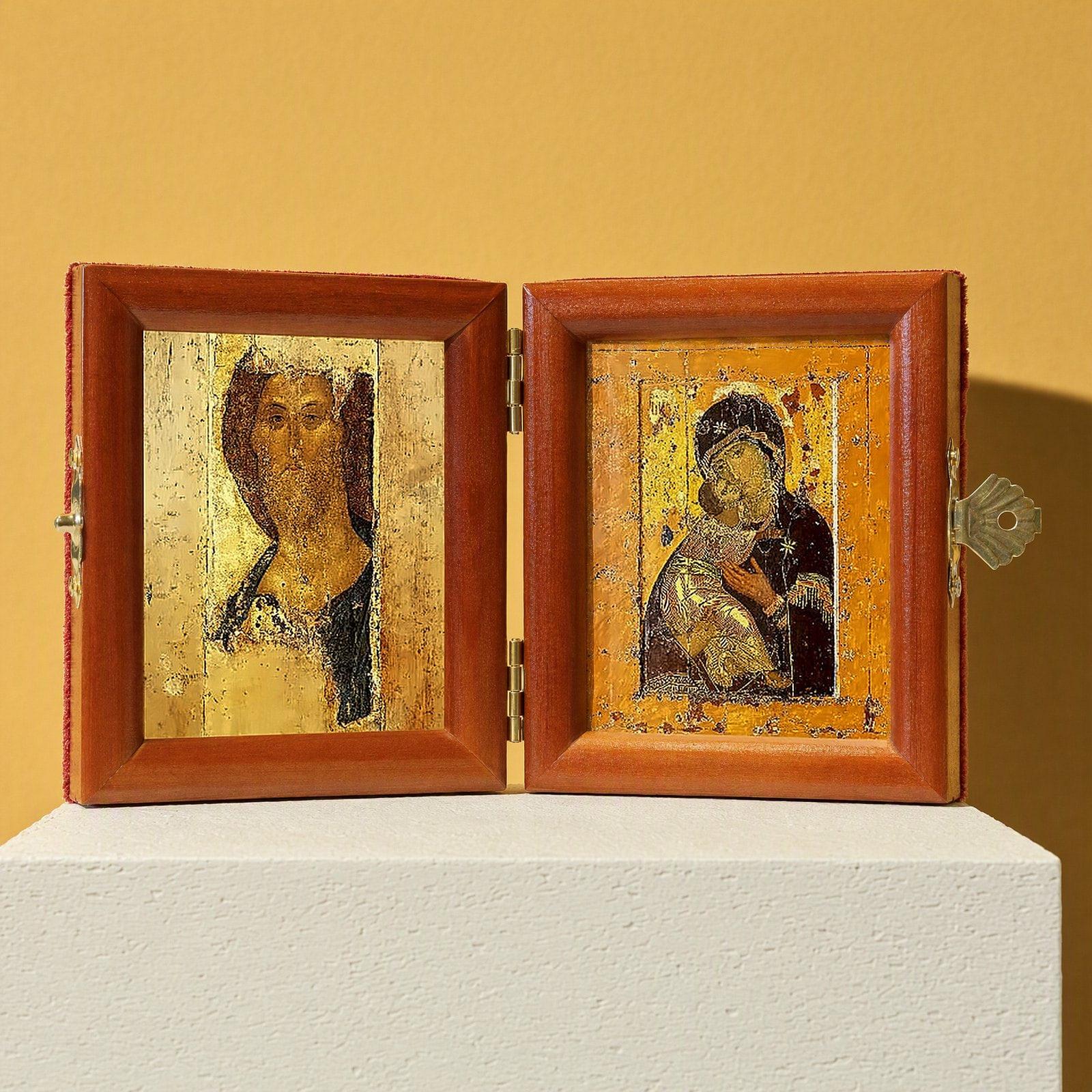 Складень
 «Спас Звенигородский и Владимирская икона Божией Матери»
$156$109 Икона
Православная икона Святой Троицы — по Рублёву
$49$34 Икона
Казанская икона Божией Матери
прямоугольная, серебро с золотом, дерево$99$69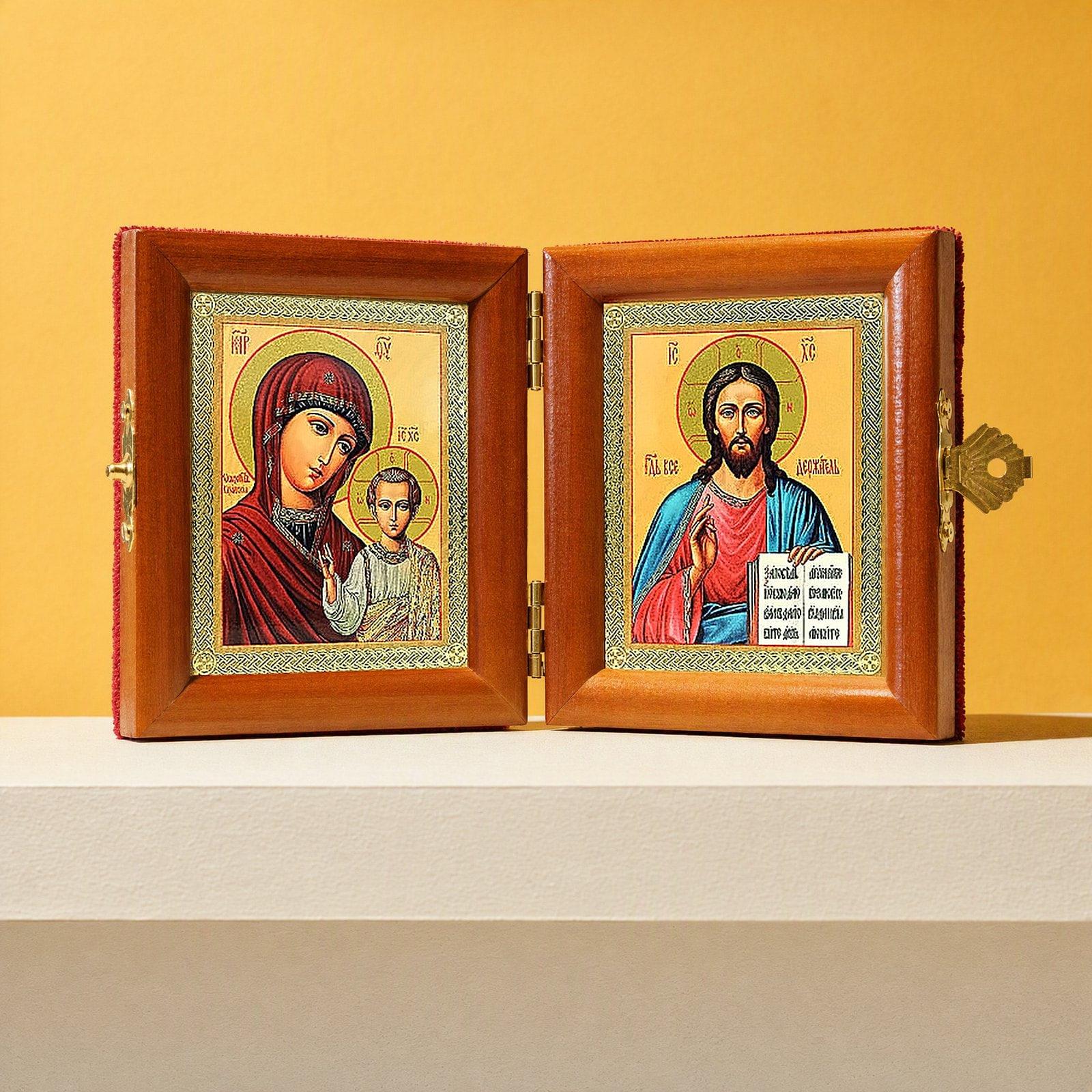 Складень
 «Господь Вседержитель и Казанская икона Божией Матери»
$135$94 Икона
Православный набор икон «Христос и Богородица на престоле»
$106$74
МЫ В США. ОТПРАВКА ИЗ ФЛОРИДЫ
Delivery in 5–8 business days.
Want us to stock it?
We carry close items, not every kind of Russian icon. Leave your email and we will write once if we stock more.
Questions
What is the most famous Russian icon?
St Andrei Rublev’s Holy Trinity, painted in the early 15th century, is the best known. Among icons of the Mother of God, the Vladimir icon, brought from Constantinople in the 12th century, and the Kazan icon, found in 1579, are the most loved.
What is the difference between Russian icons and Greek icons?
Both follow the Byzantine canon. Russian icons often use lighter, brighter colors and slender figures; Greek icons tend to keep closer to Byzantine modeling, with deeper shadows and warmer flesh tones. The subjects and inscriptions are the same.
Why are some old Russian icons black?
Old Russian icons were sealed with a varnish of boiled linseed oil, which darkens with age and soot from candles. After about a century the image can turn almost black. Restorers can remove the old varnish and reveal the colors underneath.
What is a Russian icon with a silver cover?
The metal cover over an icon is called an oklad or riza. It covers everything but the faces and hands, and protects and honors the image. Old covers were silver or gilded silver; most modern ones are silver- and gold-tone metal.
Do you sell antique Russian icons?
No. We carry icons made today in the Slavic tradition. Old icons need proof of where they come from and may fall under export rules, so buy one only with full papers from a dealer you trust.
Where should a Russian icon hang at home?
In the icon corner, called the beautiful corner in Slavic homes, traditionally on an east-facing wall, with Christ on the right and the Mother of God on the left. Hang it at eye level, out of direct sun and away from heat.