Psalms for repentance: twelve prayers of confession
Twelve psalms confess sin in their own words: I have sinned, I acknowledge my transgression, a broken and contrite heart. They are listed by the King James number, with the Septuagint number in brackets, the verse where the words stand and the kathisma. One of them is Psalm 51, called Psalm 50 in the Septuagint, which Hapgood’s Service Book prints at page 287.
A psalm is on this list when its King James text uses one of these words or phrases: sinned, contrite, my iniquities and repent. Psalms that Isabel Hapgood’s Service Book prints in a service that fits the need are added to them.
- Psalm 25 (Psalm 24 in the Septuagint), kathisma 4: verse 7, also verses 11 and 18, with the word my transgression.
- Psalm 31 (Psalm 30 in the Septuagint), kathisma 4: verse 10, with the word mine iniquity.
- Psalm 32 (Psalm 31 in the Septuagint), kathisma 4: verse 5, with the words I acknowledge, confess my, my sin, mine iniquity and my transgression.
- Psalm 34 (Psalm 33 in the Septuagint), kathisma 5: verse 18, with the word contrite.
- Psalm 38 (Psalm 37 in the Septuagint), kathisma 6: verse 18, also verses 3 and 4, with the words declare mine iniquity, sorry for my sin, mine iniquity and my sin.
- Psalm 39 (Psalm 38 in the Septuagint), kathisma 6: verse 8, with the word my transgression.
- Psalm 40 (Psalm 39 in the Septuagint), kathisma 6: verse 12, with the word mine iniquity.
- Psalm 41 (Psalm 40 in the Septuagint), kathisma 6: verse 4, with the word I have sinned.
- Psalm 51 (Psalm 50 in the Septuagint), kathisma 7: verses 2 and 3, also verses 1, 9 and 17, with the words I acknowledge, mine iniquity, my sin and my transgression; Hapgood’s Service Book also prints it at page 287, in the Rite of Confession.
- Psalm 79 (Psalm 78 in the Septuagint), kathisma 11: verse 9, with the word our sins.
- Psalm 90 (Psalm 89 in the Septuagint), kathisma 12: verse 8, also verse 13, with the word our iniquities.
- Psalm 103 (Psalm 102 in the Septuagint), kathisma 14: verse 10, with the words our sins and our iniquities.
The psalms with the most such verses for their length are kept, at most twelve, in King James order. Verses that use the word in another sense were read and set aside; for example Psalm 59, verse 3 (not for my transgression: the verse denies it); Psalm 110, verse 4 (the LORD will not repent: of God); Psalm 135, verse 14 (the LORD will repent himself: of God).
What the verses say. Psalm 25 asks the Lord not to remember the sins of youth or transgressions, and Psalm 31 says that strength fails because of iniquity. Psalm 32 says that the one who prays acknowledged his sin to the Lord, did not hide his iniquity, and confessed his transgressions. Psalm 34 speaks of a broken heart and a contrite spirit. In Psalm 38 he declares his iniquity and is sorry for his sin; in Psalm 39 he asks to be delivered from all his transgressions; in Psalm 40 his iniquities have taken hold of him. Psalm 41 says that he has sinned against the Lord. Psalm 51 acknowledges transgressions, with the sin ever before him. Psalm 79 asks the Lord to purge away our sins, Psalm 90 says that our iniquities are set before him, and Psalm 103 that he has not dealt with us after our sins.
Many of the psalms on this list also appear on the list for forgiveness, since confession and pardon belong together. The difference is one of emphasis: here the verse is the one in which the one who prays says what he has done, and there it is the one in which he asks the Lord for pardon.
Repentance in the Church’s prayer
The Rite of Confession in Isabel Hapgood’s Service Book opens with prayers that ask for sins to be washed away and transgressions pardoned, and the same book prints Psalm 51 at page 287. The psalms of confession are part of that prayer.
A believer who prays one of these psalms is using words that the Church prays itself, and the numbers in both systems are listed so that they can be found in a Bible or in a service book.
Kept in Orthodox homes during Great Lent
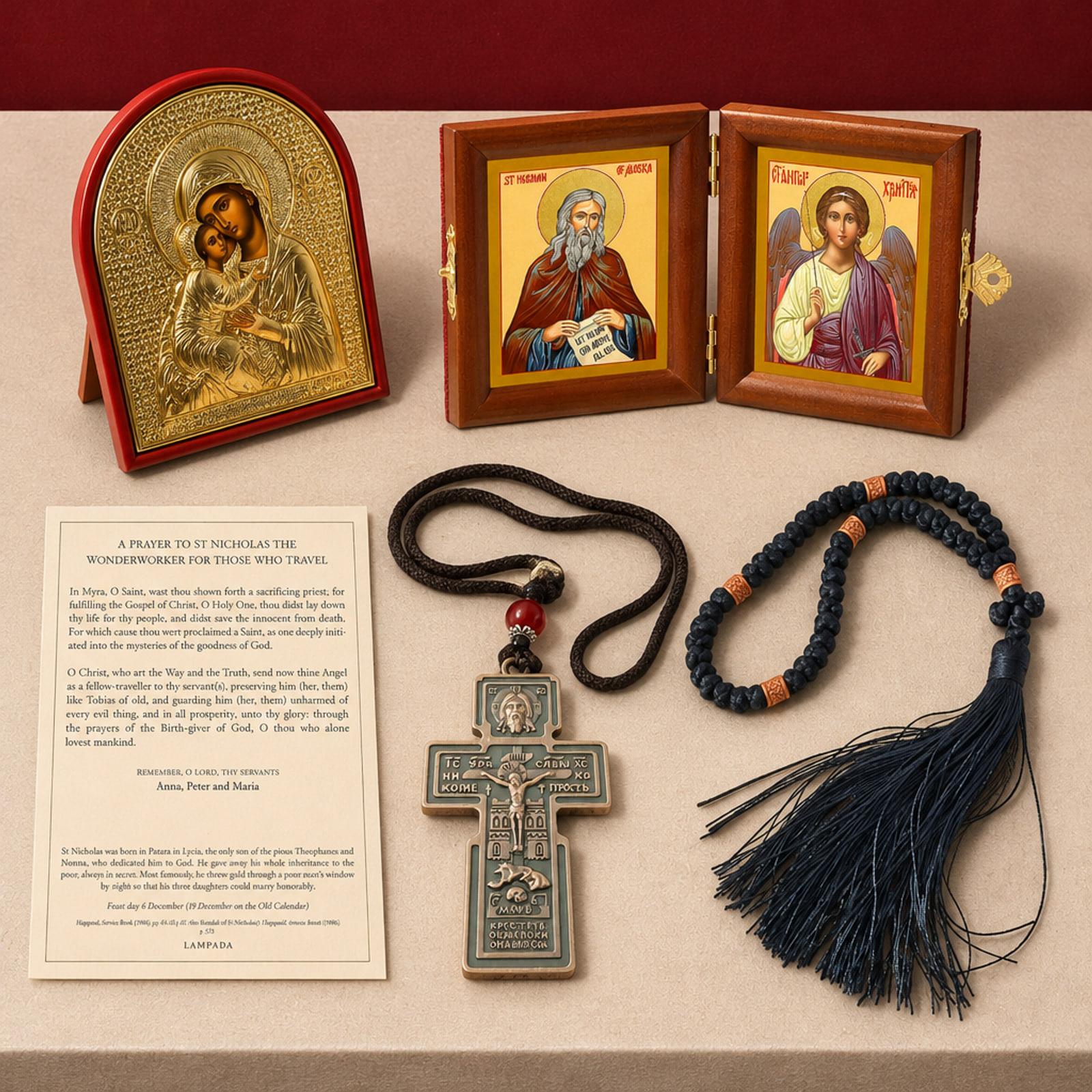
These give a home something to pray before: the Comfort Set, a patron saint icon, a Holy Face crucifix, a prayer rope and a printed prayer with their names for someone going through a hard time; the Orthodox Lent Prayer Set, a crucifix, a prayer rope, the family prayer booklet and two icons for Great Lent; and a black wool prayer rope with dividing beads and a tassel, for the Jesus Prayer. An Orthodox priest can bless any piece before it ships. With the Blessing, $83 to $288.
 Set de regalo
Set de consuelo
$299$209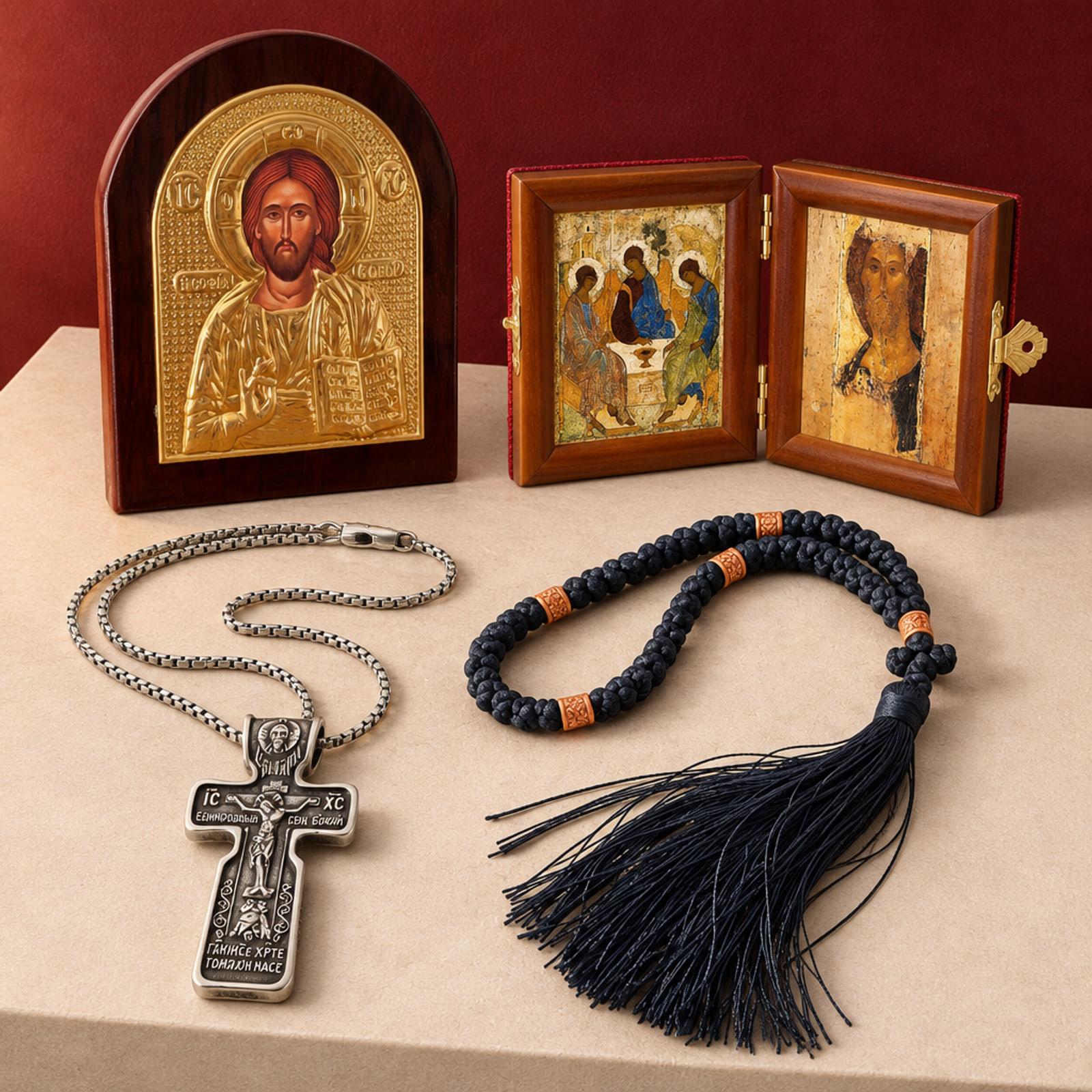 Set de regalo
Set de oración de la Cuaresma ortodoxa
$342$239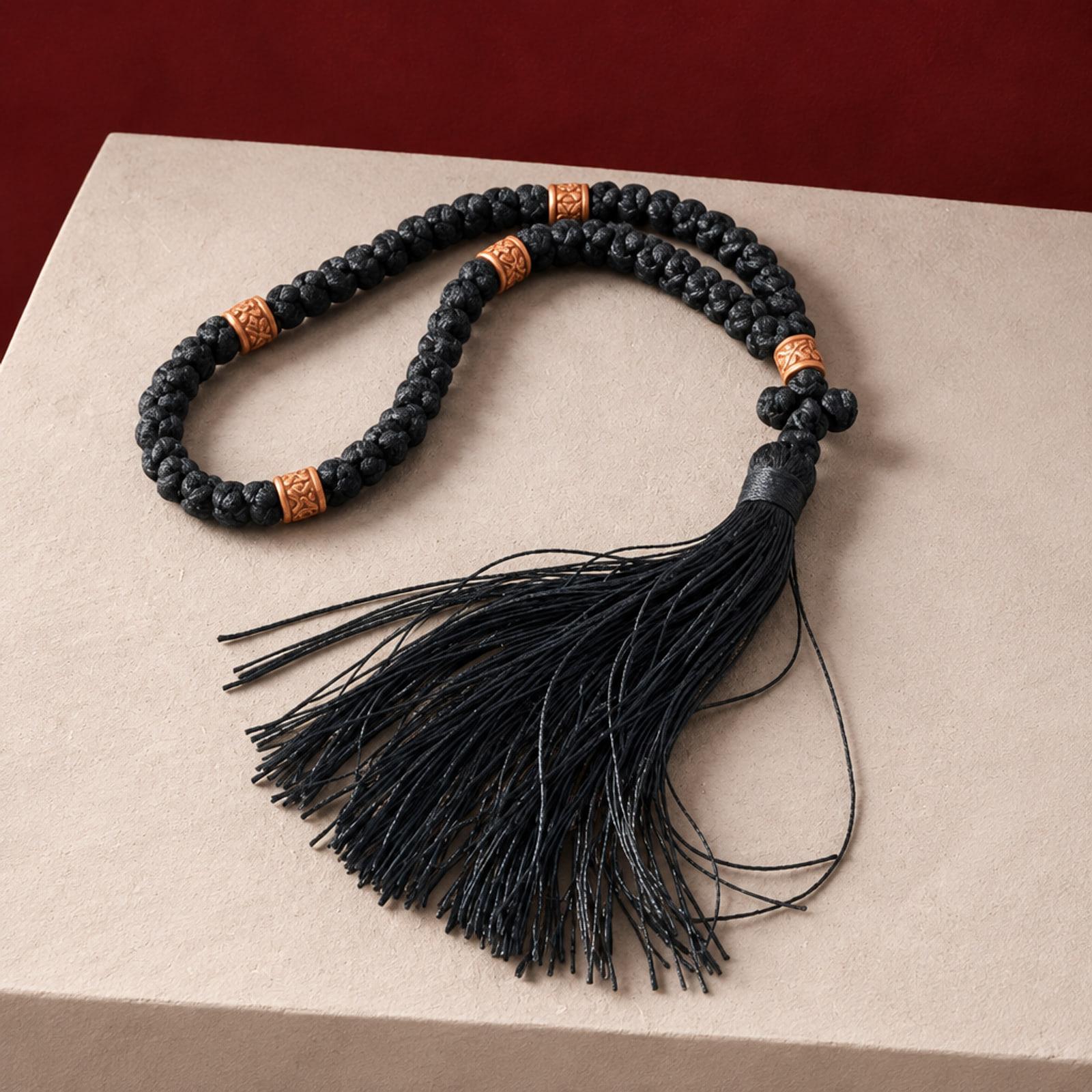 Cordón de oración
Chotki Komboskini
Color negro · Cordón de oración ortodoxo de lana, 50 nudos$49$34
- Blessing, $49. Blessed by an Orthodox priest before it ships.
- Gift packaging, $20
Questions
Which psalm is the great psalm of repentance?
Psalm 51, which the Septuagint numbers 50, and which Hapgood’s Service Book prints at page 287.
Which psalm says I acknowledge my sin?
Psalm 32, verse 5, which the Septuagint numbers 31.
How is repentance different from forgiveness here?
This page lists the psalms in which the one who prays says what he has done. The forgiveness page lists those in which he asks for pardon.
Why do the psalms have two numbers?
The King James Bible numbers the psalms in the Hebrew order and the Orthodox Church in the Septuagint order, and the two differ for many psalms. This page gives the Septuagint number beside the King James number.
Can the Comfort Set be blessed before it ships?
Yes. Choose the Blessing on its page and an Orthodox priest blesses it before it ships. With the Blessing, $258 (normally $348).