Patron saint of Beirut: the saints and their feast days
St George is the patron saint of Beirut in the Orthodox calendar we hold.
| Saint | Feast | Day kept |
|---|---|---|
| St George | Great Martyr George the Victory-bearer | 23 April on the New Calendar, 6 May on the Old |
St George. In the Orthodox calendar we hold the entry is St George. The Church keeps the feast of Great Martyr George the Victory-bearer, 23 April (6 May on the Old Calendar). The honour paid to George travelled out of Palestine, across Lebanon, and into the remainder of the Byzantine Empire. Wikipedia says he is respected by Christians, by the Druze and by some Muslims as a martyr for monotheistic faith. Beirut is among the cities that have claimed George as patron, with Genoa and others. The pages we read do not tell how the city came to choose him. Because of Christian influence on the Druze faith, George and Elias are the two Christian saints most venerated by the Druze. In the villages of central Mount Lebanon where Druze and Christians live, a church or a Druze maqam is dedicated to one or the other. A scholar quoted by Wikipedia says the Druze admired George because he faced the dragon, and Elias because he defeated the priests of Baal. Christians explain it by the Druze attraction to warrior saints. At Al-Khader near Beit Jala there is a monastery of St George, where Orthodox Christians honour the saint and Muslims honour Al-Khadr. Islamic sources describe George as a prophetic figure.
Where this comes from. Wikidata (Q3820) links Beirut to these saints; Wikipedia is the source of the facts about them, told in our own words; Orthocal confirms the feast days for 2027.
A saint honoured across the faiths of Lebanon
The Orthodox calendar we hold lists George as the Great Martyr, Victory-bearer and Wonderworker, and the Church keeps his day on the dates in the table above. In Lebanon his veneration is shared by Christians and Druze, and Wikipedia notes that some Muslims also respect him. The sources do not give the history of Beirut’s choice of the saint, so this page says only that the city is one of those that claim him. A family from Beirut, or any family with a son named George, keeps the same patron.
A saint’s gift for someone from Beirut
The catalogue pieces that go with this page are the silver-tone St George medallion on a chain at $64 and the Name-Day Gift Set, which pairs a patron saint with the Guardian Angel in a folding icon and adds a stainless steel crucifix and a prayer rope, and the story of the saint’s life and feast day, sent to you by email, at $149. With the Blessing by an Orthodox priest, $113 and $198 respectively.
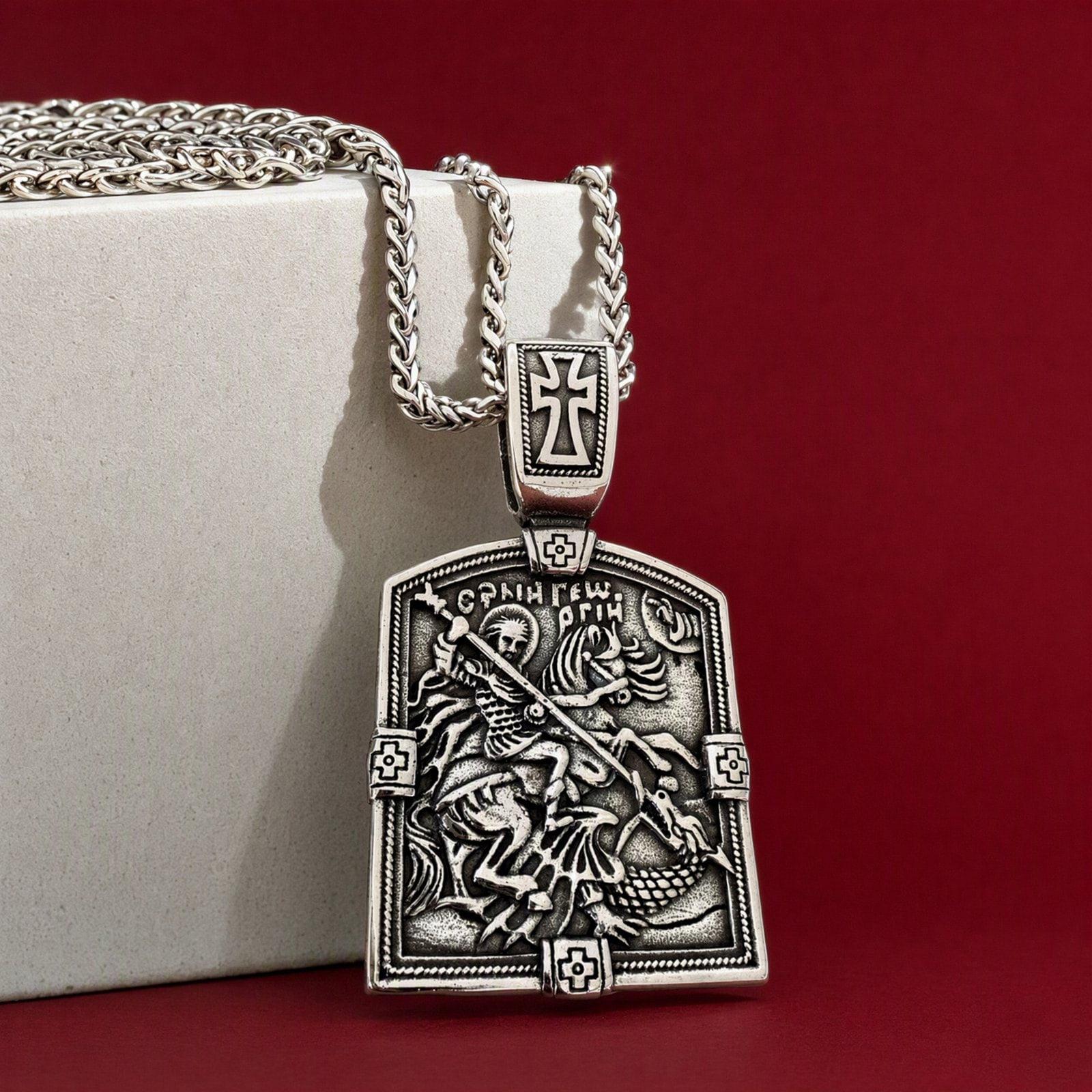 Medalla
St George Victory-Bearer
Color plata · Cadena de 60cm · Medalla ortodoxa de acero inoxidable$92$64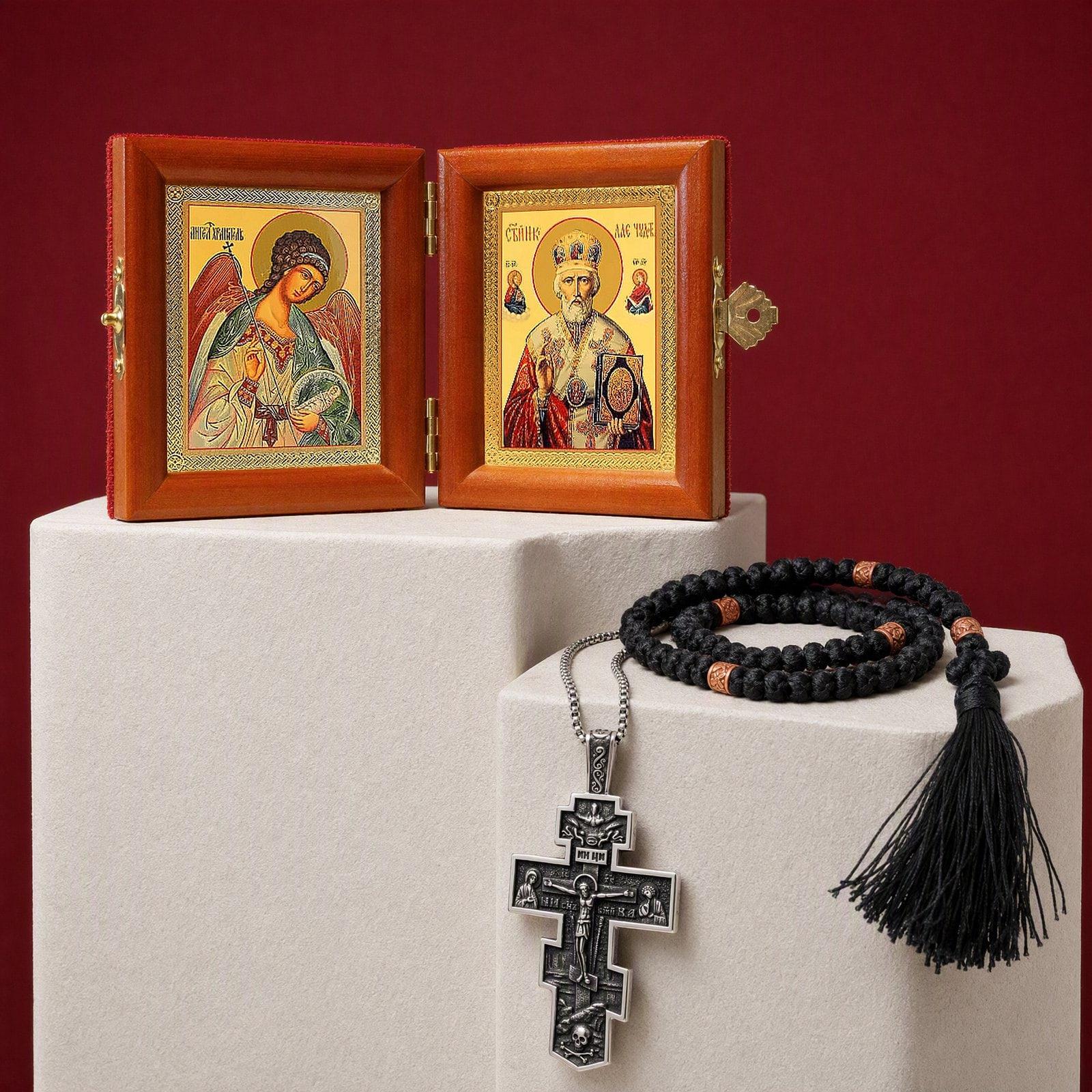 Set de regalo
Set de onomástico
$213$149
- Blessing, $49. Blessed by an Orthodox priest before it ships.
- Gift packaging, $20
Questions
Who is the patron saint of Beirut?
St George is named for Beirut on Wikidata and found in the Orthodox calendar we hold.
When is the feast day of St George?
23 April on the New Calendar and 6 May on the Old; the calendar lists the day as Great Martyr George the Victory-bearer.
Who else venerates St George in Lebanon?
The Druze count George and Elias as the two Christian saints they venerate most, and in central Mount Lebanon a church or a Druze maqam is dedicated to one of the two in many villages.
Is St George the patron saint of Beirut?
Wikipedia lists Beirut among the cities that claim George as patron saint. It does not tell how the city came to choose him.
Which Lampada gift suits a patron of Beirut?
The catalogue pieces that go with this page are the silver-tone St George medallion on a chain at $64 and the Name-Day Gift Set, which pairs a patron saint with the Guardian Angel in a folding icon and adds a stainless steel crucifix and a prayer rope, and the story of the saint’s life and feast day, sent to you by email, at $149. With the Blessing by an Orthodox priest, $113 and $198 respectively.