Tau cross meaning: the tau cross, St Anthony and St Francis
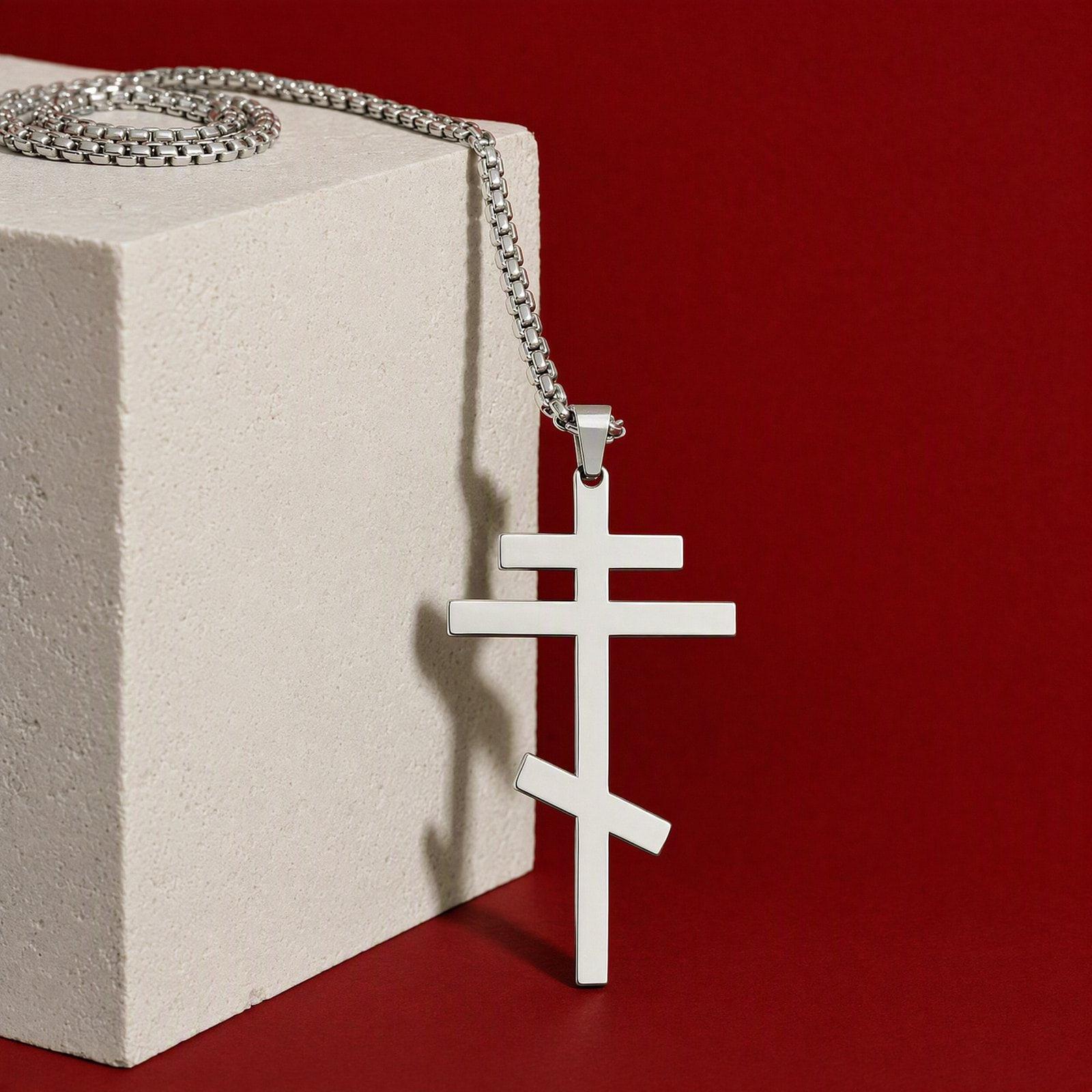
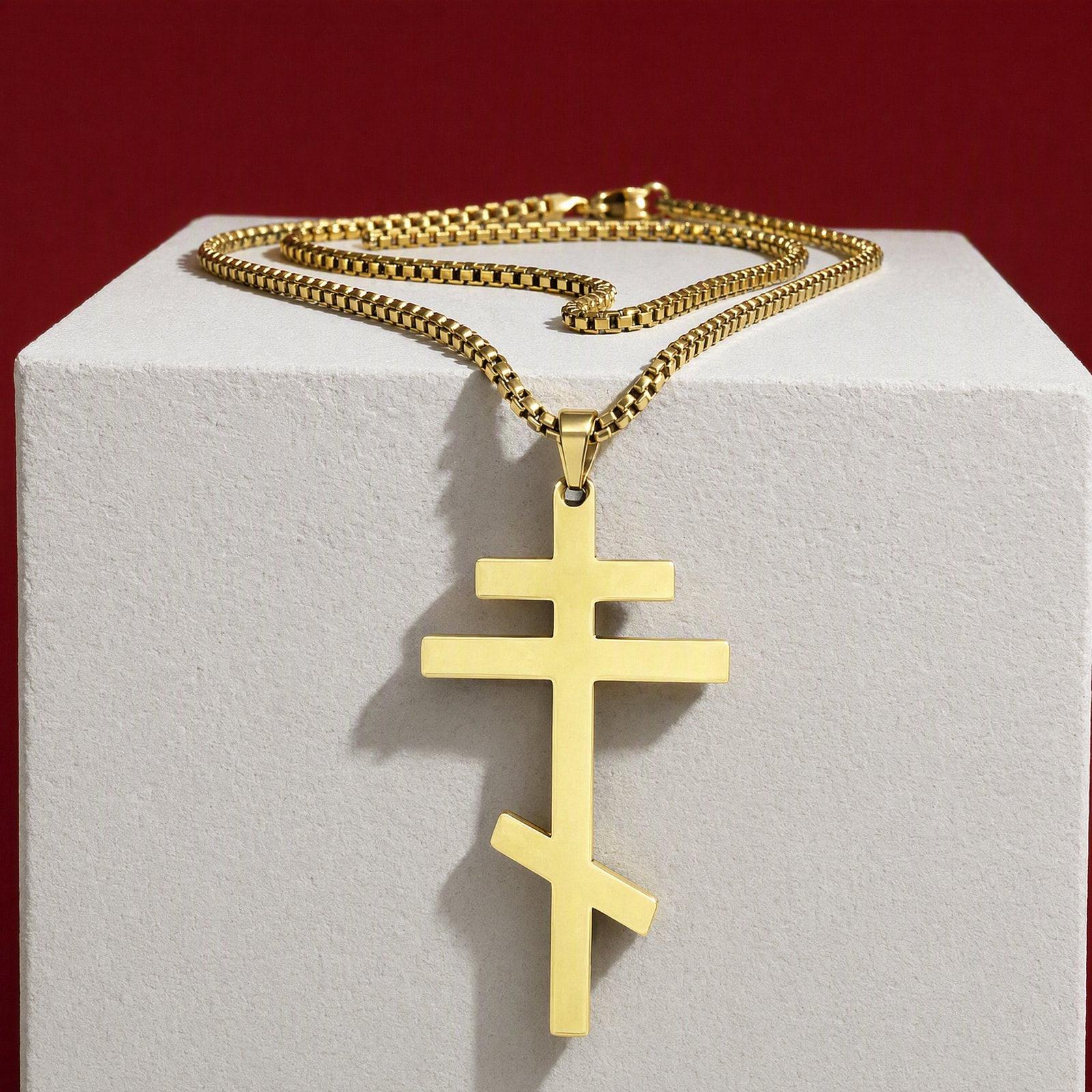
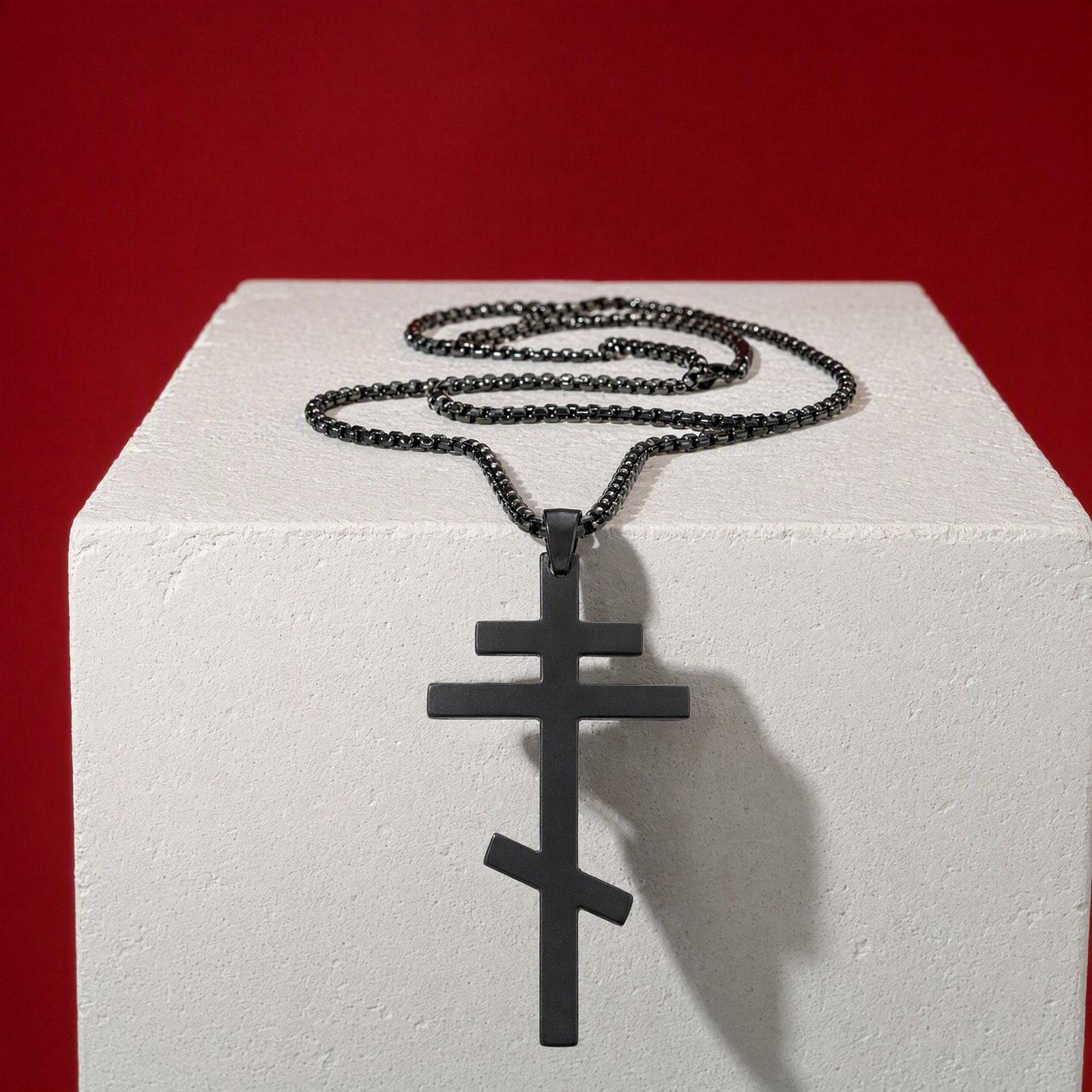
Not in our store todayWe do not carry a tau cross today. The crosses below are our closest: plain Orthodox three-bar crosses to wear every day.
The tau cross is a Christian cross shaped like a capital T. That is Wikidata’s description, and it is the clearest thing our source says about it.
Our source lists two other names, the cross of Tau and St. Anthony’s cross. It places the tau cross among the crosses in heraldry and as a kind of Christian cross, and it lists The Nuttall Encyclopædia as a work that describes it.
What our source does not hold: a date, a meaning for the T-shape, or any word on how a church uses the tau cross. We would rather give you a few honest lines than a story with no source, so the guide below adds them from public, checkable histories.
Where these lines come from. Everything above is taken from Wikidata’s entry for the cross, put into our own words; the sections below draw on public histories of the tau and on Scripture.
Lampada does not sell a tau cross; a reader looking for a necklace or pendant will find none on this site. The Orthodox cross that comes nearest, by being the plainest, has three bars and no figure, in silver-tone, gold-tone and black.
The tau cross: what it is and where it comes from
The tau cross is a cross with no top arm: a crossbar laid on the top of the upright, like a capital T. Tau is the Greek name of the letter T. Many historians think the Romans often crucified on a beam of this shape, the crux commissa, so the T is one of the oldest pictures of the cross of Christ.
Its other name, St Anthony’s cross, comes from St Anthony the Great, the Egyptian hermit and father of monks, who is shown on icons and paintings with a T-shaped staff. In the Middle Ages the Hospital Brothers of St Anthony, who nursed the sick, wore a blue tau on their habits. St Francis of Assisi took it as his own sign in the early 1200s, and through the Franciscans the tau cross is known in every country today.
How it differs from the Orthodox three-bar cross
| Cross | Shape | Where you see it |
|---|---|---|
| Tau cross | A T, no top arm | Franciscans, St Anthony |
| Latin cross | One crossbar, a long foot | Catholic and Protestant churches |
| Ankh | A T with a loop on top | Ancient Egypt, Coptic history |
| Orthodox three-bar cross | Short top bar, long bar, footrest | Orthodox baptismal crosses |
The Orthodox three-bar cross adds the title board above and the footrest below. The tau keeps only the beam and the upright, which is why it reads as a sign of humility and of the plain wood of the Cross.
The meaning of the T
- The mark of the faithful. In Ezekiel the Lord tells a man to set a mark on the foreheads of those who grieve over sin. In Hebrew that mark is the letter tav, which Christians read as the sign of the Cross.
- The bronze serpent. Moses lifted a bronze serpent on a pole in the desert, and Christ compared His own lifting up on the Cross to it (John 3:14). Many draw that pole as a T.
- Humility and conversion. For St Francis the tau meant a life turned toward God, and he blessed people with it.
The Franciscan tau and how it is worn
A St Francis tau cross is usually wood, often olive or plain dark wood, on a cord. It is given to new friars, to Secular Franciscans, and at confirmations and retreats in Catholic parishes. A tau cross pendant in silver or a gold tau cross necklace is a common gift for someone who loves St Francis. Wear it as he did, as a sign of the Cross and of a changed life.
A T-shaped cross beside a three-bar one
The tau cross is a T. The Orthodox cross in our catalogue has three bars, and in its plain version no figure on it. Our source allows no further comparison on its own, and its second name, St Anthony’s cross, is simply a name it lists. We offer the plain cross because it is quiet and because the catalogue says it is made for daily wear, not because it resembles the T.
What we carry instead
We do not stock a tau cross necklace. Our closest are the plain three-bar Orthodox crosses with no figure, about 2¼ in, each on a 60 cm chain: silver-tone stainless steel ($64), gold-tone stainless steel ($64) and black stainless steel ($64). For a wooden cross of our own, see our wooden Orthodox crosses; every piece is in our Orthodox cross necklaces. Orders arrive in 5–8 business days: US-based, ships from Florida.
A plain Orthodox cross to wear
An Orthodox priest will bless the cross before it ships if you ask, and every finish comes with its chain.
CON SEDE EN EE. UU.. ENVÍOS DESDE FLORIDA
Delivery in 5–8 business days.
Want us to stock it?
We don't carry a tau cross today. Leave your email and we will write once if we stock it.
Questions
What does the tau cross mean?
Wikidata describes a Christian cross shaped like a capital T. Our source gives no meaning for that shape, but Christian writers read the T as the Cross itself and as the mark of Ezekiel 9:4, set on the foreheads of the faithful. St Francis of Assisi made it his own sign.
Is the tau cross St. Anthony’s cross?
Yes, in our source: St. Anthony’s cross is listed as another name for the tau cross.
Do you sell a tau cross pendant?
No. The tau cross is not in the Lampada catalogue, and the plainest Orthodox cross we have is the nearest.
Which of your crosses is the simplest?
The three-bar cross that has no figure on it, which comes in silver-tone, gold-tone or black.
Why is the tau cross Franciscan?
St Francis of Assisi loved the tau as a sign of conversion and of the Cross. He drew it on walls and cells and signed his letters with it, and Franciscan friars and lay Franciscans wear it still. A simple wooden tau cross necklace on a cord is the Franciscan tau most people know.
Do Orthodox churches use the tau shape?
Yes, in one place in particular. The staff of an Orthodox bishop often ends in a T-shaped handle, two serpents turned toward a small cross, recalling the bronze serpent of Moses. Orthodox Christians do not usually wear a tau as a neck cross; the baptismal cross is three-barred or four-armed.