The crucifix: what it is, the Orthodox crucifix, and how to choose one
A crucifix is a cross that carries the figure of Christ crucified, as opposed to a plain cross without the figure. Christians wear a crucifix necklace or hang one on the wall to keep the Crucifixion, and the love it shows, in front of them every day.
The Orthodox crucifix has its own look: three bars, Christ shown at peace rather than in agony, feet side by side on a slanted footrest, and often the words “King of Glory” or IC XC above. Below: what to look for in a crucifix to wear or to hang, and the crucifixes we carry.
What people mean by a crucifix
The word comes from the Latin for “fixed to a cross.” A crucifix shows Christ on the cross; a plain cross shows the cross alone. People look for a crucifix to wear on a chain, a small crucifix pendant for a child, a crucifix for the wall or the front door, a standing crucifix for a table, or a wooden crucifix to hold in prayer. Read more in the difference between a cross and a crucifix.
The Orthodox crucifix and how it differs
| Detail | Orthodox crucifix | Western crucifix |
|---|---|---|
| Bars | Usually three: title, arms, slanted footrest | One crossbar |
| Christ’s body | At peace, the victory over death | Often in visible suffering |
| Feet | Side by side, two nails | Crossed, one nail |
| Title | IC XC, “King of Glory” or the Greek INRI | INRI |
| Form | Flat or low relief, like an icon | Often a full statue |
These are traditions, not strict rules, and you will find exceptions on both sides. The meaning is the same: Christ who died and rose. See the Calvary cross for the skull and hill often shown at the foot, and the King of Glory crucifix.
What to look for in a crucifix to wear
Look at the detail of the figure first: a good crucifix shows the face and hands clearly even at 2.5 in. Then the back, which on Orthodox crucifixes often carries a prayer, and the edges, which should be smooth. For daily wear, stainless steel is the practical metal; it takes water and sweat and does not tarnish. Most men choose a 2.5 to 3 in crucifix on a 24 in (60 cm) chain; most women a smaller one on 18 to 20 in. See crucifixes on a 60 cm chain.
A crucifix for the wall or the door
A wall crucifix belongs where it is seen: in the icon corner, above a bed, or over the front door. Wood is the traditional material. Hang it on a nail or hook at eye level or higher, and keep it out of a damp bathroom or direct sun, which fades printed images. Many families hang a small crucifix over the door as a blessing on all who come and go; read what a crucifix over a door means.
Care
Wipe a metal crucifix with a soft cloth and wash it now and then in warm water with mild soap. Keep it away from bleach and pool chlorine. A wooden crucifix should be dusted, never soaked. A crucifix that is worn out or broken is not thrown away: Orthodox custom is to bury it or burn it respectfully, or bring it to a church.
What we carry
To wear: the crucifix in gold tone on a 60 cm chain ($64) with “Let God arise” on the back; the Mary and St John crucifix in two-tone silver on a 60 cm chain ($64); the Jesus Prayer crucifix in darkened silver on a 60 cm chain ($64); and the crucifix with angels, a pendant without a chain ($54). The carved wooden crucifix ($44) is light against the skin. For the home, the 8 in wooden wall crucifix ($74) has “Save and protect” in gold on the back. See every piece in our Orthodox crosses. Orders arrive in 5–8 business days: US-based, ships from Florida.
Our Orthodox crucifixes
Four stainless steel crucifixes to wear, a carved wooden crucifix, and an 8 in wooden crucifix for the wall. Each card shows its live price.
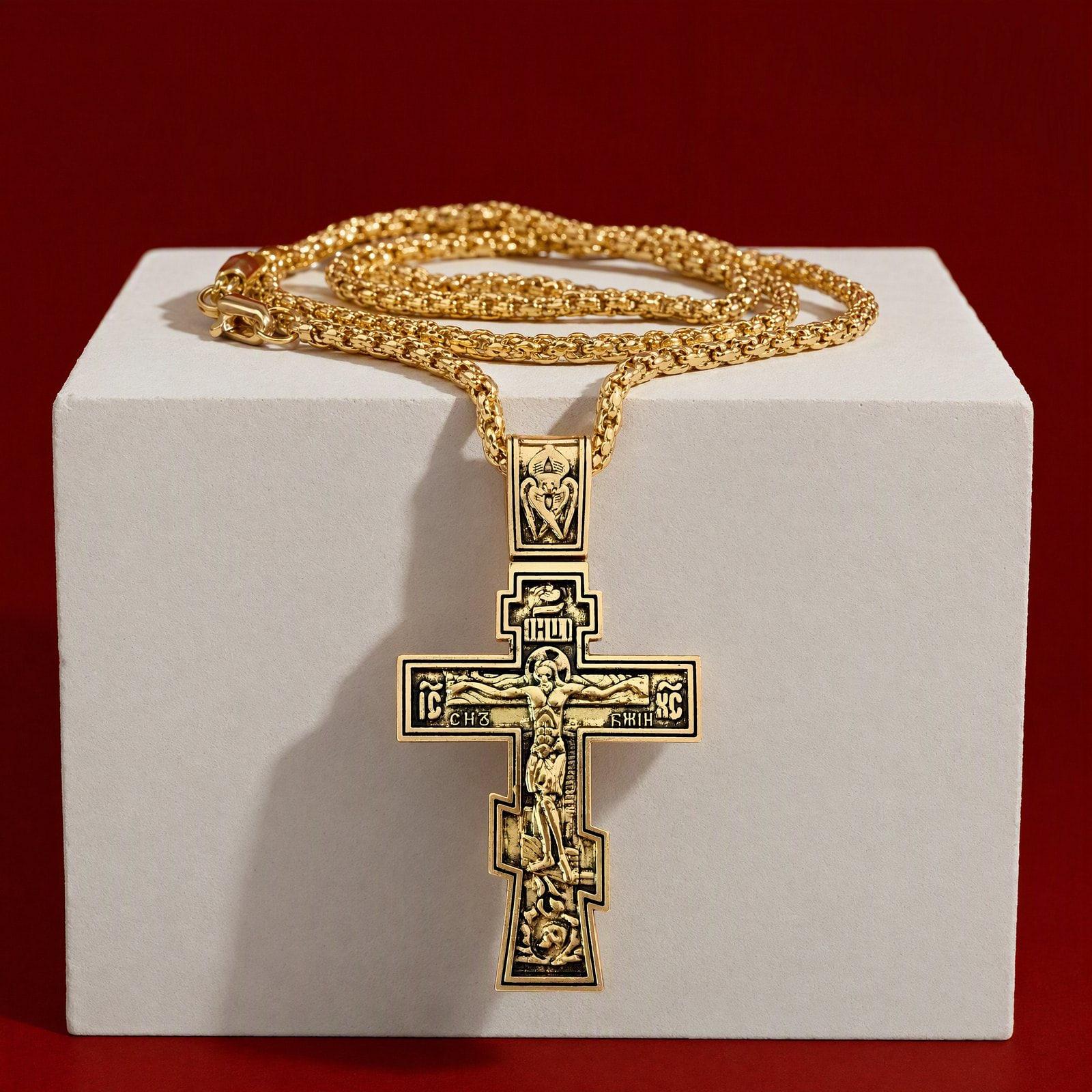 Cruz
Saviour Lamplight
Cadena de 60cm · Color oro · Cruz ortodoxa de acero inoxidable$92$64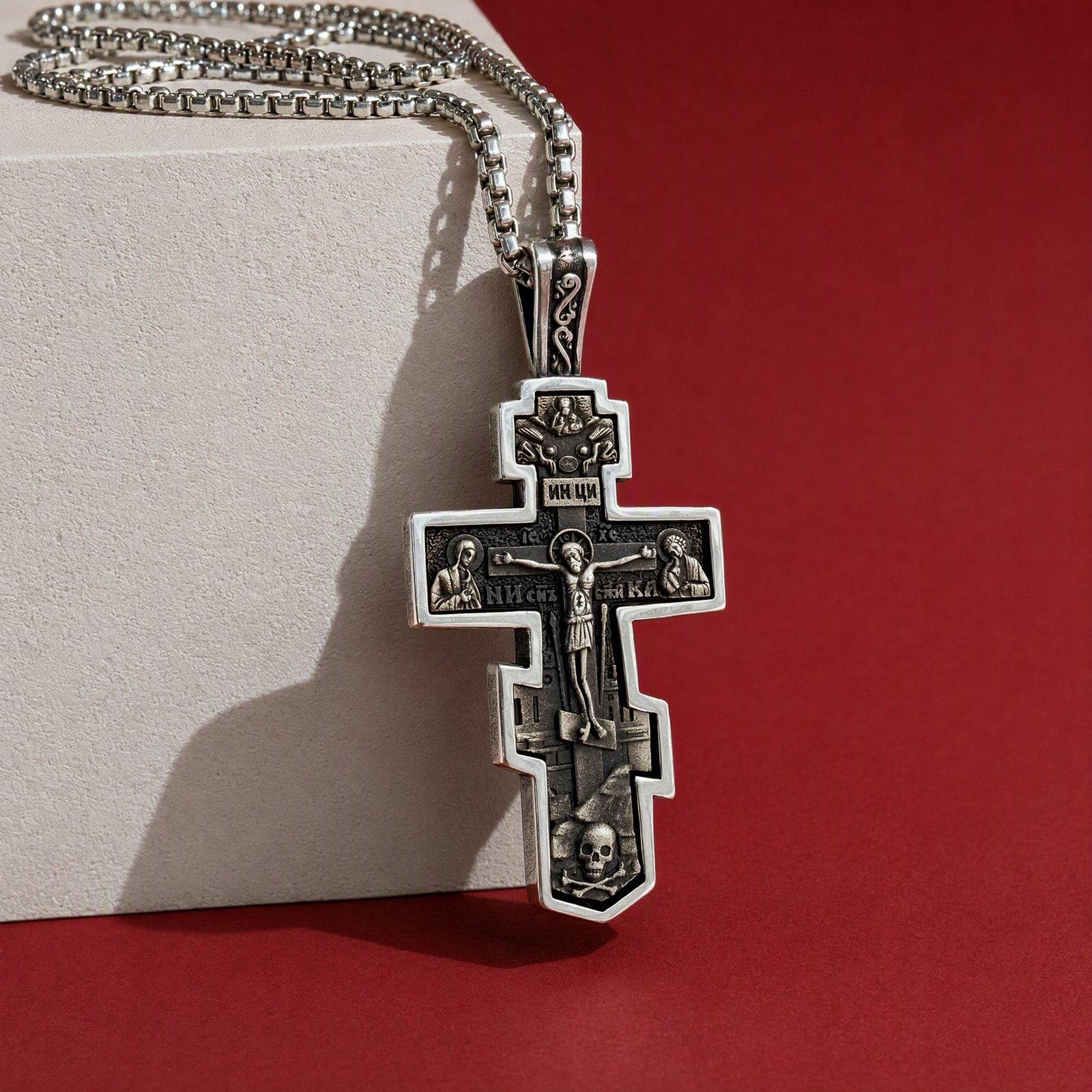 Cruz
Golgotha Dawn
Color plata · Cadena de 60cm · Cruz ortodoxa de acero inoxidable$92$64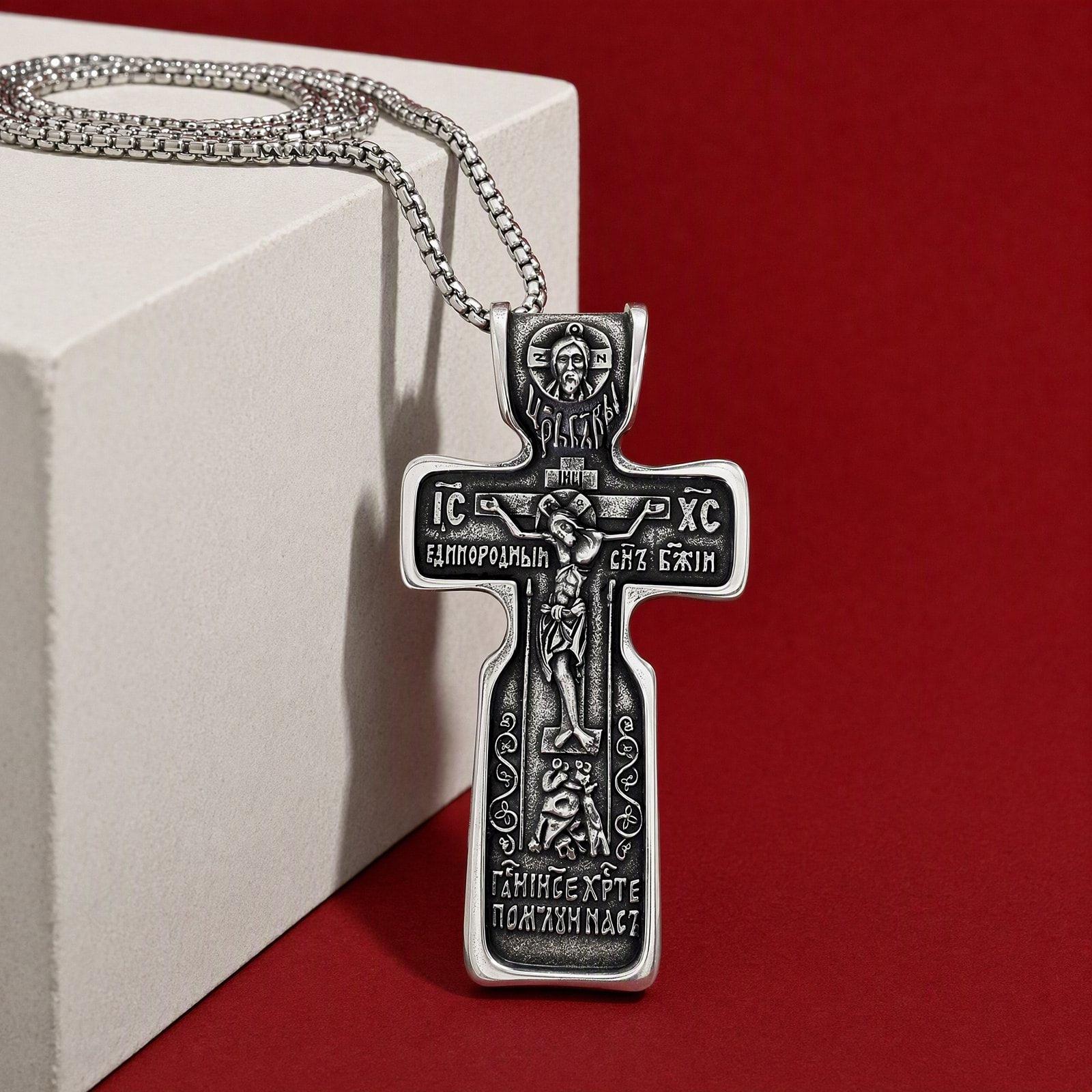 Cruz
Jesus Prayer Slate
Color plata · Cadena de 60cm · Cruz ortodoxa de acero inoxidable$92$64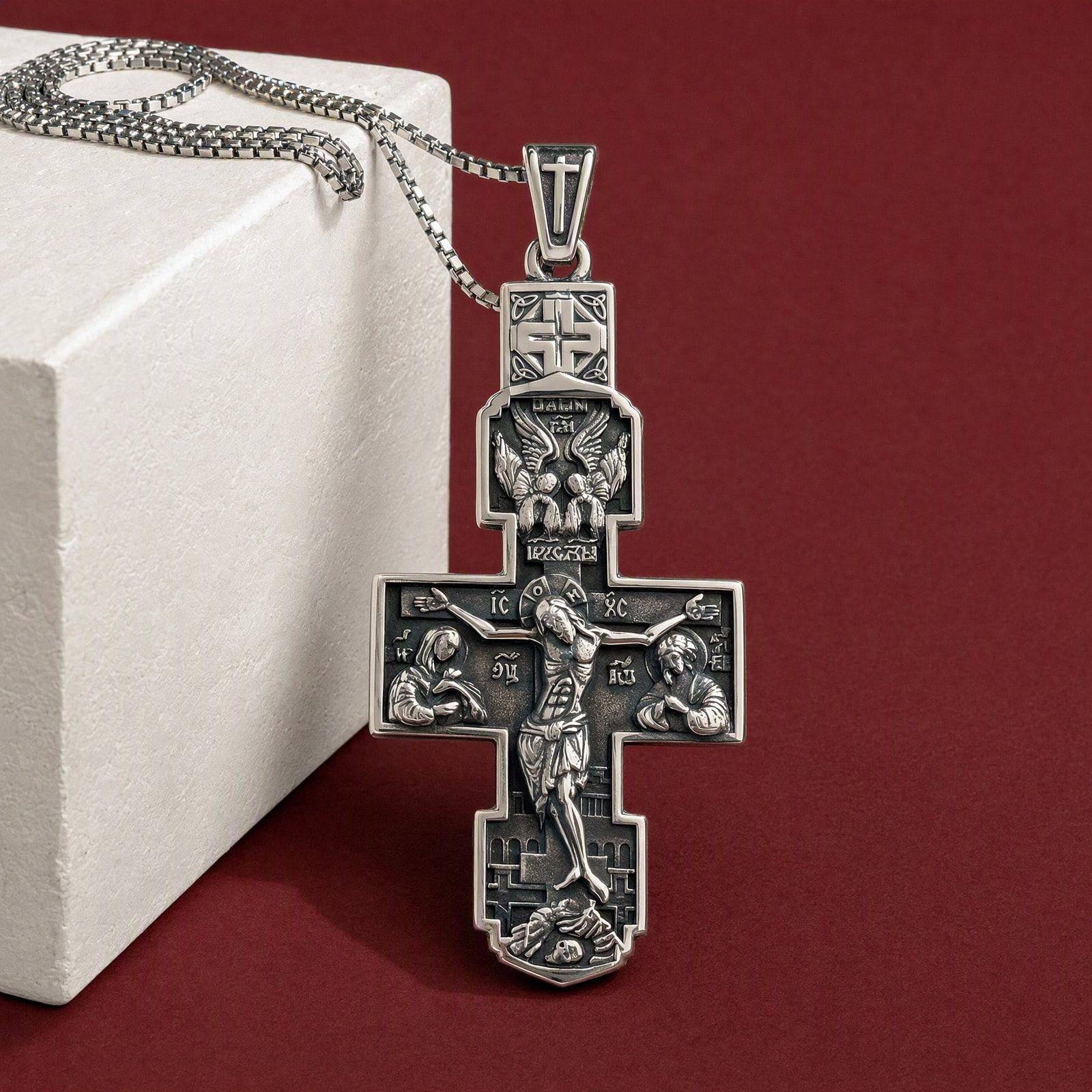 Cruz
Guardian Bright
Color plata · Cruz ortodoxa de acero inoxidable$78$54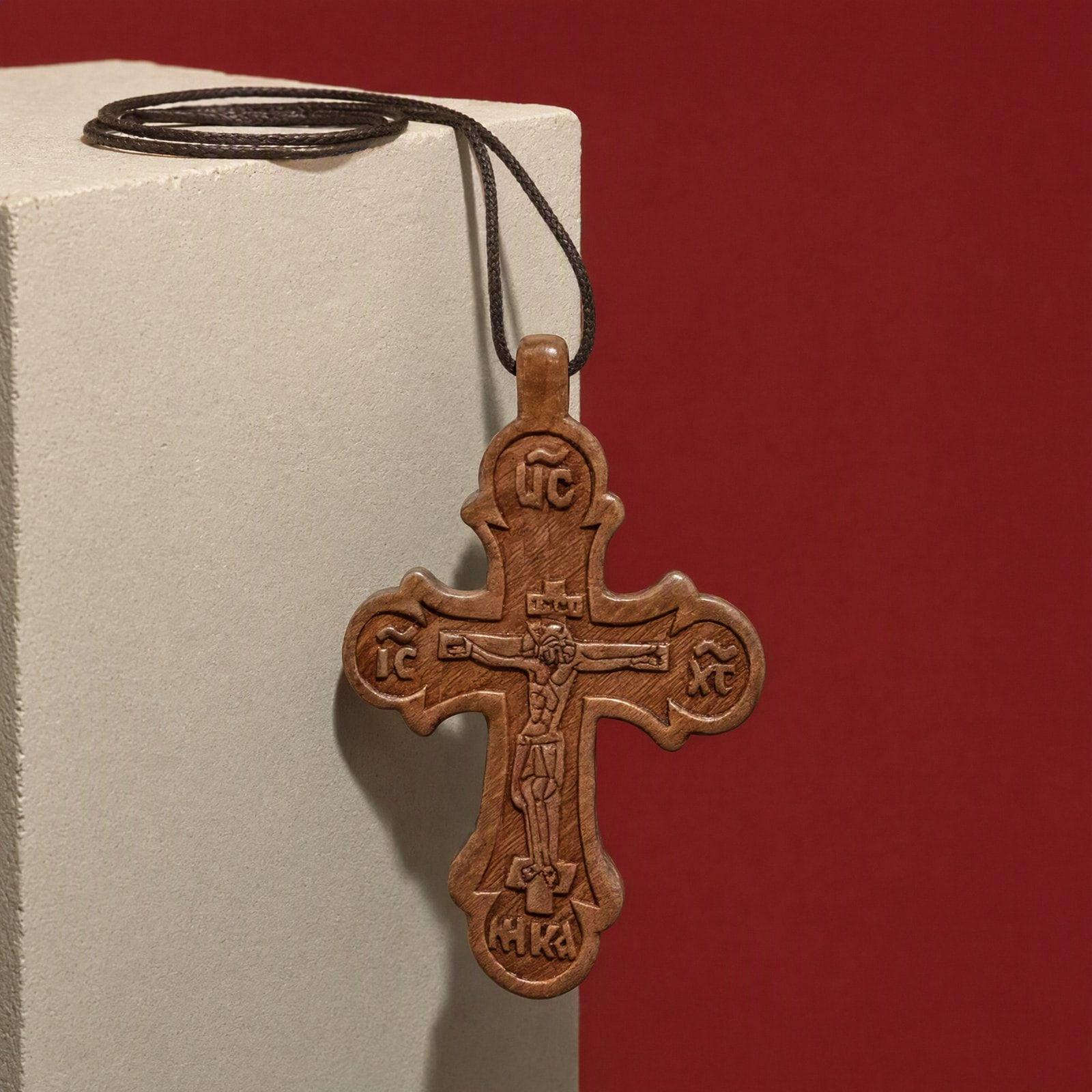 Cruz
Trefoil Wood
Cruz ortodoxa de madera$63$44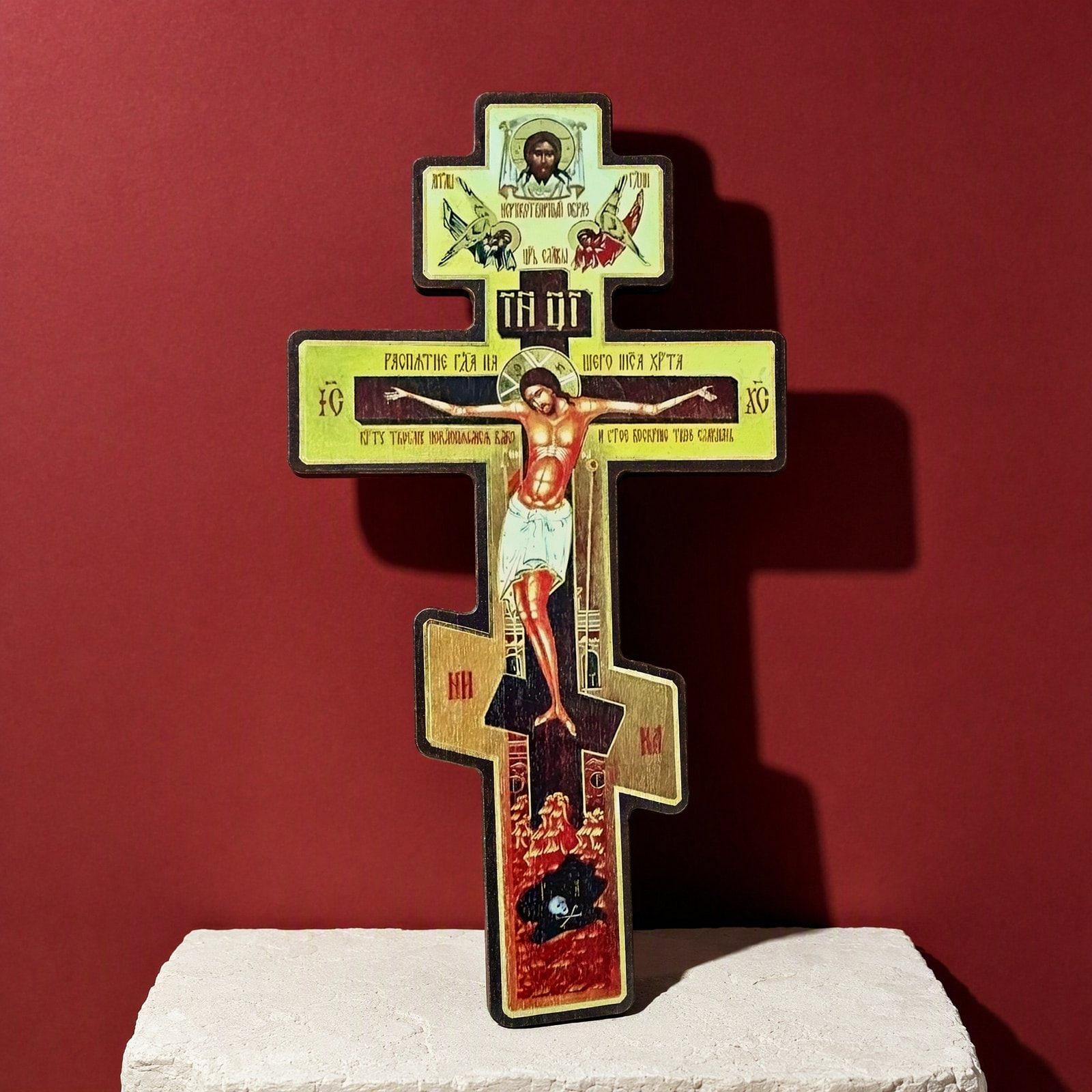 Cruz de pared
Save and Protect
Cruz ortodoxa de madera 8in$106$74
CON SEDE EN EE. UU.. ENVÍOS DESDE FLORIDA
Delivery in 5–8 business days.
Questions
What is the difference between a cross and a crucifix?
A crucifix carries the figure of Christ on the cross; a cross does not. Both are signs of faith in every Christian tradition. Orthodox Christians wear both, and the plain three-bar cross is as traditional as the crucifix.
Is a crucifix only Catholic?
No. Catholics, Orthodox, Lutherans and Anglicans all use the crucifix. The Orthodox crucifix looks different: three bars, a slanted footrest, and Christ shown at peace, usually flat or in low relief, like an icon.
What does INRI mean on a crucifix?
INRI is the Latin abbreviation of “Jesus of Nazareth, King of the Jews,” the charge Pilate had written above the cross. Orthodox crucifixes often write it in Greek letters or replace it with “King of Glory” or IC XC.
Why do Orthodox crucifixes have a slanted bar?
The lower bar is the footrest. Tradition reads its slant as pointing up toward the thief who repented and down toward the one who mocked Christ, a reminder of the choice every person makes.
Where should a crucifix hang at home?
Orthodox families keep a cross or crucifix in the icon corner, often on an east wall, and many hang one over the front door or a child’s bed. Hang it at eye level or higher, where it is seen and treated with respect.
Can anyone wear a crucifix necklace?
Yes. A crucifix is worn as a sign of faith, and anyone who wears it in that spirit may. Orthodox Christians wear the cross or crucifix from their baptism, usually under clothing.