How to choose a patron saint
Choose a patron saint by starting from your own name. In Orthodox practice a person is named for a saint, and that saint is the patron. Where a name lacks a saint, one with a matching meaning or the nearest sound can take that place, and your parish priest can advise. Converts often take a saint’s name when they are received.
Start with your name. For most of Orthodox history people were given the names of saints, or names that recall events in the Bible. So the usual patron is the saint behind the name you carry. If that saint has several feast days, usually one is picked as your name day.
When a name lacks a saint. OrthodoxWiki keeps a long list of modern names matched to saints. A name may reach a saint through its longer form, as Gerald stands for Jerry. Or a saint whose name carries the matching meaning may be used, such as Maurice for Blake, both meaning black. Failing both, the saint whose name sounds nearest is given.
If you come to the Church as an adult. A person received into the Church, by chrismation or otherwise, will often take a saint’s name, and that saint becomes the patron. Some Catholics confirmed in certain regions choose a saint’s name in the same way.
What to weigh. John Chrysostom told parents not to take the first name that occurred to them, or a relative’s name to please the family, but the name of a holy man conspicuous for virtue and courage before God. As a suggestion in his spirit, read a short life of the saint before you decide. In Italy and Spain the custom has been to name a child for the saint on whose feast the child was born.
Patrons beyond your name. A parish church or a monastery has its own patron, whose feast is a Great Feast. The Church also knows saints for particular needs: St Nicholas of Myra, whose day is 6 December, is among those called on for children and for travelers.
In short. Take the saint of your own name, fall back on a matching meaning or sound if there is no saint, and talk with your parish priest, especially if you are entering the Church.
A saint to get to know
Orthodox Christians think of a patron saint as a friend in heaven who prays for them and whose life shows one way to follow Christ. Nothing in the practice promises a result, and the choice is not a competition between saints. Catholics, Anglicans and some Lutherans also speak of patron saints, while most other Protestant churches do not. Your parish priest can tell you which saint stands behind your name, help you choose when it has none, and say how a saint’s name is given when a person is received into the Church.
A saint chosen by first name
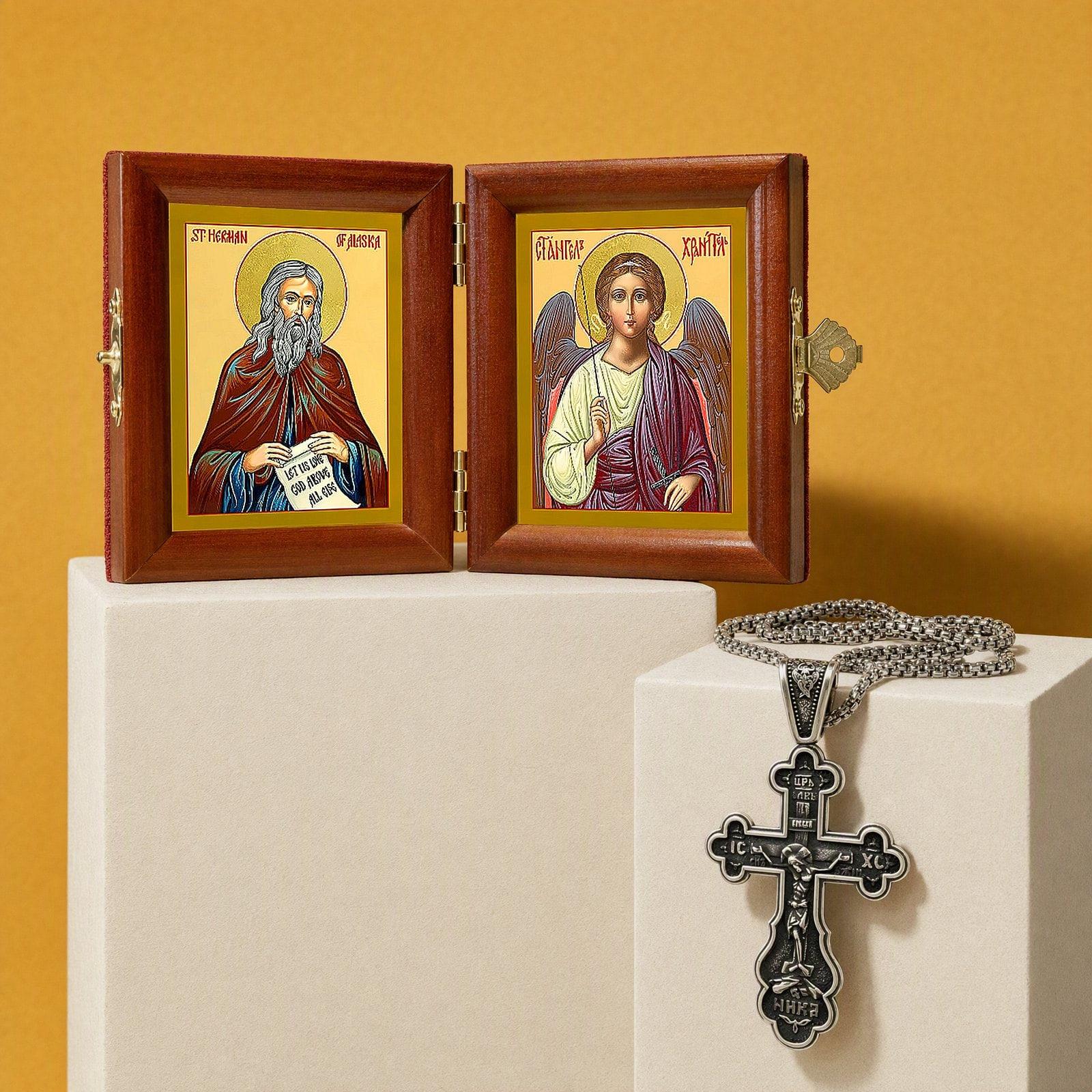
Patron Saint & Cross, $99, comes with the saint chosen by first name, and a printed prayer card, $24, can carry a prayer to a patron saint with the names you give.
 Set de regalo
Santo patrono y cruz
$142$99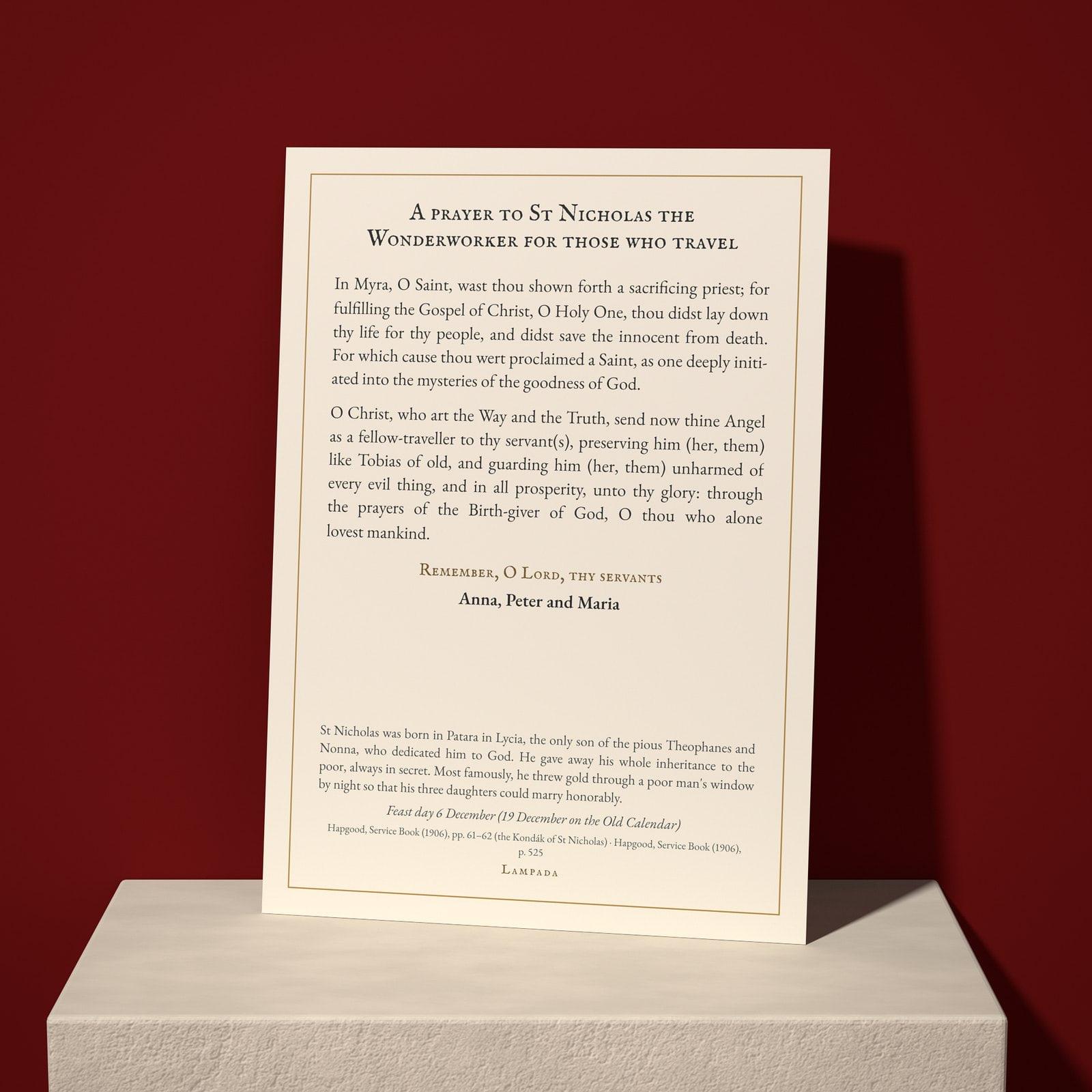
Estampa de oración impresa con sus nombres
$35$24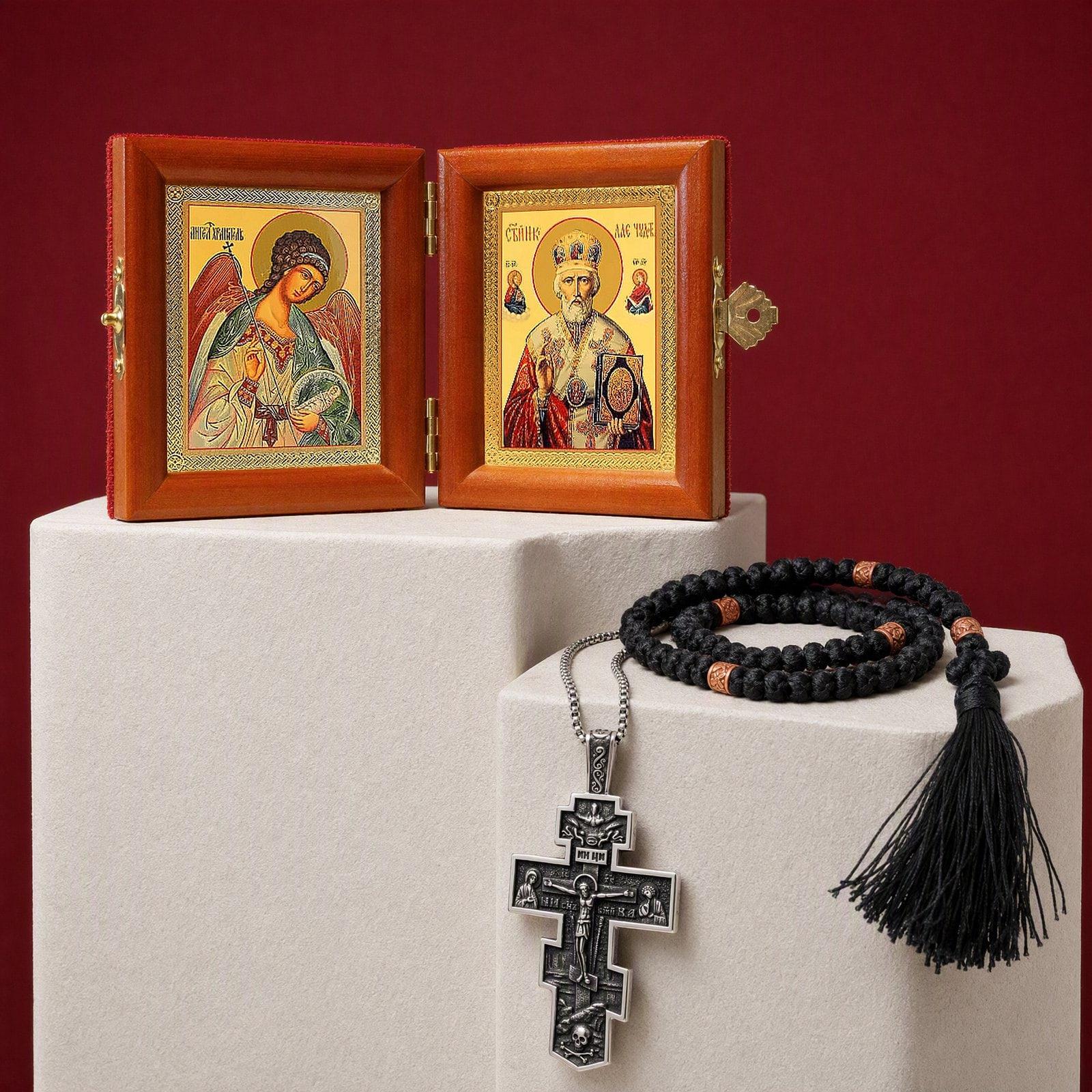 Set de regalo
Set de onomástico
$213$149
- Blessing, $49. Blessed by an Orthodox priest before it ships.
- Gift packaging, $20
Questions
How do I choose a patron saint?
Begin with your own name. In Orthodox practice a person is named for a saint, and that saint is the patron.
How do I pick a patron saint if my name has none?
A saint with a matching meaning, or the closest sound, can stand in. OrthodoxWiki matches many modern names to saints, and your parish priest can advise.
Can a convert choose a patron saint?
Yes. A person received into the Church will often take the name of a saint, who becomes the patron.
Which date counts if my patron saint has several feasts?
Normally just one date is picked as the name day.
Who is the patron saint of children and travelers?
OrthodoxWiki lists St Nicholas of Myra, whose day is 6 December, among the saints called on for both.