History of the cross
The cross shape is far older than Christianity, but the Christian cross begins with the crucifixion of Jesus. Christians were linked to the cross by the second century, and from the fourth century it became the emblem of the faith in pictures.
Before Christ. Cross shapes appear as cuts and carvings from deep prehistory, and the cross was a religious or cultural sign in Europe, Asia and Egypt. The Greek word for the execution cross shows that it was usually shaped like the letter tau.
The first Christians. By the second century the cross was already tied to Christians, and Tertullian replied to those who accused them of adoring a gibbet. By 204 he could write that it was a tradition for Christians to trace the sign of the cross repeatedly on their foreheads. Early Christians wrote and gestured the cross as a T.
In art. The Greek and Latin crosses appear in Christian art towards the end of Late Antiquity, and the wide use of the cross as an emblem begins in the fourth century.
The crucifix. A cross bearing the image of Christ is not known to have been used until the sixth century. In the East the body is usually painted or in low relief.
How the Orthodox carry the history forward
The Orthodox Church keeps the old custom of tracing the sign of the cross on the body and honours the cross in its services, twice a year in the middle of the church. Its crosses and crucifixes follow the Eastern forms: the body of Christ is painted or in low relief, shown peaceful and already dead, and the cross often has a third bar for the feet. The history above is a history of the symbol; what the cross means to Christians is told in the faith itself. A parish priest can say more about the forms used in your parish. Catholics and Protestants share the same early history and differ in the forms they chose.
Crosses in the Eastern form
The plain three-bar cross on a chain, $64, and the crucifix with the Son of God, $54, follow the Eastern forms, and the wooden crucifix, $44, is a cross to keep at home.
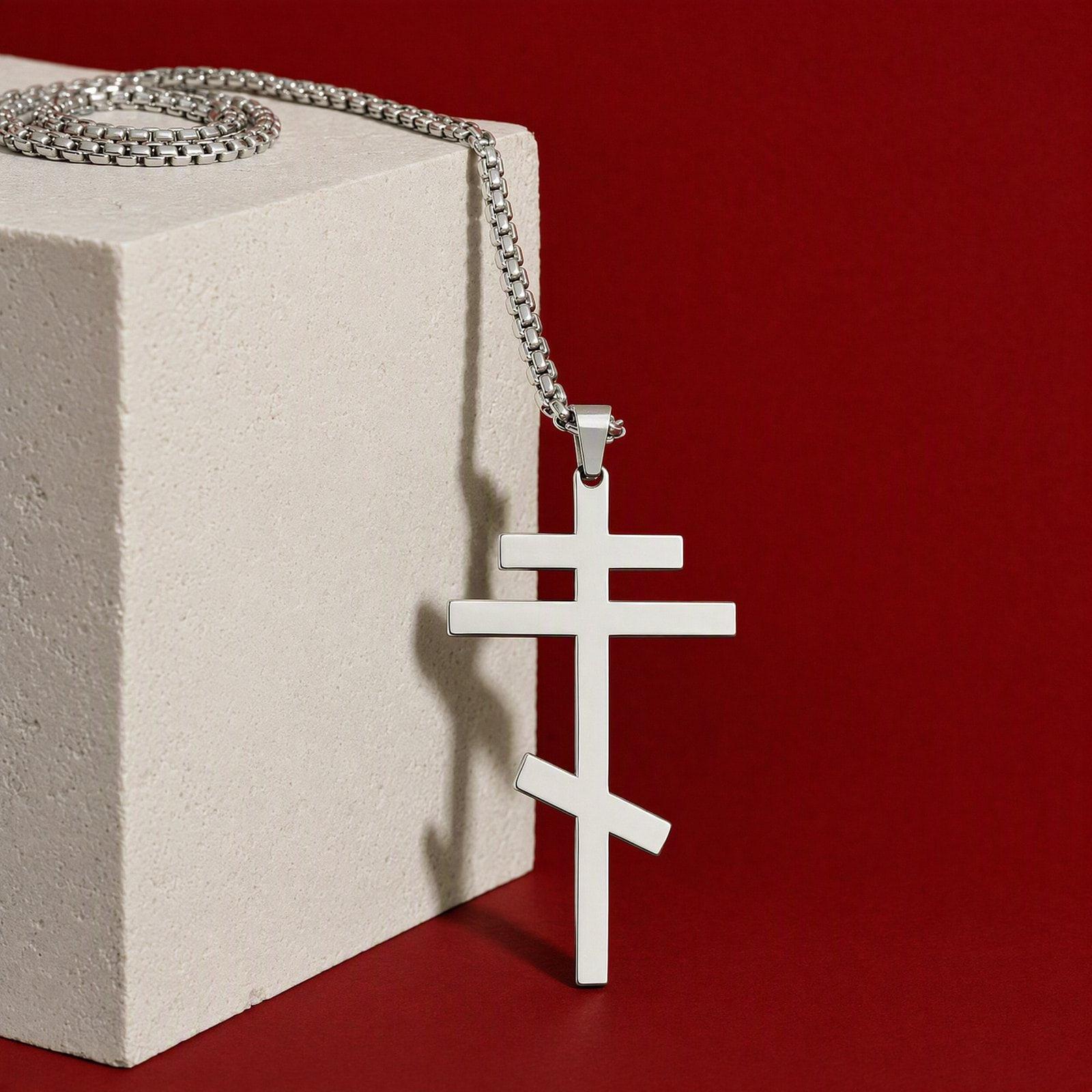 Cruz
Three-Bar Bright
Color plata · Cadena de 60cm · Cruz ortodoxa de acero inoxidable$92$64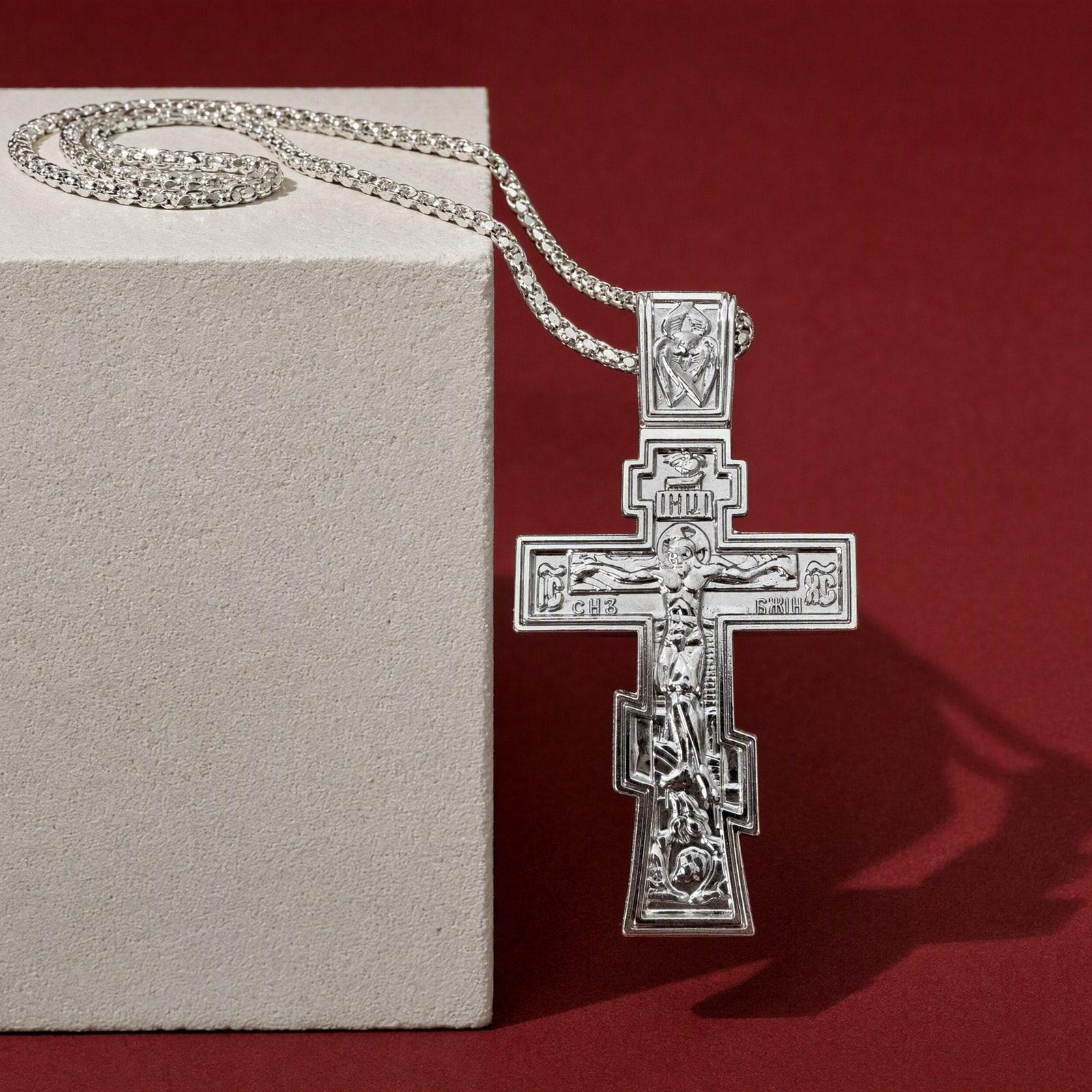 Cruz
Saviour Bright
Color plata · Cruz ortodoxa de acero inoxidable$78$54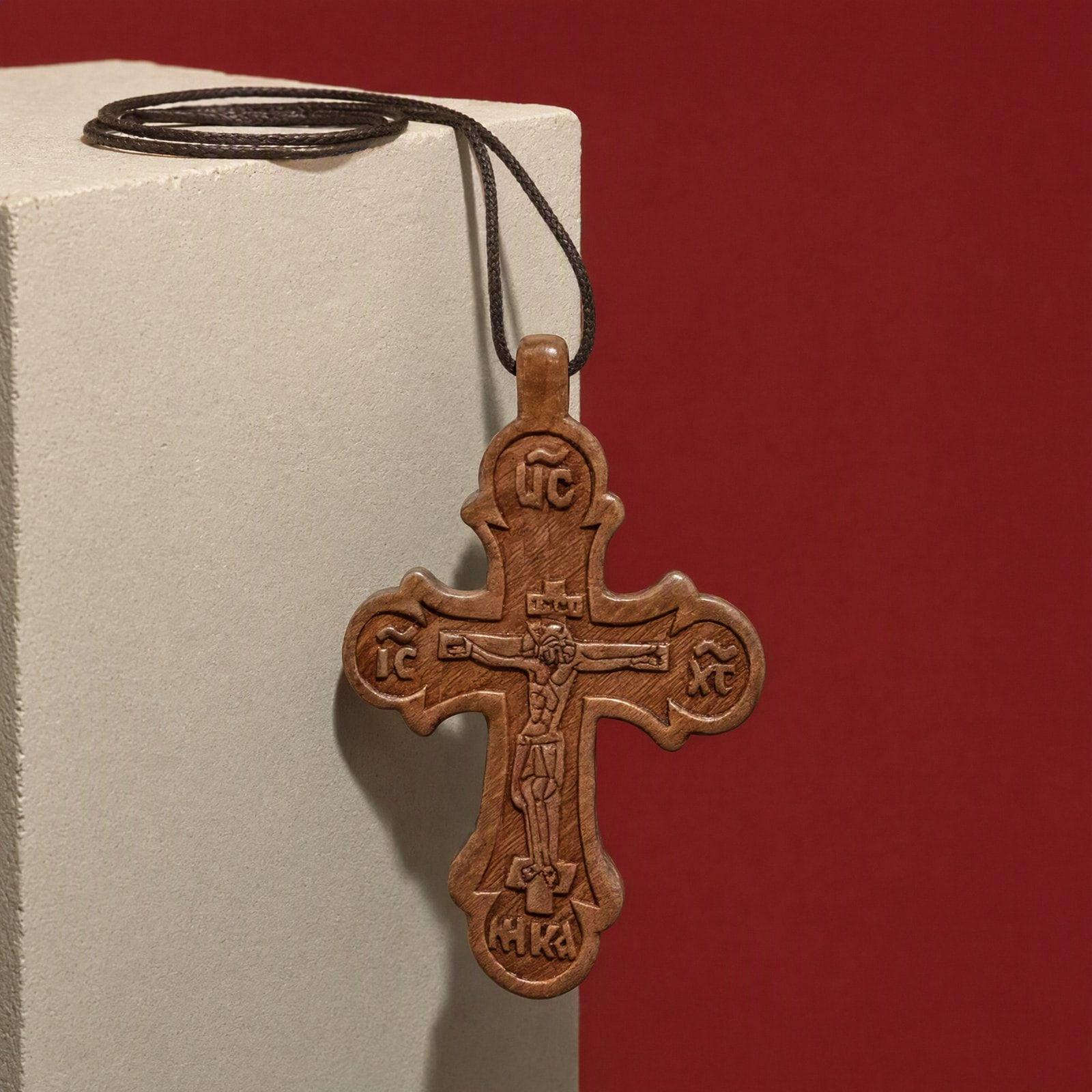 Cruz
Trefoil Wood
Cruz ortodoxa de madera$63$44
- Blessing, $39. Blessed by an Orthodox priest before it ships.
- Gift packaging, $20
Questions
When did the cross become a Christian symbol?
It was linked with Christians in the second century and widely adopted in art from the fourth.
Was the cross used before Christianity?
As a shape, yes, in many cultures.
When was the crucifix first used?
Not until the sixth century, according to Wikipedia.
Why does the Orthodox cross have three bars?
The third bar carries the feet in some forms of the Eastern crucifix.