Symbols of the Holy Spirit: what it is and how Orthodox Christians use it
The symbols of the Holy Spirit turns up in Christian art and writing, and the Orthodox Church and the Western churches do not always read it the same way. This page sets out what two reference sources say about it, and keeps the Orthodox use apart from the Western.
- The dove. The dove is the most familiar sign of the Holy Spirit, drawn from the Gospel accounts of the Spirit coming down on Jesus at baptism (Matthew 3:16, Luke 3:22).
- Fire and wind. At Pentecost, Acts describes a wind and flames settling above the apostles, so a flame also stands for the Spirit.
- In Annunciation scenes. Annunciation pictures often have a dove descending to Mary on rays of light.
- Earliest Christian use stated. Irenaeus (2nd century) noted that the Greek letters of ‘dove’ (περιστερά) total 801, the same as Alpha plus Omega, which stand for Christ.
- Dove vessel. A peristerium is a metal dove hung over an altar; the article places most of these in Eastern Christian churches.
In Western churches. In medieval churches of the West a dove-shaped vessel held the reserved hosts of the Eucharist, often gilded, with enamel wings and eyes, made in Spain or Limoges.
Facts come from Wikipedia (Holy Spirit in Christian art, Christian symbolism and Peristerium) and OrthodoxWiki (Holy Spirit, Theophany and Pentecost), put into our own words.
How Orthodox Christians use the symbols of the Holy Spirit
On OrthodoxWiki the Spirit is often shown as a dove, from Christ’s baptism in the Jordan, and sometimes as a flame, from Pentecost. Orthodox Theophany celebrates Christ’s baptism in the Jordan, where the Spirit came down in dove form. Orthodox Pentecost recalls the cloven tongues of fire and the rushing wind. Dove-shaped vessels over the altar are found most often in Eastern Christian churches.
Trinity pieces: a crucifix and a folding icon
No catalogue item is described as the symbols of the Holy Spirit. The two pieces whose text names the Holy Trinity are the Crucifixion cross with the Trinity above it, $54, and the Rublev Holy Trinity folding diptych, $109, each open to the Blessing by an Orthodox priest. With the Blessing, $93 and $158 respectively.
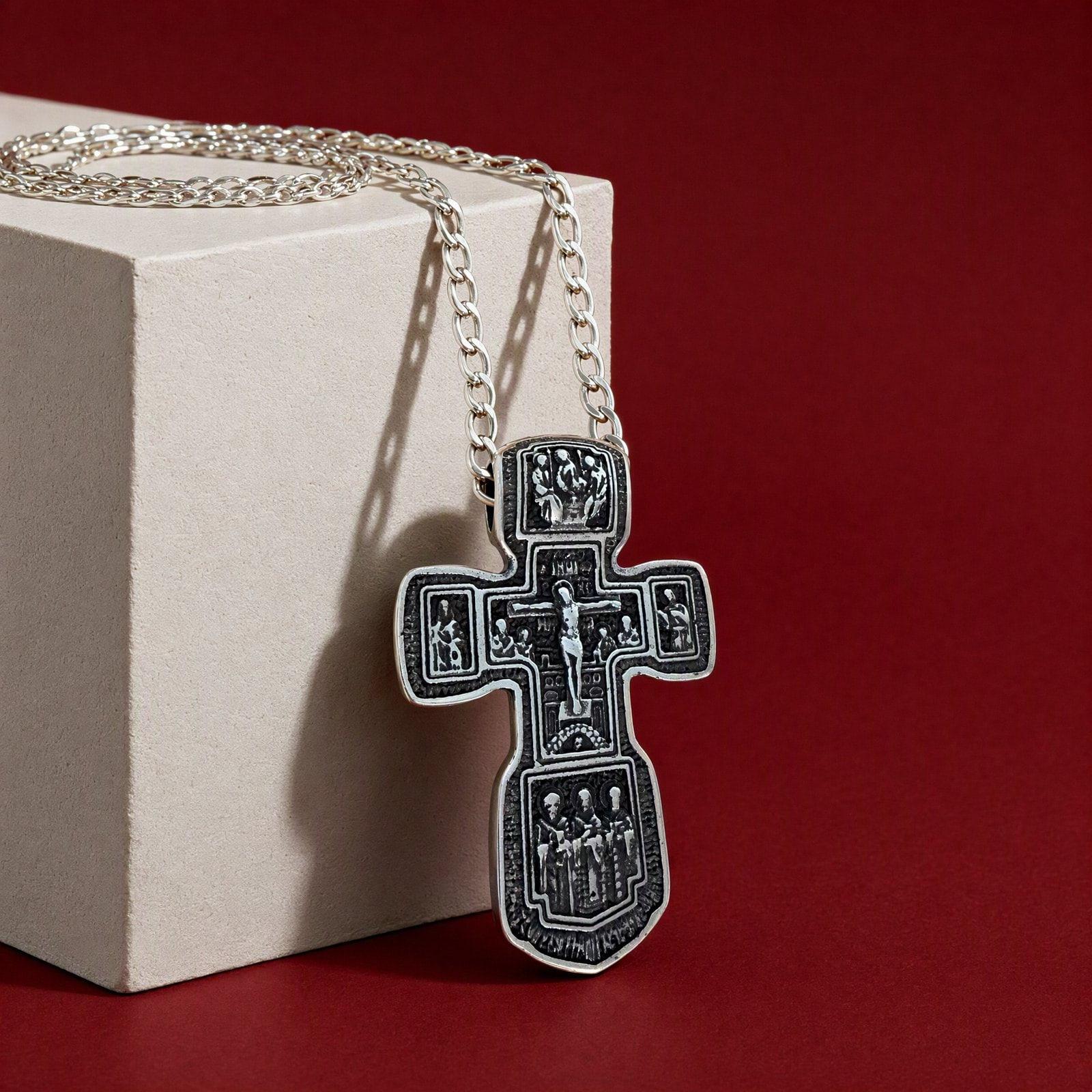 Krst
Holy Trinity Slate
srebrna boja · nerđajući čelik$78$54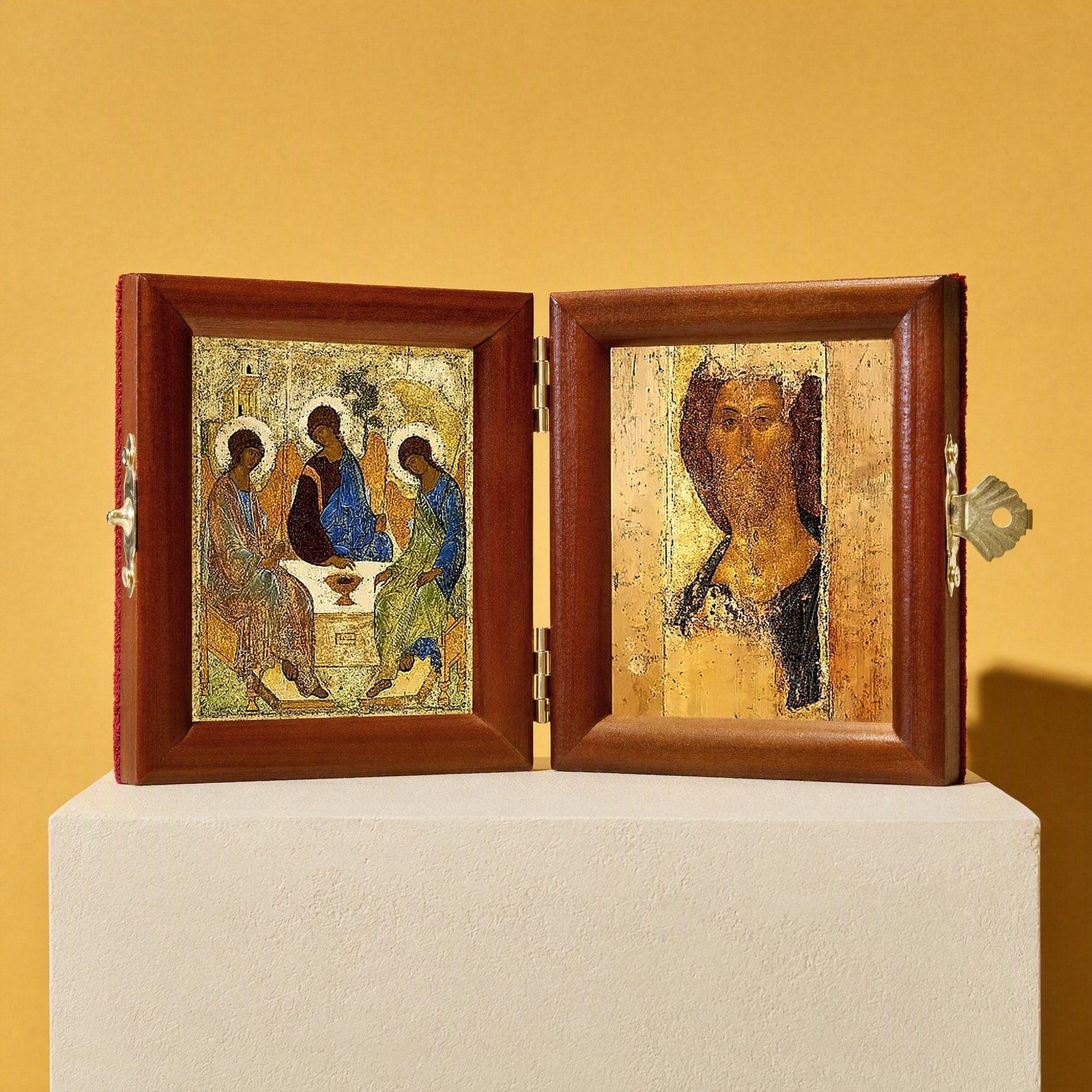 Sklopivi diptih
Sveta Trojica (Rubljov) i Hristos (Zvenigorodski Spas)
sklopivi diptih$156$109
- Blessing, from $39. Blessed by an Orthodox priest before it ships.
- Gift packaging, $20
Questions
What is the symbols of the Holy Spirit as a Christian symbol?
The dove is the most familiar sign of the Holy Spirit, drawn from the Gospel accounts of the Spirit coming down on Jesus at baptism (Matthew 3:16, Luke 3:22).
What else do the sources say about the symbols of the Holy Spirit?
At Pentecost, Acts describes a wind and flames settling above the apostles, so a flame also stands for the Spirit.
How does the Orthodox Church treat the symbols of the Holy Spirit?
On OrthodoxWiki the Spirit is often shown as a dove, from Christ’s baptism in the Jordan, and sometimes as a flame, from Pentecost. Orthodox Theophany celebrates Christ’s baptism in the Jordan, where the Spirit came down in dove form.
Do Western churches use the symbols of the Holy Spirit as well?
In medieval churches of the West a dove-shaped vessel held the reserved hosts of the Eucharist, often gilded, with enamel wings and eyes, made in Spain or Limoges.
Does Lampada sell anything that shows the symbols of the Holy Spirit?
No item in the catalogue is described as the symbols of the Holy Spirit, going by the titles and descriptions. The items on this page are the nearest we carry.