When does the liturgical year end?
In the Eastern Orthodox Church the liturgical year ends on 31 August, because the church new year opens on 1 September. In the West, where the Roman Rite begins its year with Advent, the year closes on the Saturday before the first Sunday of Advent. So the answer depends on the church: the Orthodox year closes in late summer, the Western year in late autumn.
The Orthodox year. Wikipedia gives 1 September as the day the Eastern Orthodox liturgical year begins, a day traditionally called the church new year, or Indiction. A year that opens on 1 September finishes at the end of August. The OCA lists the major feasts with fixed dates in the order of the church year, and the list runs from the Nativity of Mary the Theotokos on 8 September to her Dormition on 15 August, so the round of great feasts ends shortly before the new year begins.
Two cycles in one year. The Orthodox calendar is built from two cycles that turn over at different times. The fixed cycle starts on 1 September. The moveable cycle, which depends on Pascha, starts eleven Sundays before Pascha, on Zacchaeus Sunday or, in the Greek tradition, on the Sunday of the Canaanite Woman. After Pentecost every week is counted as a Sunday after Pentecost, until the pre-lenten season begins again.
The Western year. In the Roman Rite the year opens with Advent, which looks ahead both to the nativity of Christ and to his expected second coming. The final weeks belong to ordinary time after Pentecost, and that season ends on the Saturday before the First Sunday of Advent. Advent in the West lasts four weeks; the Orthodox Nativity Fast lasts a full forty days.
The centre of the year. The OCA points out that although 1 September is counted as the start, the real centre of the Orthodox year is the Resurrection of Christ, and even feasts on fixed dates take their form from the paschal feast.
In short. The Orthodox year ends on 31 August and the next begins on 1 September; the Western year ends on the Saturday before Advent; and for the Orthodox the heart of the year is Pascha, not either end.
Where the church year points
The OCA writes that every element of Orthodox worship points toward the Resurrection and flows from it, so the new year on 1 September is a beginning in the calendar while Pascha remains the centre of the whole cycle. The year therefore reads less as a calendar to finish than as a road walked again toward Pascha, through the fasts and the feasts that lead to it. Families and parishes keep the seasons in somewhat different ways, and ask your parish priest how your own parish marks the church new year.
Gifts that follow the church calendar
The story of the saint’s life and feast day comes by email with the Name-Day Gift Set, $149, and the First Icons Set, $239, brings together what is needed to begin praying at home.
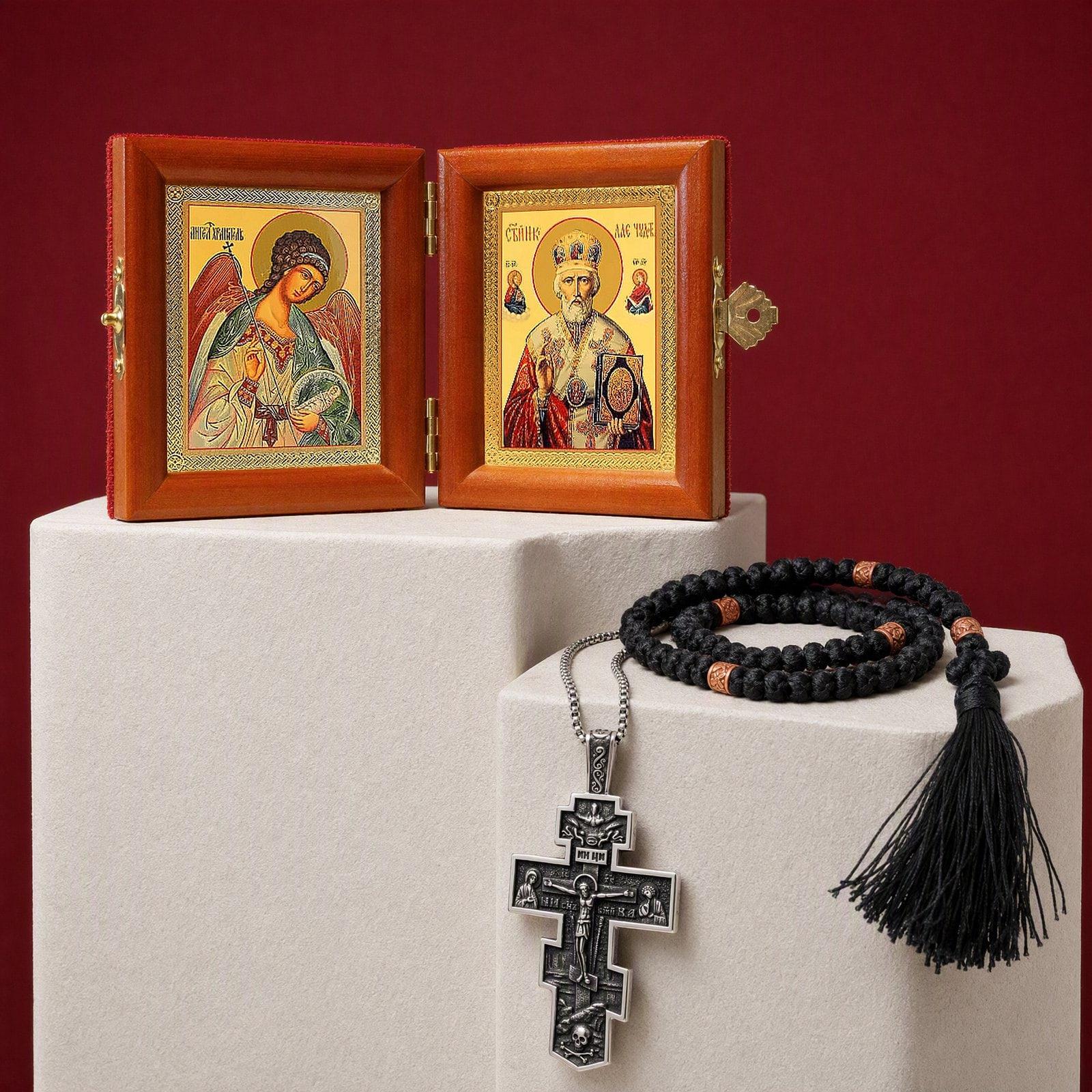 Poklon set
Set za imendan/slavu
$213$149 Poklon set
Set prvih ikona
$342$239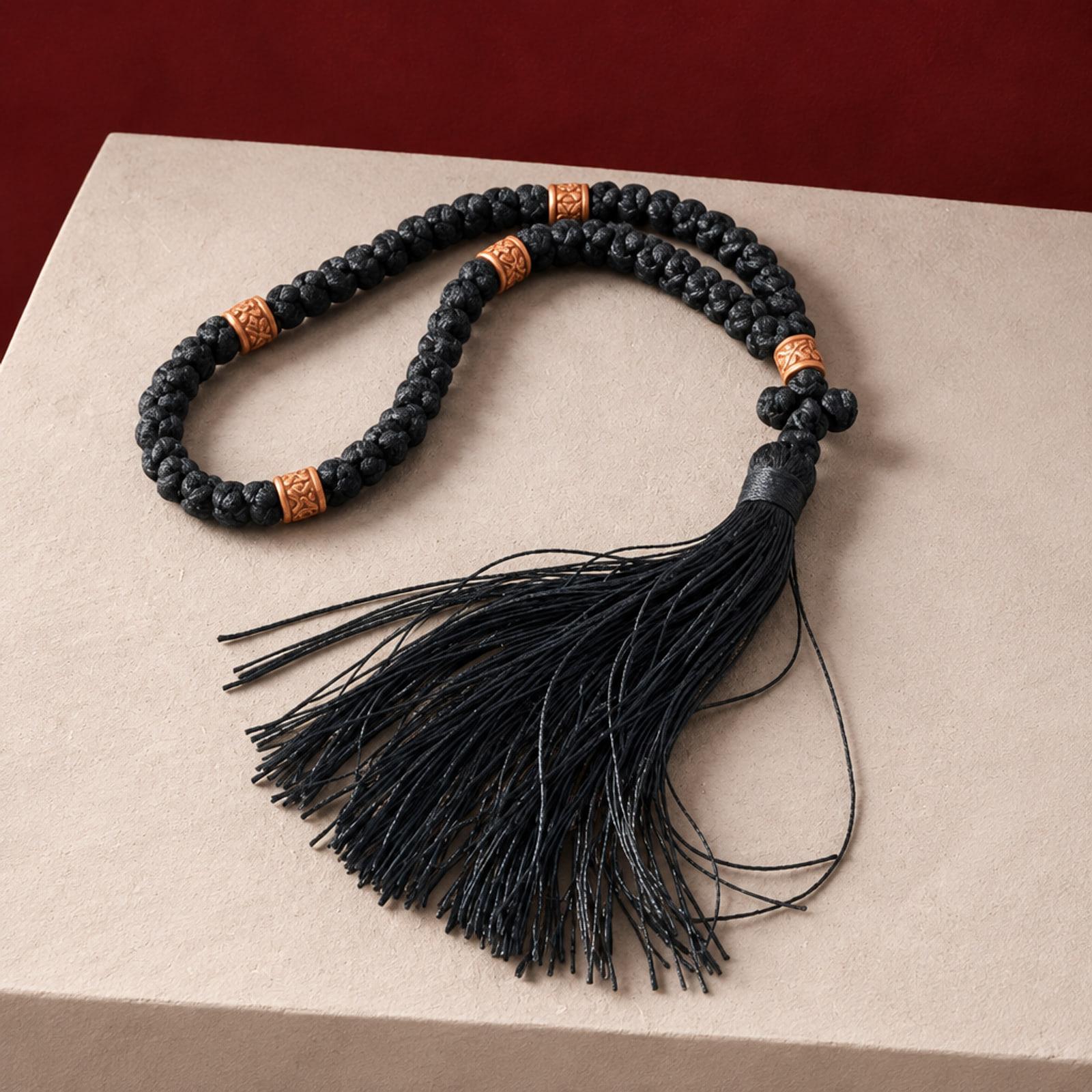 Brojanica
Pravoslavna brojanica (čotki, komboskini)
crna · vunena, 50 čvorova$49$34
- Blessing, $49. Blessed by an Orthodox priest before it ships.
- Gift packaging, $20
Questions
When does the liturgical year end?
In the Orthodox Church on 31 August, the eve of the church new year on 1 September. In the Roman Rite of the West it ends on the Saturday before the first Sunday of Advent.
When does the liturgical year begin and end?
The Orthodox year begins on 1 September and closes at the end of August; the Western year begins with Advent and closes on the Saturday before the next Advent.
What is the Indiction?
The name given to the church new year, which the Orthodox Church traditionally begins on 1 September.
Is the Orthodox church year the same as the Western one?
No. The start is different, and the Orthodox calendar also runs a moveable cycle that begins eleven Sundays before Pascha.