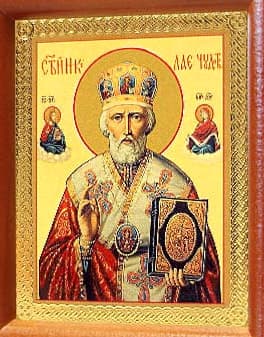
Saints for Lost Things
Greek Orthodox Christians who lose something pray to St Phanourios, whose name means “he who reveals.” By folk custom they bake a Phanouropita, a spiced cake, to share once the thing is found, praying for his mother’s soul. Russians pray to St John the Warrior for stolen property and the finding of thieves. St Menas of Egypt, patron of Heraklion in Crete, is asked to restore what was lost or stolen. Keys, a ring, a document, a lost animal: the Church has saints for all of it, and Orthodox grandmothers know their names.
The saints the Church turns to
St Phanourios the Newly-Revealed
Asked to find lost or stolen things and lost animals, and to shed light on hidden matters.
27 August (9 September on the Old Calendar).
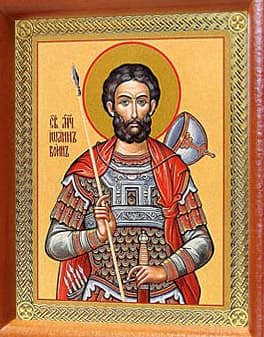
St John the Warrior
Asked for the exposing of thieves, the recovery of stolen property and the finding of what was lost.
30 July (12 August on the Old Calendar).
St Menas of Egypt
Asked for help in finding lost objects and the return of stolen property.
11 November (24 November on the Old Calendar).
In our shop

- St Phanourios icon (coming soon)
- St Menas icon (coming soon)
How Orthodox Christians pray for this
Light a candle before the icon and ask the saint plainly for what was lost. Greek families promise a Phanouropita and bake it when the thing turns up, sharing it with neighbors. A Russian household that has been robbed asks for a moleben to St John the Warrior. Whatever is found, a candle is lit in thanks.
Have it consecrated by our priest before it reaches you — Consecration, $49.
Questions
Who is the patron saint of lost things?
Catholics pray to St Anthony of Padua, a saint of the Western Church after the schism. Orthodox Christians pray to St Phanourios, and Greeks also to St Menas. Russians ask St John the Warrior, especially for stolen things.
What is a Phanouropita?
A spiced cake Greek families bake for St Phanourios when a lost thing is found. It is a folk custom, not a church rite, and it is shared with others.
Which saint do I pray to for something stolen?
St John the Warrior, in Russian practice, and St Menas, in Greek practice.