Olive Branch Meaning: what it is and how Orthodox Christians use it
What is the olive branch, and how do Orthodox Christians treat it? The facts below come from Wikipedia and OrthodoxWiki, one fact to a line, with the Orthodox and Western uses kept in separate places.
- What it is. The olive branch was a peace sign in Greek and Roman custom and in the wider Mediterranean.
- Genesis. In Genesis 8:11 the dove carries an olive leaf (some translations say branch) back to Noah, a sign that the flood had ended.
- Earliest Christian use stated. Early Christians often marked tombs with a dove holding an olive branch to signify peace; in Rome the Catacomb of Priscilla, dated 2nd to 5th centuries, has one.
- Church writers. Tertullian (c. 160 to c. 220) saw Noah’s dove as the Holy Spirit bringing God’s peace at baptism, and in the 5th century Augustine read the branch as everlasting peace.
- A translator’s choice. Jerome’s 4th-century Latin rendering changed the Hebrew olive leaf of Genesis 8:11 into an olive branch, ramum olivae.
- Meaning of the dove and branch. Later Church writers took a dove with an olive branch to mean the hope of salvation and the Holy Spirit, and finally peace.
In Western churches. One Roman catacomb has a small relief of a dove flying with a branch to a figure labelled with the Greek word for peace, Eirene. The article names Tertullian, Jerome and Augustine as the early Church writers who read the dove and its branch.
Facts come from Wikipedia (Olive branch, Symbolic and cultural significance of the olive, Noah’s Ark and Palm Sunday) and OrthodoxWiki (Palm Sunday and Noah), put into our own words.
What the Orthodox Church does with the olive branch
OrthodoxWiki describes the Palm Sunday story as the crowd laying their cloaks and olive branches in Jesus’ path as he entered Jerusalem. In OrthodoxWiki’s telling of Noah, the dove comes back at evening with a fresh olive leaf, and Noah knows the water has fallen. Because palms can be scarce, local branches such as box, olive, willow or yew replace them on Palm Sunday, and the article counts Orthodox churches among those giving out palms.
A cross with no figure on it
Nothing in the catalogue is described as the olive branch, so this page offers its plainest cross instead, a three-bar Orthodox cross with no figure, silver-tone at $64, gold-tone at $64 and black at $64, each on a chain. An Orthodox priest can bless it before it ships. With the Blessing, $103.
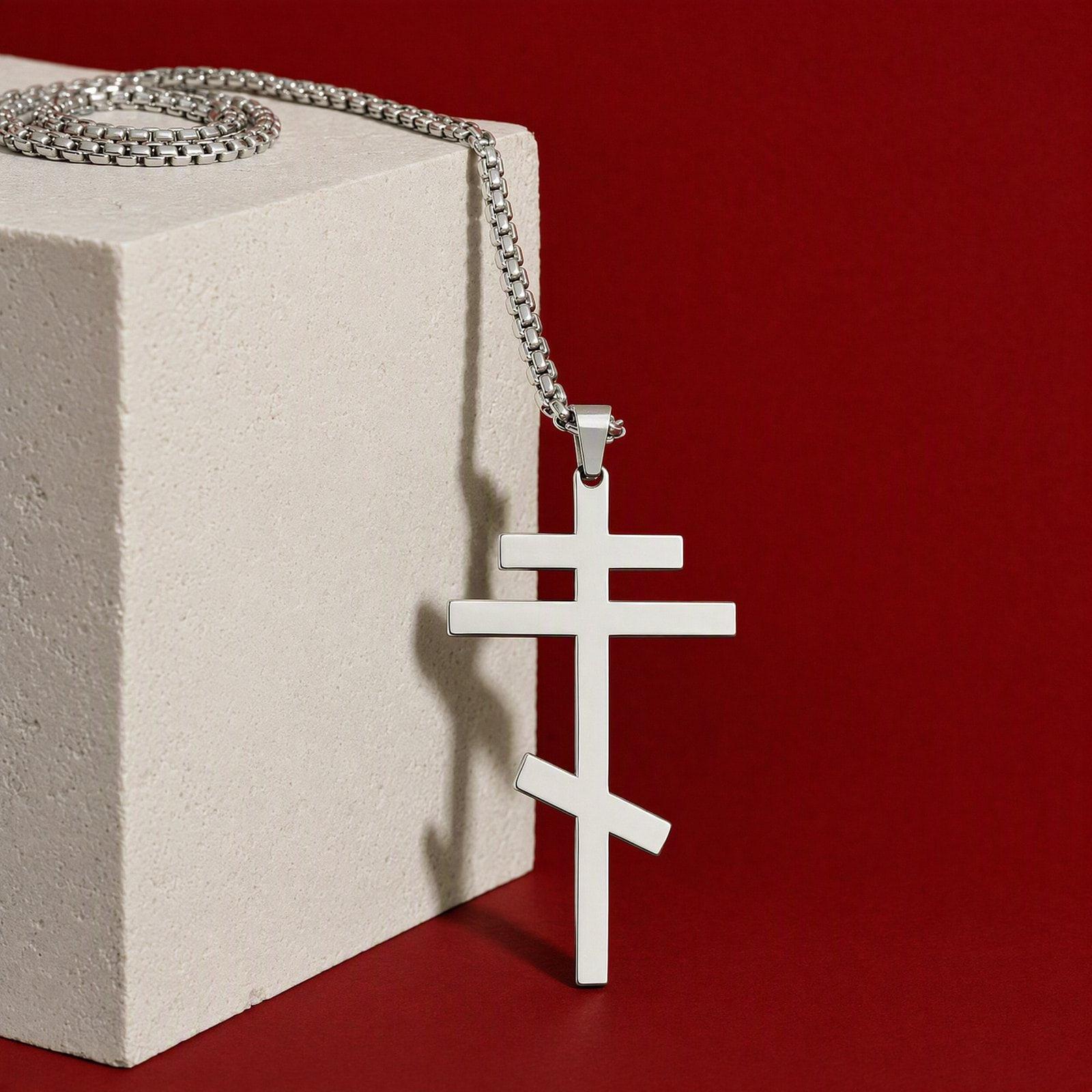 Σταυρός
Three-Bar Bright
Ασημί χρώμα · Αλυσίδα 60 εκ. · Ανοξείδωτο ατσάλι$92$64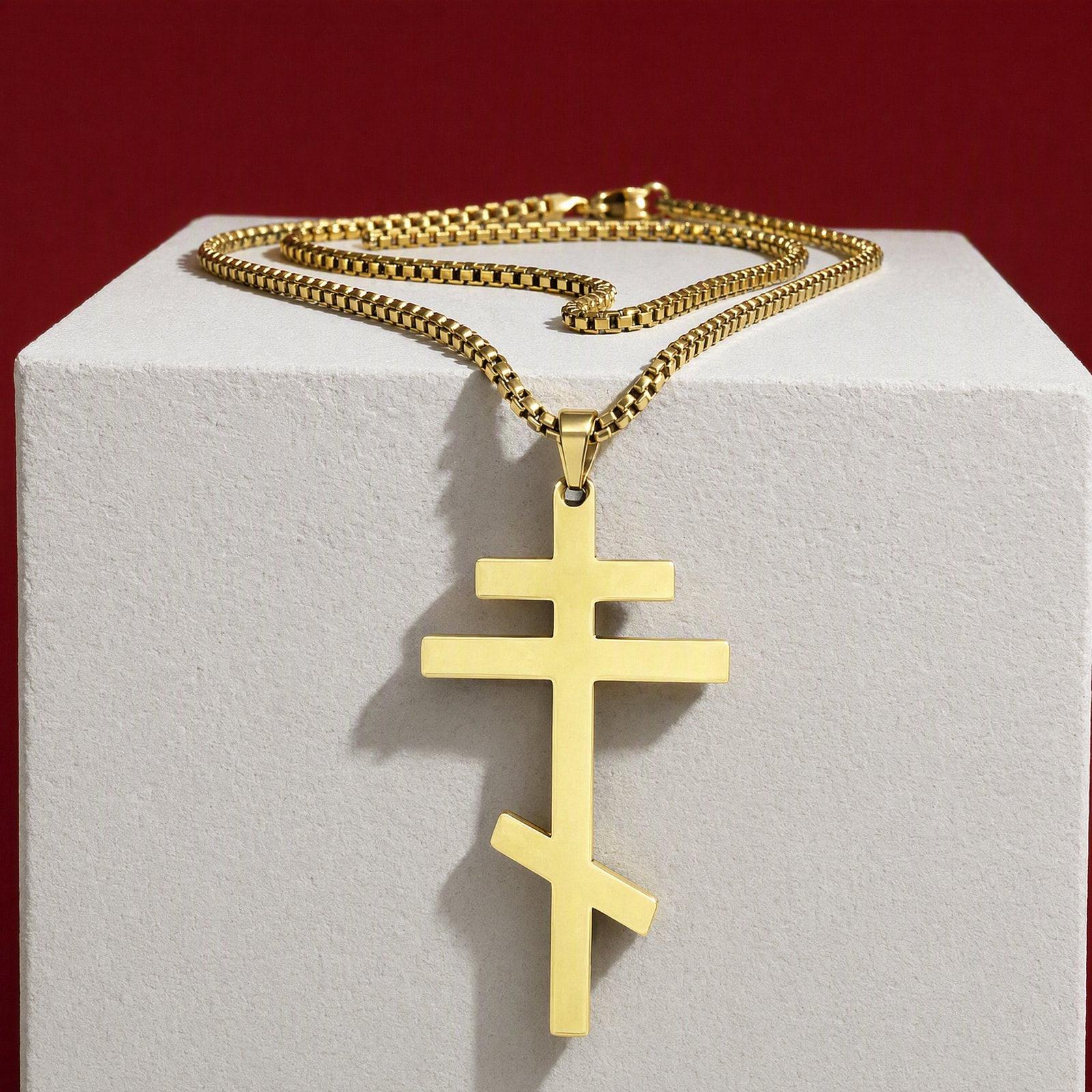 Σταυρός
Three-Bar Lamplight
Χρυσό χρώμα · Αλυσίδα 60 εκ. · Ανοξείδωτο ατσάλι$92$64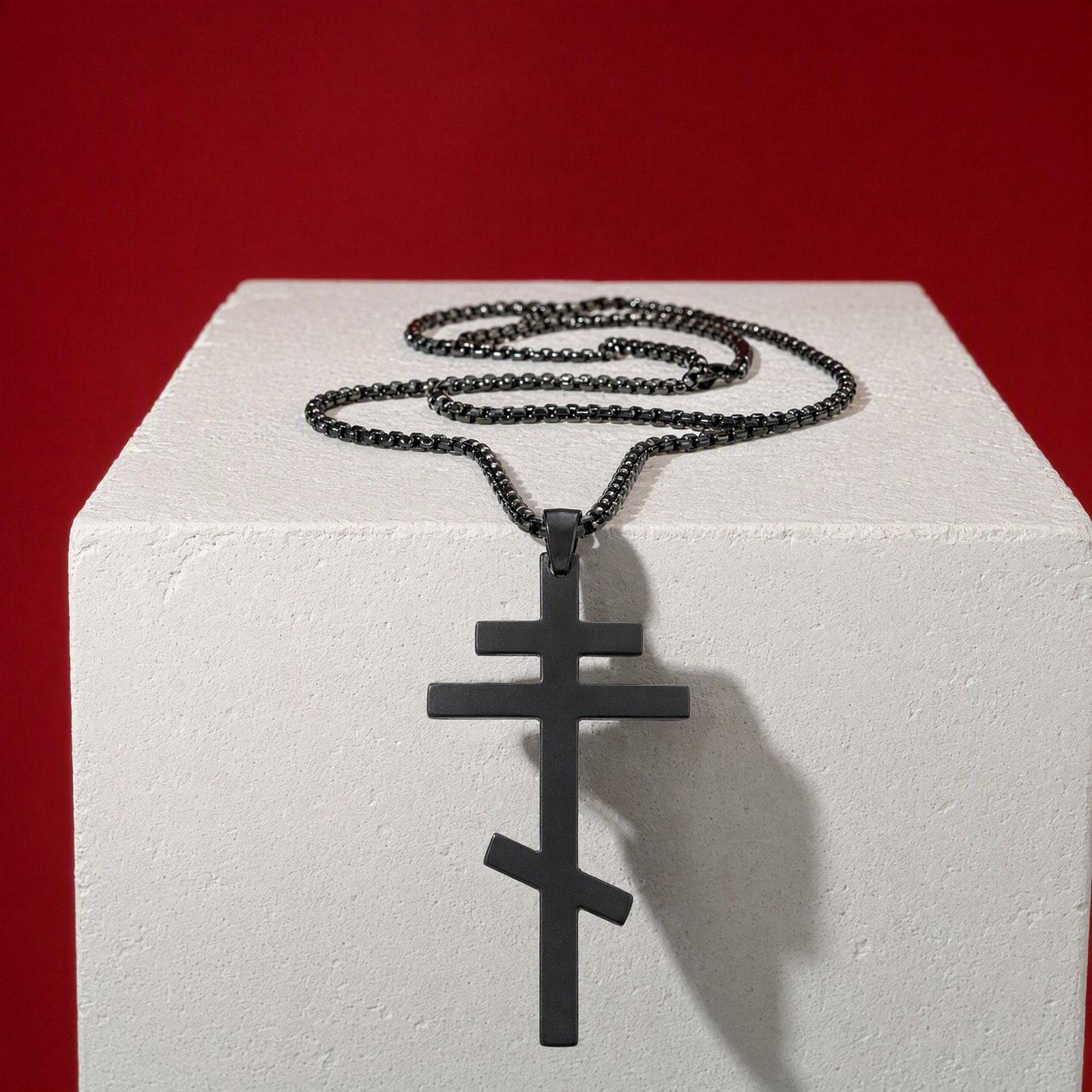 Σταυρός
Three-Bar Midnight
Μαύρο χρώμα · Αλυσίδα 60 εκ. · Ανοξείδωτο ατσάλι$92$64
- Blessing, $39. Blessed by an Orthodox priest before it ships.
- Gift packaging, $20
Questions
What is the olive branch as a Christian symbol?
The olive branch was a peace sign in Greek and Roman custom and in the wider Mediterranean.
What does the olive branch mean to Christians?
Later Church writers took a dove with an olive branch to mean the hope of salvation and the Holy Spirit, and finally peace.
How does the Orthodox Church treat the olive branch?
OrthodoxWiki describes the Palm Sunday story as the crowd laying their cloaks and olive branches in Jesus’ path as he entered Jerusalem. In OrthodoxWiki’s telling of Noah, the dove comes back at evening with a fresh olive leaf, and Noah knows the water has fallen.
Do Western churches use the olive branch as well?
The article names Tertullian, Jerome and Augustine as the early Church writers who read the dove and its branch.
Does Lampada sell anything that shows the olive branch?
No item in the catalogue is described as the olive branch, going by the titles and descriptions. The items on this page are the nearest we carry.