Wheat Symbolism: what it is and how Orthodox Christians use it
What is wheat, and how do Orthodox Christians treat it? The facts below come from Wikipedia and OrthodoxWiki, one fact to a line, with the Orthodox and Western uses kept in separate places.
- In the Gospels. Matthew 13:24-43 explains the wheat as the children of the Kingdom, the weeds as the evil one’s children, and the harvest as the age’s end.
- What the weeds were. The weeds the King James text calls tares are probably darnel, a grass that is hard to tell from young wheat.
- Created things as symbols. Wheat, wine and oil are among the created things that Orthodox teaching says the Church uses to express God’s presence and action; bread, water, flowers and fruit are others.
- Bread and the Church. Bread is called the highest symbol of Christ’s Body in the artoklasia article, and it also stands for the Church, which Christ gathered from all over, like wheat from the mountains, into one body.
- Boiled wheat for memorials. Kollyva is wheat boiled soft and mixed with items such as pomegranate seeds, sesame, almonds or raisins, then blessed at memorial services.
In Western churches. Flour from the season’s first cutting of the crop goes into the Lammas loaf, baked for the Lammas Festival Eucharist on 1 August.
Facts come from Wikipedia (Parable of the Tares and List of foods with religious symbolism) and OrthodoxWiki (Symbolism, Artoklasia and Kollyva), put into our own words.
What the Orthodox Church does with wheat
Kollyva, an offering of boiled wheat, is blessed liturgically at Orthodox memorial services for the departed. Five round loaves offered by the faithful at the artoklasia recall the five loaves Jesus blessed to feed five thousand. Kutia, a ceremonial dish of grain, is chiefly an Eastern Orthodox custom (some Catholics share it), served in the Christmas to Theophany season, at funeral meals and at the Christmas Eve supper.
A plain cross, the nearest shape
Lampada carries no item that shows wheat, and the closest thing in the catalogue to a bare symbol is the plain three-bar Orthodox cross with no figure: $64 in silver-tone, $64 in gold-tone or $64 in black, each on a chain. With the Blessing by an Orthodox priest, $103.
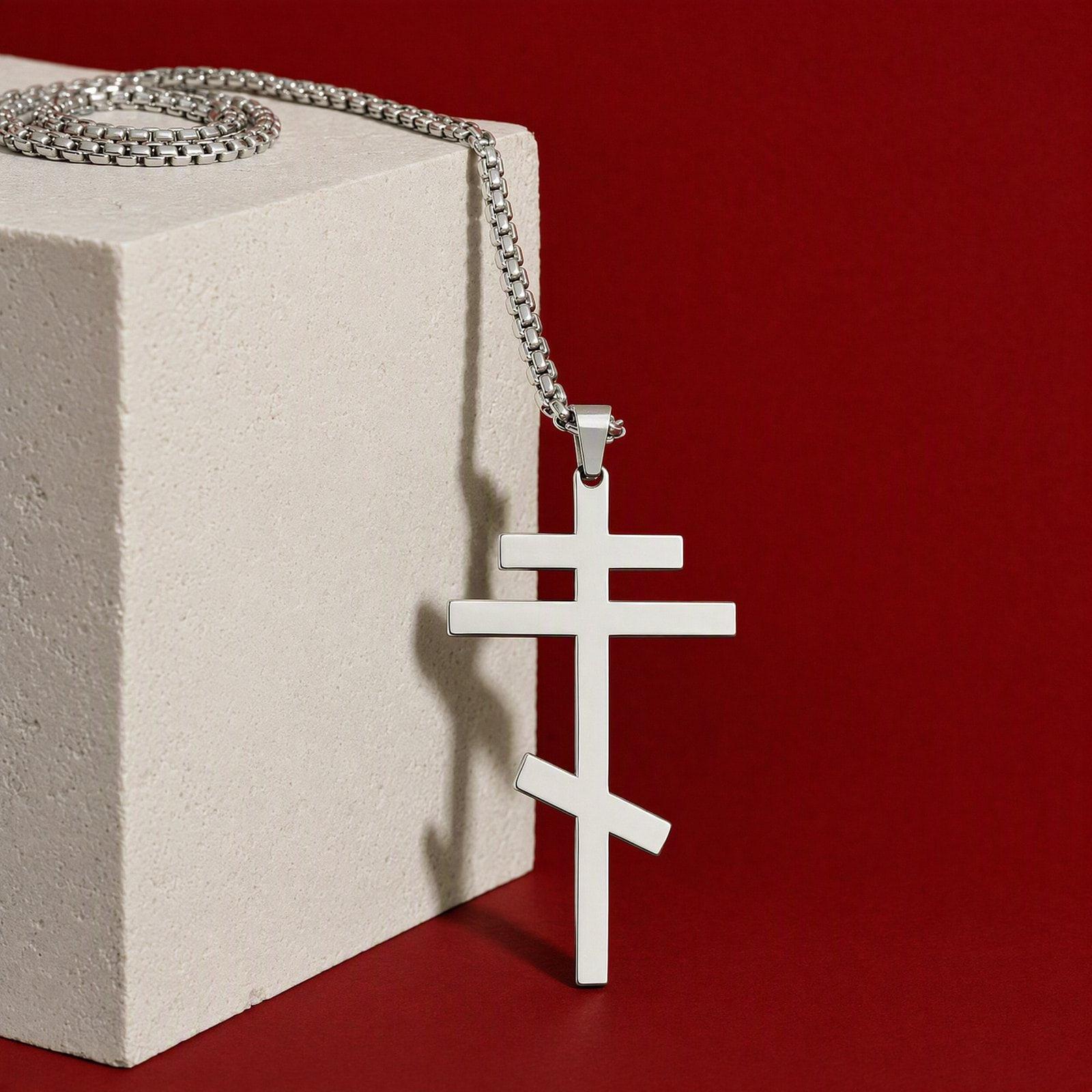 Σταυρός
Three-Bar Bright
Ασημί χρώμα · Αλυσίδα 60 εκ. · Ανοξείδωτο ατσάλι$92$64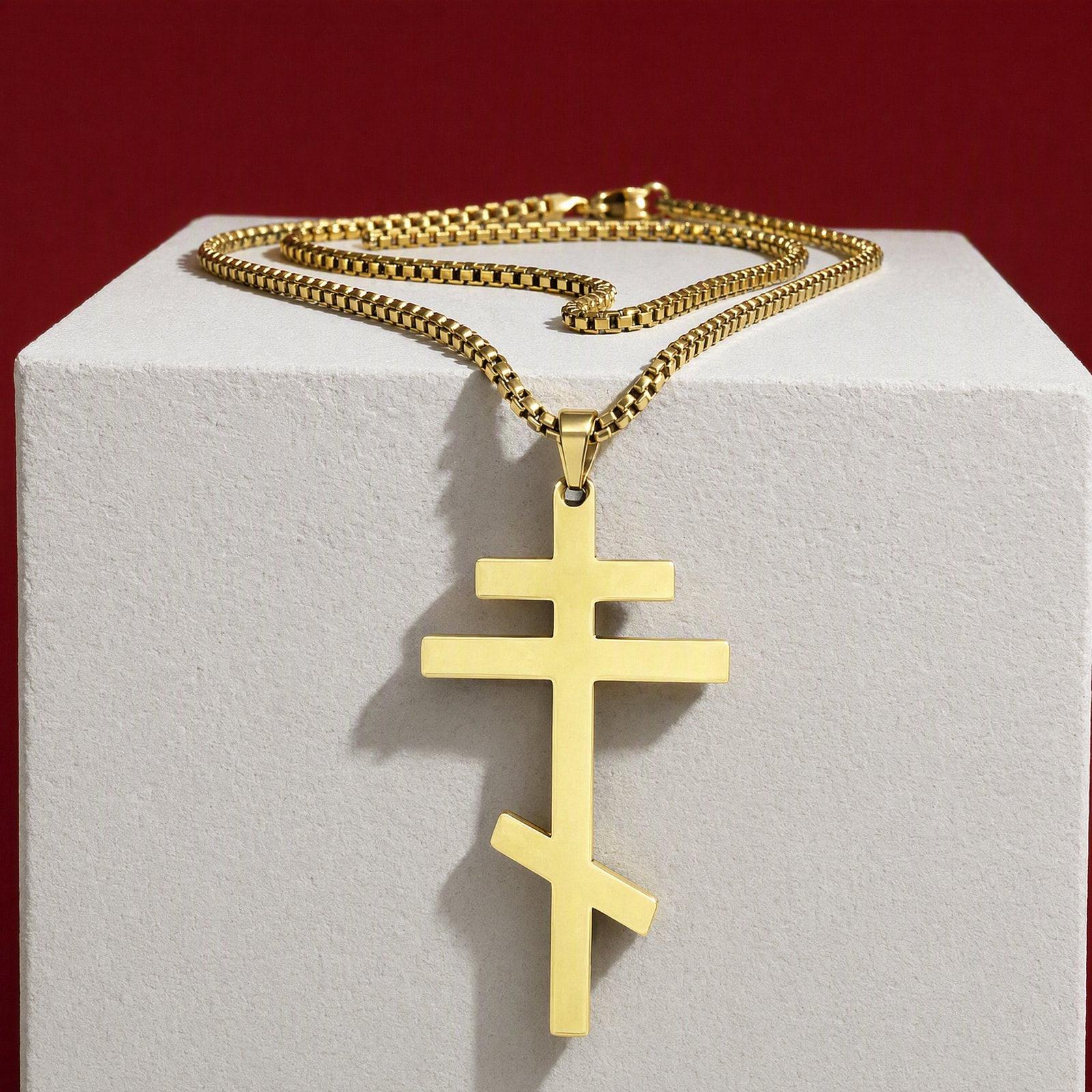 Σταυρός
Three-Bar Lamplight
Χρυσό χρώμα · Αλυσίδα 60 εκ. · Ανοξείδωτο ατσάλι$92$64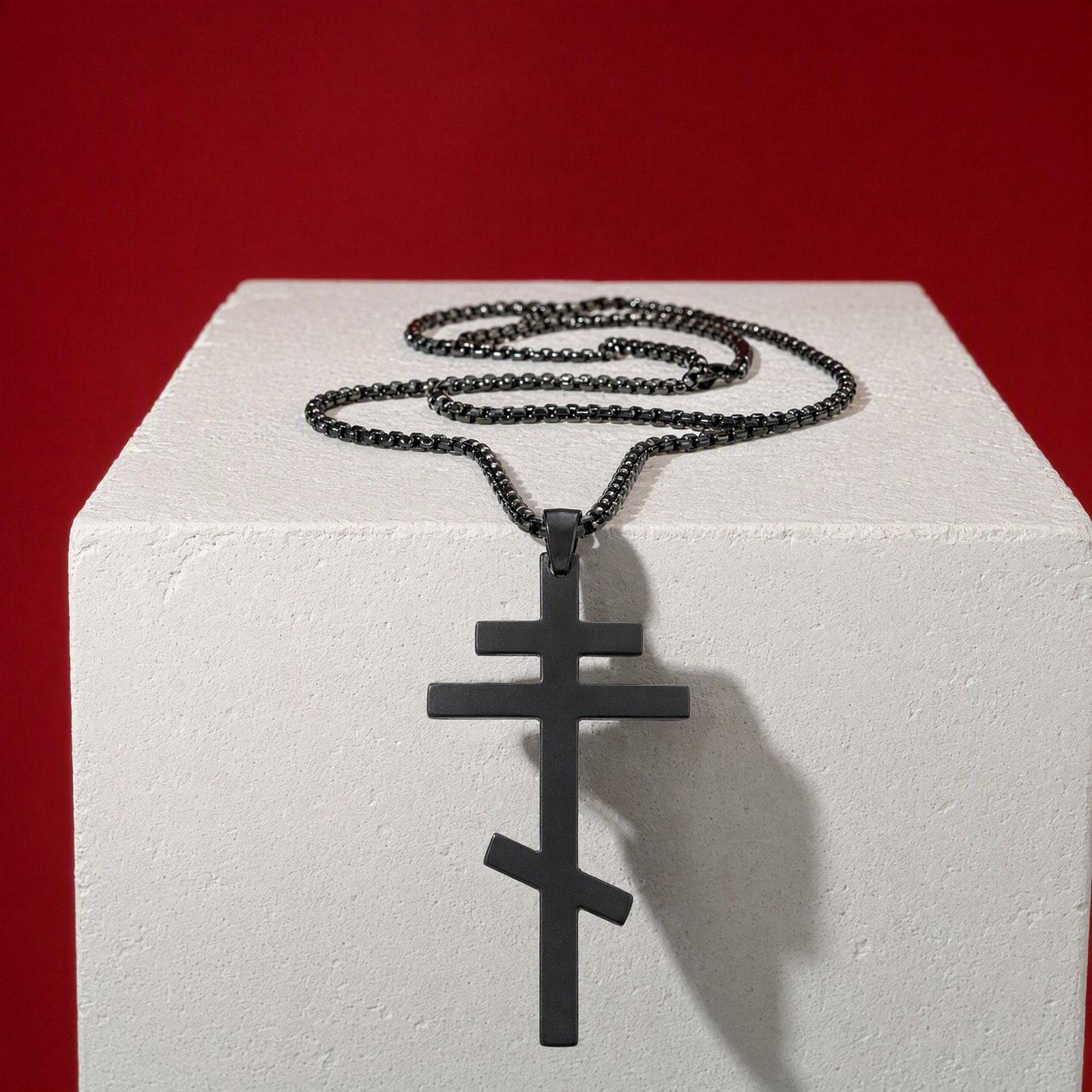 Σταυρός
Three-Bar Midnight
Μαύρο χρώμα · Αλυσίδα 60 εκ. · Ανοξείδωτο ατσάλι$92$64
- Blessing, $39. Blessed by an Orthodox priest before it ships.
- Gift packaging, $20
Questions
What is wheat as a Christian symbol?
Matthew 13:24-43 explains the wheat as the children of the Kingdom, the weeds as the evil one’s children, and the harvest as the age’s end.
What does wheat mean to Christians?
Bread is called the highest symbol of Christ’s Body in the artoklasia article, and it also stands for the Church, which Christ gathered from all over, like wheat from the mountains, into one body.
How does the Orthodox Church treat wheat?
Kollyva, an offering of boiled wheat, is blessed liturgically at Orthodox memorial services for the departed. Five round loaves offered by the faithful at the artoklasia recall the five loaves Jesus blessed to feed five thousand.
Do Western churches use wheat as well?
Flour from the season’s first cutting of the crop goes into the Lammas loaf, baked for the Lammas Festival Eucharist on 1 August.
Does Lampada sell anything that shows wheat?
No item in the catalogue is described as wheat, going by the titles and descriptions. The items on this page are the nearest we carry.