Sun Symbolism: what it is and how Orthodox Christians use it
The sun turns up in Christian art and writing, and the Orthodox Church and the Western churches do not always read it the same way. This page sets out what two reference sources say about it, and keeps the Orthodox use apart from the Western.
- What the early Church said. Early Christian writers associated Jesus with the Sun, titling him the true Sun (Sol verus) and, after Malachi, the Sun of Righteousness (Sol Justitiae).
- Dated writing. De solstitiis et aequinoctiis, a Christian treatise of the late 4th century AD, links the birth of Jesus with the sun’s birthday.
- Christmas and sun worship. Christmas arose when state-backed sun worship was at its height in the Roman Empire, and some Christian writers of that time compared Jesus to the Sun.
- In a Romanesque portal. At Conques the six star-like flowers around Christ stand for the planets known then, including the Moon, and the mandorla article reads the scene as evoking Christ as the Sun.
In Western churches. The Romanesque tympanum at Conques in France, with Christ among six star-like flowers, is read in the mandorla article as evoking Christ as the Sun.
Facts come from Wikipedia (Sol Invictus, Date of the birth of Jesus and Mandorla) and OrthodoxWiki (Nativity icon and Meeting of the Lord), put into our own words.
How Orthodox Christians use the sun
The Orthodox Nativity troparion names Christ the Sun of Righteousness, whom star-worshippers were led by a star to worship. A troparion for the Meeting of the Lord addresses the Virgin Theotokos as the one from whom the Sun of Righteousness, Christ, shone. Western churches have a use of their own. The Romanesque tympanum at Conques in France, with Christ among six star-like flowers, is read in the mandorla article as evoking Christ as the Sun.
A cross with no figure on it
Nothing in the catalogue is described as the sun, so this page offers its plainest cross instead, a three-bar Orthodox cross with no figure, silver-tone at $64, gold-tone at $64 and black at $64, each on a chain. An Orthodox priest can bless it before it ships. With the Blessing, $103.
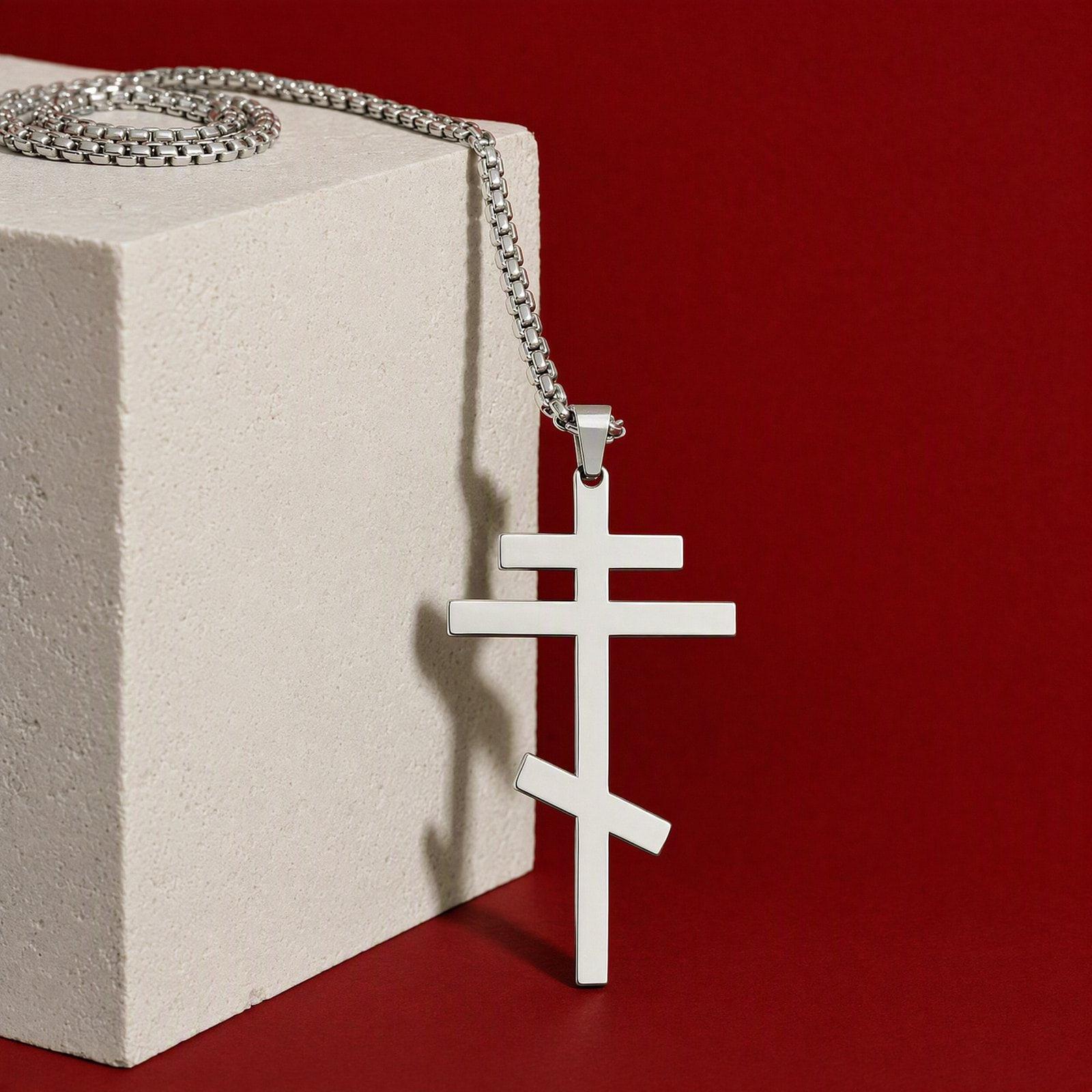 Σταυρός
Three-Bar Bright
Ασημί χρώμα · Αλυσίδα 60 εκ. · Ανοξείδωτο ατσάλι$92$64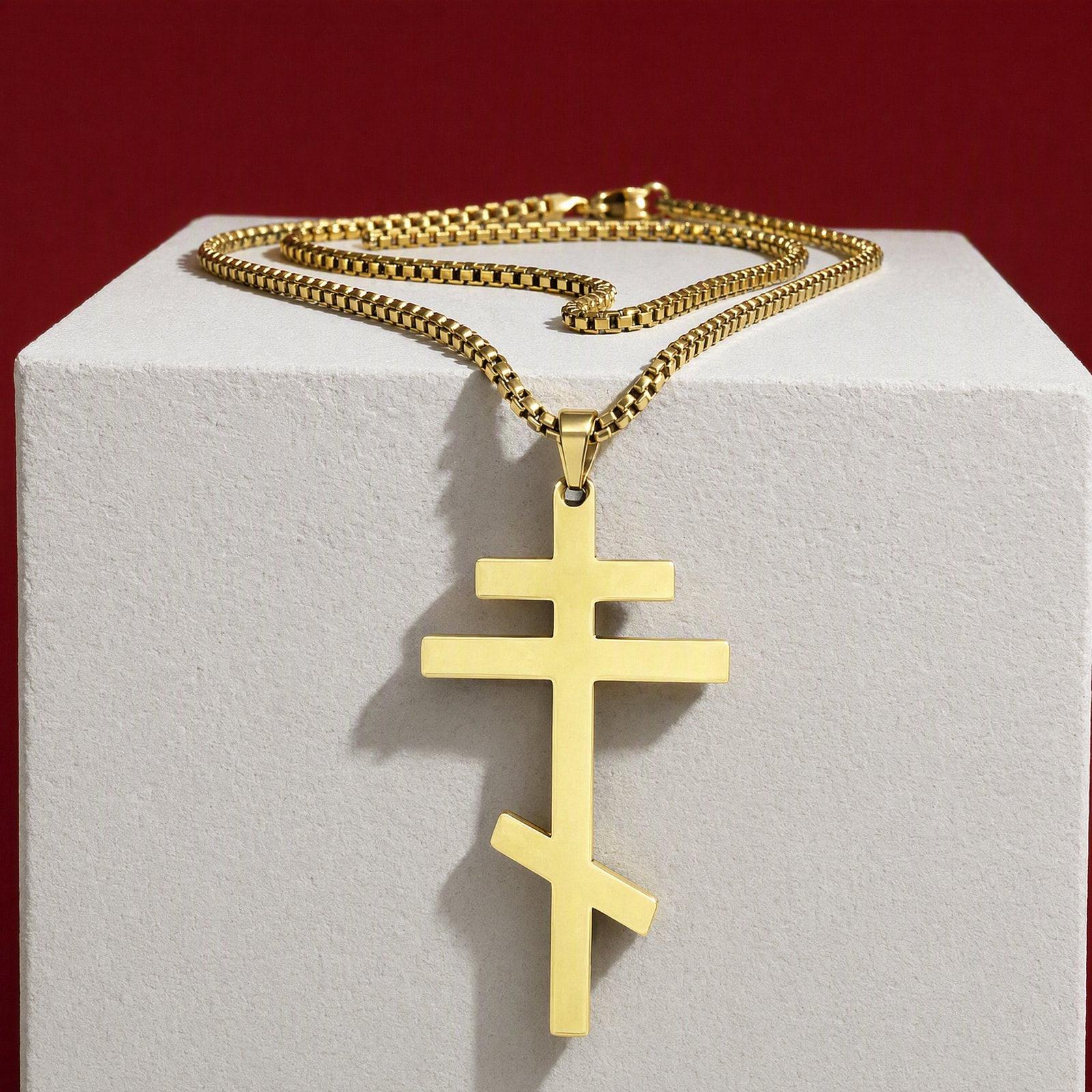 Σταυρός
Three-Bar Lamplight
Χρυσό χρώμα · Αλυσίδα 60 εκ. · Ανοξείδωτο ατσάλι$92$64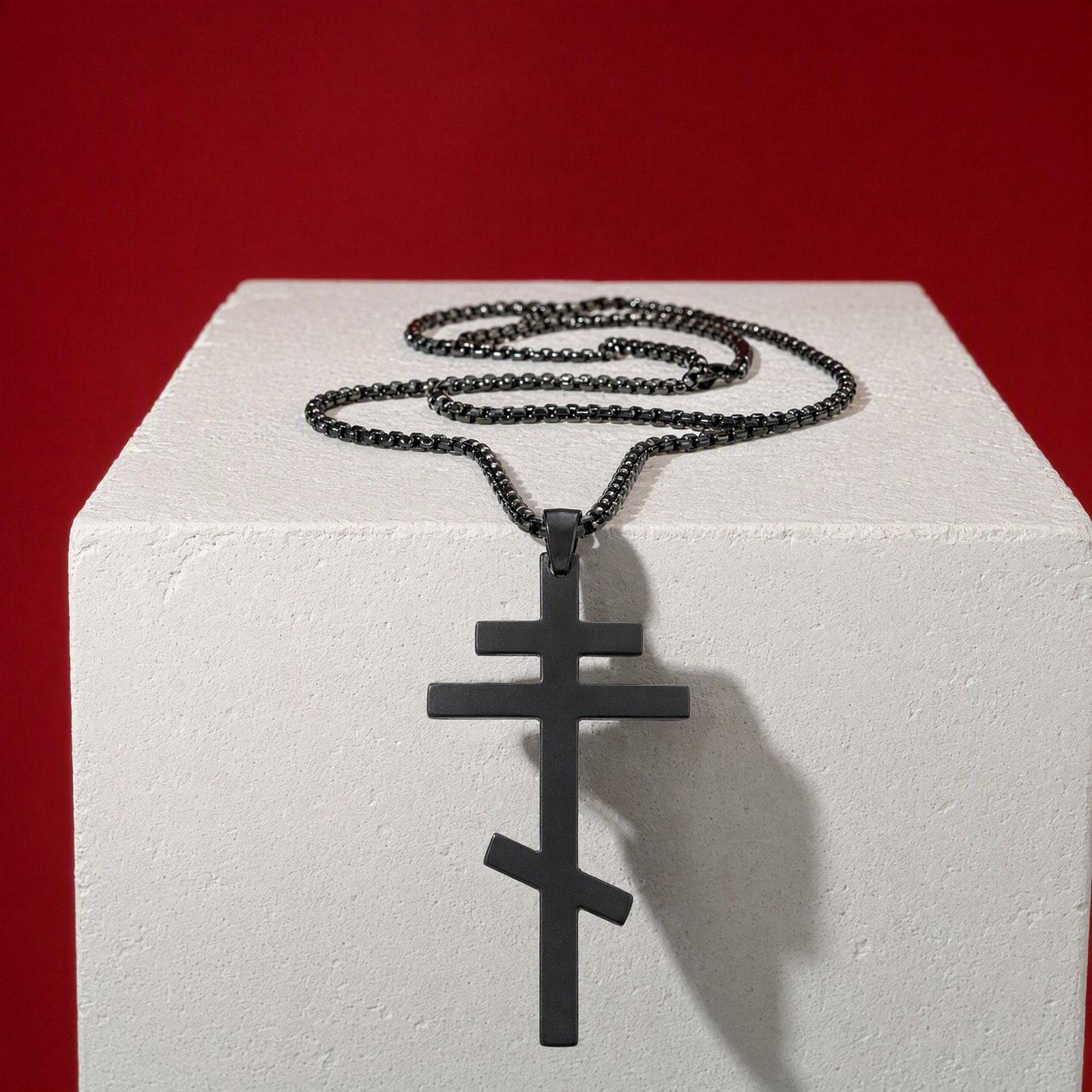 Σταυρός
Three-Bar Midnight
Μαύρο χρώμα · Αλυσίδα 60 εκ. · Ανοξείδωτο ατσάλι$92$64
- Blessing, $39. Blessed by an Orthodox priest before it ships.
- Gift packaging, $20
Questions
What is the sun as a Christian symbol?
Early Christian writers associated Jesus with the Sun, titling him the true Sun (Sol verus) and, after Malachi, the Sun of Righteousness (Sol Justitiae).
What else do the sources say about the sun?
De solstitiis et aequinoctiis, a Christian treatise of the late 4th century AD, links the birth of Jesus with the sun’s birthday.
How does the Orthodox Church treat the sun?
The Orthodox Nativity troparion names Christ the Sun of Righteousness, whom star-worshippers were led by a star to worship. A troparion for the Meeting of the Lord addresses the Virgin Theotokos as the one from whom the Sun of Righteousness, Christ, shone.
Do Western churches use the sun as well?
The Romanesque tympanum at Conques in France, with Christ among six star-like flowers, is read in the mandorla article as evoking Christ as the Sun.
Does Lampada sell anything that shows the sun?
No item in the catalogue is described as the sun, going by the titles and descriptions. The items on this page are the nearest we carry.