Psalm 129 and Septuagint Psalm 128: the text
Psalm 129 is Psalm 128 in the Septuagint. The Hebrew numbering, which the King James Bible follows, calls this psalm 129; the Septuagint, the Greek Old Testament that the Orthodox Church reads, calls it 128. The psalm is the same under both numbers. Both texts run to 8 verses. The King James text opens with a title line.
The psalm in the King James Version.
Many a time have they afflicted me from my youth, may Israel now say: Many a time have they afflicted me from my youth: yet they have not prevailed against me. The plowers plowed upon my back: they made long their furrows. The LORD is righteous: he hath cut asunder the cords of the wicked.
Let them all be confounded and turned back that hate Zion. Let them be as the grass upon the housetops, which withereth afore it groweth up: Wherewith the mower filleth not his hand; nor he that bindeth sheaves his bosom. Neither do they which go by say, The blessing of the LORD be upon you: we bless you in the name of the LORD.
The psalm in the Septuagint, in Brenton’s English translation.
A Song of Degrees. Many a time have they warred against me from my youth, let Israel now say:
Many a time have they warred against me from my youth: and yet they prevailed not against me. The sinners wrought upon my back: they prolonged their iniquity. The righteous Lord has cut asunder the necks of sinners.
Let all that hate Sion be put to shame and turned back. Let them be as the grass of the house-tops, which withers before it is plucked up. Wherewith the reaper fills not his hand, nor he that makes up the sheaves, his bosom. Neither do they that go by say, The blessing of the Lord be upon you: we have blessed you in the name of the Lord.
What the psalm says. The psalm is spoken by a people who have been hurt for a long time. Many a time they have afflicted me from my youth, let Israel now say, and the psalm says it twice, adding each time that they have not prevailed against me. The plowers plowed on my back; they made long their furrows. But the Lord is righteous, and the psalm gives the Lord’s answer: he has cut asunder the cords of the wicked. Then it asks that all who hate Zion be confounded and turned back, and that they be like the grass upon the housetops, which withers before it grows up, and which the reaper does not fill his hand with. The passers-by, the psalm says, do not say, the blessing of the Lord be upon you.
The reading it belongs to. Orthodox Christians speak of the Psalter in twenty kathismata, and Psalm 129 is in the eighteenth of them, kathisma 18.
In the Service Book. Isabel F. Hapgood’s Service Book of the Holy Orthodox-Catholic Apostolic Church prints this psalm at page 131, in the Divine Liturgy of the Presanctified.
One Psalter, two numberings
The Church’s Psalter follows the Septuagint, and its numbering is not always the Hebrew numbering of English Bibles. That is why this page gives two numbers, and the kathisma, 18, the reading that holds the psalm.
Prayer from the Psalter, for an Orthodox Christian, is prayer in the Church’s order: twenty kathismata, taken in turn, with the psalms also sung in the services.
For the road
The Travel Set holds a travel diptych of Christ and the Mother of God, a wooden cross for the car and a prayer rope, $99. An Orthodox priest can bless it before it ships. With the Blessing, $148 (normally $191).
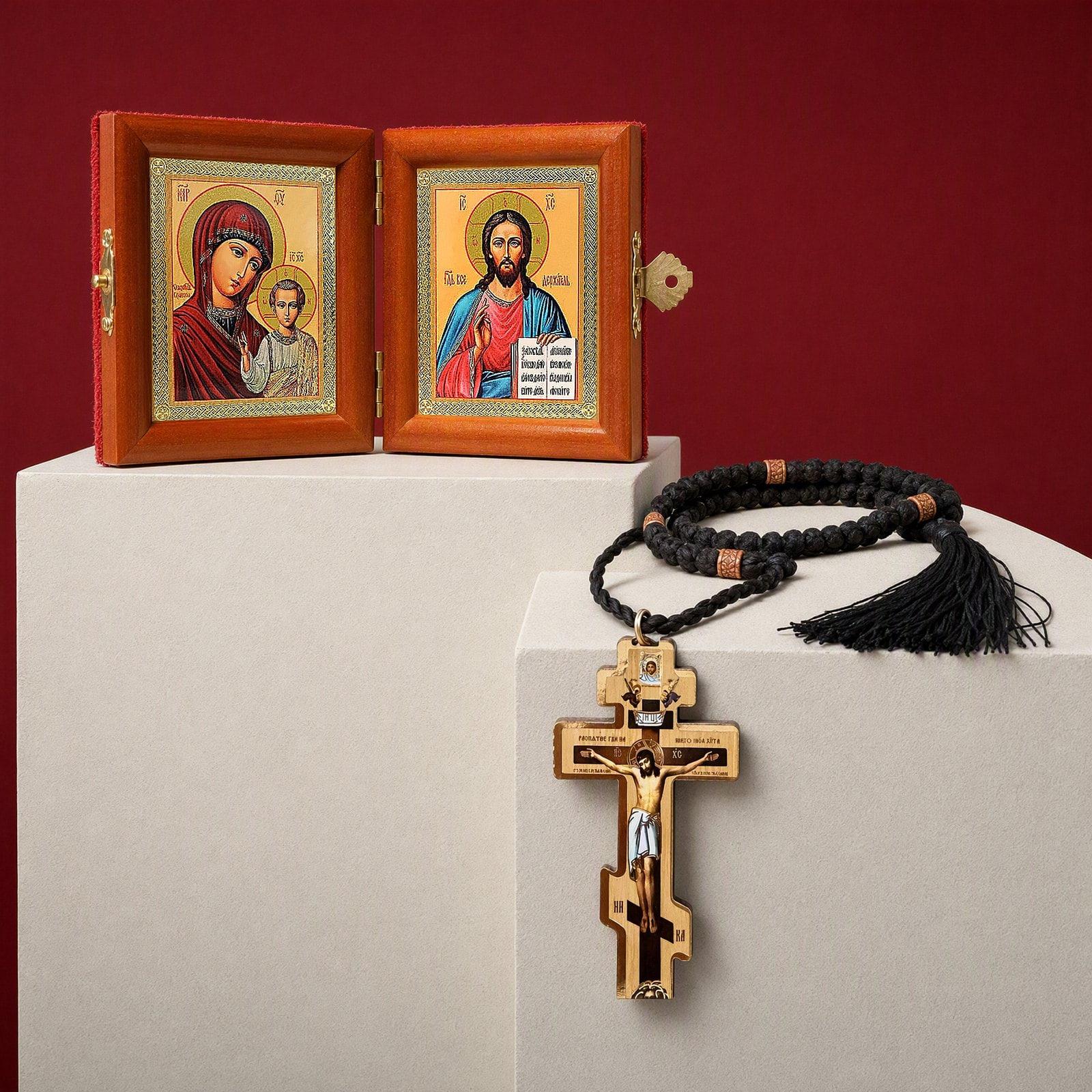
- Blessing, $49. Blessed by an Orthodox priest before it ships.
- Gift packaging, $20
Questions
What is Psalm 129 in the Septuagint?
It is Psalm 128. The King James Bible numbers it 129; the Septuagint, which the Orthodox Church reads, numbers it 128. The psalm is the same.
How many verses does Psalm 129 have?
8, in the King James text and in Brenton’s Septuagint alike.
Which kathisma is Psalm 129 in?
It is in the eighteenth, kathisma 18. The Church divides the Psalter into twenty kathismata and reads them in order.
Where does Hapgood’s Service Book print Psalm 129?
On page 131, as the page references on this page show.
Whose translations are these?
The first is the King James Version. The second is Brenton’s English translation of the Septuagint, the Greek Old Testament that the Orthodox Church reads.