Psalm 120, which the Church numbers 119
Looking for Psalm 120? It is here, and in the Septuagint, the numbering the Orthodox Church uses, it is Psalm 119. A reader may meet either number, depending on the Bible on the shelf. Both texts run to 7 verses. The King James text opens with a title line.
The psalm in the King James Version.
In my distress I cried unto the LORD, and he heard me. Deliver my soul, O LORD, from lying lips, and from a deceitful tongue. What shall be given unto thee? or what shall be done unto thee, thou false tongue? Sharp arrows of the mighty, with coals of juniper.
Woe is me, that I sojourn in Mesech, that I dwell in the tents of Kedar. My soul hath long dwelt with him that hateth peace. I am for peace: but when I speak, they are for war.
The psalm in the Septuagint, in Brenton’s English translation.
A Song of Degrees. In mine affliction I cried to the Lord, and he hearkened to me.
Deliver my soul, O Lord, from unjust lips, and from a deceitful tongue.
What should be given to thee, and what should be added to thee, for thy crafty tongue? Sharpened weapons of the mighty, with coals of the desert.
Woe is me, that my sojourning is prolonged; I have tabernacled among the tents of Kedar. My soul has long been a sojourner; I was peaceable among them that hated peace; when I spoke to them, they warred against me without a cause.
What the psalm says. The psalm is a complaint from a foreign land. In my distress, the one who prays says, I cried to the Lord and he heard me. Then he asks to be delivered from lying lips and from a deceitful tongue, and asks what shall be given to such a tongue: sharp arrows of the mighty, with coals of juniper. The last verses are the voice of a man who lives among those who hate peace. Woe is me, he says, that I sojourn in Mesech and dwell in the tents of Kedar. My soul has long dwelt with one who hates peace. I am for peace, but when I speak, they are for war.
The psalm has a simple and rather bitter shape. It begins with a past tense: I cried, and he heard. It goes on to a present prayer, for deliverance from a lying and deceitful tongue, and to a rhetorical question, what shall be given to you, and what shall be done to you, you false tongue? The answer is two images from the battlefield and the camp, the sharp arrows of a warrior and coals of juniper. The last three verses are the complaint itself, and they end on the contrast the whole psalm has been preparing: I am for peace, but they are for war.
The reading it belongs to. Orthodox Christians speak of the Psalter in twenty kathismata, and Psalm 120 is in the eighteenth of them, kathisma 18.
In the Service Book. Isabel F. Hapgood’s Service Book of the Holy Orthodox-Catholic Apostolic Church prints this psalm at page 129, in the Divine Liturgy of the Presanctified.
Why the psalms are read in order
In the Orthodox Church the Psalms are not picked out one at a time. The Church divides the Psalter into twenty kathismata and reads them in sequence, so that kathisma 18, with Psalm 120 in it, takes its turn like the rest.
That is why a search for a single psalm leads, in the Church’s books, to a number and a kathisma. Both are given on this page and the Septuagint number 119, so that the psalm can be found in whichever book you open.
For the road
In the Travel Set you receive a travel diptych of Christ and the Mother of God, a wooden cross for the car and a prayer rope, $99. The Blessing is offered on its page. With the Blessing, $148 (normally $191).
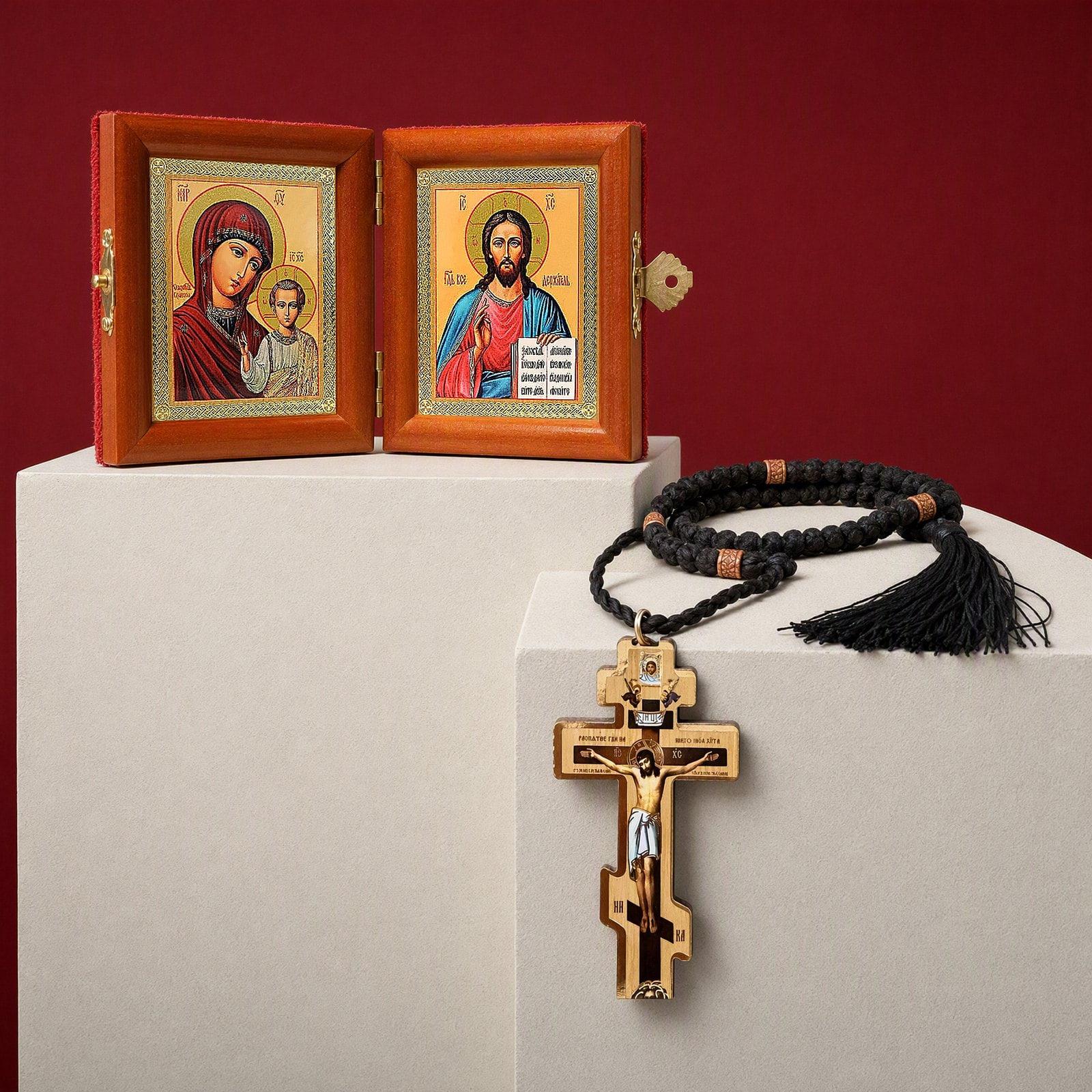
- Blessing, $49. Blessed by an Orthodox priest before it ships.
- Gift packaging, $20
Questions
What is Psalm 120 in the Septuagint?
It is Psalm 119. The King James Bible numbers it 120; the Septuagint, which the Orthodox Church reads, numbers it 119. The psalm is the same.
How many verses does Psalm 120 have?
7, in the King James text and in Brenton’s Septuagint alike.
Which kathisma is Psalm 120 in?
It is in the eighteenth, kathisma 18. The Church divides the Psalter into twenty kathismata and reads them in order.
Where does Hapgood’s Service Book print Psalm 120?
On page 129, as the page references on this page show.
Whose translations are these?
The first is the King James Version. The second is Brenton’s English translation of the Septuagint, the Greek Old Testament that the Orthodox Church reads.