Orthodox cross vs Catholic cross
The Orthodox cross usually has three bars, while the Catholic cross has two. The short top bar of the Orthodox cross stands for the inscription over Jesus, the long bar for his arms, and the slanted bottom bar for his footrest. Where both churches use a crucifix, the Orthodox figure is painted or in low relief and the Western one is often a full sculpture.
| Orthodox cross | Catholic cross | |
|---|---|---|
| Shape | Three bars, the lowest usually slanted | The Latin cross: an upright post and one crosspiece |
| The figure | Painted or in low relief, like an icon | Usually three-dimensional |
| The feet | Nailed side by side | Crossed, one over the other, since around the 13th century |
| Emphasis | Christ’s triumph; the crown of thorns generally left out | The suffering of Christ is more often shown |
| Nameplate | The inscription is the short top bar | A small plate, often with the letters INRI |
What the three bars mean. OrthodoxWiki reads the top bar as the inscription put over Jesus, the long middle bar as the beam for his arms, and the bottom bar as the footrest. The footrest is usually tilted, one end up and the other down, toward the two thieves crucified beside Jesus.
The same cross, an old form. The three-bar form is older than the year 988, and the earliest pictures of the Crucifixion, some of them made in Egypt, generally show it. It is a long-standing form of the Church, not a recent fashion.
The figure of Christ. An Orthodox crucifix reads as an icon: the body is painted on the wood or raised in a shallow relief, and the face is peaceful. A Western crucifix is more often a full sculpture, and since the 13th century it has more often shown the suffering.
One detail from Central Europe. In some regions, a three-bar cross with a horizontal footrest may mark a Greek Catholic church, and a slanted footrest an Orthodox one.
In short. Look for three bars and a slanted footrest on an Orthodox cross, and one crosspiece on a Latin cross; the Orthodox figure is painted, or in low relief, and the Western one is often sculpted.
Christ the Victor
Both churches honor the cross as the sign of Christ’s sacrifice, and both use the crucifix. The difference lies in what the eye is led to see. Orthodox Christians think of the crucified Christ as the Victor and the King, reigning from the tree, and the Church teaches that he is king because of the Crucifixion. That is why the Orthodox figure is calm, with no crown of thorns, and why a blessing cross shows the Crucifixion on one side and the Resurrection on the other. Ask your parish priest what is customary in your community.
Orthodox crosses to wear
The plain three-bar cross with no figure on a chain, $64, and the small cut-out three-bar cross with the letters IC XC, $54, are simple Orthodox crosses to wear every day, and the silver-tone crucifix with Christ crucified, $54, and the carved wooden crucifix with budded ends, $44, show the figure.
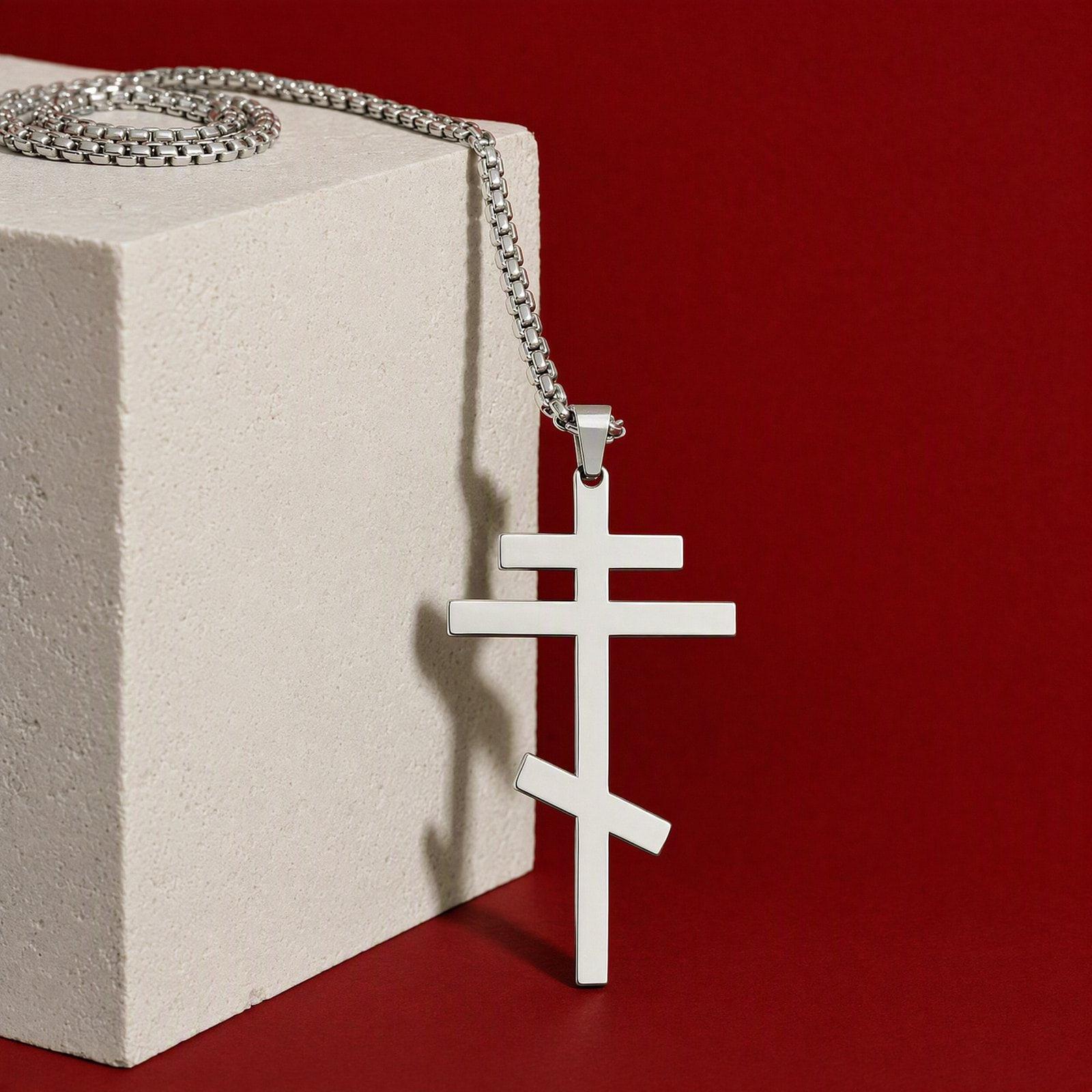 Σταυρός
Three-Bar Bright
Ασημί χρώμα · Αλυσίδα 60 εκ. · Ανοξείδωτο ατσάλι$92$64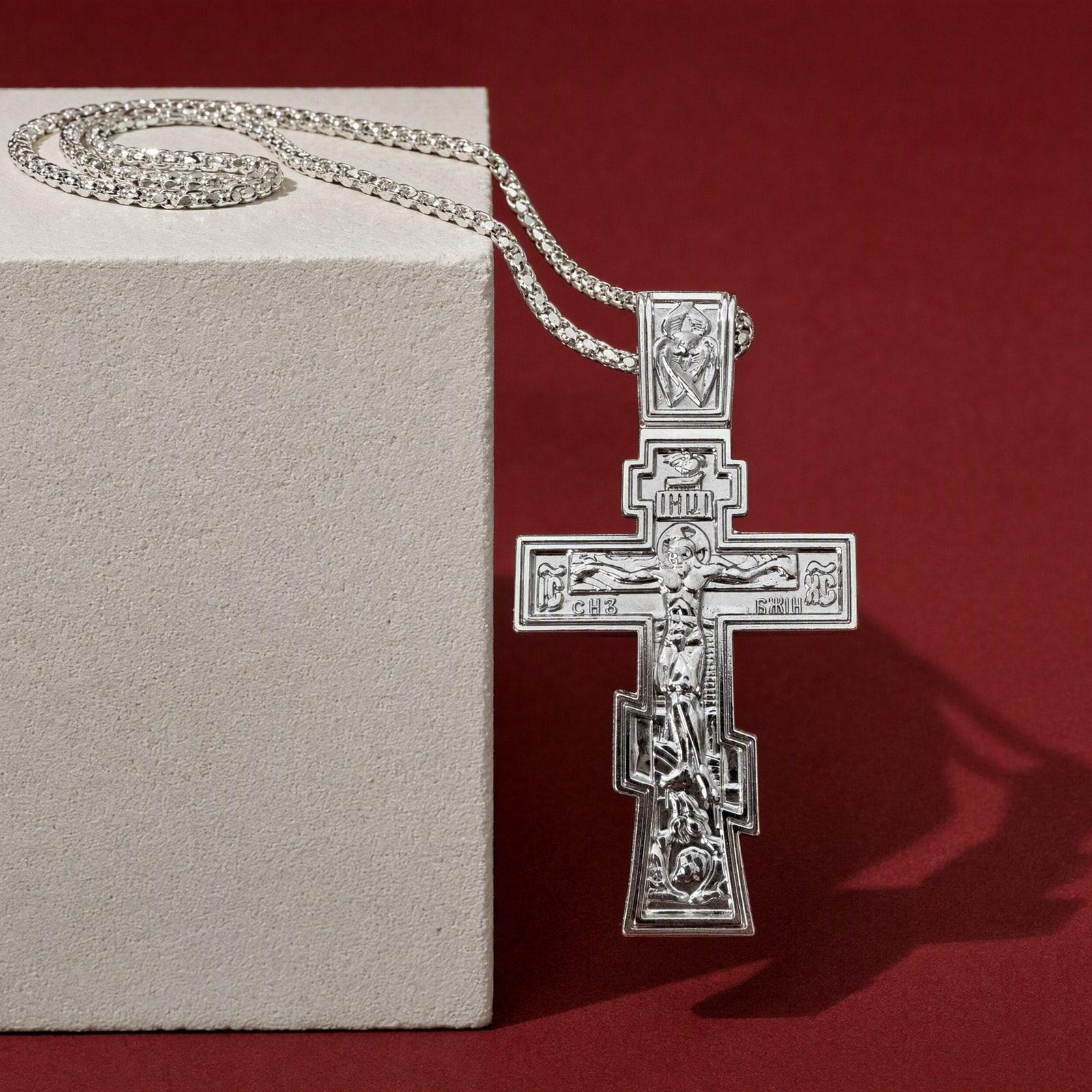 Σταυρός
Saviour Bright
Ασημί χρώμα · Ανοξείδωτο ατσάλι$78$54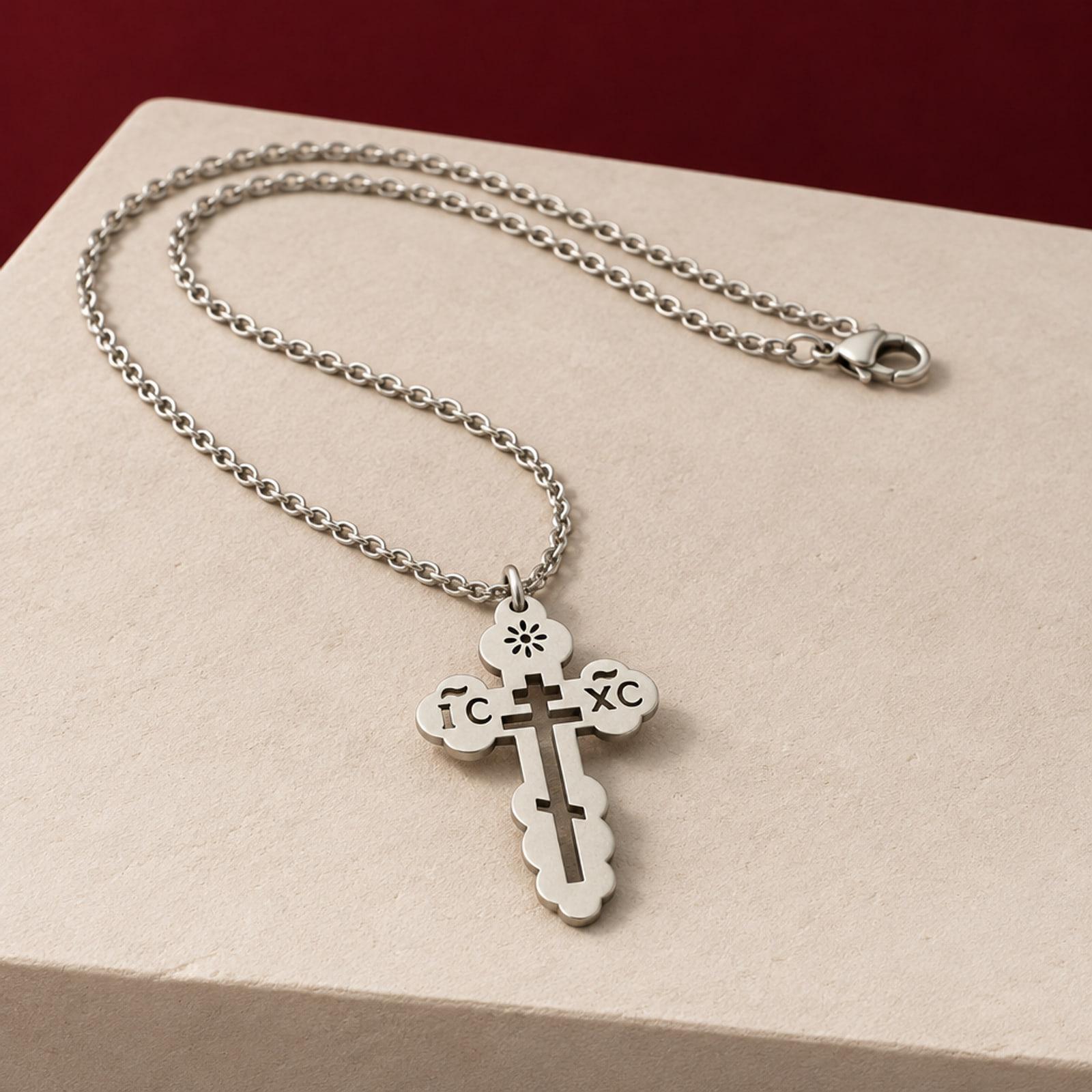 Σταυρός
Monogram Bright
Ασημί χρώμα · Ανοξείδωτο ατσάλι$78$54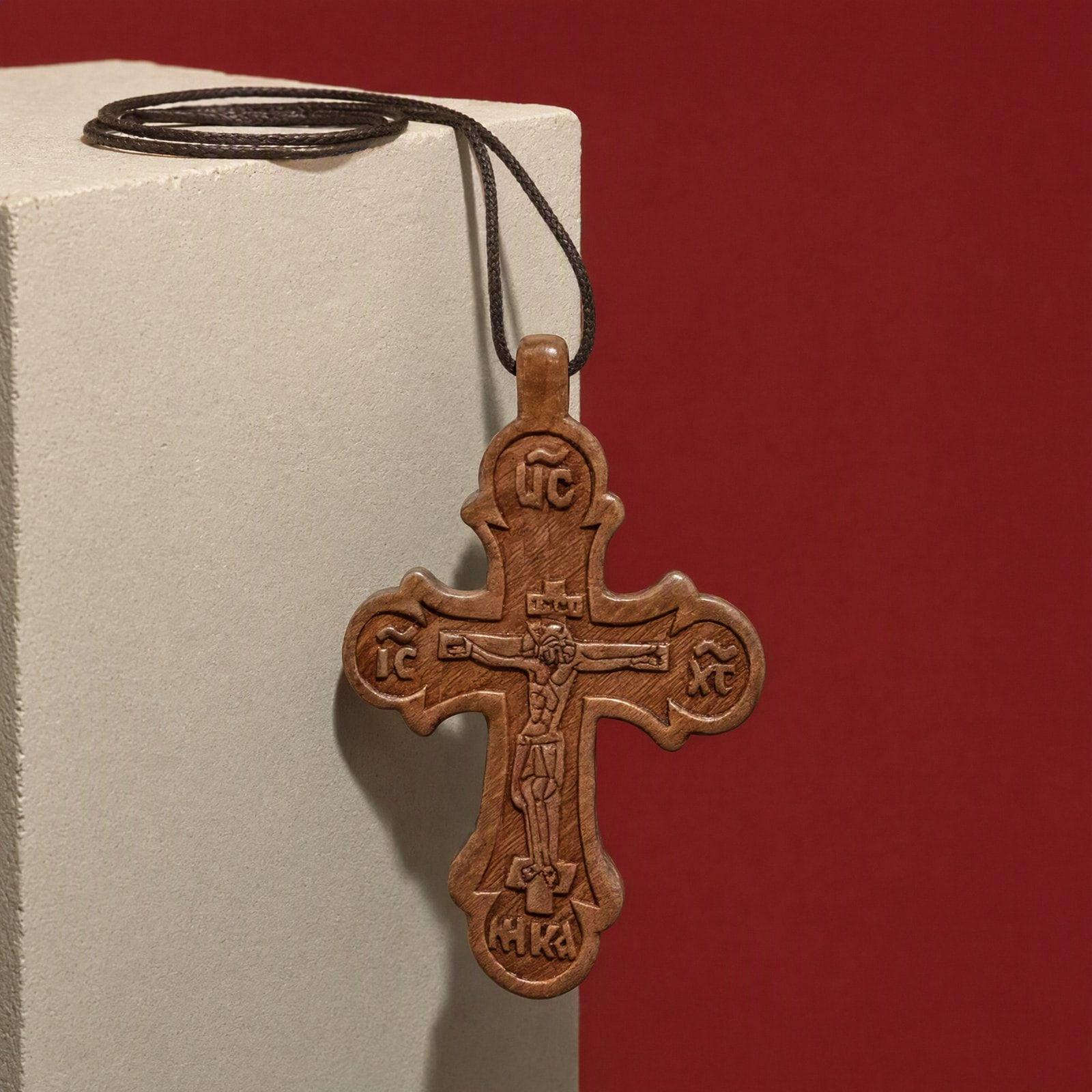 Σταυρός
Trefoil Wood
$63$44
- Blessing, $39. Blessed by an Orthodox priest before it ships.
- Gift packaging, $20
Questions
What is the main difference between an Orthodox cross and a Catholic cross?
The Orthodox cross usually has three bars, with the lowest one slanted, while the Latin cross used in the Catholic Church has an upright post and one crosspiece. The two also show the figure of Christ differently.
Why does the Orthodox cross have a slanted bar?
The bottom bar stands for the footrest. Wikipedia says it is usually slanted, one end up and the other down.
Do Orthodox crucifixes show Christ suffering?
Wikipedia says they generally leave out the crown of thorns, because the emphasis is on Christ’s triumph over sin and death rather than on his suffering.
Do Catholics and Orthodox both use a crucifix?
Yes. Wikipedia lists the crucifix as an important symbol in both churches, and they differ in its form.