Menorah Meaning: what it is and how Orthodox Christians use it
The menorah turns up in Christian art and writing, and the Orthodox Church and the Western churches do not always read it the same way. This page sets out what two reference sources say about it, and keeps the Orthodox use apart from the Western.
- What it is. A seven-branched lamp stand that the Hebrew Bible places first in the Tabernacle and afterwards in the Jerusalem Temple.
- Hebrew name. mənorā (written מְנוֹרָה in Biblical Hebrew).
- How the Bible describes it. Its description calls for solid pure gold, with fresh olive oil as the only fuel for the lamps.
- Older Jewish emblem. The Jewish people and Judaism have been represented by it since antiquity, and Israel made it the state emblem on its founding in 1948.
- Scripture reference. Exodus 25 is the chapter on the Tabernacle’s materials, where the menorah is listed beside the Ark and the showbread table; it stood in the outer room.
- Oldest preserved church example. A bronze lampstand in Essen, made around the year 1000, is the earliest surviving seven-armed one built for a church.
- Meaning the Essen article gives. The article reads the seven in early Christianity as the Trinity’s three joined to the earth’s four directions, and as the Spirit’s seven gifts, with the lampstand itself standing for Christ.
In Western churches. Essen abbey’s 14th-century service book makes this lampstand the centre of the Pentecost liturgy: its candles burned while the scholars knelt about it, and they sang to Christ risen. Its candles are lit today on solemn feasts and at a bishop’s installation.
Facts come from Wikipedia (Temple menorah and Seven-branched candelabrum (Essen)) and OrthodoxWiki (Tabernacle (biblical), Altar and Candle), put into our own words.
How Orthodox Christians use the menorah
Near the rear of the Orthodox altar table, as seen from the nave, there is a branched candle holder, normally of seven lights. A seven-branch stand can rest upon the altar table, or stand alone just behind it. OrthodoxWiki reads a candle as the worshipper’s self-offering and as a picture of Christ’s light. Western churches have a use of their own. Essen abbey’s 14th-century service book makes this lampstand the centre of the Pentecost liturgy: its candles burned while the scholars knelt about it, and they sang to Christ risen. Its candles are lit today on solemn feasts and at a bishop’s installation.
The plainest cross we carry
We sell no piece that depicts the menorah; for a reader who wants something to wear, the simplest cross is a three-bar Orthodox cross with no figure on a chain, $64 in silver-tone, $64 in gold-tone and $64 in black. With the Blessing by an Orthodox priest, $103.
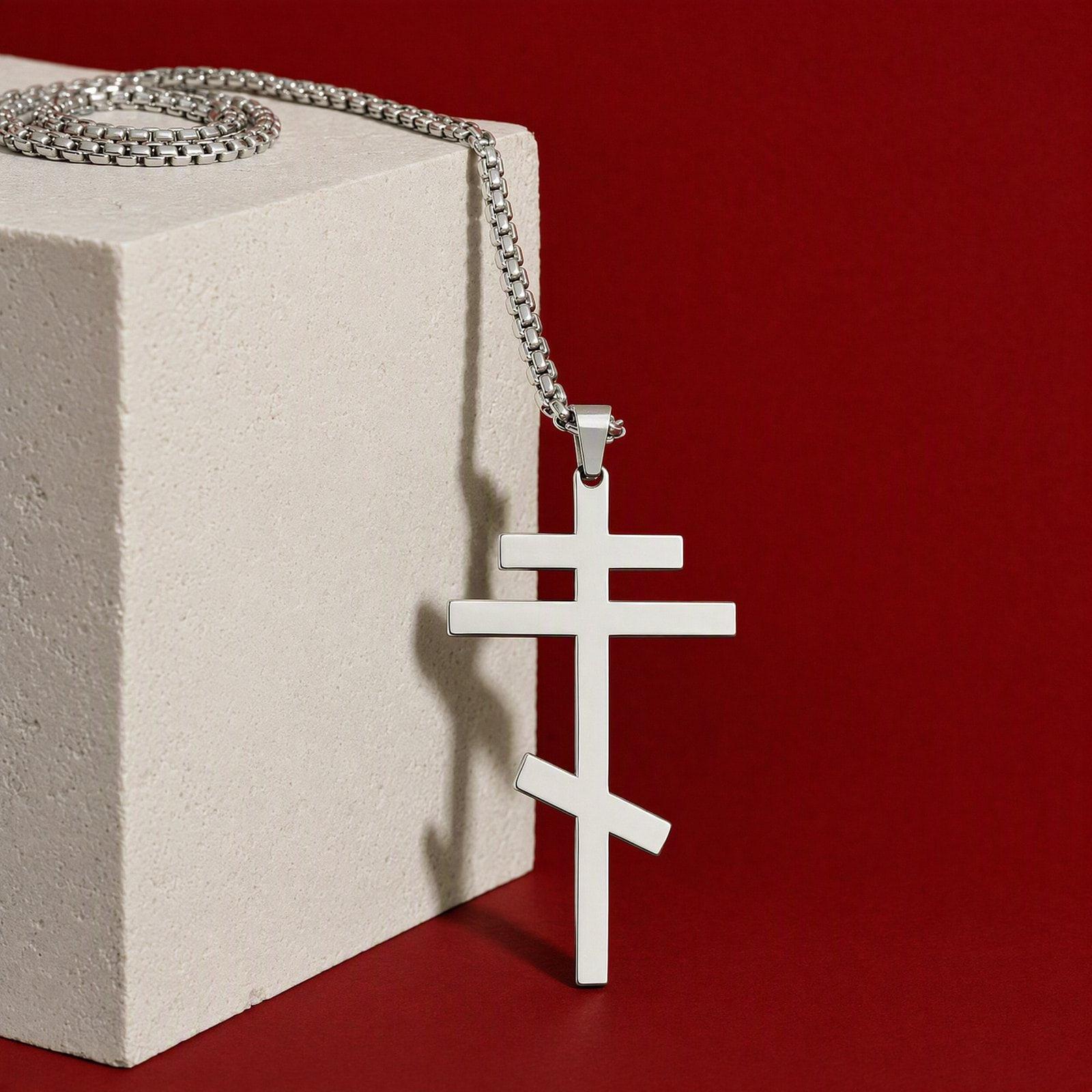 Cruce
Three-Bar Bright
Argintiu · Lănțișor 60cm · Oțel inoxidabil$92$64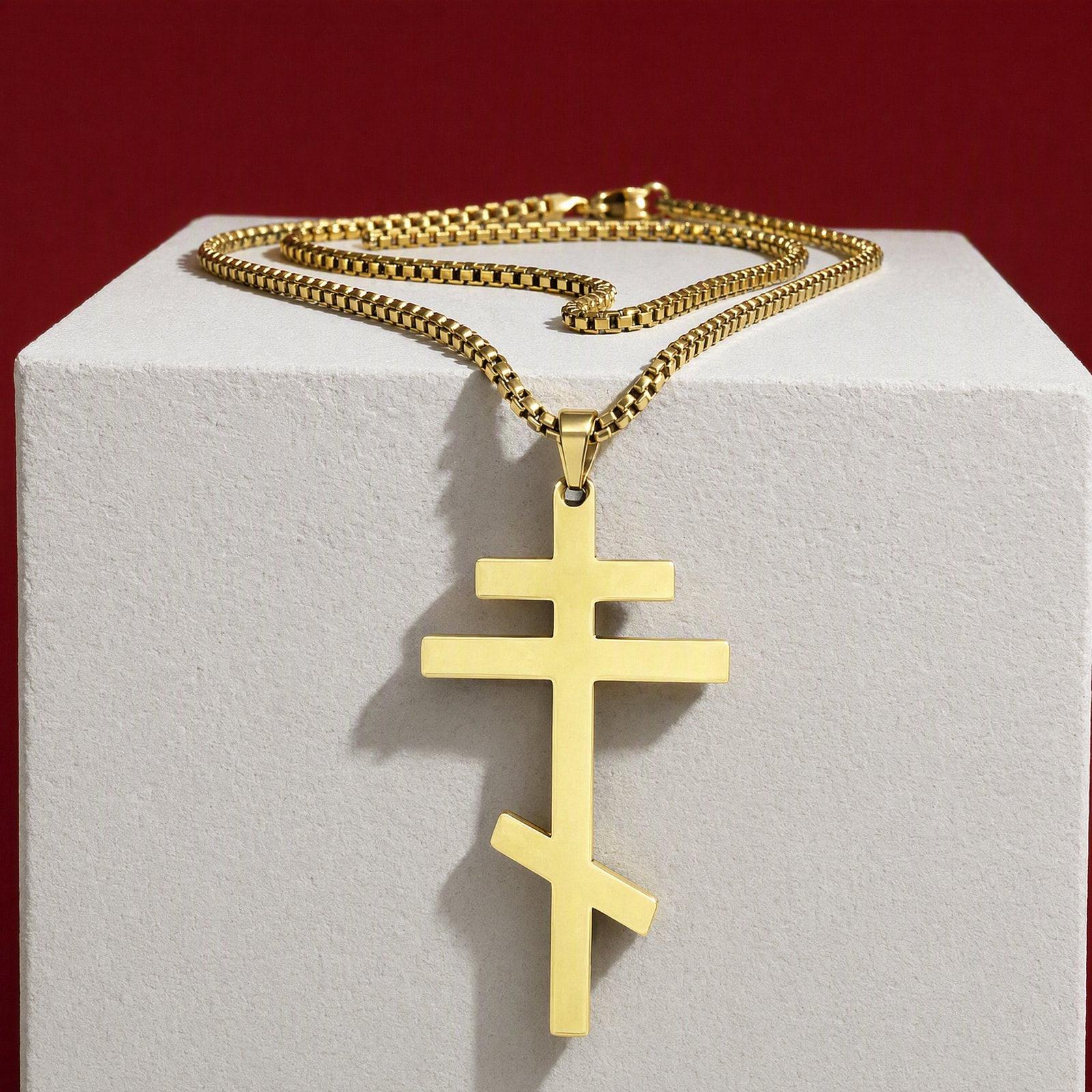 Cruce
Three-Bar Lamplight
Auriu · Lănțișor 60cm · Oțel inoxidabil$92$64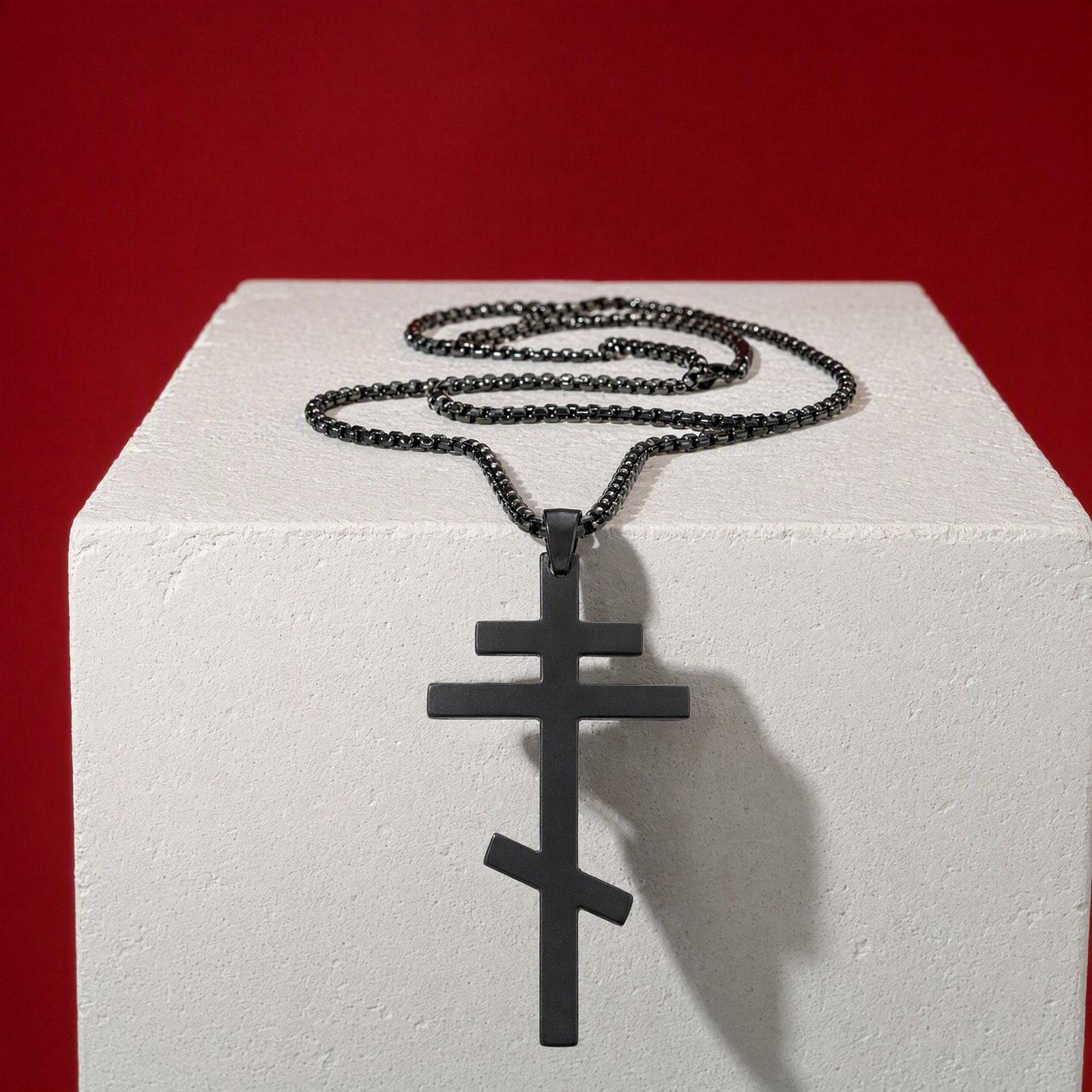 Cruce
Three-Bar Midnight
Negru · Lănțișor 60cm · Oțel inoxidabil$92$64
- Blessing, $39. Blessed by an Orthodox priest before it ships.
- Gift packaging, $20
Questions
What is the menorah as a Christian symbol?
A seven-branched lamp stand that the Hebrew Bible places first in the Tabernacle and afterwards in the Jerusalem Temple.
What does the menorah mean to Christians?
The article reads the seven in early Christianity as the Trinity’s three joined to the earth’s four directions, and as the Spirit’s seven gifts, with the lampstand itself standing for Christ.
How does the Orthodox Church treat the menorah?
OrthodoxWiki reads a candle as the worshipper’s self-offering and as a picture of Christ’s light.
Do Western churches use the menorah as well?
Essen abbey’s 14th-century service book makes this lampstand the centre of the Pentecost liturgy: its candles burned while the scholars knelt about it, and they sang to Christ risen. Its candles are lit today on solemn feasts and at a bishop’s installation.
Does Lampada sell anything that shows the menorah?
No item in the catalogue is described as the menorah, going by the titles and descriptions. The items on this page are the nearest we carry.