Psalms for forgiveness: twelve prayers for pardon
Twelve psalms ask for forgiveness, or speak of it, in their own words: forgive, pardon, blot out, cleanse, wash me, purge. They are listed by the King James number, with the Septuagint number in brackets, the verse where the word stands and the kathisma. One of them is Psalm 51, called Psalm 50 in the Septuagint, which asks for the blotting out of transgressions and the washing of the one who prays.
A psalm is on this list when its King James text uses one of these words or phrases: forgive, pardon, blot out, cleanse, wash me, purge and removed. Psalms that Isabel Hapgood’s Service Book prints in a service that fits the need are added to them.
- Psalm 19 (Psalm 18 in the Septuagint), kathisma 3: verse 12, with the word cleanse.
- Psalm 25 (Psalm 24 in the Septuagint), kathisma 4: verse 11, also verse 18, with the word pardon.
- Psalm 32 (Psalm 31 in the Septuagint), kathisma 4: verse 1, also verse 5, with the word forgive.
- Psalm 51 (Psalm 50 in the Septuagint), kathisma 7: verses 1 and 2, also verses 7 and 9, with the words blot out, cleanse and wash me; Hapgood’s Service Book also prints it at page 287, in the Rite of Confession.
- Psalm 65 (Psalm 64 in the Septuagint), kathisma 9: verse 3, with the word purge them away.
- Psalm 78 (Psalm 77 in the Septuagint), kathisma 11: verse 38, with the word forgave.
- Psalm 79 (Psalm 78 in the Septuagint), kathisma 11: verse 9, with the word purge away.
- Psalm 85 (Psalm 84 in the Septuagint), kathisma 11: verse 2, with the word forgive.
- Psalm 86 (Psalm 85 in the Septuagint), kathisma 12: verse 5, with the word forgive.
- Psalm 99 (Psalm 98 in the Septuagint), kathisma 13: verse 8, with the word forgave.
- Psalm 103 (Psalm 102 in the Septuagint), kathisma 14: verse 3, also verse 12, with the word forgive.
- Psalm 130 (Psalm 129 in the Septuagint), kathisma 18: verse 4, with the word forgive.
The psalms with the most such verses for their length are kept, at most twelve, in King James order. Verses that use the word in another sense were read and set aside; for example Psalm 69, verse 28 (blotted out of the book of the living: an imprecation); Psalm 73, verse 13 (I have cleansed my heart in vain: a complaint); Psalm 109, verse 13 (let their name be blotted out: an imprecation); Psalm 109, verse 14 (let not the sin be blotted out: an imprecation).
What the verses say. Psalm 19 asks to be cleansed from secret faults, and Psalm 25 asks the Lord to pardon an iniquity because it is great. Psalm 32 begins with a blessing on the man whose transgression is forgiven and whose sin is covered. Psalm 51 asks for mercy and for the blotting out of transgressions, for washing, and for being purged with hyssop. Psalm 65 says that as for our transgressions, the Lord will purge them away, and Psalm 78 says that the Lord, full of compassion, forgave their iniquity and did not destroy them. Psalm 86 says that the Lord is good and ready to forgive, Psalm 103 that he forgives all iniquities, and Psalm 130 that there is forgiveness with him, so that he may be feared.
Not every verse that uses these words asks for forgiveness for oneself. Some say that the Lord forgave a people, and some say that sins are removed far away; one asks that he purge away our sins. This page lists the psalms and the verses and leaves it to the reader to see which is which.
Where the Church asks for forgiveness
The Church asks for forgiveness in the Rite of Confession, which in Isabel Hapgood’s Service Book opens with prayers that ask for sins to be washed away and transgressions to be pardoned. The same book prints Psalm 51 at page 287.
So the psalms of forgiveness are not only a private text. They are said in the Church’s own prayers, and a believer who prays one of them at home is using words that the service uses.
Kept in Orthodox homes during Great Lent
These give a home something to pray before: the Family Set, three patron saint icons and a wall crucifix, one saint for each name in the family; the Orthodox Lent Prayer Set, a crucifix, a prayer rope, the family prayer booklet and two icons for Great Lent; and a black wool prayer rope with dividing beads and a tassel, for the Jesus Prayer. An Orthodox priest can bless any piece before it ships. With the Blessing, $83 to $288, and on the Family Set the Blessing is $49.
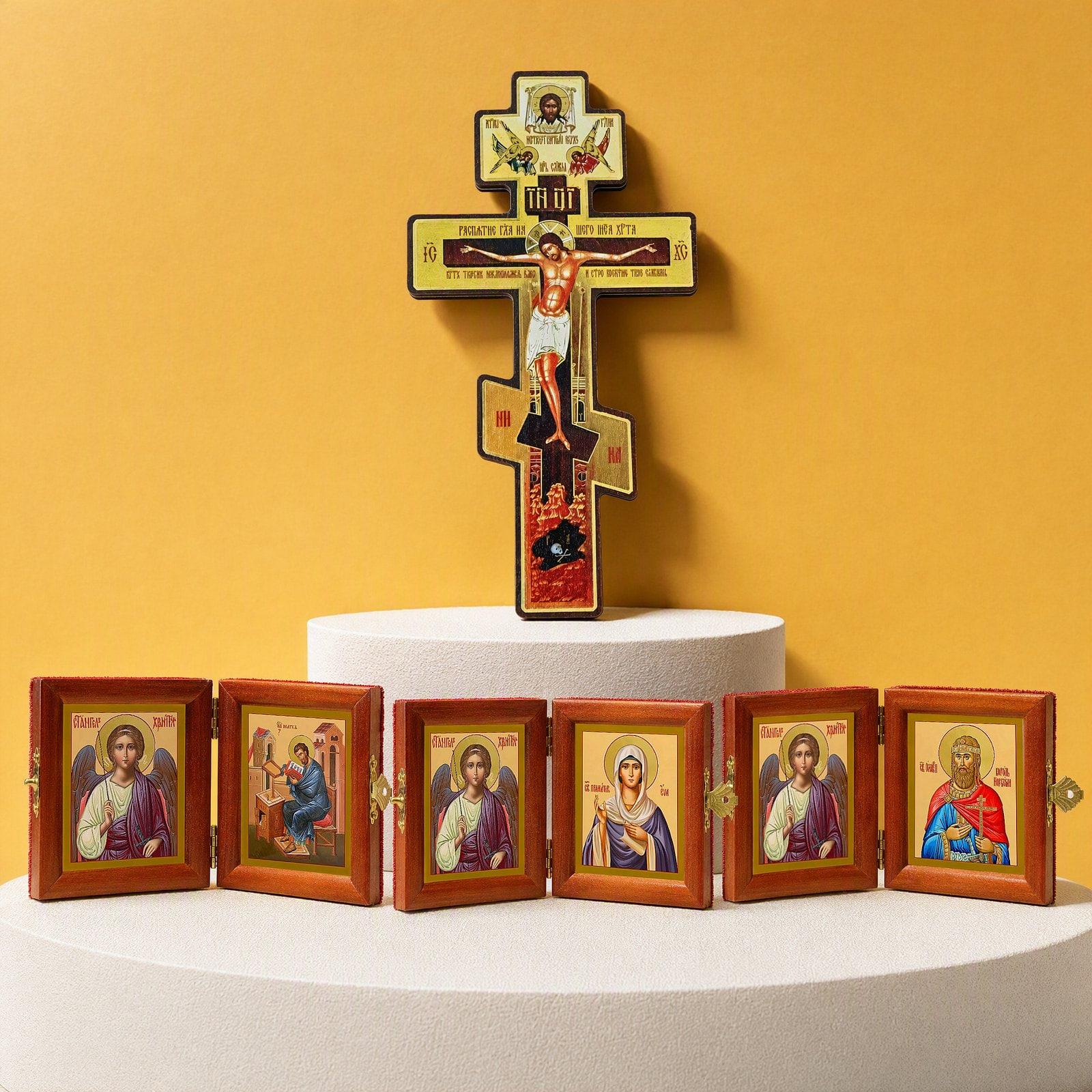 Set cadou
Set de familie
$356$249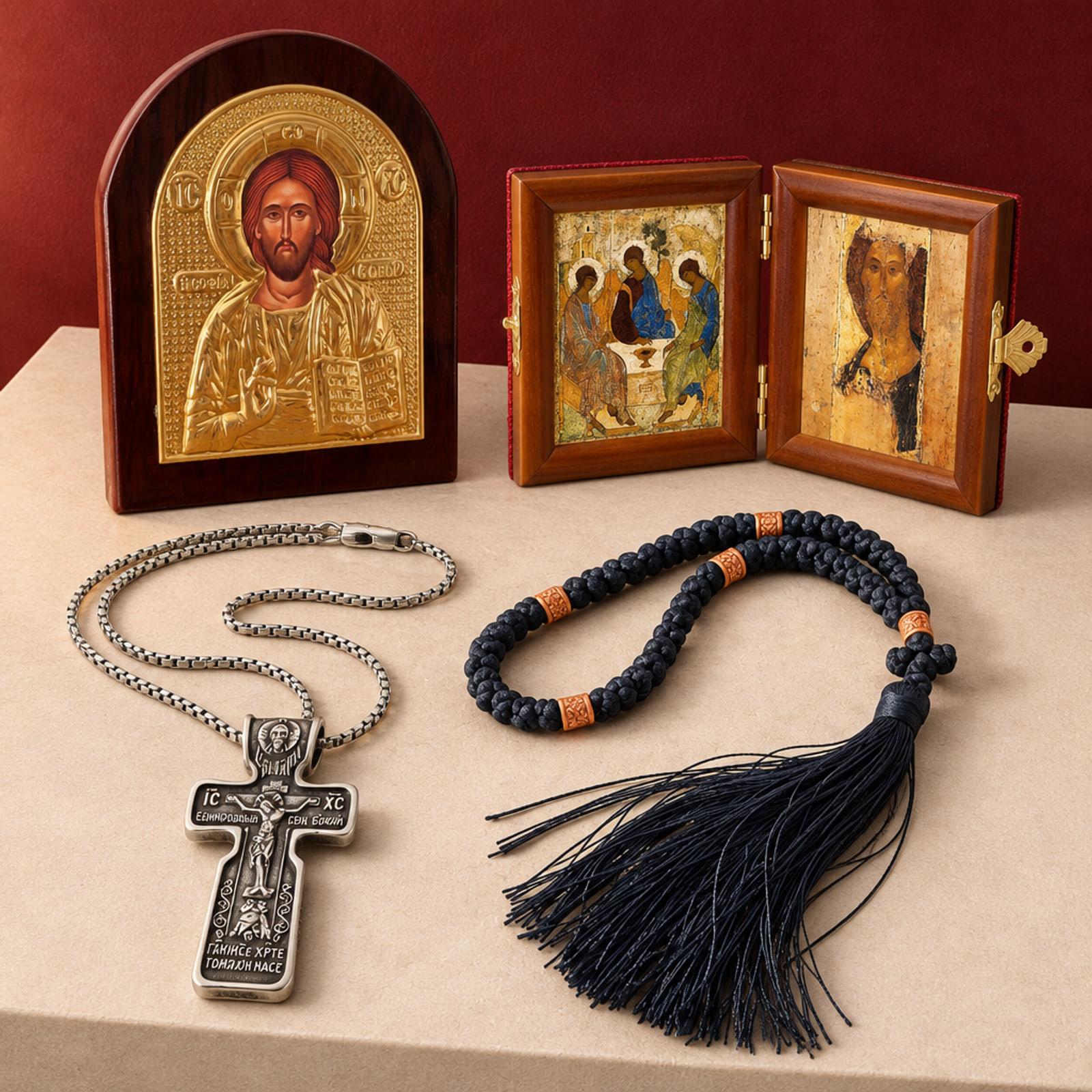 Set cadou
Set de rugăciune pentru Postul Mare
$342$239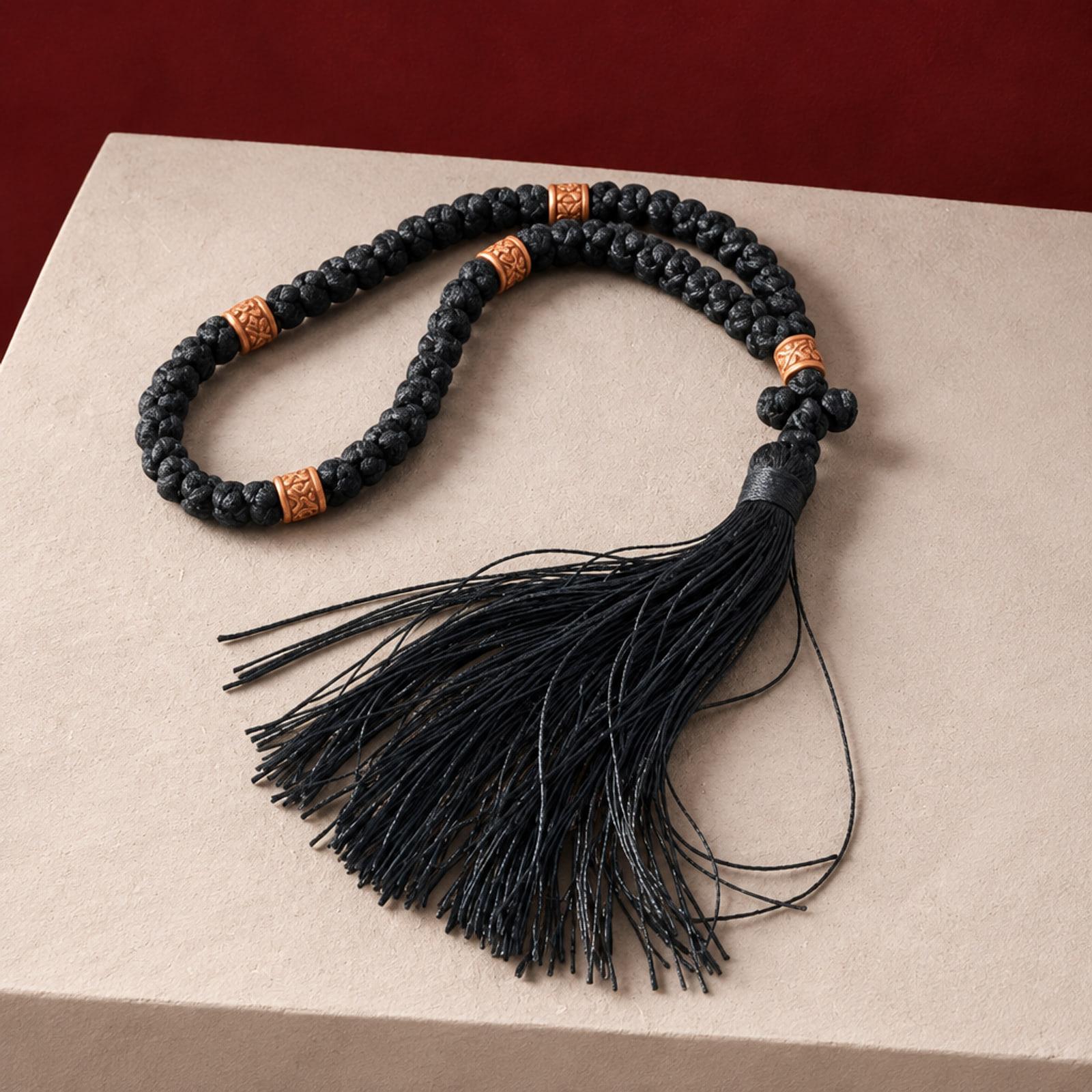 Metanier
 ortodox (chotki, komboskini)
Negru · Lână, 50 de noduri$49$34
- Blessing, $49. Blessed by an Orthodox priest before it ships.
- Gift packaging, $20
Questions
Which psalm asks most plainly for forgiveness?
Psalm 51, which the Septuagint numbers 50. Its first two verses ask for blotting out and washing, and Hapgood’s Service Book prints it at page 287.
Are there other psalms that mention forgiveness?
Yes, eleven more are listed, among them Psalms 32, 86, 103 and 130, each with the verse where the word stands.
Does the Church use forgiveness prayers in confession?
The Rite of Confession in Hapgood’s Service Book begins with prayers that ask for sins to be washed away and transgressions pardoned, and the book prints Psalm 51 at page 287.
Why do the psalms have two numbers?
The King James Bible numbers the psalms in the Hebrew order and the Orthodox Church in the Septuagint order, and the two differ for many psalms. This page gives the Septuagint number beside the King James number.
Can the Family Set be blessed before it ships?
Yes. Choose the Blessing on its page, $49, and an Orthodox priest blesses it before it ships.