Religious incense: the kinds of church incense and how to choose
Religious incense, in the Christian sense, is church incense: grains of natural resin, mostly frankincense, burned on charcoal so the fragrant smoke rises during prayer. Orthodox and Catholic churches both use it, and many Christians burn it at home before their icons. It is not the same as perfumed incense sticks, which are made for scenting a room.
The main choice is between plain resin, which smells clean and woody, and blended church incense, which adds floral or sweet notes. Below: why Christians burn incense, the kinds compared, Orthodox and Catholic customs, how to choose a scent, storage, and what we carry.
Why Christians burn incense
Incense is one of the oldest acts of worship in Scripture. God told Moses to set an altar of incense before the tabernacle (Exodus 30). The psalm sung at every Orthodox Vespers says, “Let my prayer arise in Thy sight as incense” (Psalm 140:2, Psalm 141 in most Bibles); read it on our Psalms pages. The Magi brought frankincense to the Christ Child, and in Revelation 8 an angel offers incense with the prayers of the saints.
So the smoke is a picture of prayer going up to God, and its fragrance a sign of what is holy. That is why it is burned before icons, over the Gospel and around the people in church, and at home when the family prays.
The kinds of church incense
| Kind | What it is | Scent | Burns on |
|---|---|---|---|
| Plain resin | Pure frankincense or myrrh tears | Clean, woody, lemony | Charcoal |
| Athonite-style | Resin with fragrant oils, cut and powdered | Floral or sweet: rose, gardenia, jasmine | Charcoal or a smokeless burner |
| Moist incense | Soft, sticky blend | Rich, slow to fade | Charcoal |
| Tamjan | Serbian church incense, often from monasteries | Varies by blend | Charcoal |
| Sticks and cones | Powder pressed with a binder | Perfumed | Their own ember |
For frankincense and myrrh as resins on their own, see our guide to myrrh. Sticks and cones are not church incense, and we do not carry them.
Orthodox incense and Catholic incense
Orthodox incense is burned at nearly every service: Vespers, Matins and the Divine Liturgy, and at home before the icons. Greek and Athonite incense is known for its floral blends, and Slavic and Serbian parishes use similar grains, which many call ladan or tamjan.
Catholic incense, the Roman Catholic incense of the Mass, is used on solemn days: at the entrance, the Gospel, the offertory and Benediction. Catholic Mass incense is often a plain resin or a resin blend with a little spice. Either kind can be used at home; the difference is mostly scent and custom. For the vessels each church uses, read our censer guide.
How to choose a scent
- New to incense: start with a sampler, so you learn which notes you like before buying a full box.
- Small room or apartment: a light resin such as Smyrna, a few grains at a time, or a smokeless incense burner.
- Feast days: a richer floral or moist incense fills a house well.
- Gift: a sampler or a set with charcoal, so the person can begin at once.
One to three grains on a tablet are enough for a room. Too many make heavy smoke that hides the fragrance.
Storing incense
Keep incense in its closed box or a jar with a lid, in a cool, dry place out of the sun, so the oils do not fade or the grains melt together in summer heat. Moist incense stays soft in its tin; close it after each use. Keep charcoal dry too, or it will be hard to light. Store both away from children, and never next to the stove or a heater.
What we carry
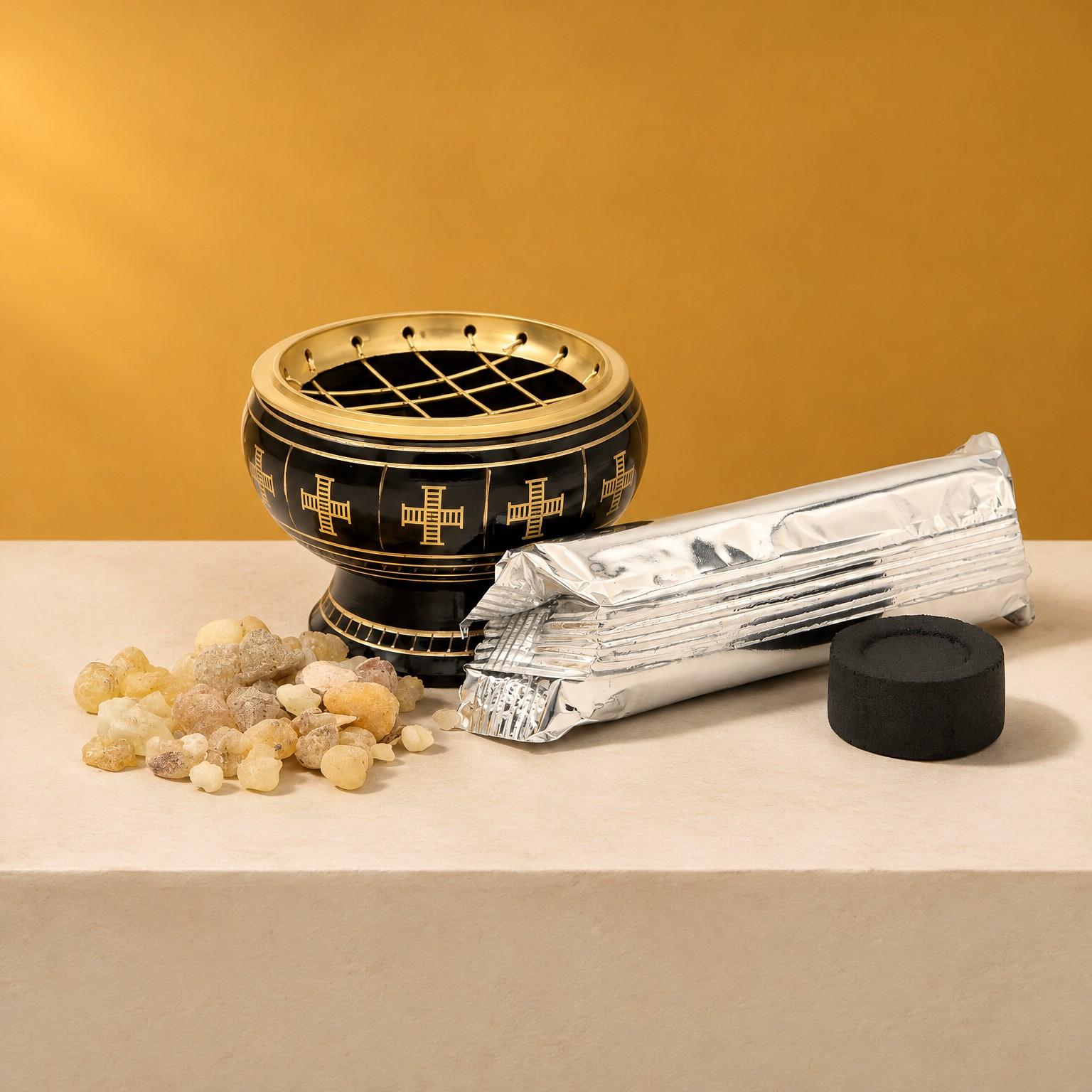
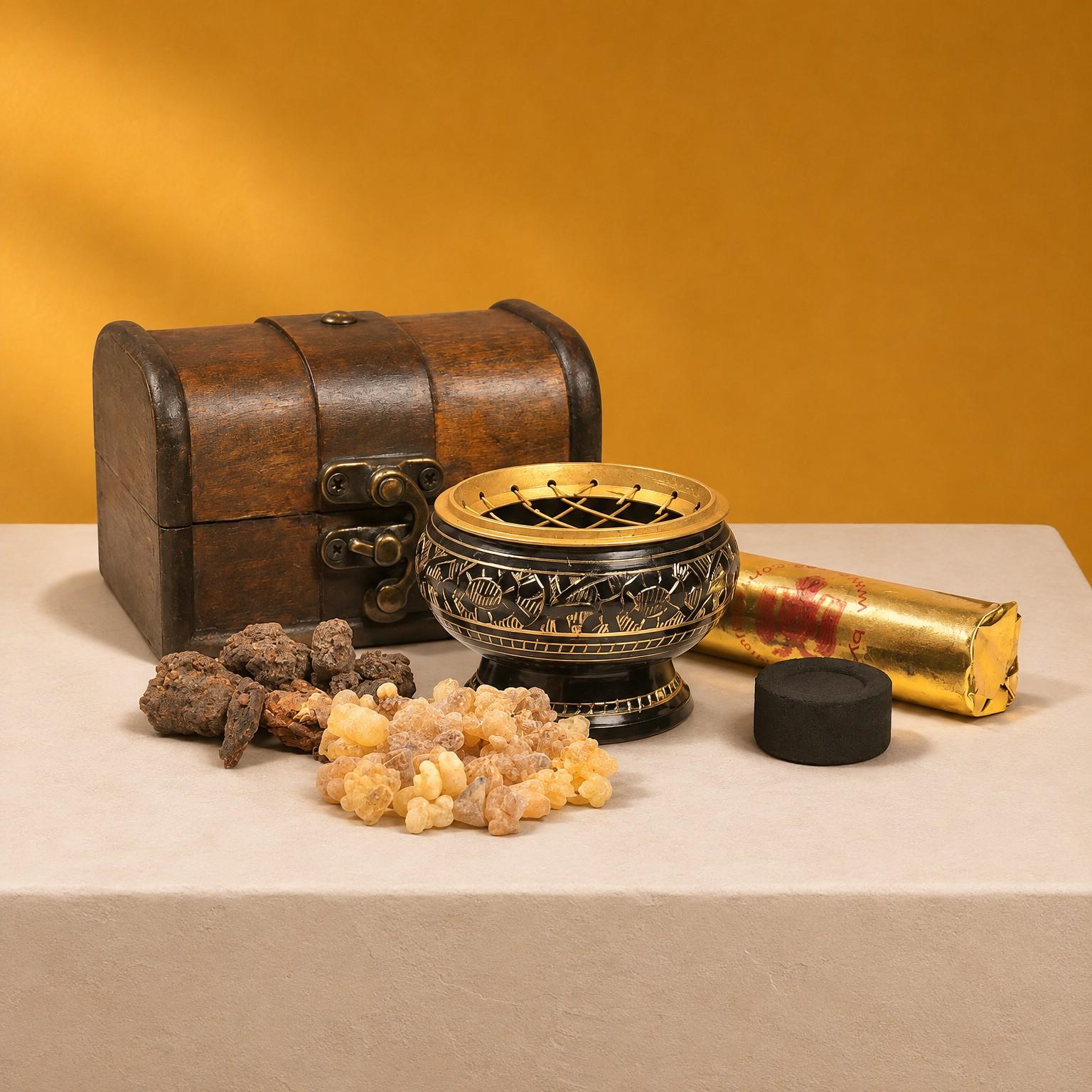
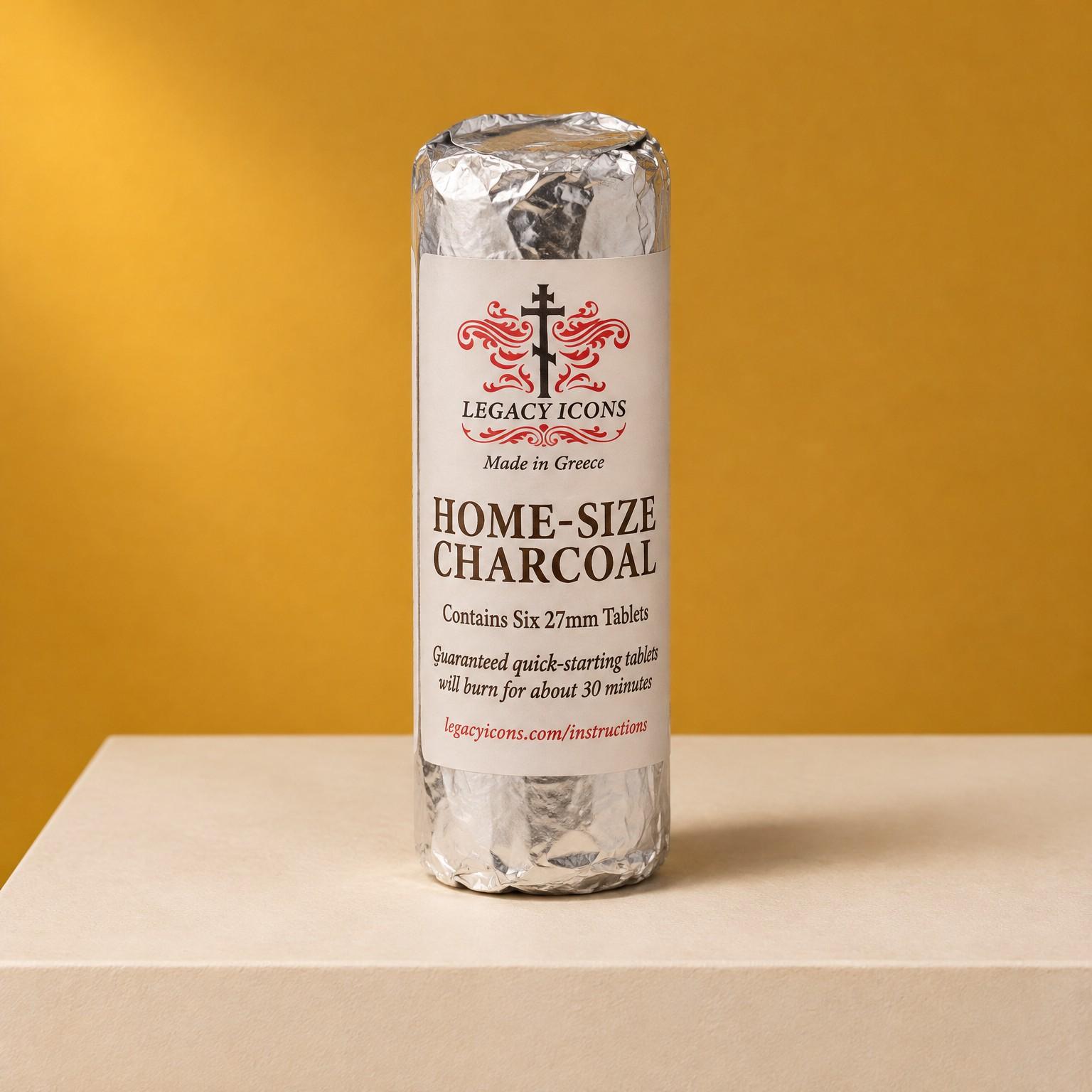
Plain frankincense resin comes in our kits: the frankincense kit ($84) holds an engraved brass censer, a roll of charcoal and frankincense, and the frankincense and myrrh gift set ($119) adds myrrh in a wooden chest. More in the frankincense guide. Home-size charcoal ($14) refills any censer. Orders arrive in 5–8 business days: US-based, ships from Florida.
Our frankincense kits and charcoal
A frankincense kit with a brass censer, a frankincense and myrrh gift set in a wooden chest, and home-size charcoal for any censer. Each card shows its live price.
CU SEDIUL ÎN SUA. EXPEDIERE DIN FLORIDA
Delivery in 5–8 business days.
Want us to stock it?
We carry close items, not every kind of religious incense. Leave your email and we will write once if we stock more.
Questions
What is church incense made of?
Mostly frankincense, the dried resin of Boswellia trees, sometimes with other resins such as myrrh or benzoin. Many Orthodox incenses blend the resin with fragrant oils and roll it into small pieces dusted with powder so they do not stick together.
What is the difference between Orthodox and Catholic incense?
Both are resin incense burned on charcoal. Catholic Mass incense is often plain or lightly blended resin. Orthodox incense, especially the Greek and Athonite kinds, is more often scented with rose, gardenia, jasmine or other floral notes.
What is Athonite incense?
Incense in the style made by monks on Mount Athos in Greece: frankincense blended with fragrant oils, cut into small grains and coated with powder. The name now describes the style; check each listing for where it was made.
What does ladan mean?
Ladan is the word for church incense in several Slavic languages. Serbian speakers say tamjan, and Greek speakers livani. All three mean the same resin incense burned in church and at home.
Can I burn church incense without charcoal?
Yes, on a smokeless burner: a tea light warms a metal pan and the incense on it releases its scent with very little smoke. On a plain plate or a stick holder it will not burn; it needs steady heat from below.
Do you sell Orthodox incense sticks?
No. Church incense comes as grains of resin; our censer kits include frankincense resin. Sticks and cones are made differently, mostly for scenting a room, and are rarely used in Orthodox worship.