What is chrismation?
Chrismation is the Orthodox sacrament in which a person is anointed with chrism, a blessed oil also called myrrh, and receives the seal of the gift of the Holy Spirit. It matches what Western Christians call confirmation, but in the Orthodox Church it is given straight after baptism, to infants as well as adults, and the person then receives first Holy Communion.
What happens. The priest anoints the forehead, eyes, nostrils, mouth, ears, chest, hands and feet in the sign of the cross, naming each anointing a seal of the Spirit’s gift. The oil is a mixture of forty sweet-smelling substances and pure olive oil. The bishops prepare it on Holy Thursday, which shows that the gift of the Spirit was first given through the apostles, whose formal successors are the bishops.
What it means. The OCA describes baptism as a personal share in Easter, the death and resurrection of Christ, and chrismation as a personal share in Pentecost, the coming of the Holy Spirit. By it a person becomes a member of the laos, the people of God. Two New Testament passages are read in this connection. In Acts, Peter and John pray for the Samaritans and lay hands on them, and in his first letter John writes that believers have an anointing from the Holy One.
How it differs from confirmation. Western confirmation is typically reserved to those of the age of reason. Chrismation in the Eastern churches is ordinarily given at once after baptism, most commonly in infancy. Roman Catholic and Protestant churches often separate the two sacraments, while the Orthodox keep them together.
When it is given alone. In some cases chrismation alone is used to receive converts who were earlier baptized in the name of the Father, Son and Holy Spirit. It is at the discretion of the local bishop, and practice varies, so anyone asking about joining the Church should speak to a parish priest.
In short. Chrismation is the anointing with chrism that gives the seal of the gift of the Holy Spirit, given in the Orthodox Church together with baptism and followed by first Holy Communion.
A personal Pentecost
The OCA teaches that in chrismation a person is given the power from on high, the gift of the Spirit of God, in order to live the new life received in baptism, and that the person is anointed just as Christ, the Anointed One, was. It is a gift that a believer is asked to cooperate with throughout life. Because the details differ between parishes and bishops, a parish priest is the right person to speak with about the sacrament for yourself or for a child.
A saint and a cross to keep
The Patron Saint & Cross set, $99, holds a patron saint and the Guardian Angel in a red-velvet folding diptych, chosen by first name, with a three-bar crucifix, and the story of the saint’s life, sent to you by email.
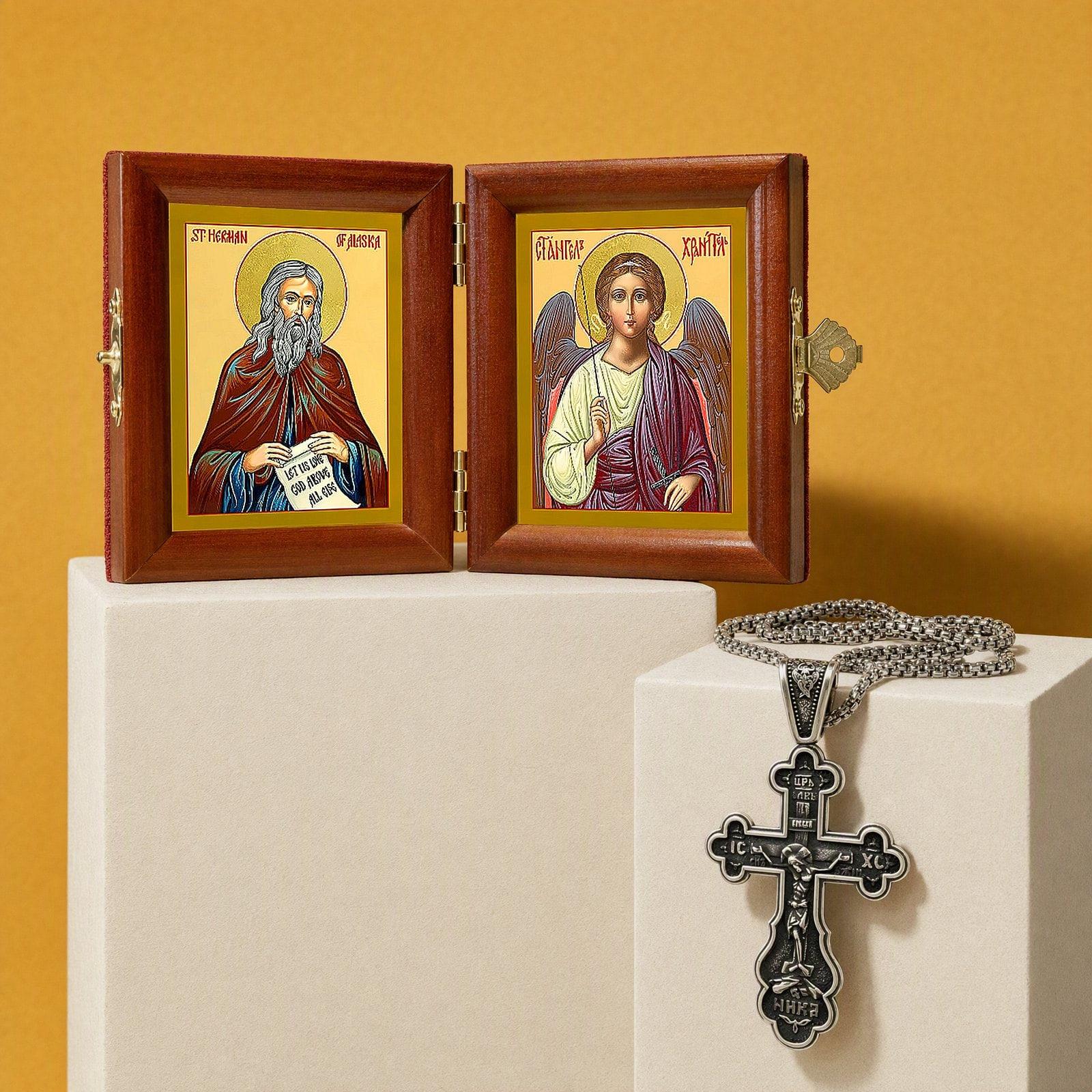 Set cadou
Sfântul ocrotitor și crucea
$142$99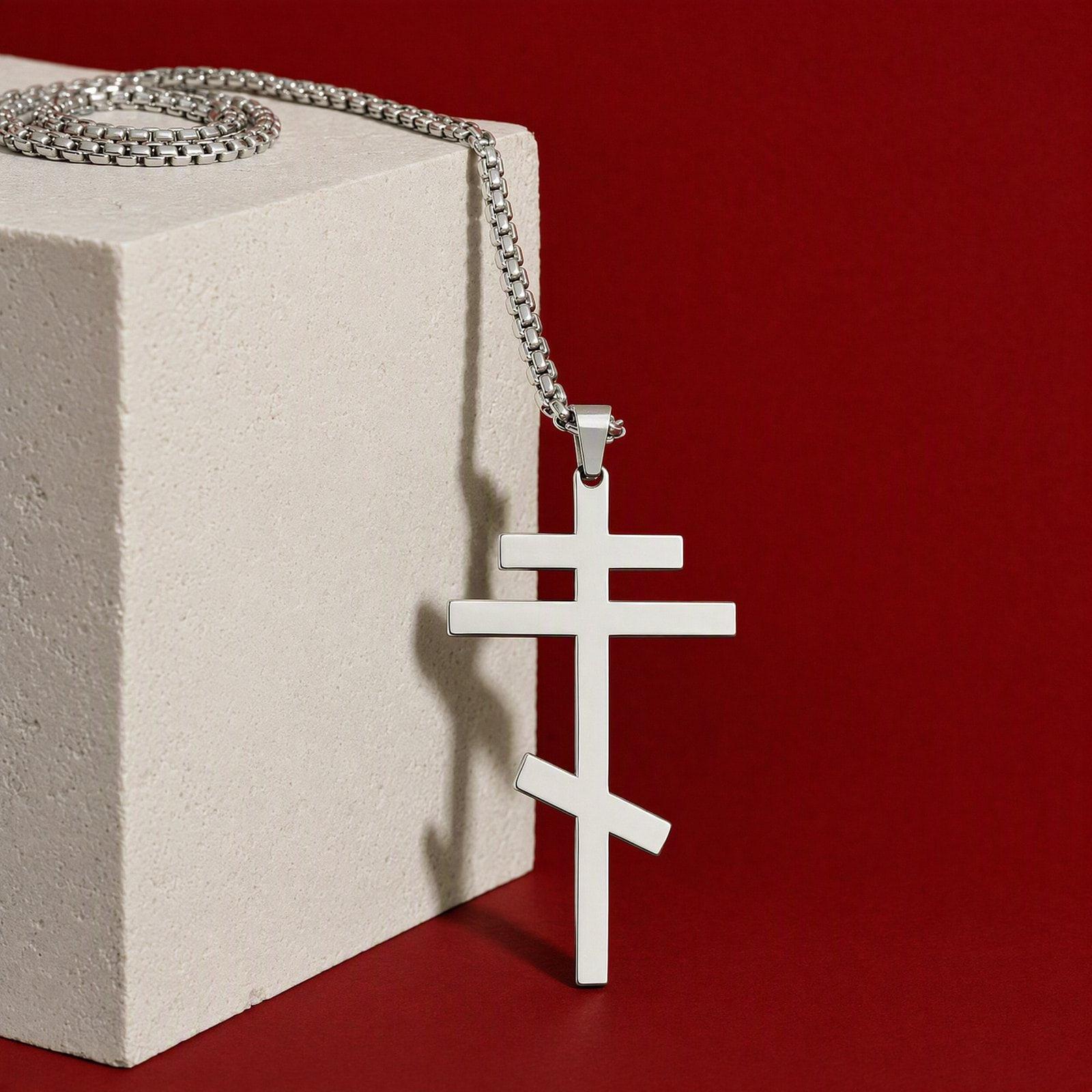 Cruce
Three-Bar Bright
Argintiu · Lănțișor 60cm · Oțel inoxidabil$92$64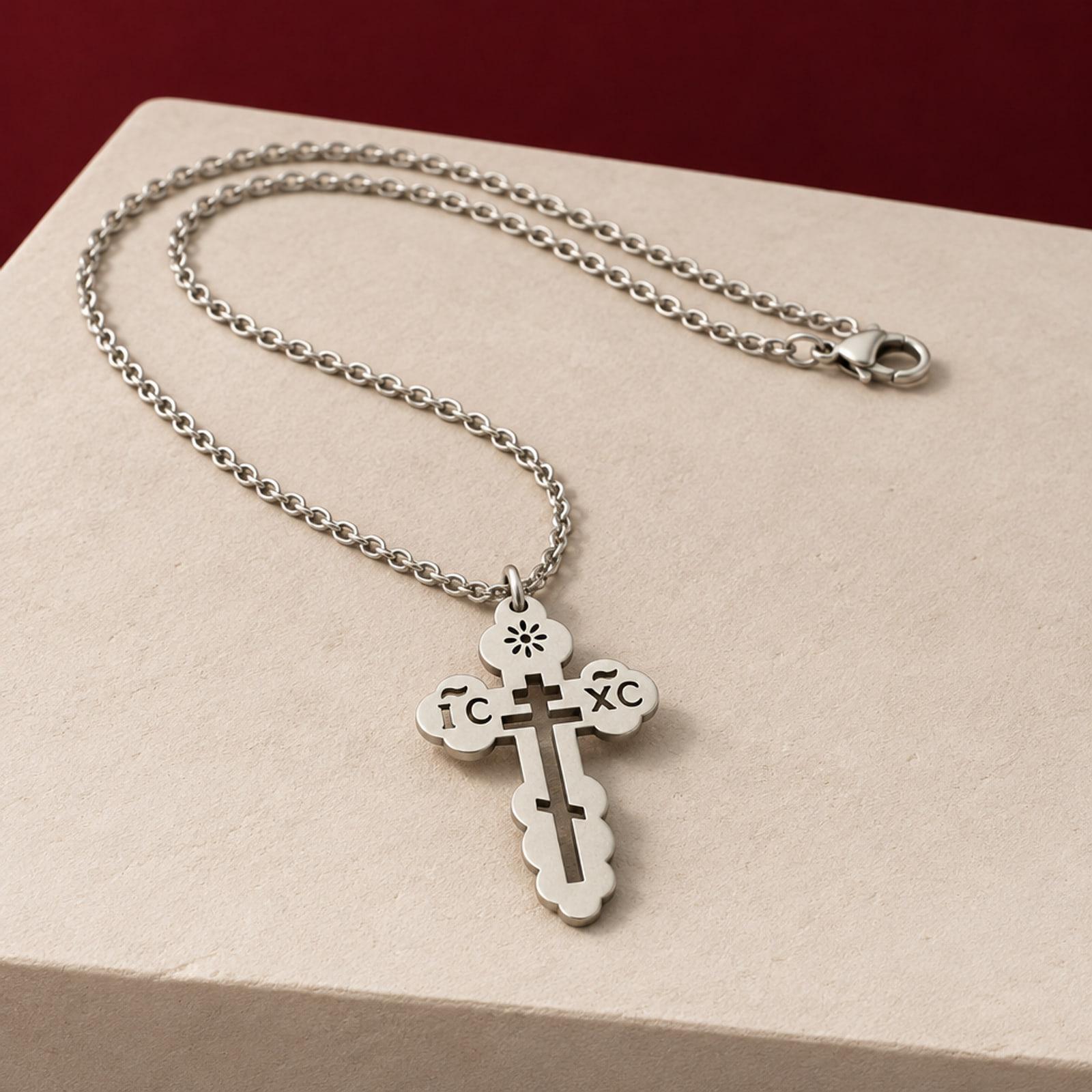 Cruce
Monogram Bright
Argintiu · Oțel inoxidabil$78$54
- Blessing, from $39. Blessed by an Orthodox priest before it ships.
- Gift packaging, $20
Questions
What is chrismation?
The Orthodox sacrament of anointing with chrism, which gives the seal of the gift of the Holy Spirit.
What is chrismation in the Orthodox Church?
It is given with baptism, to infants and adults, followed by first Holy Communion; the priest anoints the forehead, eyes, nostrils, mouth, ears, chest, hands and feet.
Is chrismation the same as confirmation?
It corresponds to confirmation, but is given at once after baptism, while Western confirmation is typically reserved to the age of reason.
What oil is used in chrismation?
Chrism, also called myrrh or myron: forty sweet-smelling substances with pure olive oil, prepared by the bishops on Holy Thursday.
Can a convert be received by chrismation?
In some cases, if baptized earlier in the name of the Father, Son and Holy Spirit; it is for the local bishop, and practice varies.