Psalm 100 and Septuagint Psalm 99: the text
Looking for Psalm 100? It is here, and in the Septuagint, the numbering the Orthodox Church uses, it is Psalm 99. A reader may meet either number, depending on the Bible on the shelf. Both texts run to 5 verses. The King James text opens with a title line.
The psalm in the King James Version.
Make a joyful noise unto the LORD, all ye lands. Serve the LORD with gladness: come before his presence with singing. Know ye that the LORD he is God: it is he that hath made us, and not we ourselves; we are his people, and the sheep of his pasture. Enter into his gates with thanksgiving, and into his courts with praise: be thankful unto him, and bless his name.
For the LORD is good; his mercy is everlasting; and his truth endureth to all generations.
The psalm in the Septuagint, in Brenton’s English translation.
A Psalm for Thanksgiving. Make a joyful noise to the Lord, all the earth.
Serve the Lord with gladness; come before his presence with exultation. Know that the Lord he is God; he made us, and not we ourselves; we are his people, and the sheep of his pasture. Enter into his gates with thanksgiving, and his courts with hymns; give thanks to him, praise his name. For the Lord is good, his mercy is for ever; and his truth endures to generation and generation.
What the psalm says. The psalm is a call to come into the Lord’s presence, and it is made of short commands. Make a joyful noise to the Lord, all you lands; serve the Lord with gladness; come before his presence with singing. Then comes the reason: know that the Lord, he is God; it is he who has made us, and not we ourselves; we are his people and the sheep of his pasture. The second half repeats the call with a different gate: enter his gates with thanksgiving and his courts with praise, be thankful to him and bless his name. The last verse gives three reasons that do not change: the Lord is good, his mercy is everlasting, and his truth endures to all generations.
The psalm is short enough to be seen at once. It has five verses and every one is an instruction, to make a joyful noise, to serve, to know, to enter and to be thankful. The central verse is a statement of who the Lord is and who we are: he made us, and not we ourselves; we are his people and the sheep of his pasture. The movement is from the outside to the inside, from all lands to the gates and the courts, and at its end it gives three reasons for praise that do not depend on circumstances, namely that the Lord is good, that his mercy is everlasting and that his truth endures from one generation to the next.
Its kathisma. In the Church’s reading of the Psalter this psalm belongs to kathisma 13, one of twenty divisions of the book.
No service named. In Isabel F. Hapgood’s Service Book of the Holy Orthodox-Catholic Apostolic Church we did not find this psalm printed under a Psalm heading, and so the page says nothing about where it is sung.
The Psalms in the Church’s prayer
The Church prays the Psalms in two ways: in the services, where they are set among the hymns and prayers, and in the Psalter read in kathismata, twenty readings in all. Psalm 100 is in kathisma 13.
The Church speaks of what a psalm says and of where it is read; it does not treat a psalm as a charm. Read Psalm 100 as the Church does, with the words in front of you, in the translation you know best and in the Septuagint’s.
For the whole family’s icon corner
In the Family Set you receive three patron saint folding icons, one for each name in the family, with a wooden wall crucifix, $249. Blessing, $49, is offered on its page.
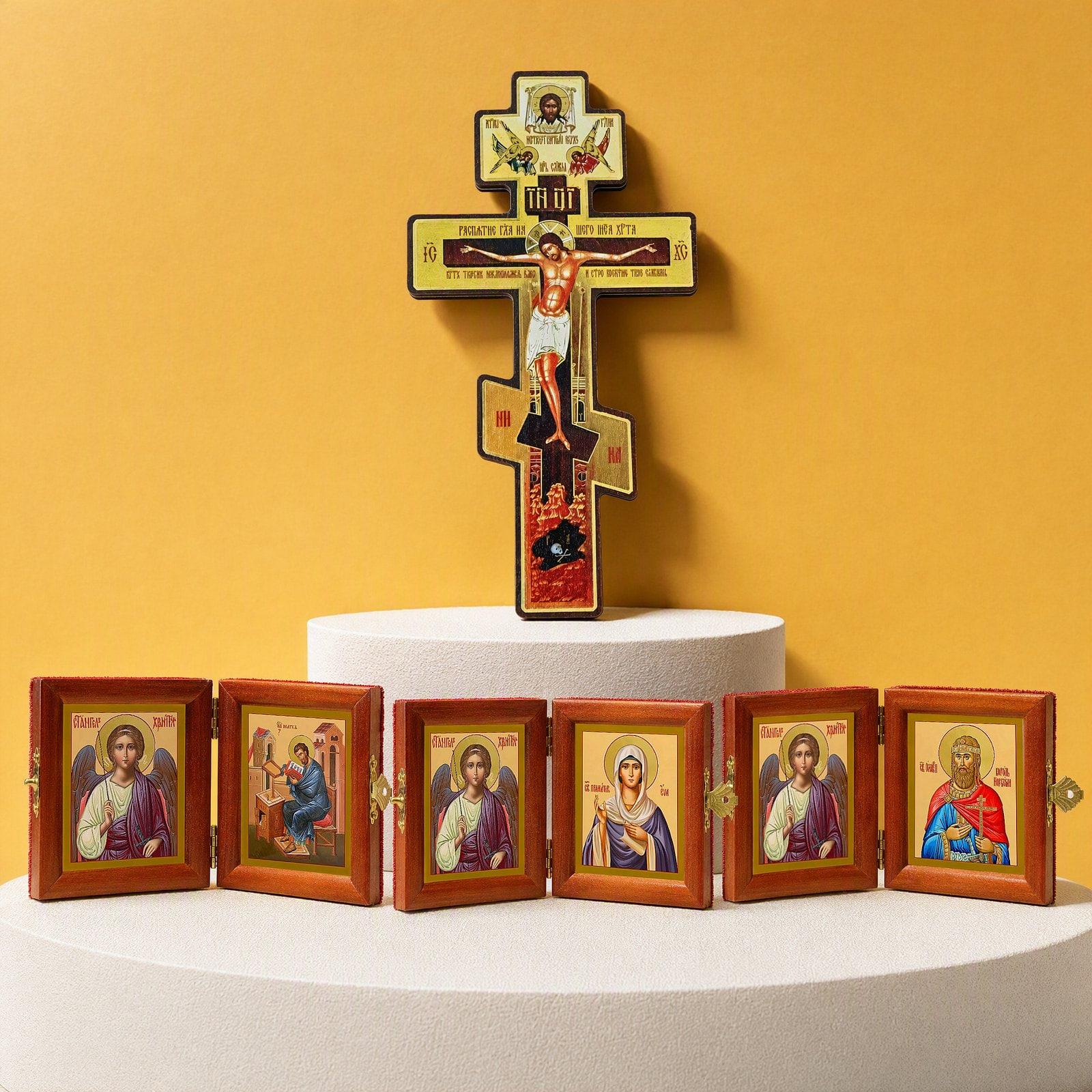
- Blessing, $49. Blessed by an Orthodox priest before it ships.
- Gift packaging, $20
Questions
What is Psalm 100 in the Septuagint?
It is Psalm 99. The King James Bible numbers it 100; the Septuagint, which the Orthodox Church reads, numbers it 99. The psalm is the same.
How many verses does Psalm 100 have?
5, in the King James text and in Brenton’s Septuagint alike.
Which kathisma is Psalm 100 in?
It is in the thirteenth, kathisma 13. The Church divides the Psalter into twenty kathismata and reads them in order.
Is Psalm 100 printed in the service book?
We did not find it under a Psalm heading in Isabel F. Hapgood’s service book, so this page names no service for it.
Whose translations are these?
The first is the King James Version. The second is Brenton’s English translation of the Septuagint, the Greek Old Testament that the Orthodox Church reads.