Latin cross meaning: the Latin cross, its shape and its story
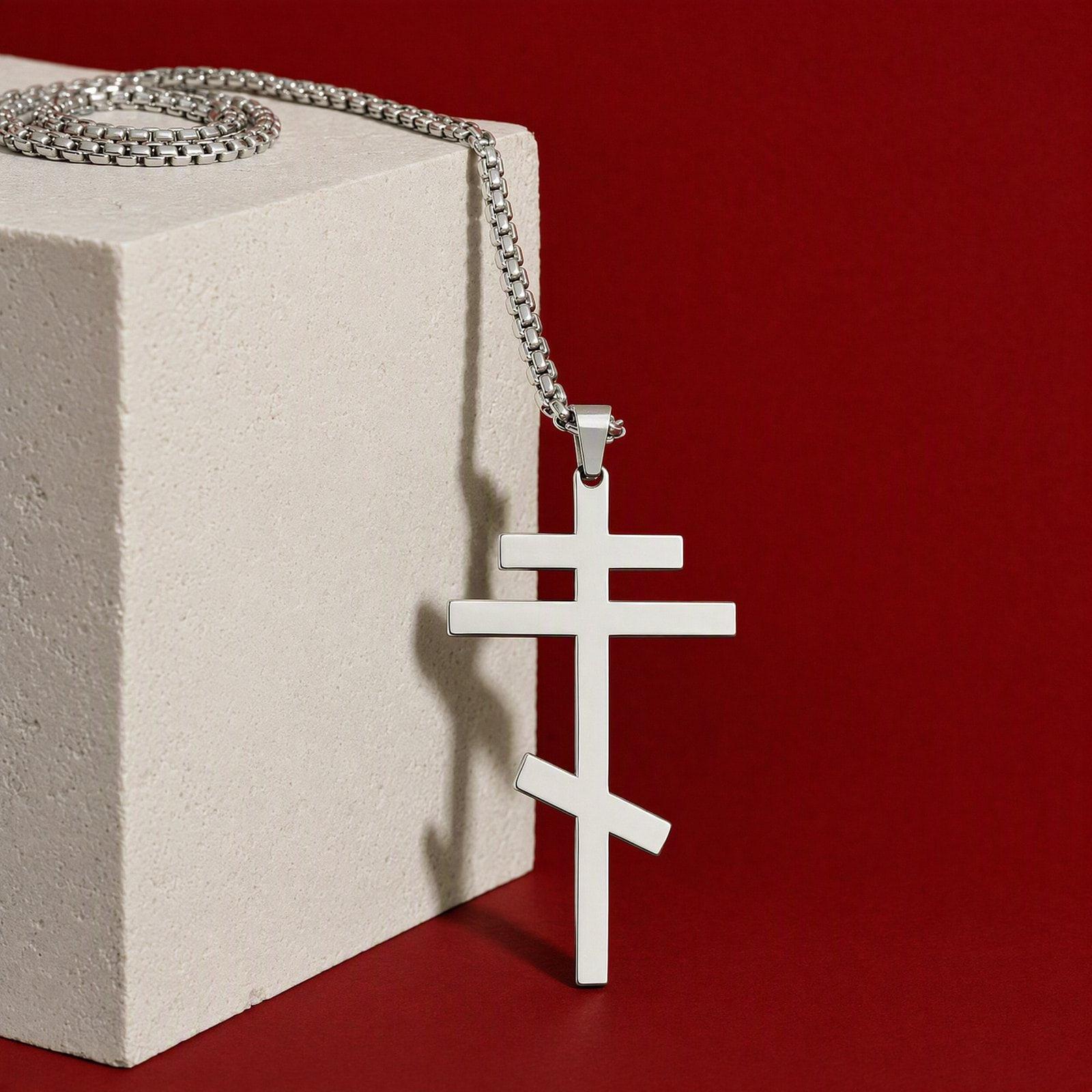
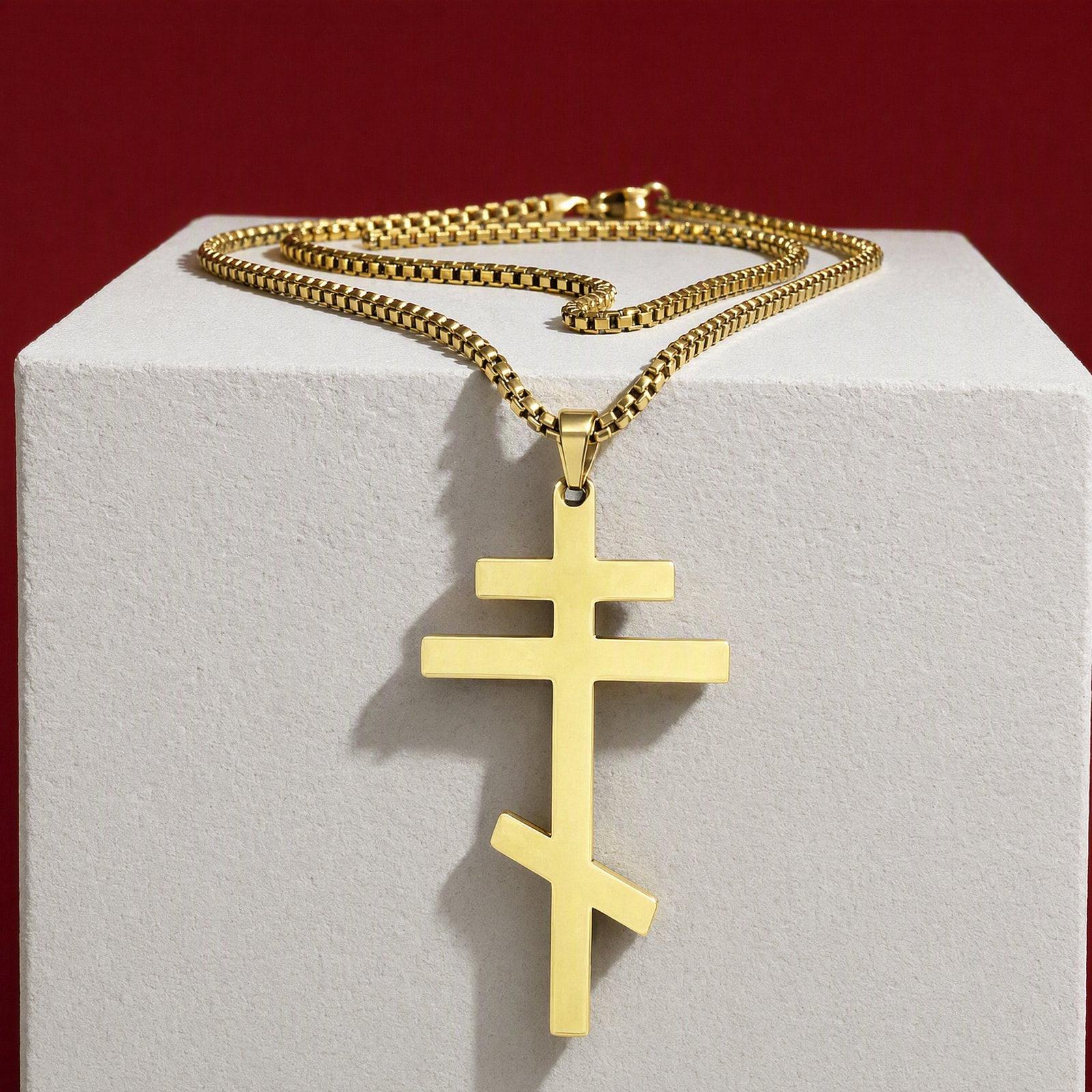
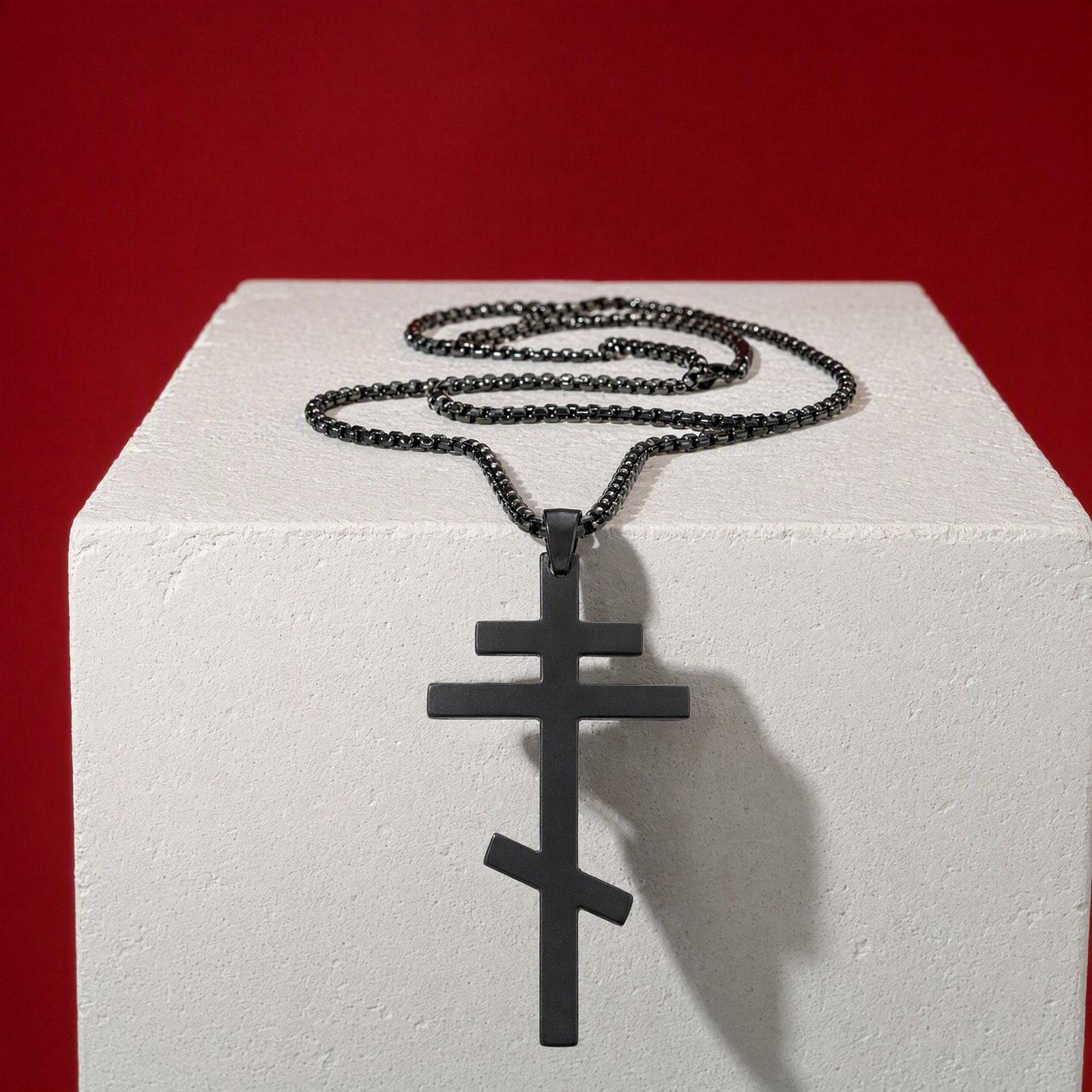
Not in our store todayWe do not carry a Latin cross today. The crosses below are our closest: plain Orthodox three-bar crosses to wear every day.
Wikidata describes the Latin cross as a symbol of Christianity. It gives one other name for it, the crux immissa, and it records that the Latin cross is a different thing from the dagger sign.
Beyond that our source is classification. The Latin cross is filed under the crosses in heraldry, and it is a kind of cross.
We say this plainly because the question is a common one and the record’s answer is brief. That record does not give the proportions of a Latin cross, it supplies no date, and it offers no meaning. It is silent, too, on how any church treats it, so the guide below answers from public sources.
What our source holds, line by line
| Line | Wikidata |
|---|---|
| Described as | a symbol of Christianity |
| Also called | crux immissa |
| Filed under | crosses in heraldry |
| A kind of | cross |
| Not the same as | the dagger sign |
Latin and Orthodox crosses in our catalogue. Lampada does not sell a Latin cross. The crosses we sell are Orthodox crosses, and the one that comes closest in simplicity has three bars and no figure on it. Choose from silver-tone, gold-tone or black.
The Latin cross: what it is and where it comes from
The Latin cross is the cross most Americans picture first: an upright with one crossbar set high, so that the foot is longer than the other three arms. It takes its name from the Latin West, where it became the main sign of the faith.
Early Christians were slow to show the cross openly, because crucifixion was still a punishment of criminals. After Constantine ended crucifixion in the 4th century, the cross came into churches, onto altars and into art, and in the West the long-footed form won out. Churches were built on its plan, with a long nave and two shorter arms, and to this day it stands on steeples, altars and graves across the country.
How it differs from the Orthodox three-bar cross
| Cross | Shape | Where you see it |
|---|---|---|
| Latin cross | One crossbar, a long foot | Catholic and Protestant churches |
| Orthodox three-bar cross | Short top bar, long bar, footrest | Orthodox baptismal crosses |
| Greek cross | Four equal arms | Byzantine churches, Greek parishes |
| Tau cross | T-shaped, no top arm | Franciscans |
The Orthodox three-bar cross adds what the Latin cross leaves out: the title board over Christ’s head and the footrest beneath. On a Latin crucifix the title usually reads INRI and Christ’s feet are crossed and held by one nail; on an Orthodox crucifix the feet rest side by side on the footrest.
The meaning of its parts
- The long upright stands for the beam Christ was nailed to, reaching from earth to heaven.
- The crossbar is where His arms were stretched out, open to the whole world.
- The longer foot is the part of the beam set into the ground of Golgotha.
- The empty cross, with no figure, is read in many churches as a sign of the Resurrection: the cross is empty because Christ is risen.
Who wears a Latin cross necklace
Catholics receive a Latin cross or a crucifix at baptism, first communion and confirmation; Protestants of every church wear a plain Latin cross as a daily sign of faith. Latin cross jewelry is among the most given Christian gifts in the US, from a small gold Latin cross pendant for a girl to a heavier steel cross for a man. Orthodox Christians use it too: Wikipedia lists the Latin cross among the crosses linked with Eastern Orthodox churches.
Two crosses, both Christian
The Latin cross and the Orthodox three-bar cross are both Christian crosses, and nothing in our source asks a Catholic or Protestant reader to choose between them. Wikidata calls the Latin cross a symbol of Christianity, and that is wide enough to hold every reader of this page. The Orthodox cross in our catalogue is plainer in what it shows: three bars, no figure. If a Latin cross is what you wear and an Orthodox cross is what you have been asked to give, the plain one is a modest place to begin.
What we carry instead
We do not stock a Latin cross pendant. Our closest are the plain three-bar Orthodox crosses with no figure, about 2¼ in, each on a 60 cm chain: silver-tone stainless steel ($64), gold-tone stainless steel ($64) and black stainless steel ($64). Read the three-bar cross, explained to see how it differs, and find every piece in our Orthodox cross necklaces. Orders arrive in 5–8 business days: US-based, ships from Florida.
A plain Orthodox cross for a friend of the Church
A gift of the plain cross can carry a Blessing from an Orthodox priest.
ΜΕ ΕΔΡΑ ΣΤΙΣ ΗΠΑ. ΑΠΟΣΤΟΛΗ ΑΠΟ ΤΗ ΦΛΟΡΙΝΤΑ
Delivery in 5–8 business days.
Want us to stock it?
We don't carry a Latin cross today. Leave your email and we will write once if we stock it.
Questions
What does the Latin cross mean?
Wikidata calls it a symbol of Christianity. Our source gives no meaning beyond that, but Christian teaching reads its long upright and shorter crossbar as the cross Christ died on, and the empty Latin cross as a sign that He rose again.
What is the crux immissa?
It is another name for the Latin cross, as our source has it. In Latin it means an inserted cross, since the upright runs through the crossbar and rises above it, unlike the T-shaped crux commissa, which is the tau cross.
Is the Latin cross the same as a dagger sign?
No. Wikidata marks the Latin cross as different from the dagger sign.
Does Lampada sell a Latin cross necklace?
No. We keep to Orthodox crosses, the plainest of which has three bars.
Is the Latin cross Catholic or Protestant?
Both. It is the main cross of Western Christianity, worn by Catholics, Lutherans, Anglicans, Baptists and most other churches of the West. Catholics often wear it as a crucifix, with Christ on it, while many Protestants prefer the empty cross. Eastern Orthodox churches use it too, beside the three-bar cross.
What should I look for in a Latin cross necklace?
Decide first between a plain Latin cross and a crucifix, then the metal and the size. A small pendant on an 18 inch chain sits at the collarbone; a larger one on a longer chain sits lower and suits men. Gold, silver and steel are all common, and a plain cross wears well every day.