Greek Orthodox wedding crowns: what the stefana mean and how to choose them
Not in our store todayWe do not carry Greek Orthodox wedding crowns (stefana) today. Below: what the crowns mean, how to choose them wherever you buy them, and the wedding icons we carry.
Greek Orthodox wedding crowns, the stefana, are two light crowns joined by a ribbon that are placed on the heads of the bride and groom during the service of crowning. The priest blesses them, and the sponsor, the koumbaros or koumbara, exchanges them three times over the couple’s heads. They are a sign of the glory and honor God gives the new family, and of the self-giving love marriage asks for.
We do not sell wedding crowns today. This page explains what to look for in stefana wherever you buy them, and shows the wedding icons we carry for the couple’s new home.
The crowns in a Greek Orthodox wedding
The Orthodox wedding is called the service of crowning, because the crowns are its central moment. A Greek Orthodox wedding begins with the betrothal, when the rings are blessed and exchanged. Then the couple stands before a small table holding the Gospel, the cup and the crowns.
The priest blesses the stefana and crowns the groom and then the bride, in the name of the Father, the Son and the Holy Spirit. The koumbaros or koumbara, the couple’s sponsor, then crosses the crowns between their heads three times. After the Epistle and Gospel, the couple shares a common cup of wine, and the priest leads them three times around the table while the hymns are sung, a procession many call the Dance of Isaiah. At the end the crowns are taken off and the priest prays that God will receive their crowns in His kingdom.
What the stefana mean
The crowns carry three meanings that the service itself sings about:
- Glory and honor. The couple is crowned as the king and queen of a new household, a small kingdom where God is to be at the center.
- Martyrdom. In the Church a crown is also the reward of the martyrs. Marriage asks each spouse to lay down their life for the other, day after day.
- Unity. The two crowns are joined by a single ribbon. They are made as a pair and are never separated.
That is why stefana are kept for life and treated with care, as something closer to an icon than to a piece of jewelry.
How to choose stefana
Wherever you buy them, a few practical points decide whether the crowns look right and sit well for an hour-long service.
| What to check | Why it matters |
|---|---|
| Weight | The crowns rest on the head or are held above it; light crowns stay put and do not tire the sponsor |
| Fit | Most stefana are one size on a flexible band; check that they suit the bride’s hairstyle and veil |
| Ribbon | Long enough to join the crowns comfortably, in a color that matches the wedding |
| Material | Metal, fabric, pearls, crystal or porcelain flowers; match the style of the dress and the church |
| The case | A stefanothiki to keep them in after the wedding; buy it with the crowns so the size matches |
Ask your priest before you buy. Some parishes have customs about what crowns may be used, and in some Orthodox churches the parish crowns are used instead of the couple’s own.
Who buys the crowns, and what the sponsor brings
By Greek custom the koumbaros or koumbara provides the stefana and exchanges them in the service. Many sponsors also bring the wedding candles (lambades) that stand or are held beside the couple and the koufeta, the sugared almonds given to guests. Customs vary between families and regions, so the couple and the sponsor usually decide together.
If you are the sponsor and the crowns are already chosen, an icon for the couple’s first prayer corner is a gift they will keep beside the stefana for decades. See our wedding and anniversary gifts and gifts for a couple.
After the wedding: keeping the crowns
After the service the couple takes the crowns home. Most keep them in a stefanothiki, a shallow glass-fronted case that hangs on the wall or stands on a shelf. It often hangs near the family icons or above the bed. The ribbon stays tied, so the two crowns stay together.
The icon corner is the natural place for the case. If the couple is setting one up for the first time, our guide on how to set up an icon corner explains where the icons, the lamp and the candles go, and the candle holders guide covers the candles.
What we carry for a wedding
We do not carry wedding crowns today. These are our closest items, chosen for an Orthodox couple’s new home:
- Sts Peter and Fevronia with a dove, framed icon, 21.5 x 25 cm ($74): the saints Orthodox couples ask to pray for a faithful, lasting marriage, in a gold-tone patterned frame. A small version, 12.5 x 14.5 cm ($29), suits a shelf or a card. Read about Sts Peter and Fevronia.
- Christ and Theotokos icon set, Hagia Sophia ($64): Christ and His Mother from the mosaics of the great church of Constantinople, a first pair for the prayer corner.
- Christ Pantocrator and Our Lady of Kazan folding diptych ($94): two icons under glass in pine frames that fold shut, for a newly married couple’s home or for travel.
- Wedding pair of hand-painted icons, Kazan and the Saviour, 15 x 20 cm ($1,819): painted by hand on cypress, each in a carved ash case with glass, with a numbered certificate.
- Beeswax candle gift set, one pound ($129): about 32 tapers and two brass holders, one candle for each spouse at evening prayer.
Orders arrive in 5–8 business days: US-based, ships from Florida.
Our closest items
Wedding icons for the couple’s first prayer corner, from a small icon of Sts Peter and Fevronia to a hand-painted pair, and a beeswax candle set with two brass holders. Each card shows its live price.
 Εικόνα
Ορθόδοξη εικόνα Αγίων Πέτρου και Φεβρωνίας με περιστέρι
Με κορνίζα 21.5x25 cm$106$74 Εικόνα
Ορθόδοξοι Άγιοι Πέτρος και Φεβρωνία με Περιστέρι
Μικρή Κορνιζαρισμένη Εικόνα 12.5x14.5 cm$42$29 Εικόνα
Ορθόδοξο Σετ Εικόνων Χριστού και Θεοτόκου
Αγία Σοφία$92$64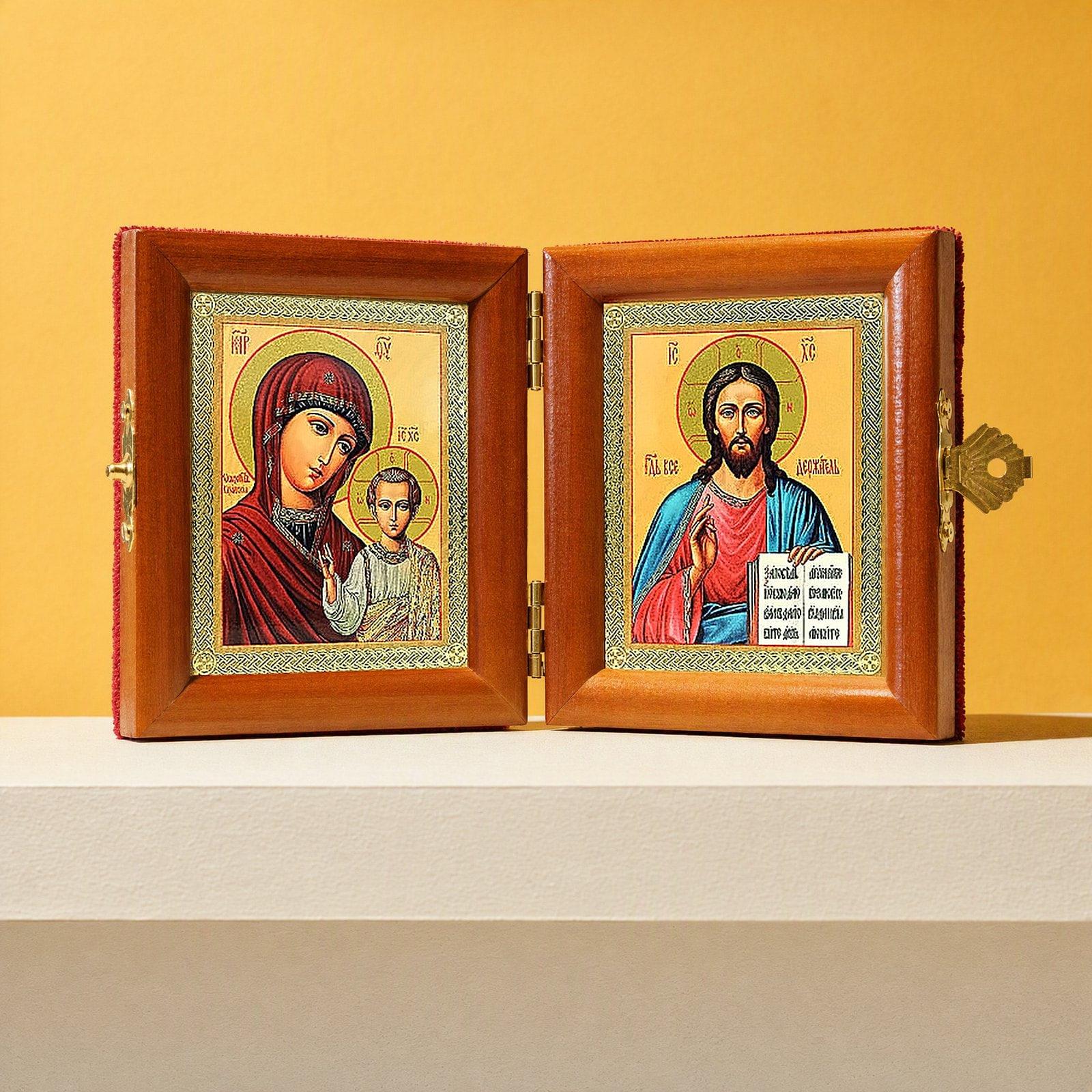 Δίπτυχο
: Ιησούς Χριστός ο Παντοκράτωρ & Θεοτόκος του Καζάν
$135$94 Εικόνα
Ορθόδοξο Ζεύγος Χειροποίητων Εικόνων Γάμου
Θεοτόκος του Καζάν και Σωτήρας 15x20 cm$2,599$1,819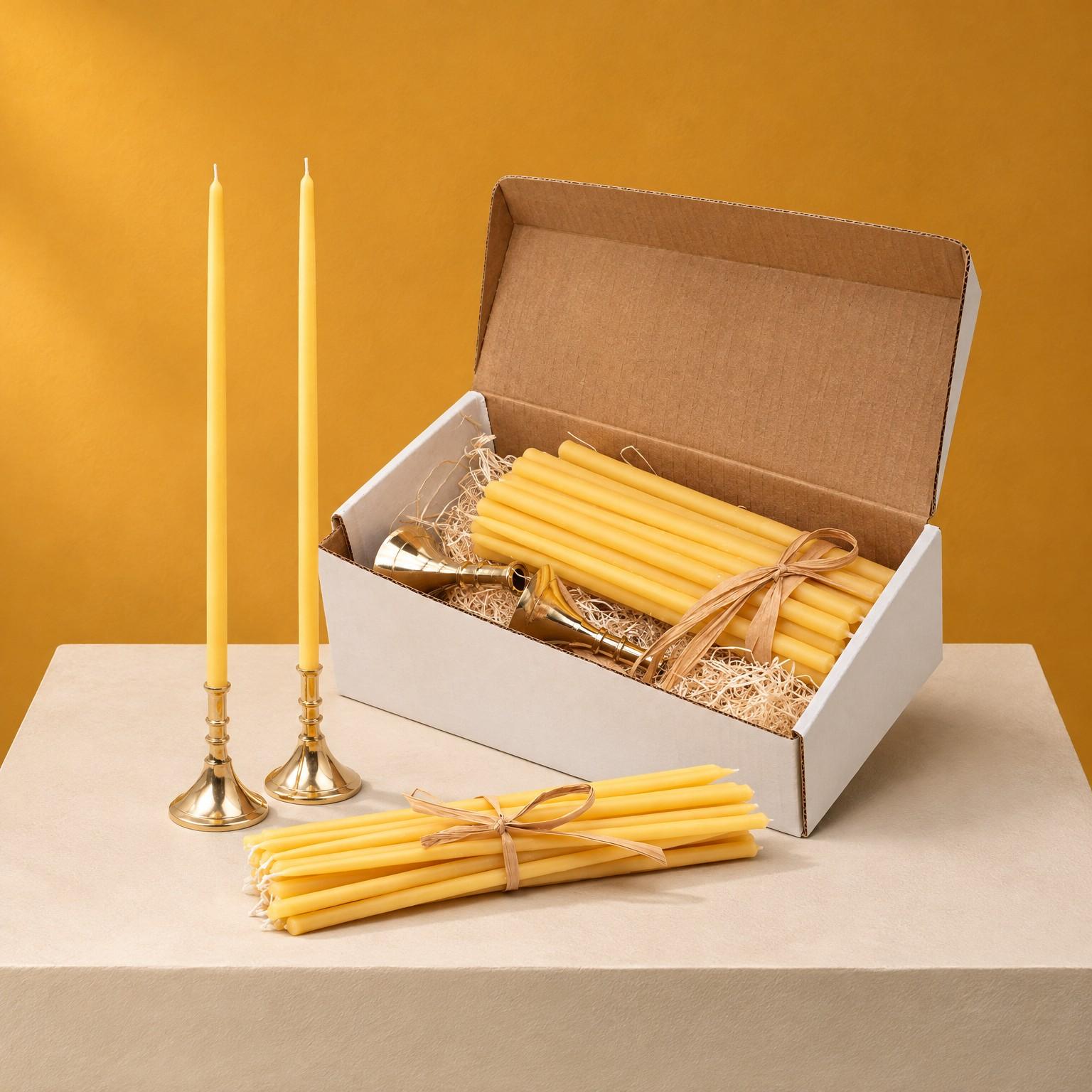 Εικονοστάσι
Ορθόδοξο Σετ Δώρου με Κεριά από Μελισσοκέρι
1 λίβρα$185$129
ΜΕ ΕΔΡΑ ΣΤΙΣ ΗΠΑ. ΑΠΟΣΤΟΛΗ ΑΠΟ ΤΗ ΦΛΟΡΙΝΤΑ
Delivery in 5–8 business days.
Want us to stock it?
We don't carry Greek Orthodox wedding crowns today. Leave your email and we will write once if we stock it.
Questions
Do you sell Greek Orthodox wedding crowns?
Not today. We carry wedding icons for the couple’s home, such as Sts Peter and Fevronia and pairs of Christ and the Mother of God. Leave your email on this page and we will write once if we stock stefana.
What do the wedding crowns mean in a Greek Orthodox wedding?
They crown the bride and groom as king and queen of a new household, given glory and honor by God. They also recall the crowns of the martyrs, because marriage asks each spouse to give their life for the other. The ribbon joining them is a sign of unity.
Who buys the stefana?
By Greek custom the koumbaros or koumbara, the sponsor who stands with the couple, provides the crowns and exchanges them during the service. Families differ, so the couple and the sponsor usually agree on the style together.
Why are the crowns exchanged three times?
The sponsor crosses the crowns between the bride’s and the groom’s heads three times in the name of the Holy Trinity, as the priest says the words of crowning. Many acts in Orthodox services are done three times for the same reason.
What do you do with the stefana after the wedding?
Couples keep them at home, most often in a stefanothiki, a glass-fronted case that hangs on the wall or stands on a shelf, near the family icons or in the bedroom. They are kept for life as a memory of the sacrament.
Do all Orthodox churches use stefana?
Every Orthodox wedding is a service of crowning, but the crowns differ. Greek weddings use light stefana joined by a ribbon, worn on the head. In many other Orthodox churches the parish’s own metal crowns are held above the couple’s heads.
What is a good Orthodox wedding gift if not crowns?
A pair of icons of Christ and the Mother of God for the couple’s first prayer corner is the classic choice, or an icon of Sts Peter and Fevronia, honored as patrons of marriage. Candles and a lamp for the corner complete the gift.