Komboskini: the Greek Orthodox prayer rope and how it is used
A komboskini is the Greek Orthodox prayer rope: a loop of knotted wool, most often black, with a cross and usually a tassel. The name joins two Greek words, kombos, a knot, and schoini, a rope. On each knot the person praying says the Jesus Prayer, “Lord Jesus Christ, Son of God, have mercy on me,” so the rope keeps count of the prayers.
In Greece it is common to see a small komboskini on a wrist, a longer one in a pocket, and many on the stalls outside monasteries. Below: the knot and the story behind it, how Greek Christians wear and pray with it, colors and sizes, care, and the wool komboskini we carry.
The komboskini knot and its story
The komboskini knot is not a plain knot. It is tied in a pattern that weaves a small cross into the knot itself, often several crosses in one knot, so that each one is firm, round and hard to undo.
Tradition credits St Pachomius, the 4th-century founder of communal monastic life in Egypt, with the knotted rope. A story told on Mount Athos explains its knot: a monk tied simple knots to count his prayers, but the devil untied them each night; an angel then taught him to tie a knot of crosses, which the devil could not undo. Orthodox writers tell it as a story, not a record. Its meaning is simple: on a komboskini, every knot is a cross.
How Greek Orthodox Christians use the komboskini
The komboskini prayer is first of all the Jesus Prayer, repeated slowly, knot by knot. Many Greeks also use it for other short prayers:
- “Most Holy Theotokos, save us.”
- “Lord Jesus Christ, have mercy on” a person, by name, one knot for each person they pray for.
- “Through the prayers of our holy fathers, Lord Jesus Christ our God, have mercy on us.”
Some pray a set number of knots each evening before the icons, given to them as a rule by a priest or spiritual father. Others use the rope through the day, on a bus, in a waiting room, in a line. Prostrations at each knot belong mostly to monastics and to Great Lent.
Sizes, colors and beads
| Knots | Where you see it |
|---|---|
| 33 | On the wrist, a favorite with lay people in Greece |
| 50 | In a pocket, or wrapped on the wrist |
| 100 | The usual length for a rule of prayer at home |
| 300 | In monasteries, folded in loops in the hand |
Black wool is the classic; lay people also choose white, red, blue or a mix of colors. A few beads divide the knots into groups, and a woven cross closes the loop. A tassel hangs from the cross; one explanation handed down is that it was used to dry tears during prayer.
Komboskini and the cross you wear
Searches for a komboskini cross necklace usually come from people who want both: the rope for prayer and a cross to wear. In Greek custom they are two things. The baptismal cross is worn on a chain at the neck, often a plain Greek Orthodox cross, and the komboskini goes on the wrist or in a pocket. If you do wear a short rope at the neck, keep it under your clothes, as Orthodox Christians do with the cross.
Care and keeping
Wool knots last for years if you keep them dry and away from pets, who love to chew them. Rinse a soiled rope by hand in cool water and let it dry flat; never use a dryer. A rope that has worn out is not thrown in the trash: by custom it is burned and the ash buried, or it is given back to a church. Keep a spare rope in the car or a bag so the prayer is never far away. More help is in our prayer rope guide.
The komboskini we carry
Our ropes are black wool and carry no claim of where they were tied. The 50-knot rope ($34) has dividing beads and a tassel, a good first Greek prayer rope for the wrist or a pocket. The 100-knot rope ($79) has a cross knot, small red beads between the knots and a tassel, for a longer rule at home.
The Prayer Corner Starter Kit ($109) includes a 50-knot rope with three small icons, and the Orthodox Lent Prayer Set ($239) pairs a rope with a crucifix and a prayer booklet. For the prayers themselves, the Orthodox Christian prayer book ($74) is in modern English. Compare every kind in our prayer ropes guide, or the Slavic chotki. Orders arrive in 5–8 business days: US-based, ships from Florida.
Our komboskini
Two black wool ropes of 50 and 100 knots, a prayer corner kit and a Lent set that each hold one, and a full-color prayer book. Each card shows its live price.
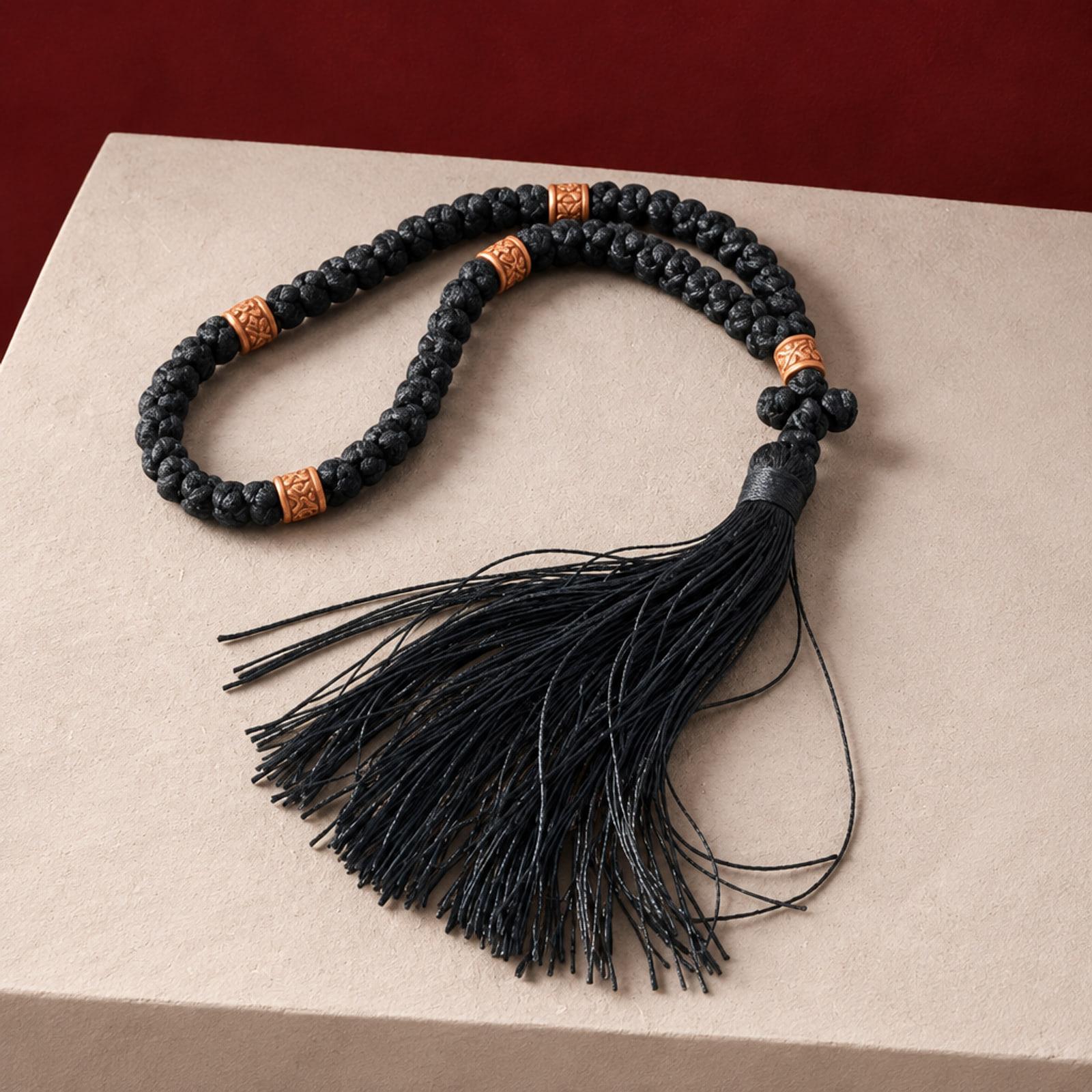 Κομποσχοίνι
Ορθόδοξο μάλλινο κομποσχοίνι 50 κόμπων
Μαύρο χρώμα$49$34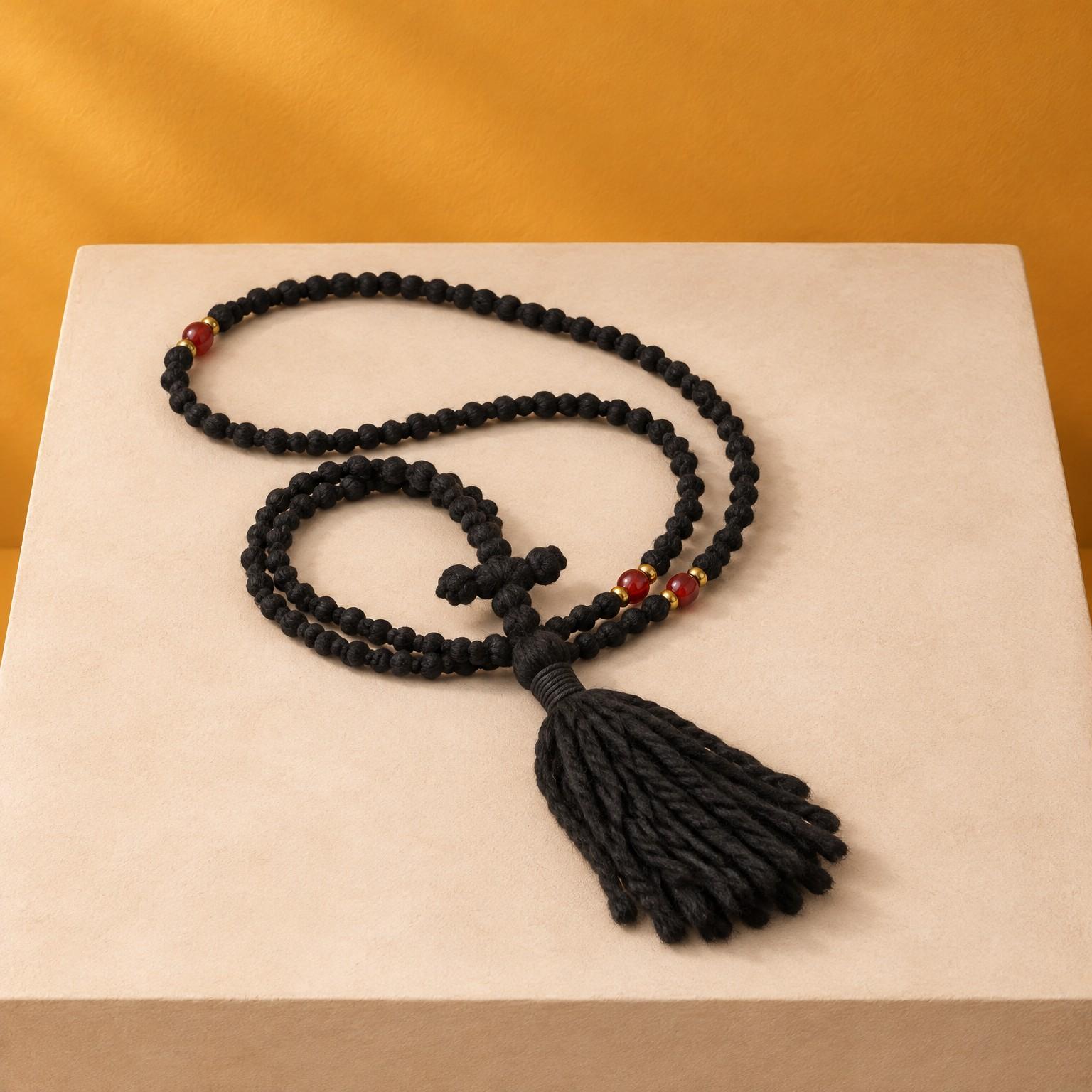 Κομποσχοίνι
Ορθόδοξο κομποσχοίνι
Μαύρο · Μάλλινο με 100 κόμπους και φούντα$113$79 Εικονοστάσι
Ορθόδοξο Σετ Έναρξης Γωνιάς Προσευχής
Κάρτες Εικόνων, Κομποσχοίνι, Κερί$156$109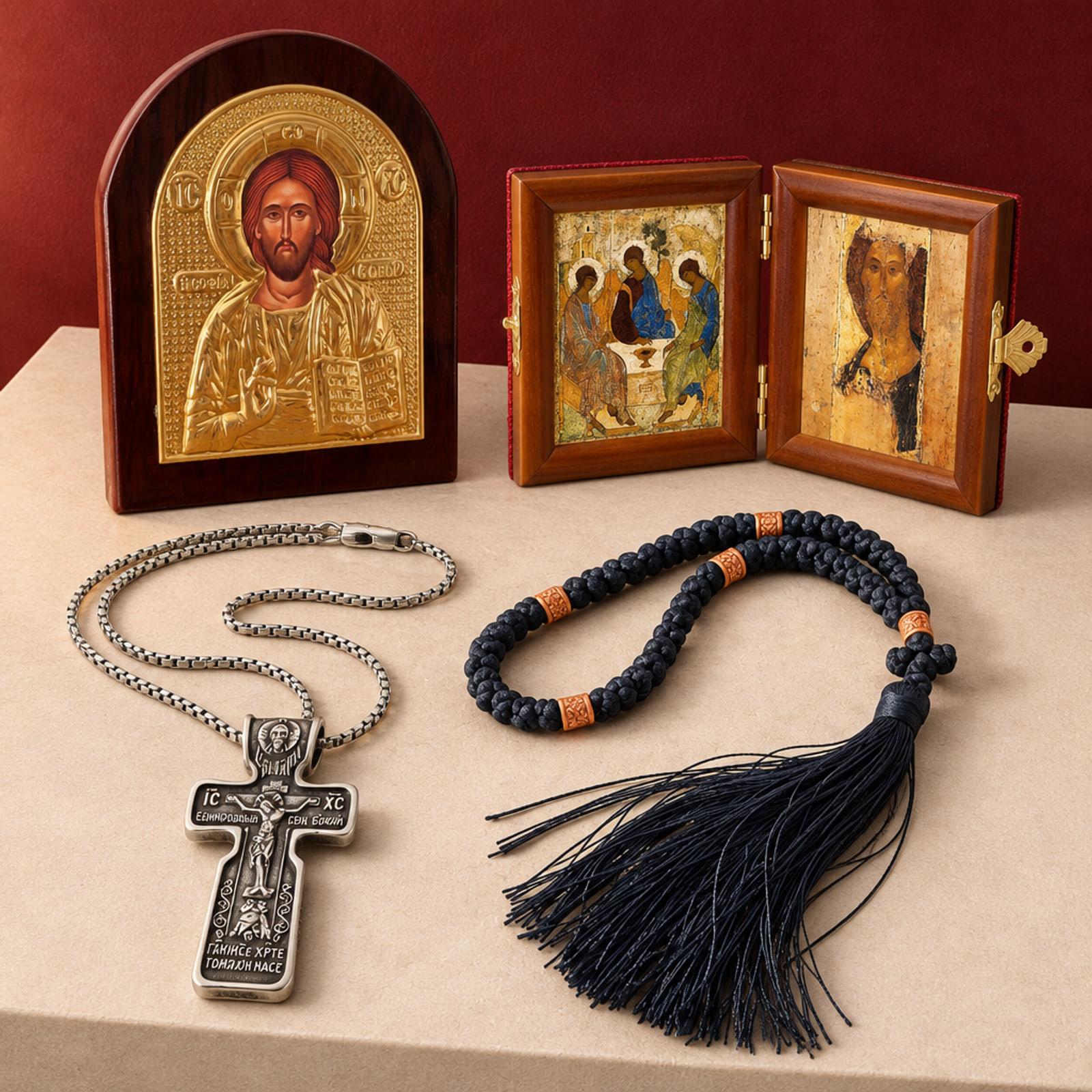 Σετ δώρου
Σετ προσευχής Μεγάλης Τεσσαρακοστής
$342$239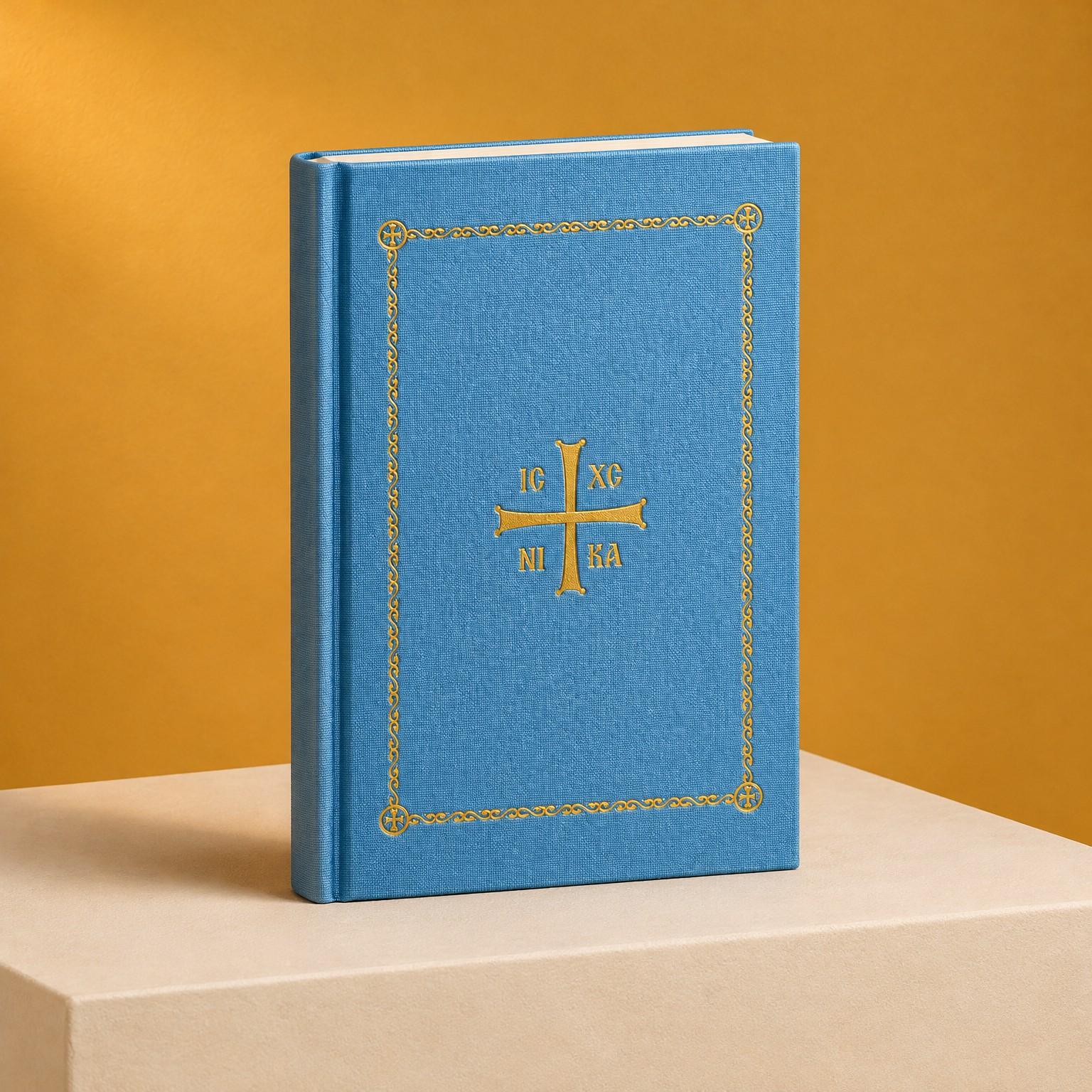 Βιβλίο ή κάρτες
Ορθόδοξο Χριστιανικό Προσευχητάριο
4x6 in με Χρυσά Γράμματα$106$74
ΜΕ ΕΔΡΑ ΣΤΙΣ ΗΠΑ. ΑΠΟΣΤΟΛΗ ΑΠΟ ΤΗ ΦΛΟΡΙΝΤΑ
Delivery in 5–8 business days.
Questions
What does komboskini mean?
It is Greek for knotted rope: kombos means knot and schoini means rope. Greek-speaking Orthodox Christians use the word for the prayer rope. Slavic Orthodox call the same rope a chotki, and English speakers simply say prayer rope.
How do you pray with a komboskini?
Hold it at the cross, make the sign of the cross, then say the Jesus Prayer once on each knot as you pass it through your fingers. Many Greeks also pray “Most Holy Theotokos, save us” on the beads or at the end.
Can anyone wear a komboskini?
Yes. A komboskini is worn by Orthodox Christians of every age, and by other Christians who pray the Jesus Prayer. What matters is that it is used for prayer. A small one on the wrist reminds you to pray through the day.
Why is a komboskini black?
Black is the color of monastic dress and of sorrow for sin, and monks tied the first ropes. Lay people use other colors too. White, red and blue ropes are common, especially for children, and a few colored beads are often added.
Is a komboskini a necklace?
Not usually. It is meant for the hand, the wrist or the pocket. Some people wear a short komboskini with a small cross around the neck, but the common Greek custom is the wrist or the pocket, with the cross worn separately.
How do I clean a wool komboskini?
Rinse it by hand in cool water with a drop of mild soap, squeeze it gently in a towel and let it dry flat, away from a heater. Never wring or tumble dry it, or the knots can loosen.