Holy oil: what it is, how Orthodox Christians use it, and our lamps
Not in our store todayWe do not carry holy oil today. Below: the kinds of holy oil and how they are used, and the icon lamps we carry.
Holy oil is oil the Church has blessed for prayer. In the Orthodox Church it usually means one of four things: oil taken from the lamp before a holy icon or a saint’s relics, oil blessed at the service of Holy Unction, oil blessed at the Vigil of a feast and used to anoint the faithful, or the holy chrism of Chrismation. Blessed oil is received from a church or a priest; it is not a product you choose off a shelf.
We do not carry holy oil today. Below: each kind of holy oil and how it is used, how to keep blessed oil at home, the plain oil that fuels an icon lamp, and the lamps we carry.
The kinds of holy oil
| Kind | Where it comes from | How it is used |
|---|---|---|
| Oil from an icon lamp or a shrine | Taken from the lamp before a much-loved icon or a saint’s relics, often given to pilgrims in small bottles | The faithful anoint the forehead in the sign of the cross with a prayer to that saint |
| Oil of Holy Unction | Blessed by priests at the service of Holy Unction | The sick, and in Holy Week all the faithful, are anointed for the forgiveness of sins and the health of soul and body |
| Oil of the Vigil | Blessed with bread, wheat and wine at the Vigil of a feast | In many parishes the priest anoints each person’s forehead with it at Matins |
| Oil of gladness | Blessed by the priest at a baptism | The person is anointed just before being baptized |
| Holy chrism | Prepared rarely by the heads of the Churches, with many fragrant ingredients | Used at Chrismation, right after baptism; see what Chrismation is |
Only a priest or bishop blesses oil; see what a blessing is. What a lay person does with blessed oil is pray with it.
Holy Unction and the oil of the sick
The Letter of James tells anyone who is sick to call the elders of the Church, who pray over him and anoint him with oil in the name of the Lord (James 5:14). The Orthodox Church keeps this as the sacrament of Holy Unction. Traditionally seven priests serve it, though fewer often do. There are seven readings from the Epistles and the Gospels, and the priest anoints the forehead, the face, the chest and the hands.
A priest brings Holy Unction to the sick at home or in the hospital. In many parishes it is also served for everyone on Holy Wednesday, and families take a little of that oil home. A prayer for the sick is often said at home while the person is anointed again in the days after.
Keeping blessed oil at home
- Keep it in the icon corner, in a small glass bottle with a tight cap, labeled with where and when it was blessed.
- Use it with prayer. Dip a finger or a cotton swab, make the sign of the cross on the forehead, and say a short prayer. Families do this for a child before an exam, for someone unwell, or on the evening of a feast.
- Keep it from children’s hands and away from heat; olive oil turns rancid over time in sun and warmth.
- When it is old, burn it in your icon lamp or bring it back to the church. Blessed oil is never poured down a drain.
Oil for the icon lamp
The oil that fuels an icon lamp is usually plain olive oil, the oil the Old Testament names for the lamp of the tabernacle. It does not need to be blessed to burn before the icons, though many families add a few drops of blessed oil to the lamp on feast days. Some use a refined lamp oil sold for indoor lamps instead; follow its maker’s directions, and never use a fuel made for outdoor torches.
A floating wick sits on the oil in a cork or metal float. Keep the flame small and steady, and see our lampada guide for how to set up the glass, the water, the oil and the wick, and how to keep a lamp safe.
What we carry instead
We do not carry holy oil, because blessed oil comes from a church. We carry what it burns in:
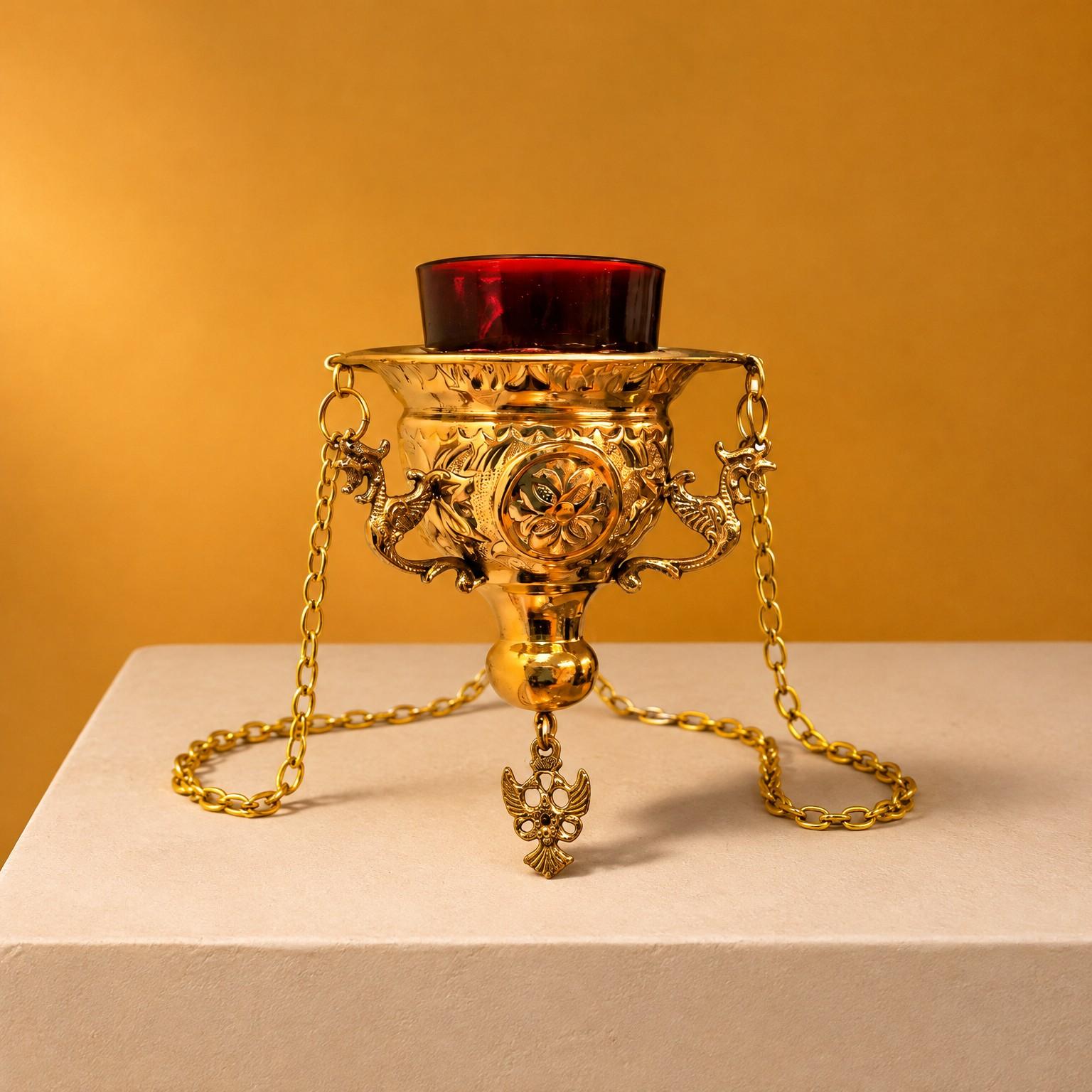
- Hanging vigil lamp, brass and glass ($249): 4.5 in across, on a chain of about 14 in, with a removable glass cup.
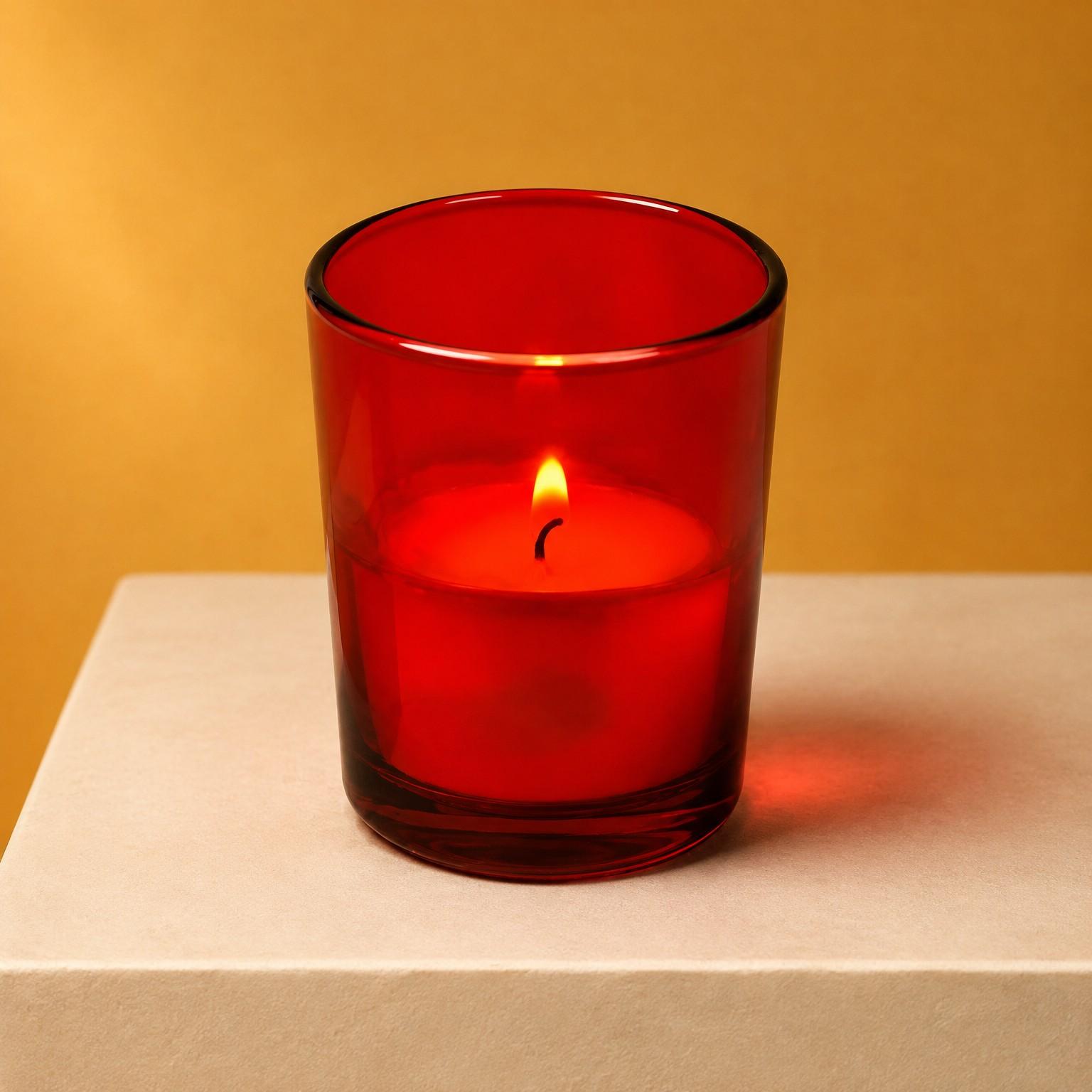
- Red votive lamp ($19): a small red glass cup that takes a tea light, or a wick and olive oil.
For the corner where the lamp and the blessed oil live, see our icon corner guide. Orders arrive in 5–8 business days: US-based, ships from Florida.
Our closest items
Icon lamps that burn olive oil, but not the blessed oil itself. Each card shows its live price.
ΜΕ ΕΔΡΑ ΣΤΙΣ ΗΠΑ. ΑΠΟΣΤΟΛΗ ΑΠΟ ΤΗ ΦΛΟΡΙΝΤΑ
Delivery in 5–8 business days.
Want us to stock it?
We don't carry holy oil today. Leave your email and we will write once if we stock it.
Questions
What is holy oil used for?
Orthodox Christians anoint the forehead with it in the sign of the cross while they pray, above all in times of sickness or trouble, and a priest anoints the faithful with blessed oil at Holy Unction and at the Vigil of feasts. It is always used with prayer, never as a charm.
Is holy oil the same as anointing oil?
Anointing oil is a broad name many churches use. In the Orthodox Church the oil used to anoint people is olive oil blessed by a priest with set prayers, at Holy Unction, at a feast’s Vigil, or before a baptism. Holy chrism is a separate, fragrant oil kept for Chrismation.
Can I bless oil myself?
No. In the Orthodox Church a priest blesses the oil with the Church’s prayers. Anyone may pray with blessed oil at home, and many families ask their priest to bless a small bottle of olive oil for the family’s use.
What is Holy Unction?
It is the sacrament of anointing the sick, based on the Letter of James. Seven readings from the Epistles and the Gospels are read and the person is anointed. Many parishes serve it for all the faithful on the Wednesday of Holy Week.
Do you sell holy oil?
Not today. We carry icon lamps, but no blessed oil. Ask your parish priest for holy oil. Leave your email on this page and we will write once if we stock it.
What should I do with old holy oil?
Never pour it down the drain. Most people burn what is left in their icon lamp, or bring it to the church. If a bottle has gone cloudy or rancid, ask your priest what your parish does with it.