Enamel religious medals: how to choose one, and how to care for it
Enamel religious medals are medals of the Virgin Mary, Christ or a saint with color fused or set into the metal, worn as a sign of faith. The most searched is the “Miraculous Medal” of the Virgin Mary in blue enamel, a favorite for girls, First Communion and confirmation. True enamel is glass melted onto metal at high heat; many low-cost medals use a colored epoxy instead, which looks alike when new.
We do not carry enamel medals; we carry crucifixes with Christ over red and black enamel. Below: how to tell the kinds apart, care, and our enamel crosses.
What enamel religious medals are
Enamel is powdered glass fused onto metal at high heat. Goldsmiths have colored sacred objects this way for well over a thousand years; Byzantine artists were famous for cloisonné, where thin wires form little cells that hold each color. A modern enamel medal is a gold, silver or base-metal medal with fired color in the image or the background.
| Method | How it is made | What you see |
|---|---|---|
| Cloisonné | Wires soldered to the face form cells for each color | Fine metal outlines between colors |
| Champlevé | Hollows are cut or cast into the metal and filled | Color set into the metal, raised metal lines |
| Painted enamel | Enamel painted onto the surface and fired | Soft shading, often on older pieces |
| Epoxy (cold enamel) | Colored resin set without heat | Glossy, lighter, scratches more easily |
The blue Marian medal
The most loved enamel medal is the “Miraculous Medal” of the Virgin Mary with a blue enamel background, from the visions St Catherine Labouré reported in Paris in 1830: Mary with rays from her hands on the front, an M, a cross and two hearts on the back. It is given for baptisms, First Communions, confirmations and to brides. For the main kinds of Marian medal, read our Virgin Mary medal guide.
What to look for in an enamel medal
| What to check | What it tells you |
|---|---|
| Fired or epoxy | Ask the seller; fired enamel is harder, with a deeper, glassy shine |
| Edges | Color should meet the metal cleanly, with no gaps or chips |
| Metal | Sterling silver, karat gold or a base metal under the color |
| Size | 0.5 to 0.75 in (12 to 20 mm) for a girl or a woman |
| Care | Keep it from knocks, chlorine and ultrasonic cleaners |
For karat gold and sterling silver medals, see our guides to 14k gold religious medals and the silver medal necklace.
Orthodox enamel crosses
Enamel is common on Orthodox crosses, in the Byzantine tradition of colored metalwork: blue, red, black or green behind the figure of Christ or around the letters IC XC NIKA. Orthodox Christians wear the cross first; a medal, if worn, goes beside it. See enamel crucifixes and the Byzantine cross.
Wearing a medal with or instead of a cross
In Orthodox custom the baptismal cross is never replaced by a medal; a medal is worn beside it, on the same chain or a second one. An enamel cross and a plain medal of the same tone make a balanced pair.
What we carry
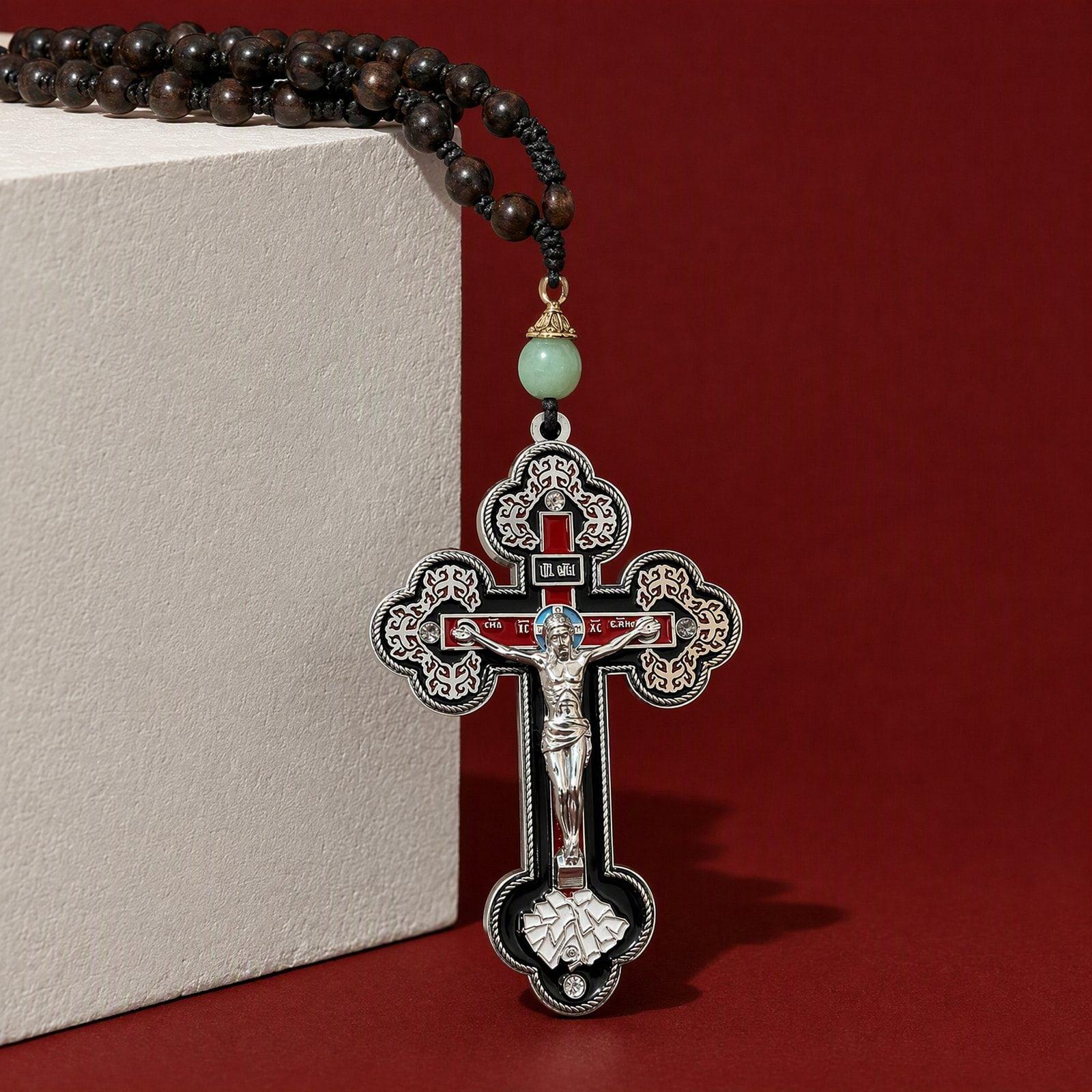
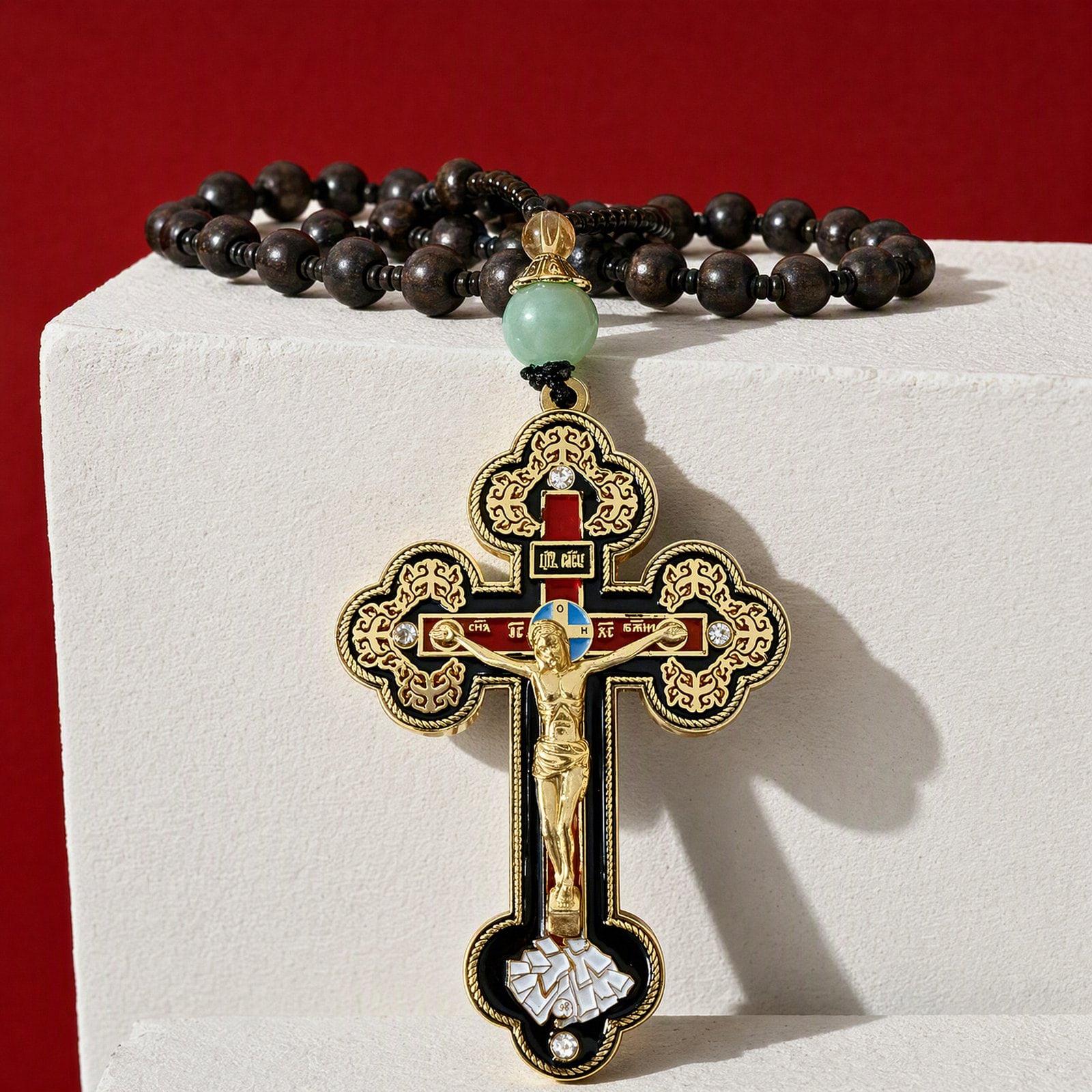
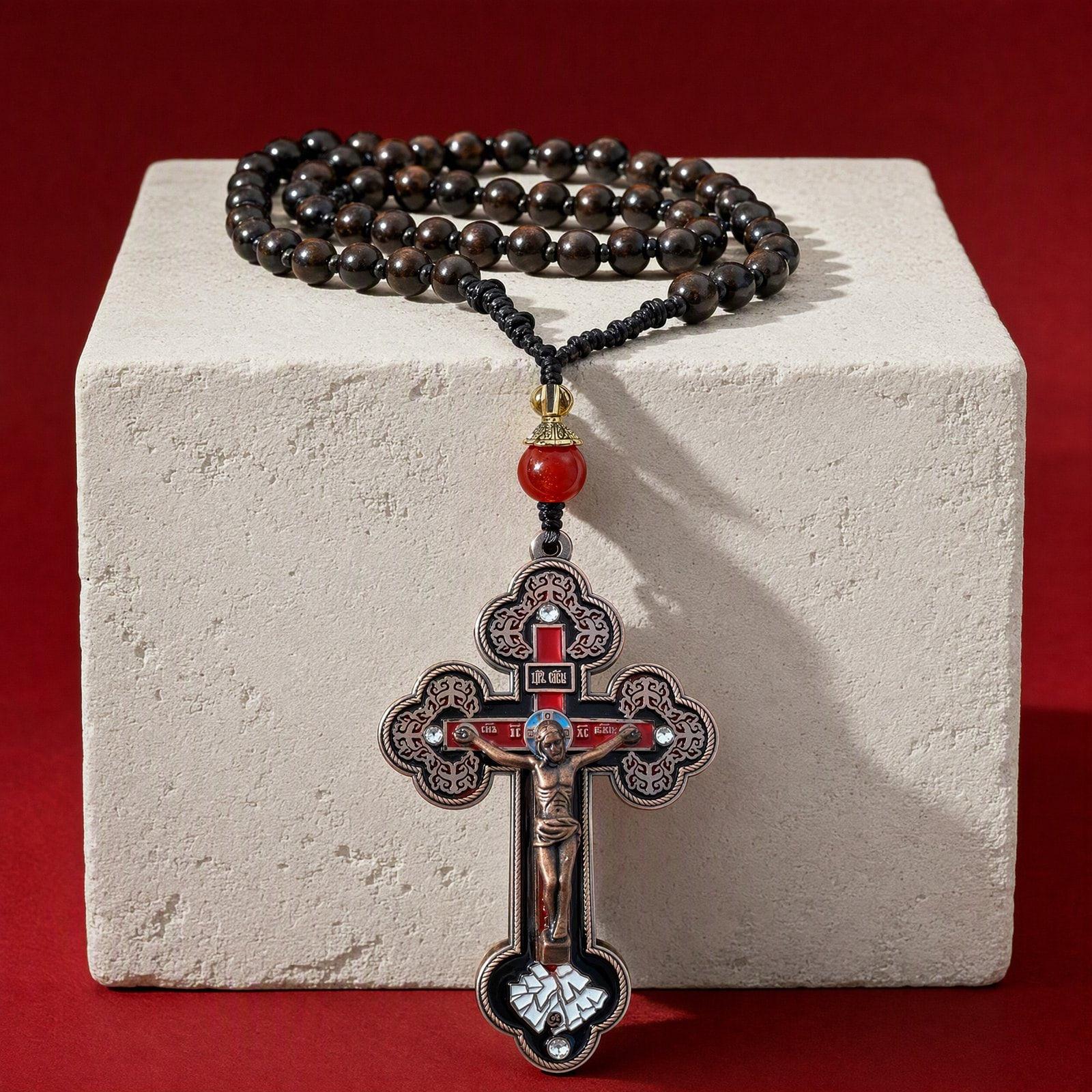
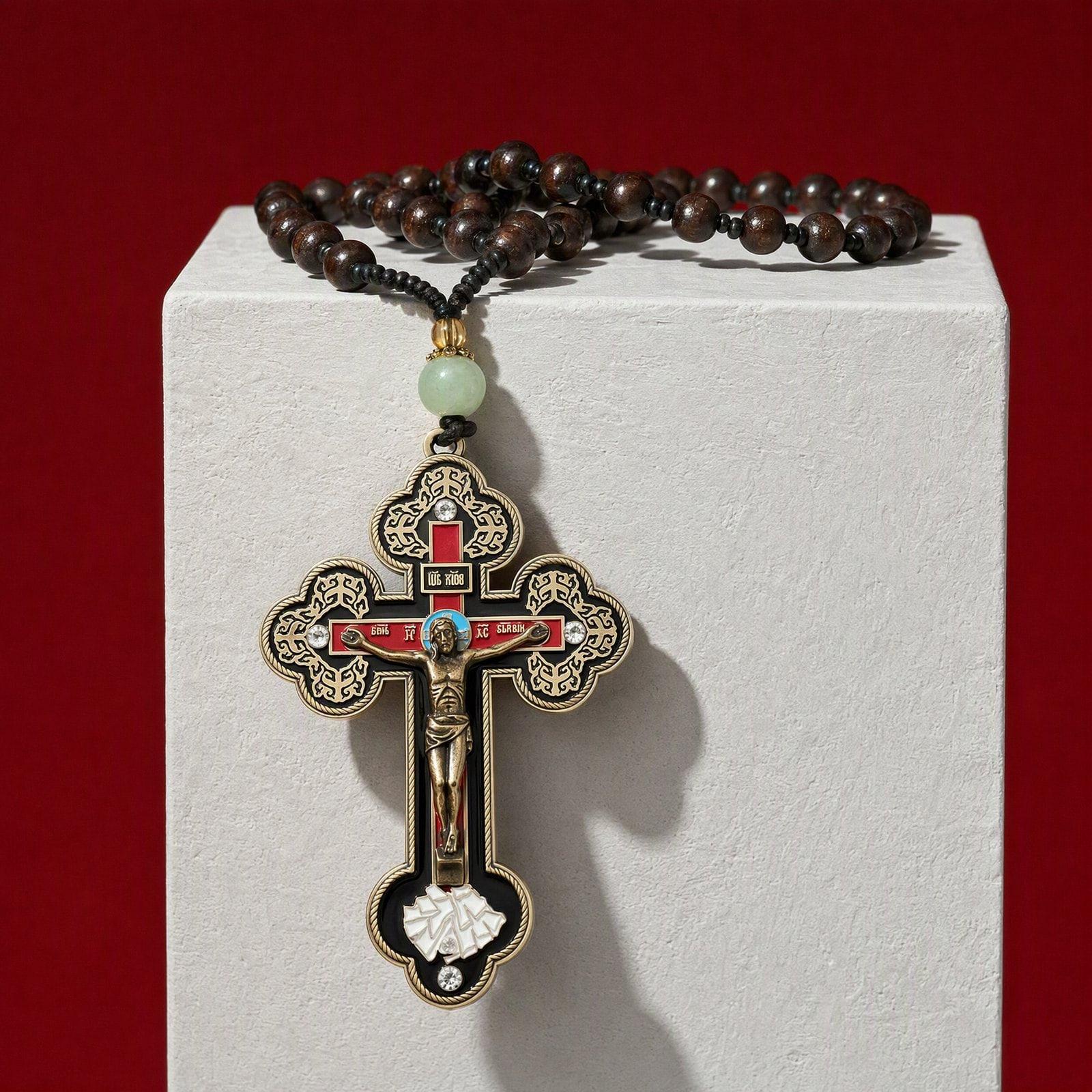
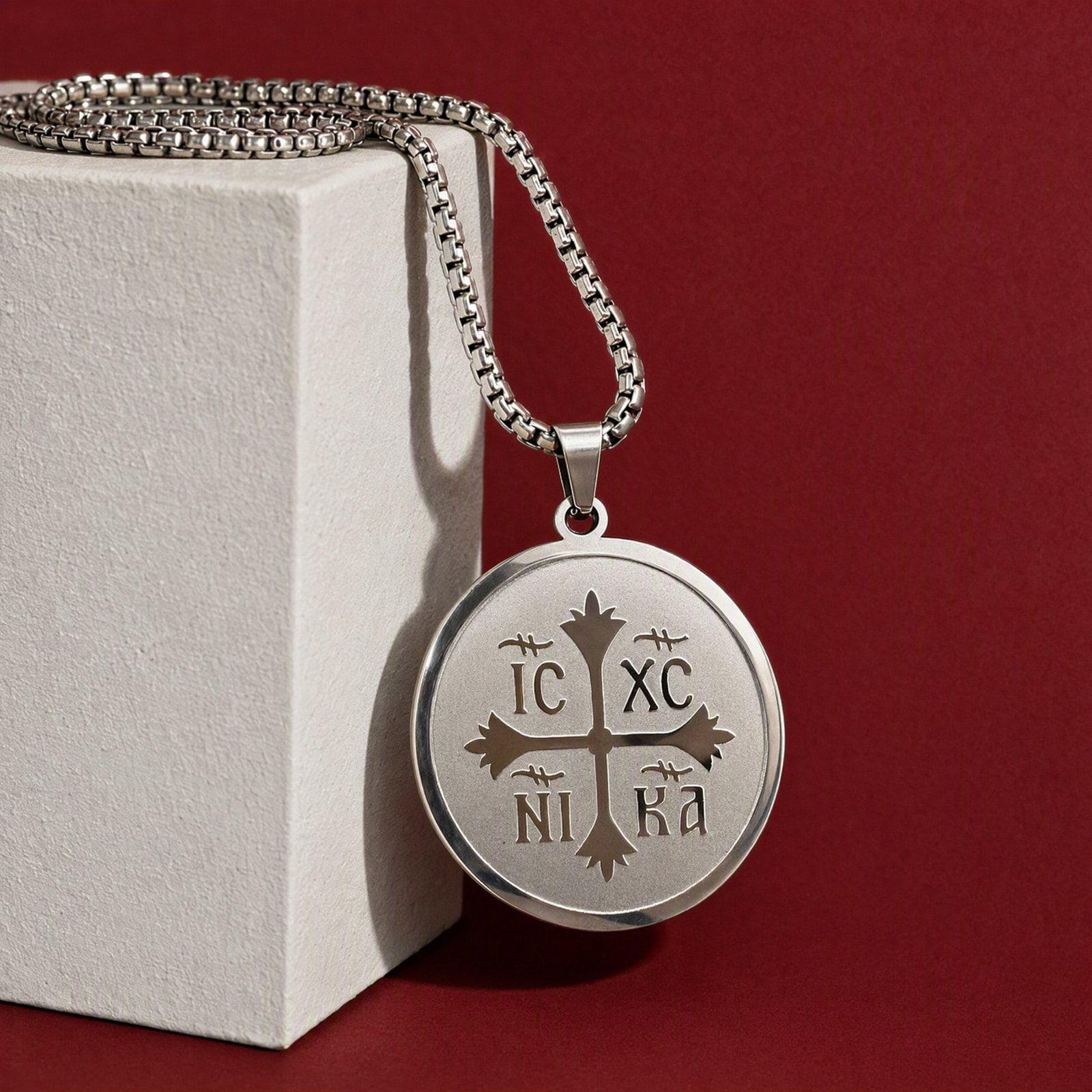
We do not carry an enamel medal today. Our enamel pieces are crucifixes: Christ crucified over red and black enamel on the front, with a textured back. The crucifix in silver-tone metal ($54), the crucifix in gold-tone metal ($49) and the crucifix in bronze-tone metal ($54) are about 3⅛ in, on a dark bead necklace of about 70 cm; the crucifix in copper-red stainless steel ($54) is about 3 in. To wear beside a cross, the IC XC NIKA medallion in silver tone stainless steel ($54). See bronze and copper crosses and our saint medals. Orders arrive in 5–8 business days: US-based, ships from Florida.
Our enamel crucifixes and a medal
Four crucifixes with Christ over red and black enamel, in silver, gold, copper-red and bronze tone, and our IC XC NIKA medallion. Each card shows its live price.
ΜΕ ΕΔΡΑ ΣΤΙΣ ΗΠΑ. ΑΠΟΣΤΟΛΗ ΑΠΟ ΤΗ ΦΛΟΡΙΝΤΑ
Delivery in 5–8 business days.
Want us to stock it?
We carry close items, not every kind of enamel religious medal. Leave your email and we will write once if we stock more.
Questions
What is an enamel religious medal?
A medal whose image or background is colored with enamel: powdered glass fused onto the metal in a kiln. Blue and white are the usual colors for medals of the Virgin Mary; red, black and gold are common on crosses.
Is enamel the same as epoxy?
No. Fired enamel is glass; it is hard, keeps its color for generations, and can chip if struck. Epoxy, sometimes called cold enamel, is a colored resin poured in and set without heat; it is cheaper and softer and can scratch or fade.
Why is the Marian medal often blue?
Blue has long been the color of the Virgin Mary’s mantle in Western art, a color of heaven and of costly pigment. In Orthodox icons she wears a deep red veil over a blue robe.
Will an enamel medal chip?
Fired enamel is glass, so a hard knock on stone or tile can chip it. Worn on a chain under a shirt, a well-made enamel medal lasts for decades. Check the edges where the enamel meets the metal.
How do I clean an enamel medal?
Wipe it with a soft, damp cloth and a drop of mild soap, then dry it. Avoid jewelry dips, bleach, chlorine and ultrasonic cleaners, which can dull or crack enamel.
Do you sell enamel medals?
Not medals. We carry four crucifixes with red and black enamel behind the figure of Christ. Leave your email on this page and we will write once if we stock an enamel medal.